
Vietnam Imports Surge 103%: Mexico Tariff Dodge Fears
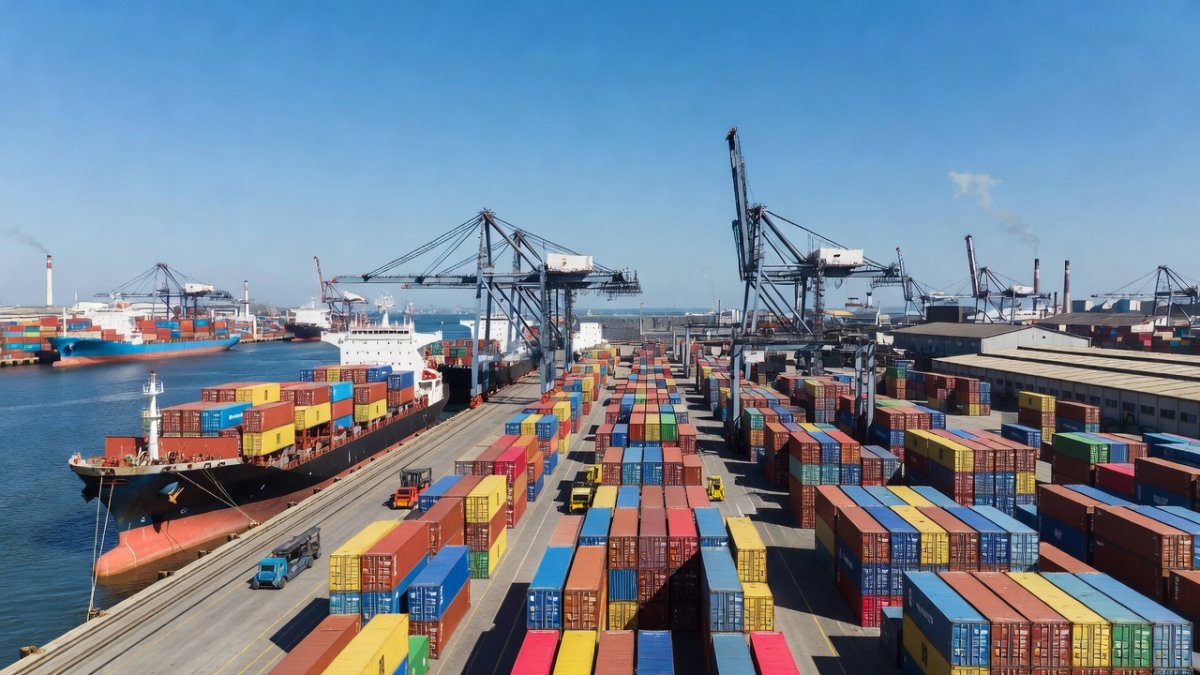
Vietnam Imports Surge 103%: Mexico Tariff Dodge Fears The numbers are staggering, and they have landed like a thunderclap in the corridors of the Palacio Nacional and the boardrooms of the maquiladora economy. According to fresh figures from Banco de México, Mexican imports from Vietnam reached US$18.405 billion during the first half of 2026 — a staggering 103% annual increase. For context, that is not a gentle rise; it is a doubling of trade flows in just twelve months.
Vietnam Imports Surge 103%: Mexico Tariff Dodge Fears
The numbers are staggering, and they have landed like a thunderclap in the corridors of the Palacio Nacional and the boardrooms of the maquiladora economy. According to fresh figures from Banco de México, Mexican imports from Vietnam reached US$18.405 billion during the first half of 2026 — a staggering 103% annual increase. For context, that is not a gentle rise; it is a doubling of trade flows in just twelve months. And while Vietnam is a legitimate manufacturing powerhouse in its own right, this explosive growth has set off alarm bells in Washington and Mexico City alike, fueling suspicions that a significant portion of those goods are not Vietnamese at all, but Chinese products being relabeled and rerouted to dodge the new tariff walls that went up on January 1, 2026.
This is not just a story about trade statistics or diplomatic cables. It is a story about the tortillería owner in Guadalajara wondering why her costs keep climbing, the textile worker in Puebla worried about her shift, and the customs broker in Nuevo Laredo navigating a maze of new rules. The global supply chain is shifting beneath our feet, and Mexico is standing right at the epicenter of a tectonic struggle between Washington and Beijing. As the Sheinbaum administration weighs its next move, the decisions made in the coming weeks will ripple through every colonia, every tianguis, and every factory floor from Tijuana to Mérida.
A Tariff Wall Built for Protection, Now Facing a Loophole
To understand the current anxiety, we must look back to the beginning of the year. On January 1, 2026, Mexico imposed a sweeping set of new tariffs covering roughly 1,463 tariff lines — approximately 12% of the entire national tariff schedule. The rates are steep, with most landing between 20% and 35%, and some categories reaching as high as 50%. The targets are specific: automotive parts, electronics, textiles, steel, and a range of consumer products. And the countries in the crosshairs are equally specific — China, India, South Korea, and Vietnam.
These measures were not born in a vacuum. Mexican manufacturers in the textile, steel, and auto sectors had been pressing the government for years, arguing that a flood of cheap Asian imports was undercutting domestic production and costing jobs. The Sheinbaum administration responded with these tariffs, which are valid through December 2026. The logic was straightforward: protect Mexican industry, preserve employment, and rebalance a trade relationship that many in the Congreso de la Unión felt was tilted too far in Asia's favor.
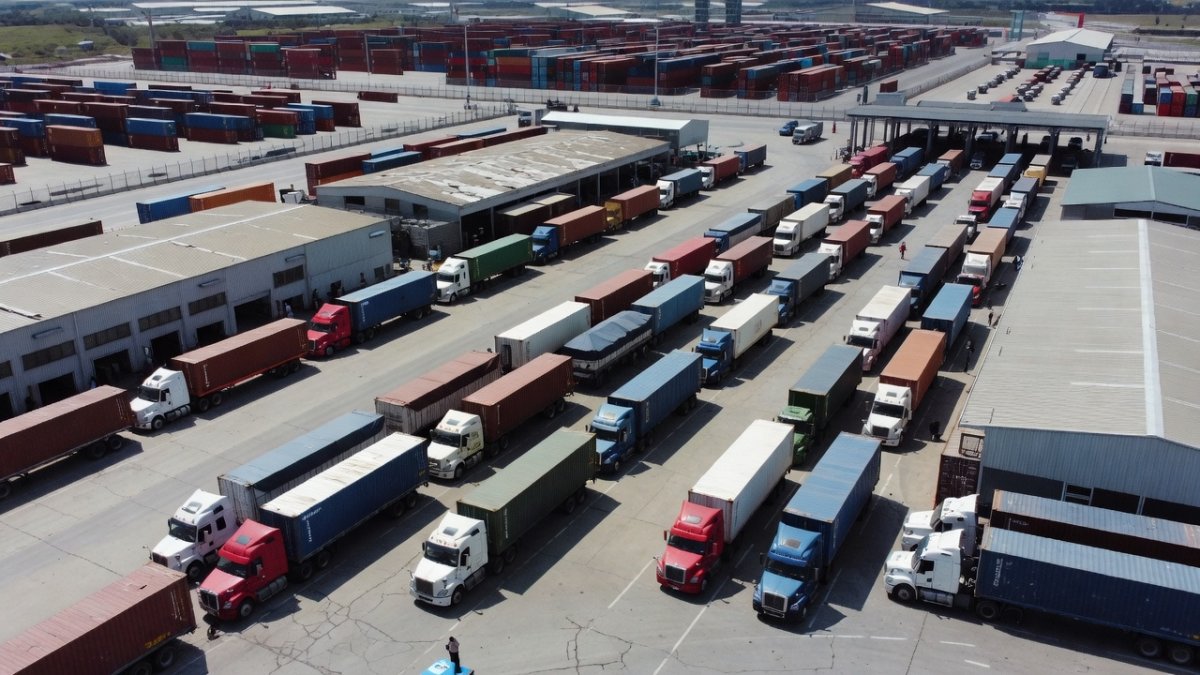
But here is the problem. If a Chinese manufacturer can ship its goods to Vietnam, perform minimal processing or simply repackage them, and then send them on to Mexico with a "Made in Vietnam" label, the tariff becomes meaningless. The 103% surge in imports from Vietnam suggests that this is precisely what may be happening. It is a classic transshipment play, and it threatens to undermine the very purpose of the tariffs that Mexican workers and businesses were promised would protect them. The question now is whether Mexico's customs authorities have the tools and the will to distinguish genuine Vietnamese goods from Chinese ones wearing a disguise.
The White House Report: A 'Global Shadow Transshipment Network'
The pressure on Mexico intensified dramatically on August 14, 2026, when the White House released a blistering report titled around what it calls the "great transshipment scam." The document names more than 40 countries — including Mexico, Canada, India, Vietnam, Israel, Japan, South Korea, Taiwan, and EU member states — as participants in what it describes as a "global Shadow Transshipment Network through which China's tariff evasion now moves." The language is aggressive, and the implications are severe.
The report groups countries into three tiers based on their alleged involvement. Mexico is placed in Tier-1, the most serious category, alongside Canada, the EU, Israel, Japan, South Korea, and Taiwan. This is a significant escalation in rhetoric. One transaction-level analysis cited in the report estimates that approximately US$67 billion in US-bound goods were transshipped from China through major hubs — including Mexico, India, and Vietnam — in 2025. The report further estimates that this activity resulted in about US$28 billion in lost US tariff revenue. These are not trivial sums; they represent a direct challenge to the enforcement of US trade policy.
White House trade adviser Peter Navarro did not mince words. "For years, the great transshipment scam has let communist China launder its exports," he said in a statement accompanying the report. The administration has already signaled that goods rerouted to hide their Chinese origin face an extra 40% US tariff, and a new 100% US tariff has been applied to certain larger drones. The message to Mexico is clear: if Washington concludes that Mexican ports and borders are being used as a laundering mechanism for Chinese goods, the consequences could be severe — including higher tariffs on legitimate Mexican exports under the USMCA enforcement mechanisms.
Mexico's Delicate Dance Between Washington and Beijing
For the Sheinbaum administration, this is a diplomatic and economic tightrope walk of the highest order. On one side stands Washington, Mexico's largest trading partner and the anchor of the USMCA agreement that underpins so much of the export economy. On the other side stands Beijing, an increasingly important commercial partner and a major investor in Mexican infrastructure and manufacturing. The new tariffs on Asian goods were a nod to domestic industrial pressure, but they also risked alienating China. Now, the transshipment allegations threaten to alienate the United States.
The administration is responding, but cautiously. Reports from approximately three days ago indicate that Mexico is considering tougher trade rules for Chinese goods amid ongoing talks with US officials. The specifics are still being negotiated behind closed doors, but the direction of travel is clear: Mexico needs to demonstrate to Washington that it is taking the transshipment problem seriously, or risk being treated as a hostile actor in the US trade enforcement regime. This is not just about optics; it is about the future of the maquiladora economy, which depends on seamless cross-border trade with the United States.
For ordinary Mexicans, the stakes are tangible. The maquiladora plants along the northern border employ hundreds of thousands of workers, and their output is almost entirely destined for the US market. If US tariffs on Mexican goods were to increase as a punitive measure, those jobs would be at immediate risk. Similarly, the price of goods in the tianguis and local stores is affected by the cost of imported components and consumer products. A trade war between Mexico and the US would hit household budgets hard, at a time when many families are already struggling with the cost of living.
Beijing Rejects Claims as Mexico Weighs New Restrictions
Unsurprisingly, Beijing has rejected the US allegations outright. Chinese officials dispute Washington's transshipment claims, arguing that the surge in Vietnamese exports to Mexico reflects genuine shifts in global manufacturing capacity and supply chain diversification, not a scheme to evade tariffs. They point to Vietnam's own growing industrial base and its integration into regional supply chains as legitimate explanations for the trade flow increase. From Beijing's perspective, the US report is a political document designed to justify protectionist measures and to pressure neutral countries like Mexico into taking sides.
But the Chinese rebuttal has not slowed the momentum in Mexico City. The administration is under mounting pressure from domestic manufacturers — the very groups that lobbied for the January tariffs — to close the transshipment loophole. These manufacturers argue that if the tariffs are not enforced effectively, they will continue to lose market share to cheap imports, and the promised job protections will evaporate. The Secretaría de Economía is reportedly studying new rules that would require more rigorous certificates of origin, enhanced customs inspections, and possibly higher duties on goods that show suspicious patterns of transshipment.
The challenge is practical as well as political. Policing the origin of goods is notoriously difficult. Customs officials must rely on documentation, supply chain tracing, and spot checks, all of which can be circumvented by sophisticated operators. Vietnam and China share a long border, and the volume of trade between them is enormous, making it relatively easy to move goods across and relabel them. Mexico's customs agency, the Agencia Nacional de Aduanas de México, would need significant new resources and technical capabilities to effectively police this flow. Whether those resources will be provided remains an open question.
What This Means for Mexican Families, Workers, and the Economy
Let us bring this down to the kitchen table, because that is where trade policy ultimately lands. When the cost of imported steel rises, the price of a new car or a refrigerator goes up. When textile tariffs are circumvented, the local garment factory in Puebla or Torreón loses orders, and workers lose hours. When the US threatens tariffs on Mexican goods, every export-dependent business — from the largest auto plant to the smallest avocado exporter — feels the uncertainty. The connection between a customs form in Veracruz and a family's grocery budget in Oaxaca is more direct than many people realize.
There is also a broader strategic question for Mexico. The country has positioned itself as a neutral player in the global trade system, maintaining strong ties with both the United States and China. This balancing act has brought significant benefits: access to the US market through USMCA, and investment and trade with China that has helped diversify the economy. But the transshipment controversy threatens to force a choice. If Washington insists that Mexico crack down hard on Chinese goods, Beijing may retaliate with its own trade measures. If Mexico resists US pressure, it risks tariffs on its own exports. There is no easy path, and the Sheinbaum administration will need all of its diplomatic skill to navigate the coming months.
For now, the tariffs on Asian goods remain in place through December 2026, and the import surge from Vietnam continues to be scrutinized. The coming weeks will likely bring new announcements from the Secretaría de Economía about enhanced enforcement measures. In the meantime, Mexican businesses and families should brace for continued volatility in prices and trade flows. The world is watching how Mexico handles this delicate moment, and the decisions made in the Palacio Nacional will shape the economic landscape for years to come. As always, the resilience of the Mexican people — from the maquiladora worker to the small business owner — will be the country's greatest asset in weathering this storm.
Tags: Mexico Vietnam imports, transshipment, China tariffs, USMCA, Banco de México, Peter Navarro, Sheinbaum, maquiladora, Mexican manufacturing, trade war, tariff evasion, Asian goods Mexico, Secretaría de Economía, customs enforcement
By Rosa Martinez, Staff Writer
This article was produced with AI-assisted research and editorial support. Reporting is based on sources cited in the article.
What's Your Reaction?
 Like
0
Like
0
 Dislike
0
Dislike
0
 Love
0
Love
0
 Funny
0
Funny
0
 Wow
0
Wow
0
 Sad
0
Sad
0
 Angry
0
Angry
0

Latin America/Andes Correspondent at Global1.News. Based in Bogota, covering politics, environment, energy, and social movements across the Andean region. Passionate about environmental journalism and communities protecting their land.















Comments (0)