
US Security Pledge Bolsters Colombia's New Leader
The United States moved quickly to back Colombia's new president with a major security commitment just hours after Abelardo de la Espriella took office on Friday. The pledge came as the right-wing leader promised an iron-fist approach to crime during ceremonies held in Cali rather than the capital.
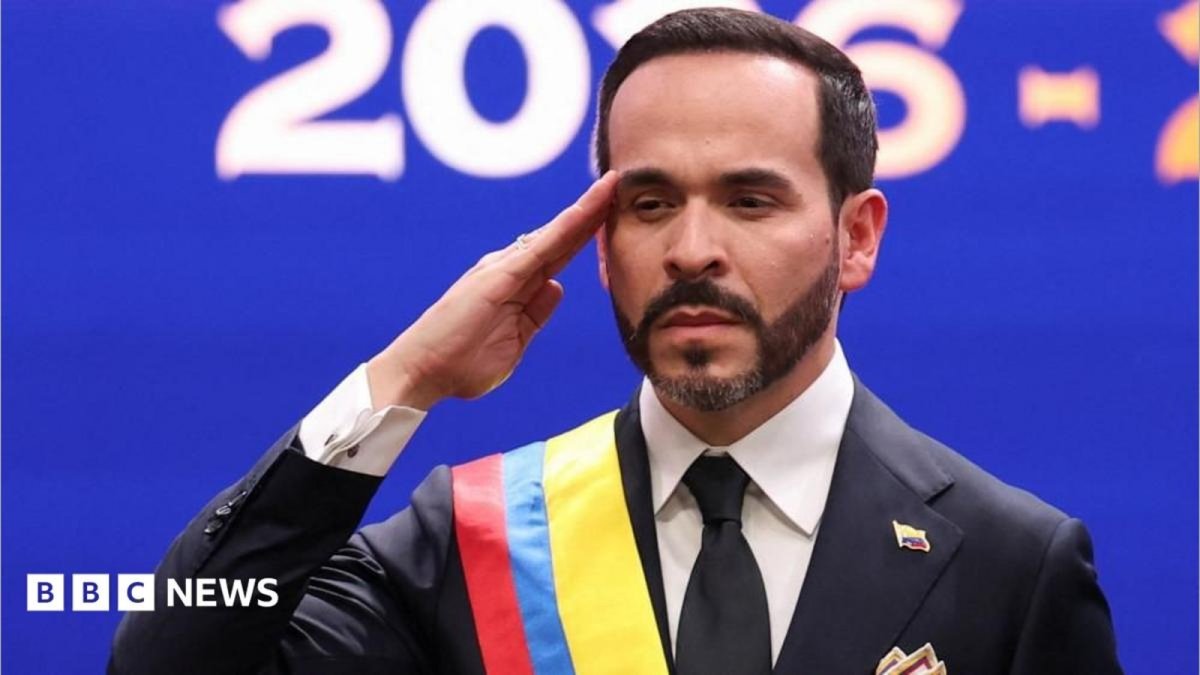
The United States moved quickly to back Colombia's new president with a major security commitment just hours after Abelardo de la Espriella took office on Friday. The pledge came as the right-wing leader promised an iron-fist approach to crime during ceremonies held in Cali rather than the capital. Regional observers noted the timing reflected Washington's interest in aligning with governments that share its priorities on organised crime and migration flows across the Americas.
US Security Pledge Bolsters Colombia's New Leader
Bogotá, Colombia — The US State Department announced a $1 billion security package hours after Abelardo de la Espriella was sworn in on Friday in Cali. Officials described the assistance as support for shared goals of dismantling organised crime and addressing illegal immigration. The move marked an early signal of closer ties between Washington and Colombia's new administration.
A Billion-Dollar Welcome
The inauguration ceremony took place in the western city of Cali instead of Bogotá, drawing US Attorney General Todd Blanche and FIFA president Gianni Infantino along with the head of South America's football body Conmebol. De la Espriella, who has positioned himself as an outsider, used the event to highlight a break from previous centralised politics. The State Department framed the security package as an opportunity to increase trade and deepen economic links between the two countries. Trump had previously expressed strong support for de la Espriella during the campaign, stating the new leader had the total support and strength of the United States behind him. Colombia's decision to join the Shield of the Americas security partnership was welcomed in Washington as part of this shift.
The rapid timing of the pledge, announced within hours of the swearing-in, signals Washington's eagerness to lock in alignment with a government that echoes its priorities on security and migration. Todd Blanche's attendance at the Cali ceremony underscores the administration's direct stake in the outcome, positioning the US Attorney General as a visible bridge between enforcement strategies on both sides of the border.
"All-Out War" on Narco-Terrorism
In his first speech to troops at a nearby military base, de la Espriella vowed to crush armed insurgents and defend democracy by reason or by force. He declared that in the age of the Tiger there would not be a single place in Colombian territory where criminals could feel safe. The remarks drew immediate comparisons to hardline policies pursued by Nayib Bukele in El Salvador and Daniel Noboa in Ecuador. De la Espriella has promised mega-prisons and operations against narcoterrorist camps as part of his security agenda. The US assistance is expected to back these efforts against transnational narco-terrorism.
De la Espriella's iron-fist rhetoric draws clear parallels to Bukele's mega-prisons and extended state of exception in El Salvador, where mass detentions produced sharp drops in visible gang activity but also entrenched concerns over prolonged arbitrary detention. Noboa's similar operations in Ecuador have shown how such tactics can temporarily disrupt networks while shifting violence into new areas and overwhelming judicial systems. Human rights groups have repeatedly flagged due-process shortfalls in these crackdowns, including limited access to legal representation and collective punishments that blur lines between combatants and civilians.
The End of "Total Peace"
De la Espriella's stance reverses the negotiation-focused strategy of predecessor Gustavo Petro, who sought to incentivise farmers to abandon coca cultivation. Critics argued that Petro's total peace initiative failed to reduce armed group membership, which expanded in recent years. A conflict between rival groups along the Colombia-Venezuela border displaced tens of thousands of people last year. Trump had repeatedly criticised Petro's policies for contributing to drug flows and migration pressures toward the United States. The new Colombian leader's alignment with Washington is expected to prioritise enforcement over dialogue with armed factions.
Petro's negotiation tables and crop-substitution incentives aimed to draw armed groups and coca farmers into formal processes, offering reintegration pathways that recognised the economic realities of rural life. These efforts produced some local ceasefires and reduced recruitment in targeted zones, though implementation remained uneven across regions. Abandoning negotiation in favour of confrontation could further isolate communities already caught between armed actors, removing incentives for demobilisation and potentially accelerating cycles of retaliation.
A Region Tilting Right
De la Espriella's rise joins similar shifts in Argentina under Javier Milei, who received a $20 billion US Treasury bailout, and in Peru with Keiko Fujimori. These developments leave Brazil's Luiz Inácio Lula da Silva with fewer left-wing allies in the region. Flávio Bolsonaro, son of the jailed former president, is positioned to challenge in Brazil's October elections. Trump has courted these aligned leaders while taking a harder line toward governments he views as opposed to US interests. The pattern reflects economic hardship and public concern over gang violence across several Latin American nations.
Latin America's recent electoral pattern reflects widespread economic hardship and voter frustration with persistent gang violence, pushing several countries toward leaders promising decisive security measures. Milei's experience with the $20 billion Treasury bailout shows how such alignments can bring immediate financial relief alongside deeper policy constraints. Fewer left-wing partners now limit Lula's room for regional coordination, particularly on issues like migration management and trade diversification.
The Tiger's Contradictions
De la Espriella, known as El Tigre, built a career as a millionaire lawyer and businessman before entering politics. He previously represented drug-trafficking paramilitaries as a defence attorney and became a US citizen in 2023 after years living and working in Miami. His campaign featured rallies behind bulletproof glass following the killing of another conservative candidate. He announced his candidacy a month after that assassination and has cast himself as an outsider unwilling to work with the traditional political elite. The choice of Cali for the inauguration underscored his desire to distance the administration from Bogotá-centred power structures.
The decision to hold the oath in Cali carries symbolic weight, distancing the new administration from Bogotá's traditional power centres and signalling a deliberate break with centralised governance. De la Espriella's earlier career defending paramilitary clients raises ongoing questions about his credibility when addressing armed groups, particularly as his US citizenship and Miami years position him as someone with deep ties to external networks.
Drugs, Coca and the Land
Colombia has long been central to US security cooperation in the region, with past efforts targeting coca production and trafficking routes. A security-first crackdown under de la Espriella raises questions for rural communities that depend on the coca economy and for environmental governance in affected areas. Previous substitution programmes struggled to provide viable alternatives for farmers. The new approach could sideline broader environmental and development priorities in favour of direct enforcement measures.
The coca economy sustains numerous rural communities where few legal alternatives generate comparable income, creating dependencies that enforcement campaigns have historically struggled to address without triggering new hardships. Cultivation continues to drive deforestation in Colombia's forests, undermining environmental governance efforts that Petro sought to strengthen through protected areas and community monitoring. A purely security-driven approach risks accelerating these losses by prioritising eradication over sustainable land-use planning.
What Comes Next
Colombia’s entry into the Shield of the Americas partnership signals a stronger military alignment with the United States and Israel, contrasting with Petro’s positions on Gaza. The risks of iron-fist strategies include potential escalation of violence and strain on institutions, as seen in other countries that adopted similar tactics. Observers in the region are watching whether the security package delivers measurable reductions in crime and migration. For Brazil, the shift reduces the number of left-leaning partners available to Lula ahead of October elections. The outcome in Colombia may influence how other nations balance security cooperation with domestic priorities.
Joining the Shield of the Americas partnership commits Colombia to deeper military coordination with the United States and Israel, a sharp departure from Petro's break with Israel over Gaza and one that could constrain future diplomatic flexibility on regional conflicts. Iron-fist tactics carry documented risks of rights abuses and fresh displacement, patterns observed in neighbouring countries where similar operations produced short-term gains at the expense of institutional trust and civilian protections. Regional stability may hinge on whether the security package reduces migration pressures without fuelling new conflicts, an outcome that could influence Brazil's October vote by demonstrating either the appeal or the limits of hardline alignment with Washington.
By Elena Vasquez, Staff Writer This article was produced with AI-assisted research and editorial support. Sources: BBC News, Reuters, The Guardian, CBS News.What's Your Reaction?
 Like
0
Like
0
 Dislike
0
Dislike
0
 Love
0
Love
0
 Funny
0
Funny
0
 Wow
0
Wow
0
 Sad
0
Sad
0
 Angry
0
Angry
0

Latin America Correspondent at Global1.News. Based in Mexico City, covering politics, economics, energy, and culture across the region. Brings an on-the-ground perspective to stories spanning from the Rio Grande to Patagonia.












Comments (0)