
Trump's $100M Mining Push Puts Latin America's Lithium and Water on the Line
Washington's plan to spend $100 million educating a new generation of American miners — part of a $2 billion critical minerals push — sends a jolt through the Lithium Triangle, where Chile, Argentina and Bolivia hold 56 percent of the world's identified lithium resources yet produce barely a quarter of its output.
Washington's plan to spend $100 million educating a new generation of American miners — part of a $2 billion critical minerals push — sends a jolt through the Lithium Triangle, where Chile, Argentina and Bolivia hold 56 percent of the world's identified lithium resources yet produce barely a quarter of its output. For communities from the Salar de Atacama to Jujuy's Salinas Grandes, the question is no longer whether the world needs their minerals, but at what price in water, land and sovereignty.
America's Mining Renaissance Puts Latin America's Lithium and Water on the Line
Washington, D.C., United States — August 7, 2026 — The Trump administration's push to rebuild domestic critical minerals capacity collides with Latin America's role as the world's lithium and copper powerhouse, forcing hard choices over water, sovereignty and the energy transition.
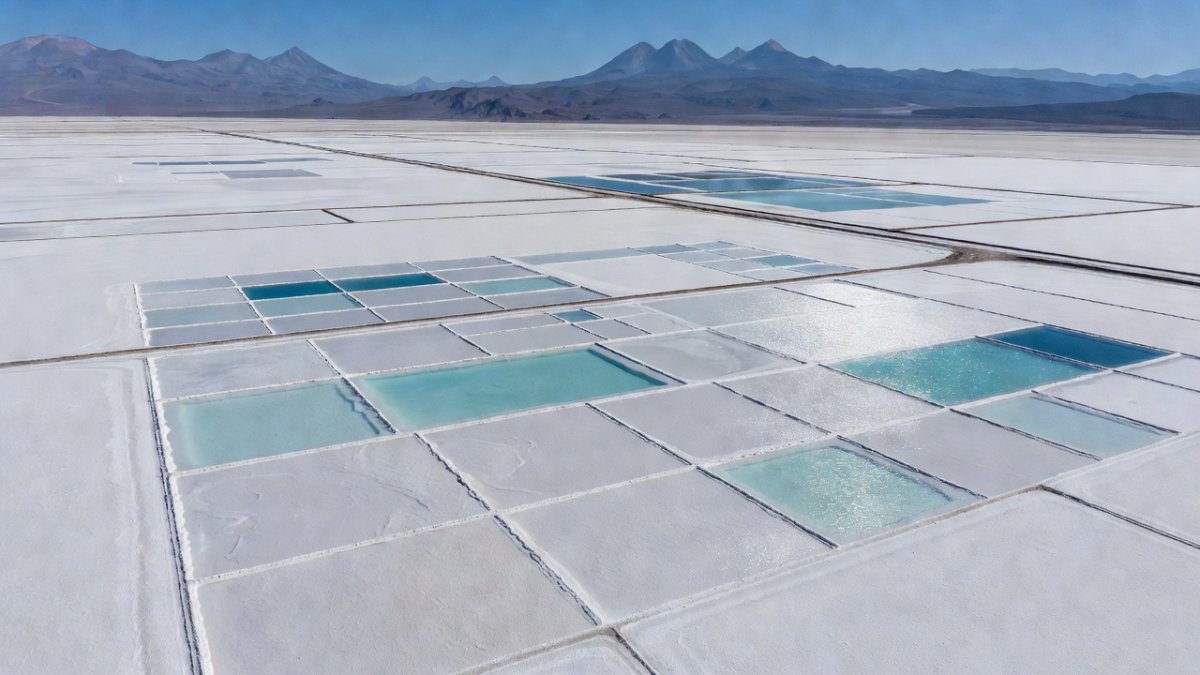
The Paradox of America’s Mining Renaissance Against Latin America’s Resource Dependence
The Trump administration’s aggressive push to rebuild domestic critical minerals capacity collides directly with Latin America’s entrenched position as the world’s lithium and copper powerhouse. While Washington pours billions into training miners and stockpiling materials, the Lithium Triangle nations of Chile, Argentina and Bolivia sit atop 56 percent of identified global lithium resources yet capture only 28 percent of current mine output. This imbalance exposes a stark asymmetry: the United States produced just 1,000-1,500 tonnes of lithium in 2024 from Silver Peak, Nevada, while Chile alone delivered 49,000 tonnes and Argentina 18,000 tonnes. At the same time Chile extracted 5.3 million metric tons of copper in 2025, representing 23 percent of global supply, even as output fell 210,000 tonnes year-over-year. The administration’s $100 million education grants and $2 billion in project financing aim to sever reliance on Chinese processing dominance, yet Latin American brine and hard-rock deposits remain indispensable to the supply chain. Indigenous communities across the salt flats now face intensified pressure as global demand for AI, EVs and defense technologies accelerates. The paradox is clear: U.S. workforce investments threaten to redirect capital flows away from the very region whose geology underpins the energy transition, forcing Latin American governments to defend both sovereignty and environmental integrity.
The $100 Million Workforce Bet Targets Domestic Supply Chain Control
President Trump’s August 7 roundtable in the Benjamin Franklin Room unveiled a coordinated federal strategy to double America’s mining talent pipeline. The Department of Energy’s Office of Critical Minerals and Energy Innovation committed $100 million to the nation’s 14 mining schools, explicitly targeting credentials in minerals processing and supply-chain logistics. The Department of War added more than $80 million across three institutions, creating technology innovation hubs for geologists, metallurgists and engineers. Specific allocations include $81 million to Colorado School of Mines, South Dakota School of Mines and Johns Hopkins University, plus a proposed $25 million Critical Minerals Merit Scholars Consortium at South Dakota. These investments complement earlier announcements of $85 million for Standard Bauxite refractory materials, $150 million for Niron Magnetics rare-earth-free magnets and $1.4 billion for Sila Nanotechnologies silicon-carbon anodes. Officials framed the spending as essential preparation for the U.S. Strategic Critical Minerals Reserve, arguing that without skilled workers the country cannot process lithium, graphite or rare earths at scale. For Latin American observers the message is unambiguous: Washington intends to internalize every stage of the value chain previously outsourced to Chile’s Codelco-SQM joint venture and Argentina’s expanding projects.
Project Vault and the China Processing Chokepoint
Launched in February 2026, Project Vault established a $12 billion U.S. Strategic Critical Minerals Reserve designed to fracture China’s grip on refining and processing. China currently controls more than 60 percent of global lithium, cobalt and rare-earth refining capacity, creating a single point of failure for batteries, magnets and defense components. The reserve has already attracted 54 nations into the FORGE framework, mobilizing an additional $30 billion in allied financing. Demand pressures are intensifying: India’s EV sales surged 82 percent in July 2026 alone, while AI data centers and autonomous systems multiply requirements for permanent magnets and battery anodes. By pairing the reserve with domestic education grants, the administration seeks to shorten supply lines that currently run through Chinese facilities. Latin American producers, however, remain the primary source of raw lithium carbonate and copper concentrate. Any successful U.S. decoupling therefore hinges on whether Chile’s Salar de Atacama and Argentina’s salars can maintain or expand output under mounting environmental scrutiny, or whether new North American mines can scale fast enough to displace them.
The Lithium Triangle Holds 56 Percent of Resources but Only 28 Percent of Output
USGS data confirm that Bolivia, Argentina and Chile together possess 23 million, 9.6 million and 9.3 million tonnes of lithium resources respectively, totaling 56 percent of known global inventories. Yet in 2024 these three countries produced just 28 percent of the world’s 240,000 tonnes of lithium content, trailing Australia’s 37 percent share. Chile’s April 2023 National Lithium Strategy converted the Salar de Atacama into a public-private vehicle; the Codelco-SQM joint venture, approved by Chile’s Fiscalía Nacional Económica in December 2024, targets 280,000-300,000 tonnes of lithium carbonate equivalent annually by 2031, with Codelco holding 50 percent plus one share. Argentina’s Cauchari-Olaroz, Centenario-Ratones and Rincon projects are accelerating under the Milei RIGI regime, with Rio Tinto’s acquisition of Arcadium Lithium positioning the country to reach 130,000 tonnes LCE in 2026. Bolivia’s 21-23 million tonne resource remains largely untapped, its CATL and Uranium One direct lithium extraction pilots stalled without commercial breakthroughs. These figures illustrate both the region’s geological advantage and its persistent lag in converting resources into reliable production volumes amid regulatory and social constraints.
Water Extraction Costs Mount as Atacama Subsides and Communities Resist
Conventional evaporation-pond methods at Salar de Atacama consume roughly 500,000 gallons of water per tonne of lithium carbonate extracted from brine containing 1,500-2,200 mg of lithium per liter. Cochilco 2024 monitoring recorded a 21 percent reduction in nucleus brine extraction under the SQM-CORFO 2018 amendment, yet groundwater levels have already fallen more than 10 meters over the past 15 years. The salt flat itself is sinking 1-2 centimeters annually according to independent studies, threatening the terminal lake’s delicate hydrological balance at 2,300 meters elevation. Indigenous Lickanantay (Atacameño) communities have long argued that brine pumping disrupts the water balance sustaining their territories. In Argentina’s Jujuy province, Kolla communities around Salinas Grandes and Laguna de Guayatayoc report similar aquifer stress from lithium projects. These documented impacts have turned water, not tonnage, into the decisive factor determining whether operations retain social licence. Freshwater stress on these communities now constitutes the politically binding constraint on further expansion, regardless of price signals or foreign investment interest.
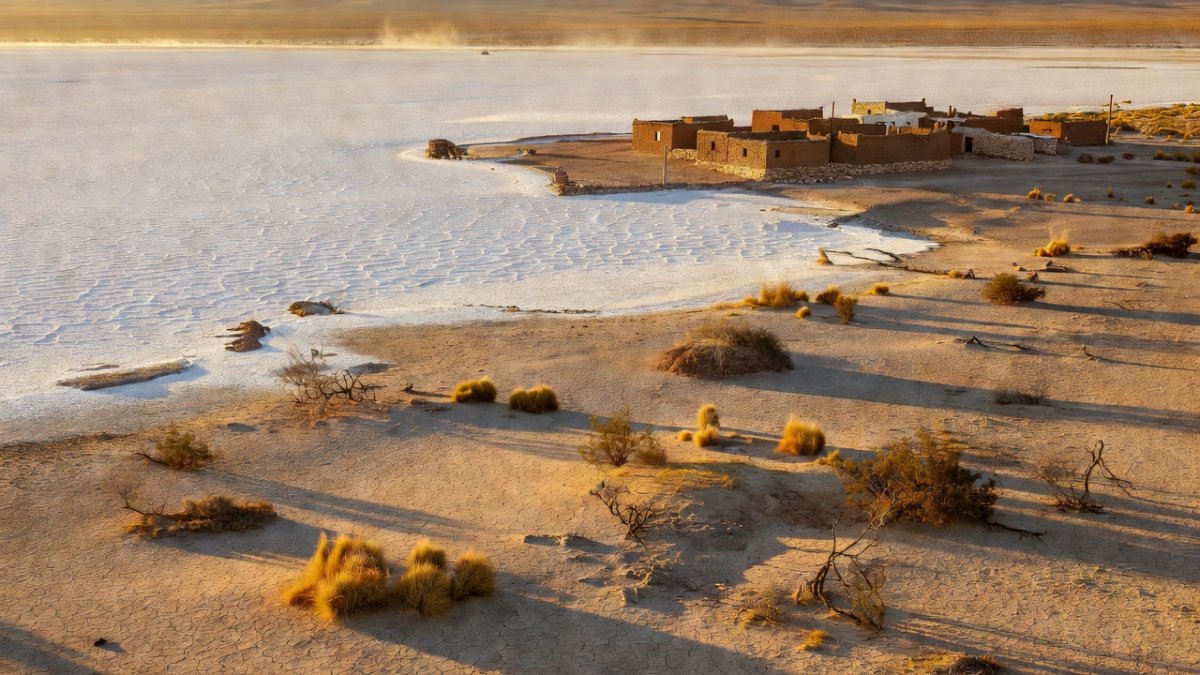
Direct Lithium Extraction and the $3 Billion Salar Futuro Gamble
Novandino Litio, the Codelco-SQM joint venture, submitted its roughly $3 billion Salar Futuro plan to Chile’s SEIA environmental review in mid-2026. The proposal centers on direct lithium extraction with reinjection of depleted brine, promising to extend Atacama operations from 2030 to 2060 while phasing out continental freshwater use over seven years. Proponents claim DLE technology will reduce surface footprint and recycle process water, yet Lickanantay representatives remain skeptical that reinjection can fully restore aquifer equilibrium. The plan arrives as lithium carbonate prices have collapsed 87 percent from their November 2022 peak of approximately $87,000 per tonne to $9,000-11,000 in 2026, with hydroxide similarly down to $9,500. LFP batteries captured 53 percent of global passenger EV demand in 2025, with China exceeding 70 percent LFP share while the United States lingers at 18 percent. If Salar Futuro secures approval, Chile could lock in decades of output; rejection would accelerate capital flight toward Argentina’s RIGI incentives or entirely new North American projects funded by the Trump administration’s workforce initiatives.
Implications for Latin America: Copper, Price Collapse and Regulatory Divergence
Chile’s copper output decline of 210,000 tonnes in 2025 underscores broader vulnerabilities as social unrest in Peru further disrupts regional supply. Lithium carbonate’s 87 percent price drop has squeezed margins across the Lithium Triangle, testing the viability of Bolivia’s stalled pilots and Argentina’s ambitious 130,000-tonne target. The Milei government’s RIGI regime offers tax stability to attract Rio Tinto and others, contrasting with Chile’s state-led Codelco-SQM model and Bolivia’s continued emphasis on national control. Indigenous opposition in both Chile and Argentina, documented by NRDC reports on Kolla and Atacameño territories, raises the prospect of project delays or cancellations. Meanwhile the U.S. Strategic Critical Minerals Reserve and $100 million education push signal that Washington will no longer accept Chinese-dominated refining as inevitable. Latin American governments must now decide whether to double down on state participation, accelerate DLE adoption, or risk losing market share to subsidized North American production. The outcome will determine whether the region converts its 56 percent resource advantage into lasting economic sovereignty or merely supplies raw materials for another nation’s strategic stockpile.
By Elena Vasquez, Staff WriterThis article was produced with AI-assisted research and editorial support. Reporting is based on sources cited in the article.
What's Your Reaction?
 Like
0
Like
0
 Dislike
0
Dislike
0
 Love
0
Love
0
 Funny
0
Funny
0
 Wow
0
Wow
0
 Sad
0
Sad
0
 Angry
0
Angry
0

Latin America Correspondent at Global1.News. Based in Mexico City, covering politics, economics, energy, and culture across the region. Brings an on-the-ground perspective to stories spanning from the Rio Grande to Patagonia.













Comments (0)