
US Requests Extradition of KOJC Founder Quiboloy
The US has formally requested the extradition of KOJC founder Apollo Quiboloy on sex trafficking and cash smuggling charges. Philippine courts must approve any transfer, while the DOJ says it has yet to receive the papers. Sen. Risa Hontiveros says justice demands he answer for crimes against women and girls.
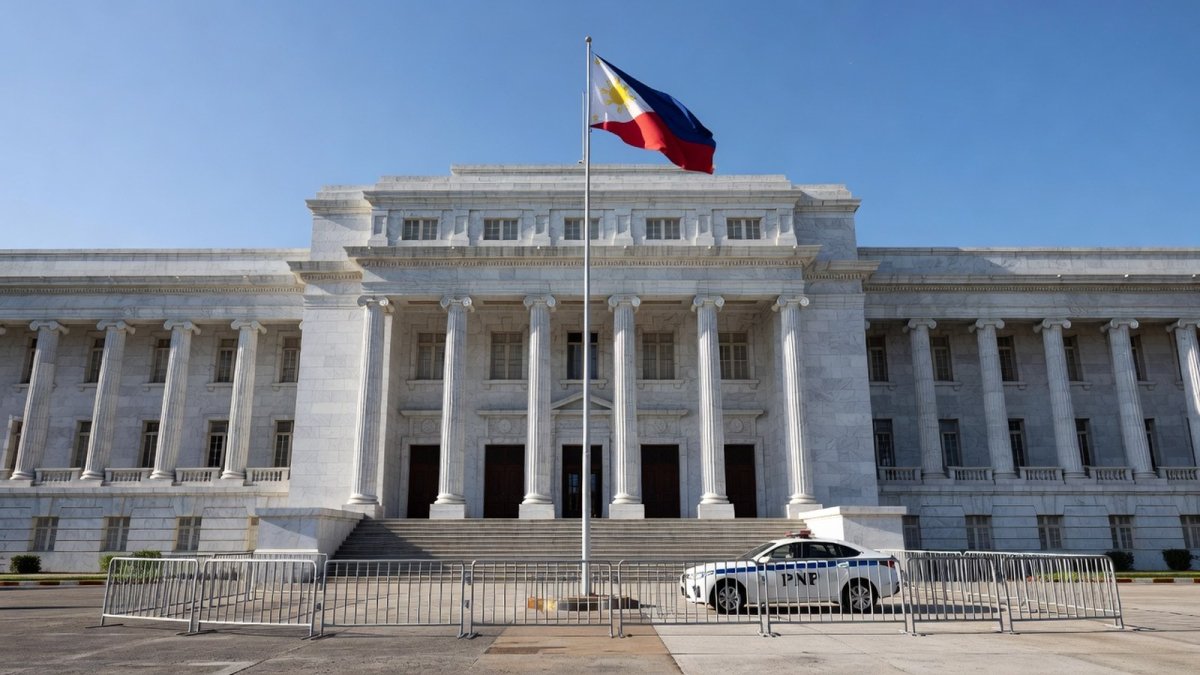
The United States has formally requested the extradition of Apollo Quiboloy, founder of the Kingdom of Jesus Christ, sending the documents through diplomatic channels in July 2026 and highlighting the case as a top priority involving human trafficking and sex trafficking allegations.
US Seeks Quiboloy Extradition Over Sex Trafficking
MANILA, Philippines - The request reached the Department of Foreign Affairs, which endorsed it to the Department of Justice. Philippine Ambassador to the United States Jose Manuel Romualdez stated on Friday that American authorities want the transfer handled quickly because of pending cases abroad. He noted that if approved, US Marshals or FBI agents would likely arrive with their own aircraft to escort Quiboloy to the United States, possibly Los Angeles, where some alleged crimes occurred.
Details of the American Request
The extradition documents were transmitted to the Department of Justice in Manila via the Department of Foreign Affairs. DFA spokesperson Analyn Ratonel confirmed receipt and the subsequent endorsement to the DOJ. Ambassador Romualdez emphasized in broadcast interviews that the matter stands apart from routine cases due to its focus on human trafficking and sex trafficking.
Romualdez described the offenses as major international crimes. He explained that US authorities view the request with urgency because of the nature of the charges, which include conspiracy to engage in sex trafficking by force, fraud and coercion, sex trafficking of children, and bulk cash smuggling.
The apparent mismatch between the Associated Press report and the Department of Justice statement highlights how diplomatic channels can create delays in formal acknowledgment. Because the request arrived through the Philippine Embassy in Washington, it bypassed immediate domestic routing, leaving the DOJ without an official copy even as American authorities treated the transmission as complete. This procedural gap underscores the layered coordination required when foreign governments seek the surrender of high-profile figures whose cases also involve local proceedings.
Such indirect routing through embassies is standard for extradition matters, yet it can fuel public confusion when one agency confirms action while another insists no papers have arrived. The DFA's role as the initial recipient means any subsequent internal handoff to the DOJ must follow strict protocols, potentially extending the timeline before Philippine courts receive formal notification. Observers note that this sequence protects the integrity of the process but also tests the efficiency of inter-agency communication in sensitive international cases.
Philippine Court Approval Process
Any transfer requires approval from Philippine courts, which must decide whether the US request takes precedence over local cases. Romualdez noted that two courts will ultimately weigh the matter, and the Department of Justice also plays a key role in the outcome.
The process follows the Philippines-US extradition treaty signed in November 1994. Under rules issued by the Supreme Court last year, the DOJ may petition for temporary surrender when an extraditee faces other criminal charges in the country.
Under the Supreme Court's recently issued Rules on Extradition Proceedings, the DOJ can seek temporary surrender of an accused even while local cases remain pending, provided the individual faces separate charges in the Philippines. This mechanism allows authorities to balance international obligations with domestic judicial requirements, yet it also opens avenues for legal challenges that could reach the highest court. Legal experts point out that any petition for temporary turnover would likely face scrutiny over whether the accused's rights are adequately protected during the interim period abroad.
The involvement of two separate trial courts stems from the distinct nature of the offenses: one branch handles qualified human trafficking while another addresses child sexual abuse matters. This division ensures specialized attention to each category of allegations but adds procedural complexity, as rulings from both venues must align before any transfer can proceed. Should temporary surrender be granted, opponents could contest the decision through successive appeals, potentially prolonging resolution for months or years.
Quiboloy's Current Detention Status
Quiboloy remains detained at the Pasig City Jail on a non-bailable qualified human trafficking charge. He also faces a separate child abuse case that the Supreme Court transferred from Davao to Quezon City, where it was assigned to Branch 106. The Pasig Regional Trial Court Branch 159 handles the qualified human trafficking matters.
US prosecutors allege that Quiboloy and aides groomed and coerced female followers, some minors, into sexual acts described by followers as "night duty." The charges also involve bringing KOJC members to the United States on fraudulently obtained visas and forcing them into a labor-trafficking scheme to solicit donations.
Quiboloy's September 2024 arrest inside the Kingdom of Jesus Christ compound in Davao City ended a prolonged manhunt that drew significant law-enforcement resources. The operation highlighted the challenges authorities faced in securing the surrender of a figure who once served as a close adviser to former president Rodrigo Duterte and maintained a large following within his religious organization. His placement on the FBI's most wanted list further elevated the case's international profile, signaling the seriousness with which American investigators viewed the allegations.
Following the arrest, Philippine courts assigned the qualified human trafficking charges to the Pasig Regional Trial Court Branch 159, while child sexual abuse cases were transferred to Quezon City Branch 106. This allocation reflects the judiciary's effort to manage high-profile dockets across different jurisdictions. The dual-court structure also illustrates how the accused's detention status remains intertwined with both local proceedings and the pending extradition request, creating overlapping layers of legal oversight.
Defense Lawyers Respond to Request
Quiboloy's lawyer Israelito Torreon said his office had not yet received formal notice. He cited Article 11 of the extradition treaty, which allows Manila to postpone proceedings when a person is being prosecuted locally, and stressed the principle that a court which has acquired jurisdiction should decide the case before surrendering it.
Another lawyer, Ferdinand Topacio, called extradition extremely unfeasible while local cases remain ongoing. He argued that the pastor is already under the custody of Philippine courts, making any handover to a foreign power difficult at this stage.
Senate Committee Chair Welcomes Development
Senator Risa Hontiveros, chairperson of the Senate committee on women, children, family relations and gender equality, welcomed the request. She stated that it is time for Quiboloy to answer for crimes against women and girls in the places where they were allegedly committed.
Hontiveros, who led the 2024 Senate inquiry into victim testimonies, expressed relief that two jurisdictions now seek to hold him accountable. She urged the Department of Justice to act promptly on the American request.
Impact on Victims and Filipino Communities
Many Filipino women and girls who left their barangays in search of spiritual guidance now carry the weight of alleged exploitation that crossed borders. Families in Davao and beyond continue to seek closure, hoping that justice will restore dignity to those harmed within their own kapitbahay circles.
The case touches the core of bayanihan values, where communities once rallied around shared faith but now confront betrayal. Cooperation between the Philippines and the United States signals that trafficking will not be tolerated, offering a measure of reassurance to households that lost daughters to schemes involving fraudulent visas and forced labor.
Senator Risa Hontiveros emphasized that Quiboloy must answer for trafficking women and girls "from around the world," noting relief that multiple jurisdictions now seek accountability for crimes against women and girls. Her remarks frame the extradition request as a long-overdue step toward redress for victims whose experiences span borders, reinforcing the message that no single legal system can fully address transnational exploitation. Families in Filipino communities have followed these developments closely, viewing the dual pursuit of justice as validation of their long-standing calls for protection.
Ambassador Jose Manuel Romualdez linked the case to broader patterns affecting many Filipinos who have suffered human trafficking, stressing the need for cooperation to curb such crimes. The 2024 Senate committee hearings featured heartbreaking testimonies that revealed the emotional and economic toll on victims and their relatives, many of whom remain in the Philippines. When two legal systems simultaneously demand answers, it signals to affected families that their suffering is recognized beyond national boundaries, potentially encouraging more survivors to come forward in future inquiries.
Broader Context of Cooperation
Ambassador Romualdez stressed that many Filipinos have been victims of human trafficking, making cooperation essential to stop such crimes. He noted that the Philippines must weigh its own cases against the American request while upholding the rule of law through its courts and the Department of Justice.
President Ferdinand Marcos Jr. previously indicated in 2024 that the government would focus on domestic cases rather than extradition. The current request now places that balance before the courts for careful consideration.
By Bella Reyes, Staff Writer
This article was produced with AI-assisted research and editorial support. Reporting is based on sources cited in the article.
What's Your Reaction?
 Like
0
Like
0
 Dislike
0
Dislike
0
 Love
0
Love
0
 Funny
0
Funny
0
 Wow
0
Wow
0
 Sad
0
Sad
0
 Angry
0
Angry
0

Philippines/Southeast Asia Correspondent at Global1.News. Manila-based journalist covering Philippine politics, environment, maritime security, and social issues. Passionate about marine conservation and the communities protecting the Philippines' natural heritage.










Comments (0)