
US Marines Conduct First FPV Drone Live-Fire Exercise Near DMZ Amid Coordination Concerns
The U.S. Marine Corps conducted its first live-fire exercise with first-person view attack drones on the Korean Peninsula on August 5, 2026, at Rodriguez Live-Fire Complex in Pocheon, near the DMZ. The Neros Archer demonstration during KMEP 26.2 followed a July 30 misidentification incident that exposed US-ROK airspace coordination gaps.
The U.S. Marine Corps conducted its first live-fire exercise with first-person view attack drones on the Korean Peninsula on August 5, 2026, at the Rodriguez Live-Fire Complex in Pocheon, Gyeonggi Province, approximately 30 km south of the Demilitarized Zone. The event formed part of the Korea Marine Exchange Program 26.2, a bilateral field-training exercise that began July 28 and concludes August 8. This demonstration of Neros Archer drones occurred against the backdrop of a July 30 misidentification incident in Paju that revealed persistent gaps in US-ROK airspace coordination procedures.
US Marines Conduct First FPV Drone Live-Fire Exercise Near DMZ Amid Coordination Concerns
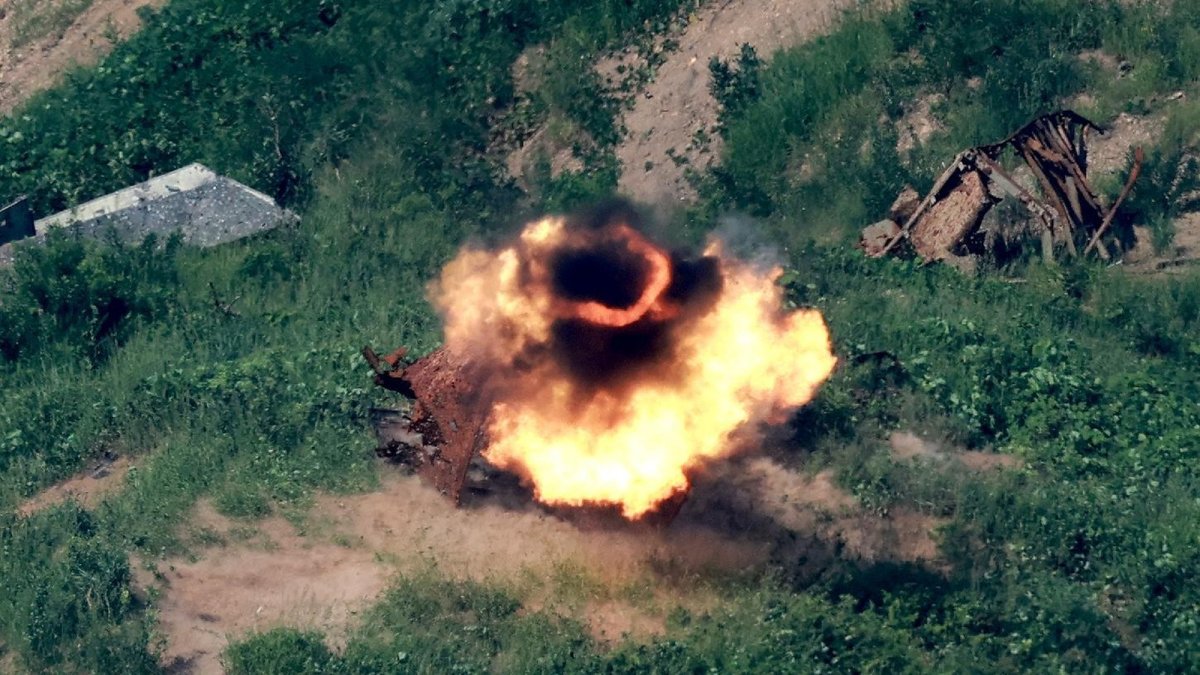
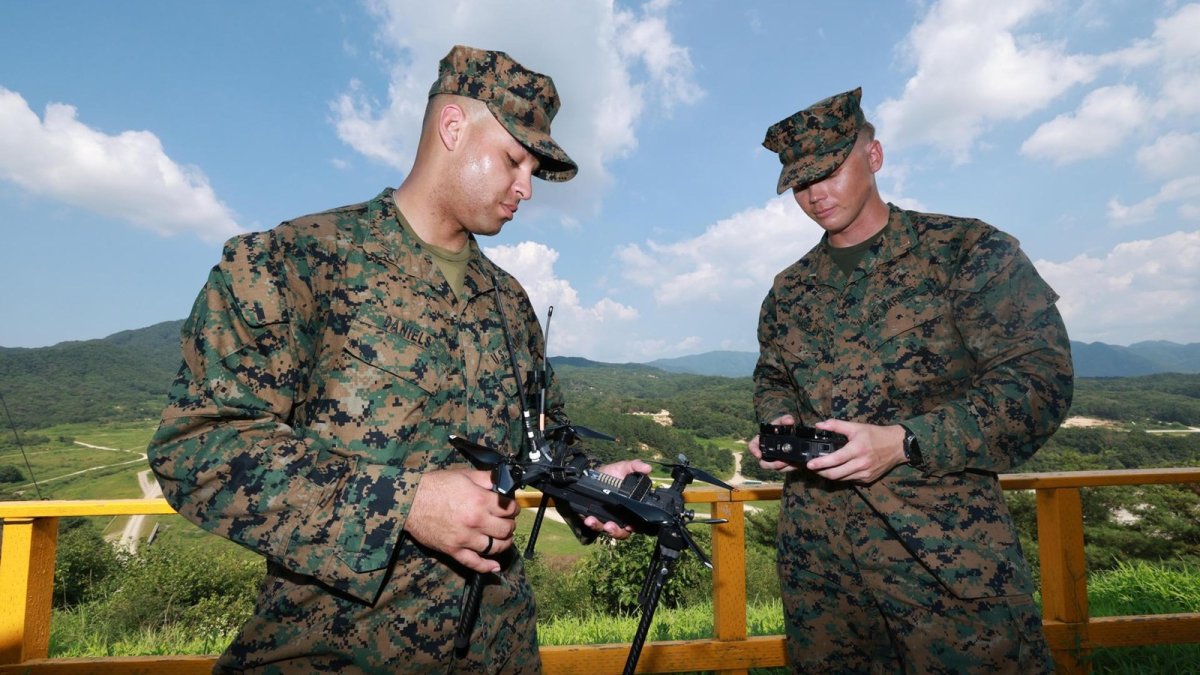
[Seoul, South Korea – August 7, 2026] — Marines from the 3rd Battalion, 7th Marine Regiment launched six quadcopter-style Neros Archer drones during the exercise, with all six striking targets at approximately 900 meters in hit-to-kill mode. A radio call of "Splash" preceded each explosion, as operators and observers watched real-time video feeds from the drones until impact. The strikes targeted positions roughly 2.5 km from the observation post, extending the tactical reach of small infantry units beyond traditional squad-level weapon ranges.
Detailed Analysis of the Live-Fire Exercise
The Neros Archer system measures roughly backpack-sized, with a maximum range of 25 km, top speed of 130 km/h, and payload capacity up to 3 kg. Its anti-armor variant penetrates up to 100 mm of rolled homogeneous armor. The platform received Pentagon Blue UAS certification, reflecting a supply chain with minimal Chinese components and assembly in the United States using parts from Taiwan, Japan, and other allied sources. Kenneth Inocencio, Neros Asia-Pacific growth lead, described the Archer as "probably the least Chinese drone in the market." The system has seen service with the U.S. military and Ukrainian forces.
Exercise planners coordinated with the Republic of Korea Army 5th Corps. The U.S. Air Force Skydio drone provided overhead footage. High temperatures above 37 degrees Celsius delayed proceedings by 90 minutes under an extreme heat warning across much of the country. Col. Peter Ankeny, deputy commander of U.S. Marine Corps Forces Korea, noted that Marines follow strict heat-mitigation standard operating procedures, including camouflage nets, ice water, and nearby corpsmen.
The Korea Marine Exchange Program has long served as the primary mechanism for integrating U.S. and Republic of Korea Marine Corps aviation and ground assets under realistic field conditions. Its annual iteration, KMEP 26.2, which ran from 28 July to 8 August 2026, provided the structured environment in which new unmanned systems could be tested alongside established combined-arms procedures at the Rodriguez Live-Fire Complex, a dedicated combined training area located in Pocheon roughly 30 km south of the Demilitarized Zone.
The arrival of the 3rd Battalion, 7th Marine Regiment under the Unit Deployment Program placed a forward-deployed Indo-Pacific unit at the center of this integration effort. Its earlier demonstration with the 3rd Light Armored Reconnaissance Battalion near Pohang on 30 July established an operational sequence that the 5 August live-fire event at Rodriguez then extended, confirming that small-unit precision effects could now be delivered well beyond the one- to two-kilometer envelope of conventional squad weapons while operators remained at standoff distances.
Geopolitical Context in Northeast Asia
The exercise reflects Marine Corps efforts to integrate lessons from the Russia-Ukraine war, where FPV drones emerged as potent weapons. The service formed an attack drone team in March 2025 in response to unmanned system proliferation. North Korean UAV incursions have repeatedly tested South Korean air defenses along the DMZ, making the "Durumi" high-alert posture a standard response framework. Pocheon, a border city in Gyeonggi Province, hosts critical combined training facilities that support the US-ROK alliance's Western Pacific force posture.
North Korea’s recurring UAV incursions, most notably the December 2022 penetration of South Korean airspace that prompted fighter-jet scrambles, have made the Durumi high-alert posture a standing element of Seoul’s layered air-defense response. The July 30 episode illustrated how even allied drones can trigger this posture when information flow is incomplete, underscoring the persistent asymmetry between low-cost unmanned systems and expensive kinetic interceptors along the inter-Korean frontier.
Within the broader Western Pacific reorientation, the Marine Corps’ employment of FPV drones aligns directly with the expeditionary advanced base operations concept, enabling dispersed, low-signature strike capabilities. Parallel Japanese investments in loitering munitions and the accelerating trilateral security coordination among Washington, Tokyo, and Seoul reflect a regional pattern in which Ukraine-derived tactics are being adapted to Indo-Pacific contingencies, amplifying the demonstration effect of the Rodriguez exercise.
Policy Implications for the US-ROK Alliance
The July 30 incident in Paju exposed vulnerabilities in information dissemination. South Korean air defense units detected an unidentified track and issued the Durumi posture, placing anti-aircraft systems and attack helicopters on 90-minute standby. The track proved to be a U.S. Marine Corps Stalker VXE30 reconnaissance UAV operating under KMEP. Prior notification reached only working-level officers; a text message referencing approved altitudes failed to reach the Army's I Corps or frontline units. The Joint Chiefs of Staff investigation released August 4 found that both sides had grown reliant on informal text messaging rather than formal channels through the Air Force Operations Command.
The Diplomat’s analysis by Park Ki-chul on 5 August 2026 argued that the July 30 breakdown stemmed from systemic shortfalls in information dissemination and combined airspace management rather than isolated individual error. Holding working-level officers accountable, the piece concluded, would not prevent recurrence without structural reforms in real-time situational awareness and formal approval channels between the two militaries.
These reforms are now being weighed against the alliance’s drive to field emerging technologies rapidly, as evidenced by the March 2025 establishment of the Marine Corps attack-drone team. South Korea’s own FPV ambitions will be shaped by the same tension between procedural maturity and operational urgency, a balance that will be tested again during the 2026 Freedom Shield exercise under existing combined command arrangements.
Expert Perspectives on Interoperability Challenges
Defense Minister Ahn Gyu-back convened senior commanders on August 4 to address operational discipline. The Ministry of National Defense removed Lt. Gen. Han Gi-seong, commander of the Army's 1st Corps, pending review. USFK confirmed the drone belonged to U.S. forces conducting bilateral training with the ROK Marine Corps 1st Marine Division. A separate civilian drone incident the previous day in northern Gyeonggi Province, in which a preapproved aircraft exceeded its cleared altitude, further illustrated compliance issues in border-area airspace.
Alliance interoperability ultimately rests on mutual trust and reliable command-and-control links, both of which were exposed as fragile when a U.S. Marine Corps Stalker VXE30 flight plan failed to reach frontline ROK Army units. The Joint Chiefs of Staff statement on 4 August explicitly noted that “both sides failed to fully comply with established procedures,” acknowledging shared responsibility for the lapse rather than assigning blame to a single officer.
USFK’s subsequent commitment to assess circumstances and coordinate directly with the ROK Marine Corps 1st Marine Division signals an intent to convert the incident into procedural reform. Korean defense analysts have observed that similar coordination shortfalls in earlier years prompted lasting changes to notification protocols; the current heat-wave conditions above 37 °C, which delayed the 5 August exercise by ninety minutes, further tested the resilience of these combined arrangements under realistic environmental stress.
Looking Ahead
Col. Ankeny stated that the drills provide opportunities to refine ranges, airspace management, regulatory controls, and joint coordination while developing new standard operating procedures. KMEP 26.2 concludes August 8, after which planners will assess integration of FPV capabilities into future combined exercises. The demonstrations signal the alliance's intent to field emerging technologies rapidly while addressing command-and-control shortfalls exposed along the DMZ.
The FPV drone exercise and the preceding coordination failure together illustrate both the promise and the procedural hurdles facing US-ROK defense modernization in an era of proliferating unmanned systems.
By Prof. David Park, Staff Writer
This article was produced with AI-assisted research and editorial support. Reporting is based on sources cited in the article.
What's Your Reaction?
 Like
0
Like
0
 Dislike
0
Dislike
0
 Love
0
Love
0
 Funny
0
Funny
0
 Wow
0
Wow
0
 Sad
0
Sad
0
 Angry
0
Angry
0

East Asia/Technology Correspondent at Global1.News. Seoul-based voice covering Korean politics, technology, business, and culture. Analyzes how technology and geopolitics intersect across East Asia.













Comments (0)