
US Pressures Mexico to Stop Its Citizens at Border
WASHINGTON — In their first face-to-face meeting, U.S. Secretary of State Marco Rubio pressed Mexico's Foreign Secretary Roberto Velasco on migration, fentanyl, and cartel violence.
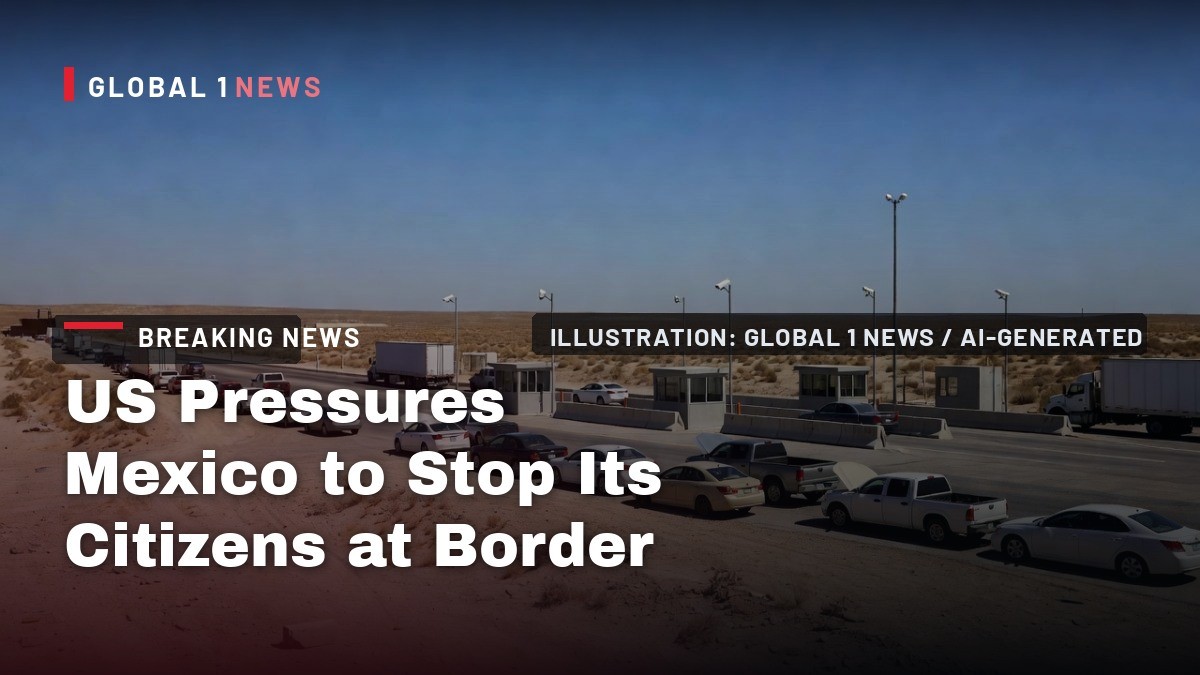
US Pressures Mexico to Stop Its Own Citizens from Crossing the Border, Sources Say
WASHINGTON — In their first face-to-face meeting, U.S. Secretary of State Marco Rubio pressed Mexico's Foreign Secretary Roberto Velasco on migration, fentanyl, and cartel violence. But according to Bloomberg, citing informed sources, the real demand behind closed doors was far tougher than either official let on: Mexico must prevent its own citizens from crossing the border into the United States.
The meeting, held Wednesday, August 26, 2026, in Washington, D.C., came at a delicate moment in bilateral relations. Apprehensions of migrants at the U.S. southern border have reached the highest level of Donald Trump's second term in recent weeks, raising the political temperature on both sides of the Río Bravo. Velasco, who had just concluded a two-day official visit to Seoul, South Korea, focused on strengthening economic ties, flew directly to Washington for the encounter.
The public statements from both governments painted a picture of cooperative diplomacy. The U.S. State Department, in a statement attributable to spokesperson Tommy Pigott, said Rubio called for "decisive action" to end illegal immigration, stop the trafficking of fentanyl and other illicit drugs into the United States, and dismantle foreign terrorist organizations and cartels while depriving them of arms. Rubio himself posted on social media that he met with Velasco "to discuss decisive actions to end illegal immigration, halt fentanyl trafficking, and dismantle Foreign Terrorist Organizations and cartels."
Velasco, for his part, insisted that bilateral cooperation must continue under principles of "respect for sovereignty and territorial integrity, shared responsibility, mutual trust, and collaboration without subordination" — a phrase reported by La Razón and La Jornada that has become a cornerstone of President Claudia Sheinbaum's foreign policy.
But the Bloomberg report, which cites people familiar with the matter, reveals a more complicated reality. The push to have Mexico block its own citizens from traveling to the border is reportedly led by White House Homeland Security Adviser Stephen Miller, a top Trump adviser known for his hardline immigration stance. The demand, if pursued formally, would present a significant constitutional and legal complication for the Sheinbaum government.
The Constitutional Right at the Heart of the Dispute
At the center of this diplomatic tension lies a fundamental principle of Mexican law. Article 11 of the Mexican Constitution guarantees every person the right to enter and leave the Republic, to travel through its territory, and to change their residence without the need for a letter of security, passport, safe-conduct, or any other similar requirement. This is not a minor legal detail — it is a cornerstone of Mexican citizenship, deeply embedded in the nation's legal fabric and its understanding of individual liberty.
For the Sheinbaum administration, agreeing to restrict the movement of Mexican citizens within their own country would be a profound departure from constitutional norms. The demand touches on the very nature of Mexican sovereignty, raising questions about whether one nation can dictate how another manages its internal affairs. The Mexican government has long maintained that migration is a shared responsibility, not a unilateral obligation, and that any cooperation must respect the legal frameworks of both nations.
The constitutional complication is particularly acute because many migrants originate from Mexico's poorer southern states — regions like Chiapas, Oaxaca, and Guerrero, where economic opportunities are scarce and the push factors for migration are deeply rooted in inequality. For families in these communities, the right to travel north is not an abstract legal concept; it is a survival strategy, a way to reach jobs in border cities or across the line where remittances can sustain entire households back home.
What This Means for Mexican Communities
For ordinary Mexicans, the implications of this reported demand are profound. In the colonias of Mexico City, in the ejidos of the countryside, in the pueblos mágicos that dot the nation, the right to move freely is taken as a given. It is the right that allows a campesino from Veracruz to seek work in Tijuana, that permits a teacher from Michoacán to attend a conference in Monterrey, that enables a family from Oaxaca to visit relatives in Ciudad Juárez.
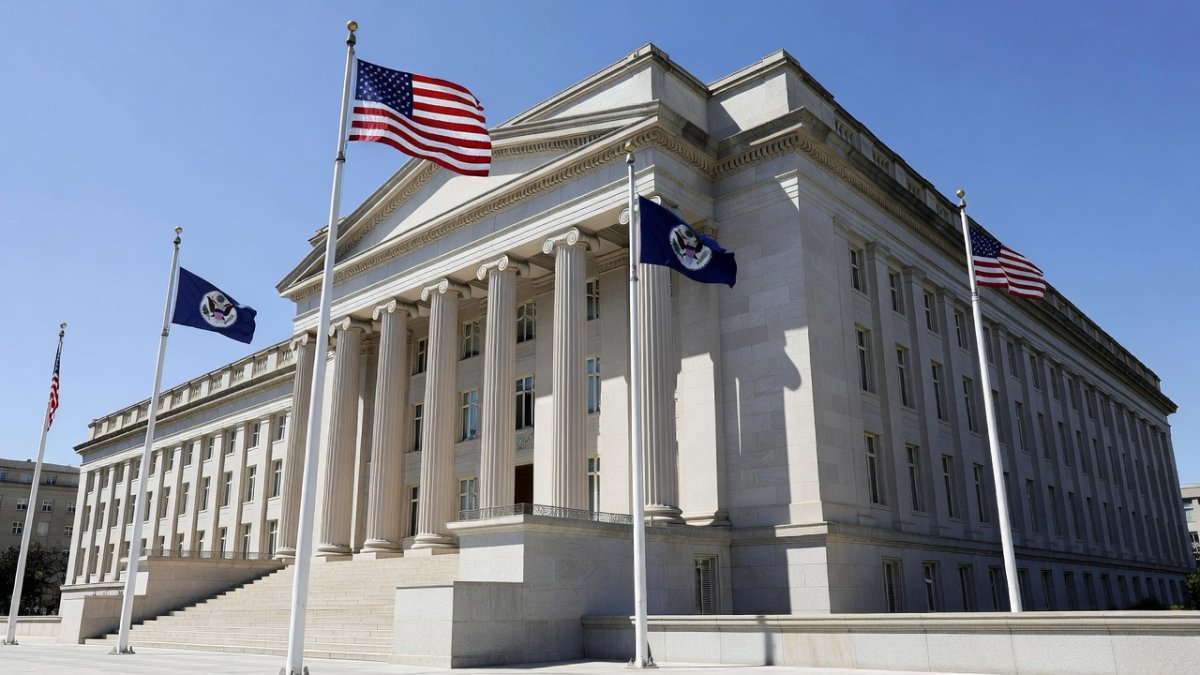
The Bloomberg report suggests that Washington wants Mexico to erect barriers to its own citizens' movement — a demand that, if implemented, would fundamentally alter the relationship between the Mexican state and its people. It would require the Mexican government to police its own population in ways that have no precedent in modern Mexican history, creating checkpoints and restrictions that would disproportionately affect the poor, the rural, and the marginalized.
The timing is particularly sensitive. The Sheinbaum administration has sought to position itself as a defender of Mexican sovereignty while maintaining a pragmatic working relationship with Washington. The president has walked a careful line, cooperating on security and migration enforcement while insisting on "collaboration without subordination." The reported demand from the Miller faction threatens to upset that delicate balance, potentially forcing Mexico into a position that would be politically untenable at home.
The Broader Bilateral Context
The meeting between Rubio and Velasco is part of ongoing bilateral negotiations amid the threat of U.S. tariffs on Mexican goods tied to migration and fentanyl enforcement. The Trump administration has repeatedly used the threat of economic penalties as leverage in its dealings with Mexico, creating a climate of uncertainty for businesses and workers on both sides of the border.
For Mexico's economy, the stakes are enormous. The United States is Mexico's largest trading partner, and the flow of goods, services, and people across the border sustains millions of jobs on both sides. Maquiladora workers in Ciudad Juárez, agricultural producers in Sinaloa, and small business owners in border towns all depend on the smooth functioning of the bilateral relationship. Any disruption — whether through tariffs or through new restrictions on movement — would have immediate and painful consequences.
The reported demand also comes at a time when migration patterns are shifting. While the number of Mexican nationals attempting to cross the border has fluctuated, the overall flow of migrants from Central America, the Caribbean, and beyond has increased pressure on Mexico to serve as a buffer zone for U.S. immigration enforcement. Mexico has already deployed National Guard troops to its northern and southern borders, a move that has been controversial domestically but has helped reduce crossings.
The Role of Stephen Miller and the Hardline Faction
The Bloomberg report identifies Stephen Miller as the driving force behind the demand that Mexico stop its own citizens from crossing. Miller, who has long advocated for restrictive immigration policies, has been a vocal proponent of the view that Mexico is not doing enough to control migration. His influence within the Trump administration has grown in recent months, and his hardline positions have increasingly shaped U.S. policy toward Mexico.
The demand to have Mexico block its own citizens is consistent with Miller's broader worldview, which holds that the United States has the right to demand cooperation from its neighbors in controlling migration. But it also reflects a fundamental misunderstanding of Mexican law and politics, according to analysts. The Mexican Constitution is not a document that can be easily amended to satisfy foreign demands, and any attempt to restrict the movement of Mexican citizens would face immediate legal challenges in Mexican courts.
The Supreme Court of Justice of the Nation (SCJN) has historically been protective of constitutional rights, and it is difficult to imagine the court upholding a government policy that restricts the free movement of citizens without a compelling national security justification. The demand, if formally presented, would likely trigger a constitutional crisis in Mexico, pitting the executive branch against the judiciary and potentially against the Congress of the Unión.
What Comes Next
For now, the demand remains a matter of diplomatic pressure rather than formal policy. The public statements from both governments suggest that the conversation is ongoing, with both sides emphasizing their commitment to cooperation. But the Bloomberg report has lifted the veil on the private dynamics of the relationship, revealing a level of pressure that goes beyond what either official acknowledged in their public remarks.
The Sheinbaum administration faces a difficult path forward. It must balance the need to maintain a working relationship with Washington against the constitutional and political realities at home. The president has staked her political reputation on defending Mexican sovereignty, and any concession that appears to subordinate Mexican law to U.S. demands would be politically costly.
For Mexican families, the uncertainty is deeply felt. In the taquerías and tortillerías of border towns, in the tianguis of rural communities, in the kitchens of homes across the republic, the question is the same: what does this mean for us? The answer is not yet clear, but the stakes could not be higher. The right to move freely within one's own country is not a privilege granted by the state — it is a fundamental guarantee that defines what it means to be Mexican.
As the negotiations continue, the world will be watching to see whether Mexico can maintain its constitutional principles while navigating the pressures of a powerful neighbor. The outcome will shape not only the bilateral relationship but also the lives of millions of Mexicans who have always taken for granted their right to travel, to work, and to seek a better life — whether at home or abroad.
This article was produced with AI-assisted research and editorial support. Sources: Mexico News Daily, Bloomberg, U.S. State Department, La Jornada.
Tags: Mexico, US border, Marco Rubio, Roberto Velasco, Stephen Miller, Claudia Sheinbaum, migration, fentanyl, cartels, sovereignty, Bloomberg, State Department, bilateral relations, tariffs, Mexican citizens
By Rosa Martinez, Staff Writer
What's Your Reaction?
 Like
0
Like
0
 Dislike
0
Dislike
0
 Love
0
Love
0
 Funny
0
Funny
0
 Wow
0
Wow
0
 Sad
0
Sad
0
 Angry
0
Angry
0
Latin America/Andes Correspondent at Global1.News. Based in Bogota, covering politics, environment, energy, and social movements across the Andean region. Passionate about environmental journalism and communities protecting their land.













Comments (0)