
Zaldy Co, others face new graft, malversation raps over P77-million 'ghost' flood project
The Ombudsman has filed fresh graft and malversation charges against fugitive ex-lawmaker Zaldy Co over a P77.2-million 'ghost' flood control project in Balagtas, Bulacan, certified 100 percent complete but found nonexistent. Co's staff and DPWH officials were also charged.
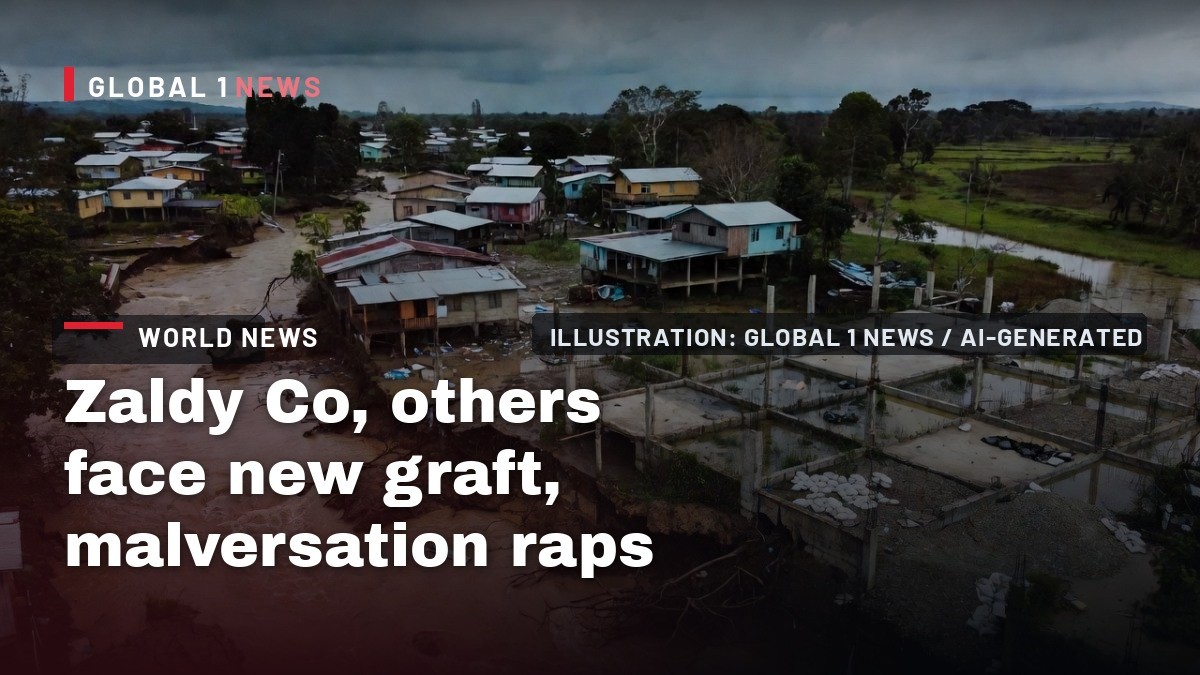
Zaldy Co, others face new graft, malversation raps over P77-million 'ghost' flood projectMANILA, Philippines — The Office of the Ombudsman has filed another set of malversation and graft charges against fugitive former lawmaker Zaldy Co before the Sandiganbayan, this time over a P77-million alleged anomalous flood control project in Balagtas, Bulacan that turned out to be a "ghost" structure — nonexistent despite being certified as 100 percent complete.In a statement on Friday, August 28, the Ombudsman said the charges stem from a project for the construction of a riverbank protection structure along the Balagtas River in Barangay San Juan, Balagtas, Bulacan. The project was awarded to SYMS Construction Trading, with a revised contract valued at approximately P77.2 million.
How the alleged scheme unfolded
According to the Ombudsman, the project commenced on February 24, 2025, and was certified as 100 percent complete by May 2, 2025. However, a subsequent physical inspection revealed that the flood-control structure was entirely nonexistent — a stark revelation that has left residents of Barangay San Juan and nearby communities questioning how public funds meant to protect them from devastating floods simply vanished.The anti-graft body pointed to an "implied conspiracy" among the accused, detailing how kickbacks collected by one of the respondents, identified as Alcantara, from contractors were allegedly delivered in advance to Co. In exchange, Co ensured the insertion of the project into the National Expenditure Program (NEP) and its subsequent funding in the General Appropriations Act."Co's participation was therefore necessary or indispensable in this elaborate scheme of embezzling funds intended for flood control projects," the Ombudsman's statement read.The modus operandi, according to the Ombudsman, did not end with the delivery of the advance payment to Co. The project was eventually awarded to SYMS, which was owned by Santos. However, the Ombudsman noted that "there was no intention to actually complete the project" — a pattern that has become all too familiar in Philippine public works corruption cases.Who are the accused
The charges were filed against Co, along with officials of the Department of Public Works and Highways (DPWH) and Co's staff members, John Paul Estrada and Mark Tecsay. The Ombudsman also included officials from the DPWH in the charges, though their specific names were not detailed in the statement.The malversation case was raffled to the Sandiganbayan Fourth Division, while the graft case was raffled to the Fifth Division. Meanwhile, a separate perjury charge against SYMS contractor Sally Santos was referred back to the Department of Justice for proper disposition.While proceeding with the graft and malversation charges, the Ombudsman dismissed the charge for violation of Section 3(b) of RA 3019, or the Anti-Graft and Corrupt Practices Act, against Co, Alcantara, Estrada, and Tecsay due to lack of probable cause.A pattern of ghost projects
This is not the first time Co has faced the Sandiganbayan. The former lawmaker, who is currently at large, is also facing graft and malversation charges before the anti-graft court for the P289.5-million flood control project in Oriental Mindoro. His fugitive status raises serious questions about the ability of Philippine law enforcement to bring high-profile corruption suspects to justice.For ordinary Filipinos, particularly those living in flood-prone areas like Barangay San Juan in Balagtas, the implications of these ghost projects are deeply personal. When flood control structures are certified as complete but do not actually exist, communities are left vulnerable to the devastating effects of typhoons and monsoon rains that regularly batter the country.The Philippines is no stranger to catastrophic flooding. In recent years, severe weather events have displaced thousands of families, destroyed homes and livelihoods, and claimed lives. Flood control infrastructure is not merely a matter of convenience — it is a lifeline for communities that face the brunt of climate change and extreme weather patterns.The human cost of corruption
For the residents of Barangay San Juan, the revelation that the riverbank protection structure along the Balagtas River was never built means that the next typhoon could bring floodwaters into their homes, schools, and farms. The P77.2 million that was supposed to protect them has instead been allegedly siphoned off through a scheme that involved advance kickbacks and deliberate misrepresentation.The Ombudsman's statement highlighted the systematic nature of the oversight failures, noting that officials tasked with inspecting, auditing, and approving the project repeatedly failed to perform their duties. The agency emphasized that these failures were far too systematic to be brushed off as simple oversights or isolated mistakes."Here, respondents acted with evident bad faith and/or gross inexcusable negligence when they issued the pertinent documents and certifications that led to the diversion of public funds… for a project that turned out to be non-existent or incomplete. The repeated failure to exercise due diligence is very telling," the Ombudsman said.This language underscores a critical point: corruption in public works is not just about the theft of money. It is about the betrayal of public trust and the endangerment of lives. Every peso stolen from infrastructure projects is a peso that could have gone toward protecting families, creating jobs, and building resilient communities.Accountability and the road ahead
The filing of these charges represents a step toward accountability, but it also highlights the challenges that remain. Co's status as a fugitive raises concerns about the enforcement of arrest warrants and the ability of the justice system to hold powerful individuals accountable.The Sandiganbayan, the Philippines' anti-graft court, has a critical role to play in these cases. Its decisions will send a message about whether corruption in public works will be met with meaningful consequences or whether it will continue to be seen as a risk worth taking for those in positions of power.For the DPWH, these cases serve as a reminder of the importance of rigorous oversight and verification. The agency, which is responsible for some of the country's most critical infrastructure projects, must ensure that its inspection and approval processes are robust enough to catch anomalies before public funds are released.What this means for Filipino communities
The Balagtas case is a stark illustration of how corruption undermines development and leaves ordinary Filipinos to bear the consequences. When flood control projects are not built, it is not just a bureaucratic failure — it is a failure to protect lives and livelihoods.In a country where many communities are already grappling with the impacts of climate change, the loss of flood control infrastructure is particularly devastating. Farmers lose their crops, families lose their homes, and children lose school days when floods strike. The psychological toll of living with the constant threat of flooding cannot be overstated.The bayanihan spirit — the Filipino tradition of community cooperation and mutual support — is often tested in times of disaster. But it should not have to compensate for the failures of those entrusted with public funds. Communities should be able to rely on the government to deliver the infrastructure they were promised.The broader fight against corruption
The charges against Co and his co-accused are part of a broader effort to address corruption in Philippine public works. The Ombudsman's office has been increasingly vigilant in pursuing cases involving ghost projects, overpriced contracts, and other forms of graft.However, the fight against corruption is far from over. It requires not only the prosecution of wrongdoers but also systemic reforms that make it harder for corruption to occur in the first place. This includes strengthening procurement processes, enhancing transparency, and empowering citizens to hold their government accountable.For the residents of Balagtas and other communities affected by ghost projects, the hope is that justice will be served and that the lessons learned will lead to better governance. The filing of charges is an important step, but it is only the beginning of a longer process of accountability and reform.Looking forward
As the cases move through the Sandiganbayan, the public will be watching closely. The outcome will have implications not only for the accused but also for the broader fight against corruption in the Philippines.For now, the residents of Barangay San Juan and other flood-prone communities can only hope that the justice system will deliver. They deserve to know that the funds meant to protect them were not stolen, and they deserve to see those responsible held accountable.The Ombudsman's decision to pursue these charges sends a clear message: corruption in public works will not be tolerated. But the true test lies in the enforcement of the law and the delivery of justice.In the meantime, the people of Balagtas and other communities across the Philippines continue to live with the consequences of these alleged crimes. They are the ones who pay the price when flood control projects exist only on paper. They are the ones who face the rising waters with little protection. And they are the ones who deserve better.The fight against corruption is not just about punishing wrongdoers — it is about building a country where public funds are used for the public good, where infrastructure projects are actually built, and where communities can live without fear of the next flood or the next betrayal of trust.By Bella Reyes, Staff WriterThis article was produced with AI-assisted research and editorial support. Sources: Philippine Star (philstar.com)
What's Your Reaction?
 Like
0
Like
0
 Dislike
0
Dislike
0
 Love
0
Love
0
 Funny
0
Funny
0
 Wow
0
Wow
0
 Sad
0
Sad
0
 Angry
0
Angry
0

Isabella "Bella" Reyes
Philippines/Southeast Asia Correspondent at Global1.News. Manila-based journalist covering Philippine politics, environment, maritime security, and social issues. Passionate about marine conservation and the communities protecting the Philippines' natural heritage.











Comments (0)