
US Presses Mexico to Stop Its Own Citizens' Border Crossings
U.S. Secretary of State Marco Rubio met Mexican Foreign Secretary Roberto Velasco in Washington on Aug. 26, their first face-to-face talks, pressing for decisive action on migration, fentanyl and cartels. Bloomberg reports the Trump administration also demanded Mexico do more to stop its own citizens from crossing the border - a request that collides with Article 11 of Mexico's Constitution guaranteeing freedom of movement.
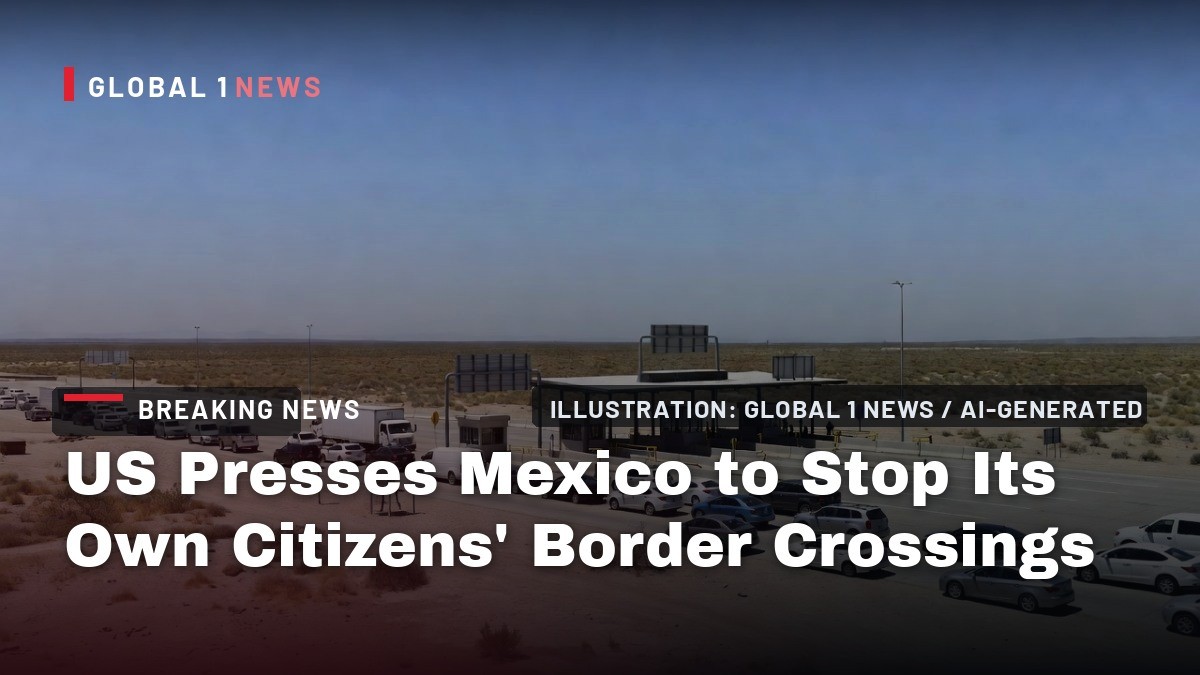
US Presses Mexico to Stop Its Own Citizens' Border Crossings
WASHINGTON — When Mexico's Foreign Secretary Roberto Velasco sat down with U.S. Secretary of State Marco Rubio on Wednesday, the official agenda was familiar: migration, fentanyl, and cartels. But behind closed doors, according to people familiar with the conversation, the Trump administration delivered a demand that cuts to the very heart of Mexican sovereignty — that Mexico do more to stop its own citizens from crossing the border without documents.
The meeting, held August 26 at the State Department, was the first face-to-face encounter between the two diplomats. Bloomberg reported Thursday that the demand was relayed by Rubio to Velasco during a private session, and that the push is being led by Stephen Miller, the White House national security adviser and one of the chief architects of the administration's restrictive immigration policy. The core ask: Mexico should deploy greater efforts to intercept people trying to reach the United States without documents — even when those people are Mexican nationals.
For the Sheinbaum administration, this represents a significant escalation. Mexico has long cooperated with Washington on controlling the transit of foreign migrants through its territory — Central Americans, Haitians, Venezuelans, and others heading north. But preventing Mexican citizens from leaving their own country is an entirely different matter, one that poses profound political, legal, and operational difficulties. In the colonias of Mexico City, in the pueblos of Michoacán, in the migrant-sending states of Guerrero and Oaxaca, the question is not abstract: it is about whether a mother can leave to find work, whether a father can cross to send money home.
Article 11 and the Legal Wall Mexico Cannot Cross
At the center of this tension is Article 11 of Mexico's Constitution, which recognizes the right of every person to enter and leave the national territory. This is not a minor legal detail — it is a fundamental guarantee, one that has been upheld by Mexican courts and defended by human rights organizations for decades. The article states that no one can be required to provide a guarantee or letter of safe conduct to exercise this right, and that authorities may only restrict it in cases of criminal or civil liability, or by judicial order.
What this means in practice is that Mexican authorities cannot arbitrarily detain a person solely because they intend to travel. They can combat human-trafficking crimes, they can warn about the risks of crossing the desert, they can set up informational campaigns in migrant-sending communities. But they cannot set up checkpoints to stop a Mexican citizen from leaving their own country — that would be a violation of the Constitution and of basic principles of liberty.
This is the legal wall that the Trump administration's demand runs into. And it is a wall that the Sheinbaum government, which has repeatedly emphasized its commitment to the rule of law and to the protection of human rights, cannot easily dismantle. The president has said her administration seeks a cooperative relationship with the United States, but she has also drawn clear lines: sovereignty, independence, territorial integrity, and non-interference are the limits of that cooperation.
For ordinary Mexicans, the implications are deeply personal. In the rural communities of the Bajío, in the indigenous regions of Chiapas, in the working-class neighborhoods of the capital, migration is not a policy debate — it is a survival strategy. Remittances from Mexicans in the United States totaled more than $63 billion in 2024, a lifeline for millions of families. The demand to stop Mexican citizens from leaving is, in effect, a demand to cut that lifeline.
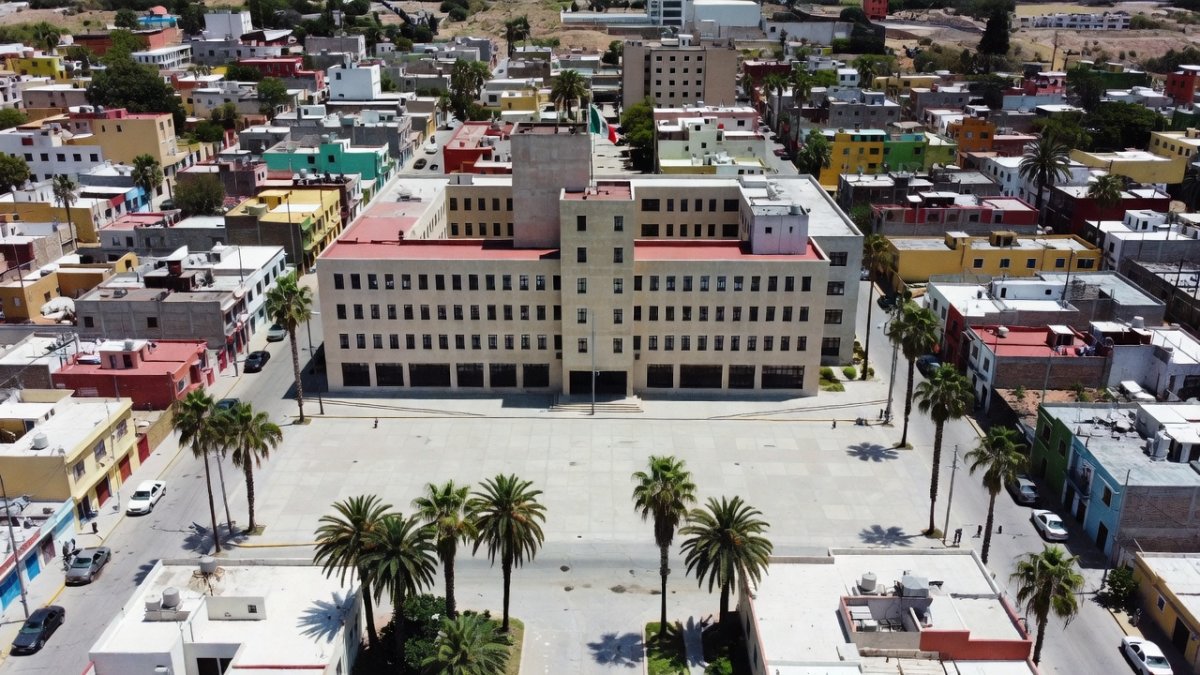
The Numbers Behind the Pressure
The demand comes at a moment of renewed pressure on the border. According to U.S. Customs and Border Protection data, there were approximately 33,800 apprehensions at the U.S.-Mexico border in July 2026 — the highest monthly figure since February 2025. While this is a far cry from the peaks of December 2024, when monthly encounters reached roughly 370,000, the upward trend has alarmed officials in Washington who had touted the dramatic declines of the past year.
The rebound is modest in historical terms, but politically significant. For the Trump administration, which has made border security the centerpiece of its domestic agenda, any increase is unacceptable. And for Mexico, the numbers create a delicate balancing act: cooperate enough to avoid tariffs and other punitive measures, but not so much that it appears to be surrendering its sovereignty.
The State Department's official readout of the meeting, delivered by spokesperson Tommy Pigott, framed the conversation in terms of "decisive action" on three priorities: ending illegal immigration, stopping the trafficking of fentanyl and other illicit drugs into the United States, and dismantling foreign terrorist organizations and cartels and depriving them of arms. Notably, the official statement did not mention the demand to stop Mexican citizens from leaving — a sign, perhaps, of how sensitive the issue is on both sides of the border.
Mexico's Foreign Ministry, for its part, issued a statement emphasizing the bilateral advances in security, particularly in fighting drug and arms trafficking and transnational organized crime. Velasco, according to the SRE, insisted on cooperation grounded in mutual respect for sovereignty and territorial integrity, shared responsibility, mutual trust, and coordination "without subordination." The phrase is telling: Mexico is signaling that it will cooperate, but not as a subordinate.
Velasco's Message: Cooperation Without Subordination
Velasco arrived in Washington after a two-day official visit to South Korea, accompanied by a substantial delegation: Ambassador Roberto Lazzeri, Undersecretary Cristina Planter, Efraín Guadarrama, Carlos Botello, Oliver Arroyo Ramón, and Rafael Saucedo Fuentes. The size of the delegation suggests that the meeting was intended to be substantive, not ceremonial — and that Mexico came prepared to discuss a wide range of issues.
The SRE statement also noted that the two sides reviewed progress in reducing irregular migration and discussed protecting the human rights of Mexicans in U.S. immigration proceedings. This latter point is particularly significant given the Mexican government's hardening criticism of ICE operations after the deaths of Mexican citizens during raids or in U.S. detention centers. For the families of those who have died during raids or in U.S. detention facilities, the promise of human rights protections rings hollow without concrete action.
No new joint initiatives were announced publicly, and the meeting came amid broader bilateral tensions over trade negotiations, fentanyl, arms trafficking, and U.S. demands against cartels. The relationship between Mexico and the United States has always been complex — a mix of cooperation and friction, of shared interests and divergent priorities. But the demand to stop Mexican citizens from crossing the border represents something new: a direct challenge to the fundamental rights of Mexicans in their own territory.
For the Sheinbaum government, the challenge is to navigate this pressure without losing the trust of the Mexican people. The president has built her political identity on the legacy of Andrés Manuel López Obrador — a legacy that includes a strong defense of national sovereignty and a commitment to the most vulnerable. She cannot be seen as capitulating to Washington, especially on an issue that touches the lives of so many ordinary Mexicans.
What This Means for Mexican Families
Behind the diplomatic language and the official statements, there are real people whose lives hang in the balance. In the pueblos mágicos of the central highlands, in the ejidos of the north, in the indigenous communities of the south, migration is woven into the fabric of daily life. The Día de Muertos altars in many Mexican homes include photographs of relatives who live in the United States — absent in body but present in memory and in the remittances that sustain the family.
The demand to stop Mexican citizens from crossing the border is not just a policy dispute between two governments. It is a question about the right of a person to seek a better life, to provide for their family, to escape violence or poverty or simply to pursue opportunity. The Mexican Constitution recognizes that right. The Mexican people have exercised it for generations. And no amount of pressure from Washington can erase that reality.
What Mexico can do — and what the Sheinbaum government has said it will do — is address the root causes of migration: poverty, violence, lack of opportunity. The administration has invested in social programs, in infrastructure, in security reforms. But these are long-term solutions, and the pressure from Washington is immediate. In the meantime, Mexican authorities will continue to combat human trafficking, to warn about the dangers of the crossing, to work with U.S. officials on legitimate security concerns. But they will not — and cannot — arbitrarily detain Mexican citizens for exercising their constitutional right to travel.
The coming weeks and months will test the limits of the bilateral relationship. Rubio and Velasco have established a channel of communication, but the underlying tensions remain unresolved. For Mexican families, the uncertainty is painful. For the Sheinbaum government, the challenge is to defend the rights of its citizens while maintaining a working relationship with its most important partner. It is a delicate balance, and the stakes could not be higher.
This article was produced with AI-assisted research and editorial support. Sources: Mexico News Daily, Bloomberg, U.S. State Department, Secretaría de Relaciones Exteriores (SRE), Infobae, CBP data.
Tags: Marco Rubio, Roberto Velasco, Mexico-US relations, border crossings, Mexican citizens, Article 11, Claudia Sheinbaum, Stephen Miller, fentanyl, cartels, CBP data, migration policy, sovereignty, ICE, remittances
By Rosa Martinez, Staff Writer
What's Your Reaction?
 Like
0
Like
0
 Dislike
0
Dislike
0
 Love
0
Love
0
 Funny
0
Funny
0
 Wow
0
Wow
0
 Sad
0
Sad
0
 Angry
0
Angry
0
Latin America/Andes Correspondent at Global1.News. Based in Bogota, covering politics, environment, energy, and social movements across the Andean region. Passionate about environmental journalism and communities protecting their land.













Comments (0)