
Jury Clears AT&T, Verizon, T-Mobile in $436M Patent Fight
Folks, if you’ve ever wondered what a $436 million swing looks like in a courtroom, it looks like a bunch of telecom lawyers high-fiving in a Texas hallway. On Wednesday, a federal jury in Marshall, Texas, took one look at a massive patent claim from Taiwanese electronics giant ASUS and its licensing partners, and said, “Nope. Not today.” It was a clean sweep, a total shutout, and a massive win for AT&T, Verizon, T-Mobile, Ericsson, and Nokia. The plaintiffs wanted a fortune.
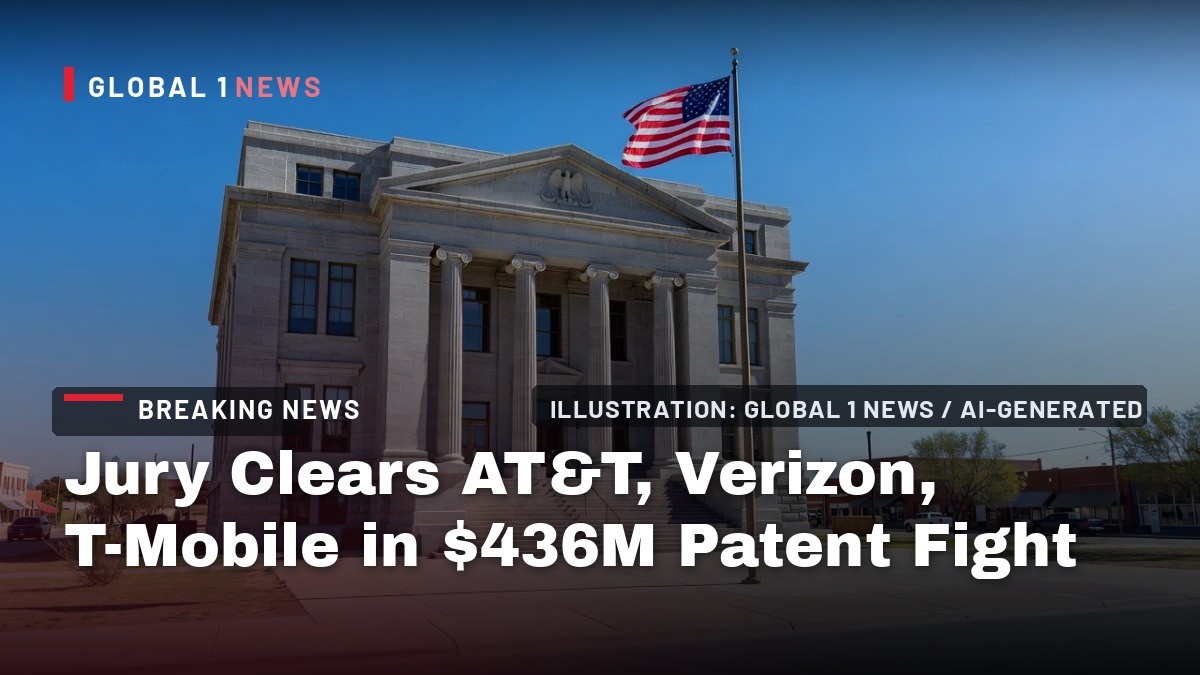
Folks, if you’ve ever wondered what a $436 million swing looks like in a courtroom, it looks like a bunch of telecom lawyers high-fiving in a Texas hallway. On Wednesday, a federal jury in Marshall, Texas, took one look at a massive patent claim from Taiwanese electronics giant ASUS and its licensing partners, and said, “Nope. Not today.” It was a clean sweep, a total shutout, and a massive win for AT&T, Verizon, T-Mobile, Ericsson, and Nokia. The plaintiffs wanted a fortune. They walked away with nothing but a legal bill.
Jury Clears AT&T, Verizon, T-Mobile in $436M Patent Fight
Marshall, Texas - August 27, 2026 - The verdict landed like a thunderclap in the piney woods of East Texas. After a trial that kicked off on August 14, a unanimous jury in the U.S. District Court for the Eastern District of Texas found that the nation’s biggest wireless carriers and their equipment vendors did not infringe a single one of the three patents asserted by ASUS Technology Licensing Inc. and its co-plaintiffs. The decision, delivered on August 26, denied the plaintiffs’ request for a whopping $436 million in damages, and it sent a clear signal that not every patent assertion is going to find a friendly ear, even in the most patent-friendly courthouse in America.
The Verdict: A Complete Defense Victory
Let’s be crystal clear about what happened here, folks. This wasn’t a split decision. This wasn’t a compromise. This was a unanimous verdict for the defense, and it covered all three patents in play. The jury, seated before U.S. District Judge Rodney Gilstrap, found that AT&T, Verizon, and T-Mobile did not infringe the asserted claims, and neither did their infrastructure partners, Ericsson and Nokia. McKool Smith, the powerhouse law firm representing the carriers, didn’t mince words when they called it a “complete defense verdict.” And they’re right. It’s about as complete as it gets. The plaintiffs—a consortium that included ASUS Technology Licensing Inc., Innovative Sonic Limited, Celerity IP LLC, and ASUSTeK Computer Inc.—came into this courtroom swinging for the fences, and they struck out on every single pitch.
The $436 Million Ask That Went Up in Smoke
Now, let’s talk about the money, because that’s what really gets people’s attention. The plaintiffs were asking for $436 million in damages. That’s not pocket change. That’s a number that would make most Fortune 500 companies blink. The theory was that the carriers, by using network equipment from Ericsson and Nokia, were building and operating their 4G and 5G networks in a way that stepped all over ASUS’s intellectual property. The original lawsuit was filed back in 2023, and it took years to get to this point. But when the rubber met the road, the jury simply didn’t buy it. They looked at the technical evidence, they listened to the experts, and they decided that the carriers and their vendors were playing by the rules. The $436 million ask? Gone. Evaporated. Reduced to a line item in a legal brief that will now be filed in the circular file.
The Three Patents at the Heart of the Fight
So what exactly was this fight about? It’s geeky stuff, but it’s the geeky stuff that makes your smartphone actually work. The three disputed patents covered technology related to quality of service flow, control resource set configuration, and small cell enhancements. In plain English, these are the nuts and bolts of how your data gets prioritized, how your phone knows where to look for critical control signals, and how the network handles the small cells that fill in coverage gaps in dense urban areas. These are foundational technologies for 4G and 5G network operations. ASUS and its partners argued that Ericsson and Nokia’s equipment, which the carriers bought and deployed, was built on their patented inventions. The defense countered that the technology in question was either not covered by the patents as written, or that the way it was implemented was fundamentally different. The jury sided with the defense, and that’s a big deal because it validates the technical arguments that the carriers have been making for years.
The Trial, Judge Gilstrap, and the East Texas Factor
You can’t talk about this case without talking about where it was tried. The Eastern District of Texas, specifically the Marshall division, is the undisputed heavyweight champion of American patent litigation. For decades, patent holders have flocked to this courthouse like it’s a legal gold mine, hoping to find juries that are sympathetic to inventors and willing to award big damages. Judge Rodney Gilstrap is the man in the middle of it all. He handles a massive share of the nation’s patent cases, and he’s seen it all. The trial began on August 14, and it moved at a brisk pace, wrapping up in less than two weeks. Gilstrap is known for keeping things moving, and this case was no exception. The fact that the jury came back so quickly, and so decisively, suggests that the evidence for the defense was compelling. In a venue that’s historically been a plaintiff’s paradise, this verdict is a notable outlier, and it’s going to be studied by litigators on both sides of the aisle for years to come.
The Players: ASUS, Celerity IP, and the Monetization Machine
Let’s dig into who was actually pulling the strings here, because it’s not as simple as “ASUS vs. the phone companies.” The lead plaintiff was ASUS Technology Licensing Inc., but they brought along some interesting company. There’s Innovative Sonic Limited, a familiar name in wireless patent circles. And then there’s Celerity IP LLC, which is a subsidiary of GLS Capital, an intellectual-property monetization firm. That’s a fancy way of saying they’re in the business of buying and licensing patents, and they’re not shy about going to court to enforce them. This is a classic example of a patent assertion entity—sometimes called a “patent troll” by critics—taking a portfolio and trying to squeeze value out of it through litigation. ASUS, the hardware maker, is the name on the door, but the strategy was likely driven by the monetization experts at GLS Capital. They saw an opportunity to target the big carriers, and they took their shot. It just didn’t land.
What This Means for AT&T, Verizon, and T-Mobile
For the carriers, this is a massive weight off their shoulders. A $436 million verdict would have been a painful hit, but the implications go far beyond the money. A loss here could have opened the floodgates for similar lawsuits from other patent holders, all claiming that the carriers’ use of standard network equipment infringes on their inventions. It could have forced the carriers to renegotiate licensing deals, or worse, to redesign aspects of their networks. Instead, they get to walk away with a clean slate. The verdict validates their position that they are simply buying and deploying equipment from reputable vendors like Ericsson and Nokia, and that the responsibility for patent compliance lies with those vendors. This is a huge win for the operational side of the business, and it means that the billions of dollars they’re pouring into 5G expansion can keep flowing without the threat of a massive legal judgment hanging over their heads.
What This Means for ASUS and the Patent Litigation Landscape
On the flip side, this is a stinging defeat for ASUS and its partners. They came in with a big number, and they left with nothing. This doesn’t mean ASUS is out of the patent game entirely—they’ve got other irons in the fire, including a separate case against Samsung over a different wireless patent—but it’s a serious blow to their licensing strategy. For the broader patent litigation landscape, this verdict is a shot across the bow. It shows that even in the Eastern District of Texas, juries are willing to look at the technical merits and side with the defendants when the evidence supports them. It’s a reminder that patent assertion is a risky business. You can have a strong-looking portfolio, you can hire the best lawyers, and you can pick a favorable venue, but at the end of the day, you still have to convince twelve people that your patents are valid and infringed. That’s a high bar, and this jury said the plaintiffs didn’t come close to clearing it.
The Bigger Picture for 5G and Consumers
So what does this all mean for you and me, folks? It means that the rollout of 5G networks is going to continue without a major legal speed bump. Patent litigation is a cost of doing business in the telecom world, and those costs eventually get passed down the line. A $436 million verdict against the carriers would have been a significant expense, and it could have slowed down investment in network infrastructure. Instead, the carriers can keep their focus on building out faster, more reliable networks. For consumers, that means better coverage, faster speeds, and more innovative services. It also means that the price of your wireless plan isn’t going to go up to cover a massive legal settlement. This verdict is a win for the industry, but it’s also a win for anyone who relies on their phone for work, for entertainment, or just to stay connected. The 5G revolution is moving forward, and this courtroom battle is now just a footnote in its history.
By Jessica Ali, Staff Writer
This article was produced with AI-assisted research and editorial support. Sources: Reuters, Law360, Texas Lawbook, McKool Smith.
What's Your Reaction?
 Like
0
Like
0
 Dislike
0
Dislike
0
 Love
0
Love
0
 Funny
0
Funny
0
 Wow
0
Wow
0
 Sad
0
Sad
0
 Angry
0
Angry
0

Editor-in-Chief at Global1.News. Atlanta-based journalist who cuts through the BS and tells it like it is. Lead anchor, host, and the voice you hear when the spin stops and the truth starts.















Comments (0)