
UGC-NET 2026 Re-Exam Announced for English, Commerce, Sociology After NTA Finds Errors
The National Testing Agency (NTA) has announced a re-examination for three papers of the UGC-NET June 2026 cycle — English, Commerce, and Sociology — after an internal audit committee flagged "many factual, typographical, translation errors" including misspelt names of prominent scholars and garbled book titl

The National Testing Agency (NTA) has announced a re-examination for three papers of the UGC-NET June 2026 cycle — English, Commerce, and Sociology — after an internal audit committee flagged "many factual, typographical, translation errors" including misspelt names of prominent scholars and garbled book titles. The decision, announced on Sunday, August 16, 2026, comes as the agency released provisional answer keys for the remaining 84 subjects, withholding those three pending review. With roughly 10 lakh candidates registered for the June 22-30 examination, this marks yet another credibility test for India's high-stakes testing ecosystem, still recovering from the NEET-UG 2024 leak scandal and the UGC-NET 2024 cancellation.
UGC-NET 2026 Re-Exam Announced for English, Commerce, Sociology: NTA Audit Finds Scholar Names Misspelt, Book Titles Garbled
New Delhi, August 16, 2026 — The National Testing Agency (NTA) has ordered a complete re-test for three subjects of the UGC-NET June 2026 examination following a committee's findings of systemic errors in question papers. The audit, constituted by the NTA itself, uncovered "many factual, typographical, translation errors including misspelt names of prominent scholars and garbled book titles" across the English, Commerce, and Sociology papers. The re-examination will be conducted without any additional fee, and candidates' existing registration data, centre choices, and candidature details remain valid — no fresh registration is required.
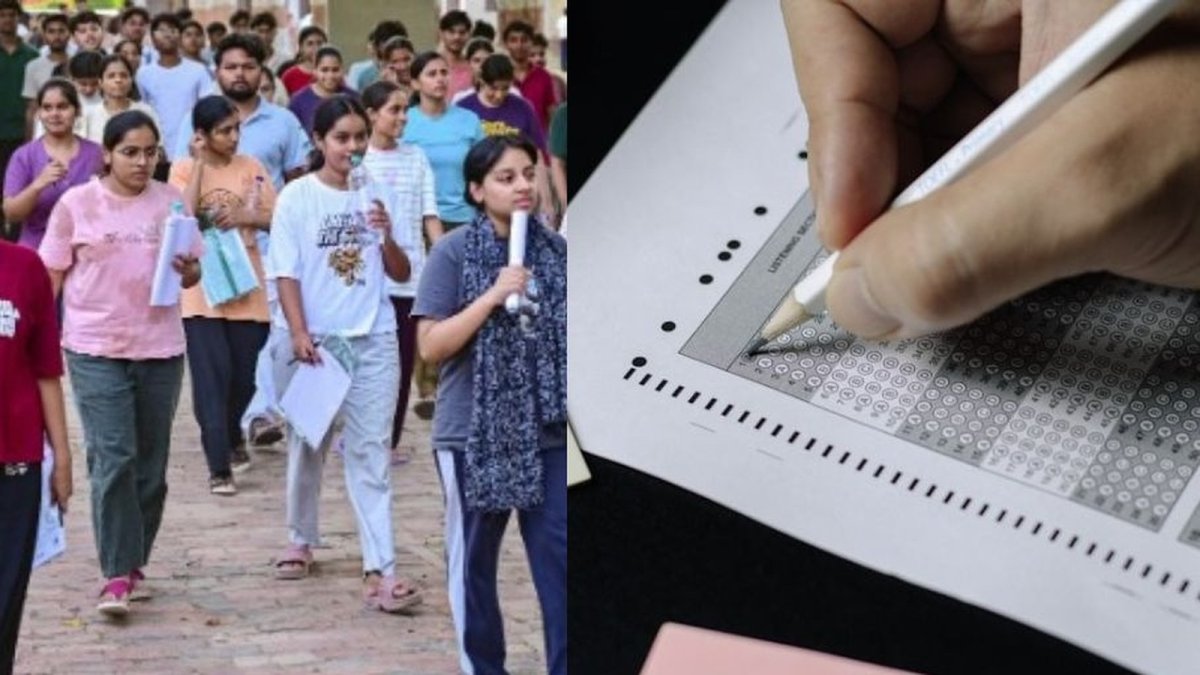
The Scope of the Failure: 3 Papers, 87 Subjects, 10 Lakh Candidates
The UGC-NET June 2026 examination, conducted in Computer Based Test (CBT) mode from June 22 to June 30, 2026, covered 87 subjects and attracted approximately 10 lakh registered candidates. This examination serves as the gateway for Junior Research Fellowship (JRF), Assistant Professor eligibility, and PhD admissions across Indian universities. On August 16, the NTA released provisional answer keys for 84 subjects, but deliberately withheld the keys for English, Commerce, and Sociology pending the committee's full review. The decision to hold back these three papers while releasing the rest signals that the errors were not isolated typographical slips but systemic quality-control failures within the question paper setting process.
For the 84 subjects where answer keys have been released, the challenge window opens August 16 and closes August 18, 2026. Candidates challenging any question must pay a non-refundable processing fee of Rs 200 per question challenged, with the payment deadline also set for August 18. This tight 48-hour window places significant pressure on candidates to scrutinise their papers quickly, a process that itself has historically been a source of contention given the volume of challenges NTA receives each cycle.
English Paper: 67 of 150 Questions Repeated from 2024
The most damning allegations concern the English paper. Candidates reported that 67 of the 150 questions were repeated verbatim from the UGC-NET 2024 examination, with the repetition concentrated in the subject-specific section. This is not merely a question of fairness — it fundamentally undermines the validity of the examination as a measure of current scholarly aptitude. If a candidate prepared using the 2024 question bank, they would have an outsized advantage over those who did not, distorting the merit-based selection process that UGC-NET is designed to uphold.
The committee's findings on the English paper also included wrongly worded questions, grammatical and punctuation mistakes, and the use of non-standard terms for established literary concepts. For a subject that tests linguistic precision and scholarly rigour, such errors are not cosmetic — they are existential. A candidate being tested on their command of English cannot be fairly assessed when the examination paper itself demonstrates a failure of the same standards.
Sociology Paper: Translation Errors and Unverified Leak Allegations
The Sociology paper faced a distinct set of complaints: spelling mistakes, incorrect names of scholars and sociological terms, grammatical errors, and significant problems in Hindi translations. Given that UGC-NET is offered bilingually, translation errors create a two-tier examination experience — candidates taking the Hindi version may have been tested on different content than those taking English, raising questions about inter-language comparability and fairness.
More concerning are unverified online allegations of a possible paper leak, with a PDF allegedly circulated before the test. The NTA has not confirmed any leak, and the committee's findings as disclosed do not mention one. However, the mere existence of such allegations, even unsubstantiated, further erodes public confidence in an agency that has been under continuous scrutiny since the NEET-UG 2024 paper leak scandal and the subsequent cancellation of UGC-NET 2024 after a leak was detected. The NTA's silence on the leak allegations is itself notable — in the current climate, a definitive denial would have been expected if the claim were baseless.
What This Means for Indian Candidates and the Education System
For the roughly 10 lakh candidates who registered for UGC-NET June 2026, this re-examination announcement creates significant uncertainty. Those who sat for the English, Commerce, and Sociology papers must now prepare to re-sit an examination they believed they had completed, with no clarity on the new date. For candidates who had already begun PhD applications or job searches based on their expected results, the delay could have cascading consequences on academic calendars and employment timelines.
The financial implications are also non-trivial. While the NTA has waived the re-examination fee, candidates who travelled to examination centres, took leave from work or study, or made other arrangements for the original test will not be compensated. For candidates from smaller cities and rural areas — who often travel significant distances to reach CBT centres — this represents a real cost borne entirely by the individual.
The NTA's Credibility Crisis: From NEET-UG 2024 to UGC-NET 2026
This is not an isolated incident. The NTA has been operating under a cloud since the NEET-UG 2024 paper leak scandal, which led to the cancellation of UGC-NET 2024 after a separate leak was detected. The agency's response to these crises has been reactive rather than preventive. A NEET-UG 2026 re-test was held on June 21, 2026, with more than 22.79 lakh candidates across 551 cities in India and 14 international locations — a logistical exercise of enormous scale that nonetheless went ahead. Reports indicate the government planned its biggest NTA reset yet after the NEET row, with 47 officials removed from their positions.
Yet the UGC-NET June 2026 errors suggest that personnel changes alone have not addressed the underlying quality-control failures. The question paper setting process — which involves subject experts, translators, and reviewers — appears to lack adequate verification layers. When errors of the magnitude described (67 repeated questions, misspelt scholar names, garbled book titles) pass through multiple stages of review, it indicates either a collapse of the review process or a systemic shortage of qualified reviewers willing to do the work.
The Cost of High-Stakes Testing in India
India's examination system is among the largest in the world. UGC-NET alone draws 10 lakh candidates; NEET-UG 2026 drew over 22.79 lakh. These examinations determine access to higher education, research funding, and academic employment for millions of young Indians. The stakes could not be higher, and the margin for error should be correspondingly lower.
The Rs 200 per question challenge fee, while modest, creates a financial barrier to accountability. A candidate who identifies multiple errors across their paper must pay for each challenge, and the fee is non-refundable regardless of whether the challenge is upheld. This structure disincentivises thorough scrutiny, particularly for candidates from economically weaker backgrounds who are already bearing the cost of repeated examination cycles.
The Bottom Line
The UGC-NET June 2026 re-examination for English, Commerce, and Sociology is a necessary corrective, but it is also an indictment of the NTA's quality assurance mechanisms. With 84 answer keys released and three withheld, the agency has implicitly acknowledged that its own audit process works — but only after the fact. The challenge now is to build quality control into the question paper setting process itself, not to discover errors after 10 lakh candidates have already sat the examination. For Indian students, researchers, and aspiring academics, the cost of these failures is measured not just in rupees but in delayed careers, disrupted plans, and a growing distrust in the very institutions meant to enable their advancement. The NTA's next examination cycle will be watched closely — not just for its results, but for evidence that the lessons of 2024 and 2026 have finally been learned.
This article was produced with AI-assisted research and editorial support. Sources: NDTV, India Today, Deccan Chronicle, Moneycontrol, Times of India, NTA official notices.
— By Dr. Raj Patel, Staff Writer
What's Your Reaction?
 Like
0
Like
0
 Dislike
0
Dislike
0
 Love
0
Love
0
 Funny
0
Funny
0
 Wow
0
Wow
0
 Sad
0
Sad
0
 Angry
0
Angry
0

India/South Asia Correspondent at Global1.News. Analytical voice with a background in science and health journalism. Based in New Delhi, covering Indian politics, education, healthcare, technology, and policy. Breaks down complex data into clear, actionable reporting.















Comments (0)