
US-Iran War Widens as Egypt Suffers First Attack and Trump Pushes Gaza Deal
The US-Iran war widened after the June ceasefire collapsed: Egypt suffered its first strike at Damietta port, Iran hit US bases in Kuwait, and Trump announced a Gaza disarmament deal. Oil near $88 a barrel; war costs top $113 billion.
Egypt Hit for the First Time in the Conflict
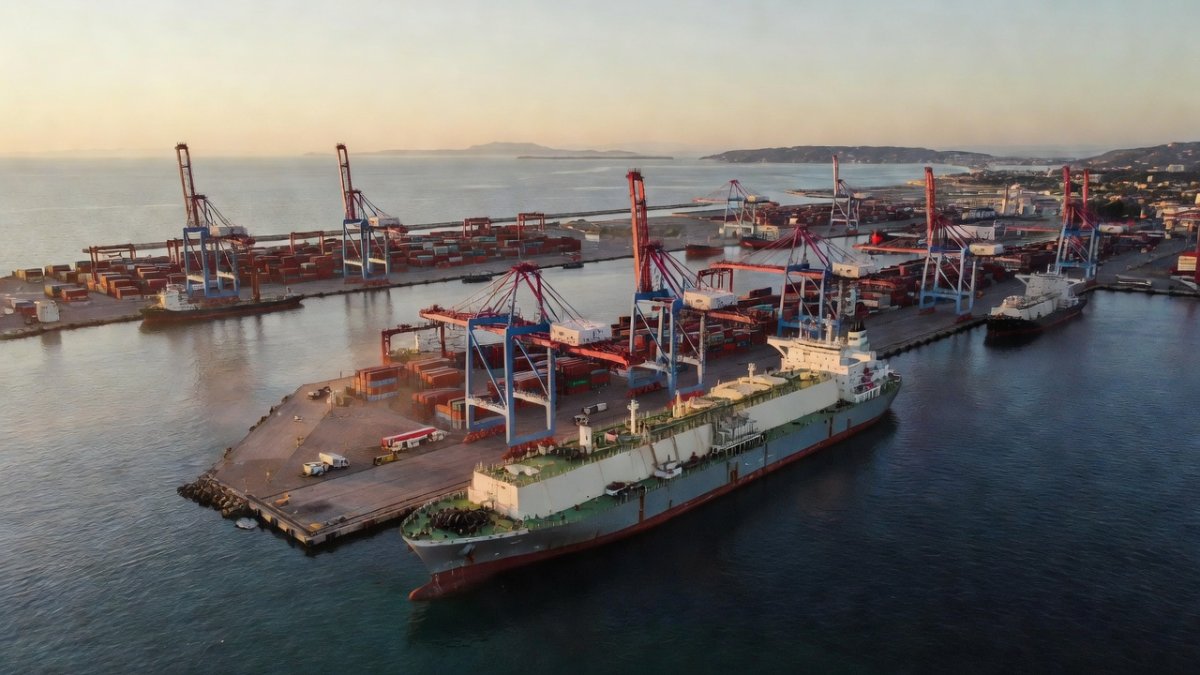
The suspected drone strike on US-linked LNG vessels at Egypt's Damietta port on July 29-30 marks the first attack on Egyptian soil since the US-Iran war began February 28, 2026. Fire erupted on the Energos Winter floating storage and regasification unit and the GasLog Salem LNG tanker, both damaged in the incident. Egypt's cabinet confirmed the drone attack as the cause, with maritime security firm Ambrey reporting at least one UAV strike on the floating LNG storage facility.
Egypt maintains close ties as a US ally and key LNG hub near the Suez Canal. An Egyptian source told The National that the country will pursue diplomatic steps to prevent recurrence. Officials had maintained regular contact with Iranian leaders to restore the collapsed June ceasefire, yet the strike occurred amid those efforts.
Yemen's Iran-allied Houthi rebels denied responsibility. No other party claimed the attack at the time. The incident highlights how the conflict, initiated by the United States and Israel, continues to expand beyond initial theaters.
US Launches Strikes Across Iran
Overnight July 29-30, the US struck dozens of targets in Iran, including sites on Qeshm Island in the Strait of Hormuz. Iranian officials reported that bombardment killed a family, with the Director General of Crisis Management of the Hormozgan Governorate confirming search and rescue operations amid rising casualties. The Guardian described the strikes as reigniting the low-intensity tit-for-tat exchanges.
Mediators had struggled to return both sides to negotiations before these renewed attacks. The US actions followed Iran's earlier ballistic missile launches at American forces in Jordan. President Trump vowed to hit Iran very hard in response to those Jordan strikes and the Egypt drone incident.
Qeshm Island lies directly in the Strait of Hormuz, a chokepoint carrying about a fifth of the world's oil. The location of the strikes underscores the strategic pressure points now in play across the region.
Iran Retaliates Against US Positions in Kuwait
On July 31, Iran's Revolutionary Guard Corps announced strikes on US targets in Kuwait, including Ahmad al-Jaber Air Base and Ali Al Salem Air Base. The IRGC claimed destruction of two drone hangars and a fuel storage facility. Iran's Army separately stated it targeted key facilities at the US-run Ahmad al-Jaber Air Base.
The IRGC further reported hitting two tankers attempting to pass through the Strait of Hormuz under US military aerial escort, describing the non-compliant oil tankers as struck and stopped. Additional strikes reached Iraq and Jordan earlier in the week.
These retaliatory moves came directly after the US bombardment of multiple Iranian locations, including Qeshm. The pattern of escalation shows both sides responding in kind within days of each new round.
Trump Announces Gaza Disarmament Breakthrough
At a Camp David cabinet meeting on July 31 with Vice President JD Vance, Secretary of State Marco Rubio, Defense Secretary Pete Hegseth, Labor Secretary Keith Sonderling, and HUD Secretary Scott Turner, President Trump described an understanding with Israel to implement a Gaza peace deal. The plan requires Israeli forces to withdraw and Hamas to surrender its weapons.
Trump called the arrangement a breakthrough for the besieged enclave but provided no details on the sequence of steps. His Board of Peace, which includes former UK Prime Minister Sir Tony Blair, stated it had secured a deal with Hamas on complete disarmament, labeling it historic.
Hamas told Reuters that Israel's commitment to stop killing and end violations of the October ceasefire agreement must come first. Senior Hamas officials told AFP the agreement covers the group's weapons and gradual Israeli withdrawal from Gaza. Israeli officials conveyed concerns to Tony Blair, insisting on complete demilitarization before any pullout. The deal also hinges on forming a Palestinian police force.
The Collapse of the June Ceasefire
A 14-point truce between Washington and Tehran was signed June 17, 2026, pausing military operations pending a longer peace process. The agreement collapsed July 8 after a dispute over merchant shipping in the Strait of Hormuz. Trump declared the truce no longer in effect on July 9.
The war had already lasted more than four months by that point. A former US Defense Secretary told CNN the United States now finds itself locked into an unwinnable conflict with Iran. Reuters reported Trump grappling with how to resolve the war while addressing gasoline prices ahead of November midterm elections.
These timeline markers show how quickly diplomatic gains unraveled. The February 28 start date and June 17 signing remain fixed reference points in the ongoing cycle of strikes and counterstrikes.
Oil Markets React to Escalating Tensions
Brent crude fell to approximately $93.38 per barrel on June 2, 2026, following peace negotiations and a Hezbollah ceasefire announcement. By late July, oil prices returned near $88 per barrel, with the US national average for regular gasoline climbing back above $4 per gallon.
The New York Times fact-check on August 1 noted that oil prices dipped on the Monday of Trump's speech, marking the largest single-day decline since late May. Prices remain high and volatile compared with pre-war levels. An Iran war cost tracker estimated US taxpayers spent $113.3 billion over the first 108 days from February 28 through June 16, 2026.
These figures illustrate the direct economic pressure the conflict exerts on global energy markets and domestic politics. Volatility in the Strait of Hormuz continues to influence daily price movements.
Regional Powers Drawn Into the Fray
Strikes now extend to Egypt, Kuwait, Iraq, and Jordan, pulling additional countries into the fighting that began with US and Israeli initiation on February 28. Egypt's role as a key LNG hub and US ally makes the Damietta attack particularly significant for regional stability.
Iran's IRGC actions in Kuwait demonstrate willingness to target US bases beyond Iranian borders. The involvement of multiple air bases and tanker routes shows the conflict's widening geographic scope.
Mediators face increasing difficulty as each new strike adds fresh grievances. The pattern suggests the June 17 truce's collapse has left few guardrails in place.
The return of oil prices near $88 a barrel after the brief June dip to $93.38 shows how quickly any renewed threat in the Strait of Hormuz reverses market relief. With that waterway carrying a fifth of global oil, even limited strikes on tankers and Qeshm Island keep volatility elevated and push U.S. gasoline back above $4 a gallon. These swings arrive just as Trump must balance ending the conflict with shielding voters from higher energy costs ahead of the November midterms, while the $113.3 billion already spent in the first 108 days underscores the mounting fiscal burden.
Prospects for Peace Amid Ongoing Hostilities
Trump's Gaza announcement runs parallel to the military escalation, yet neither Israel nor Hamas fully endorsed the proposed sequence. Israeli officials continue to demand complete demilitarization before withdrawal, while Hamas prioritizes an end to hostilities first.
The creation of a Palestinian police force remains a required element, adding another layer of implementation challenges. The Board of Peace's involvement of figures such as Tony Blair has not yet bridged these gaps.
With oil prices still elevated and the war cost already at $113.3 billion for the initial period, pressure mounts for de-escalation. The facts show a conflict that has expanded rapidly since the July 8 collapse of the 14-point truce.
Egypt’s status as a close U.S. ally and major LNG hub adjacent to the Suez Canal makes the Damietta strike a direct challenge to Washington’s regional posture. Iran’s Revolutionary Guard retaliation against U.S. bases in Kuwait on July 31, following American strikes on Qeshm, demonstrates Tehran’s willingness to widen the battlefield beyond its own territory. Because the war began with U.S. and Israeli action on February 28, each new front multiplies the number of governments now forced to manage spillover risks and supply-line disruptions.
The Gaza disarmament understanding announced at Camp David still collides with the same sequencing problem that collapsed the June 17 fourteen-point truce on July 8 over Hormuz shipping. Israel insists on full demilitarization before any withdrawal, while Hamas demands an end to hostilities first, leaving the proposed Palestinian police force and Tony Blair’s Board of Peace without a workable timetable. A former U.S. defense secretary’s assessment that Washington is locked into an unwinnable war with Iran only sharpens the pressure to find an exit before further escalation locks both sides deeper into the fight.
By Jessica Ali, Staff WriterThis article was produced with AI-assisted research and editorial support. Reporting is based on sources cited in the article.
What's Your Reaction?
 Like
0
Like
0
 Dislike
0
Dislike
0
 Love
0
Love
0
 Funny
0
Funny
0
 Wow
0
Wow
0
 Sad
0
Sad
0
 Angry
0
Angry
0

Editor-in-Chief at Global1.News. Atlanta-based journalist who cuts through the BS and tells it like it is. Lead anchor, host, and the voice you hear when the spin stops and the truth starts.













Comments (0)