
US-Iran War: Trump Demands 20% Toll on Strait of Hormuz Shipping as Iran Attacks Tanker, Oil Tops $88
As the US-Iran war enters its sixth month, Trump's 20% Strait of Hormuz toll and Iran's reparations demands block any deal, pushing Brent crude above $88 a barrel, gas to $4 a gallon, and the November midterms to the brink.
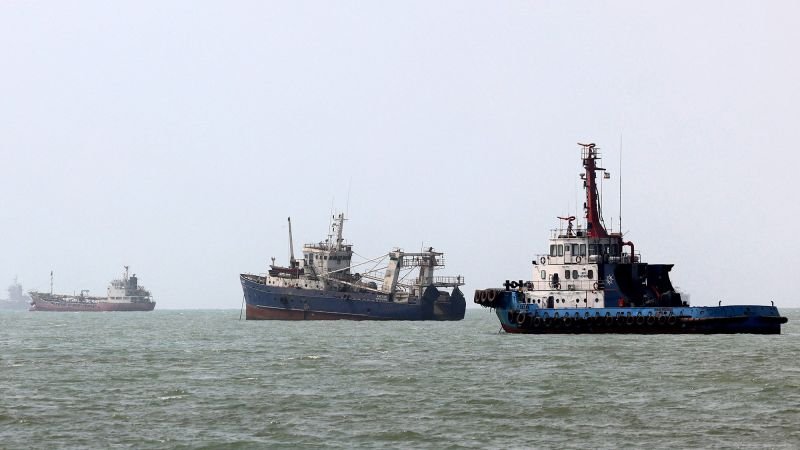
The Strait of Hormuz is no longer a waterway. It is a toll booth with missiles on both sides. As of Tuesday, August 11, 2026, Washington and Tehran are stacking new conditions on top of old grievances faster than tankers can navigate the mine-swept channel. President Donald Trump is demanding a 20% cut of every ship's cargo for the privilege of passing under American guns. Tehran is demanding sanctions relief, frozen assets, and war reparations before it will even consider reopening the strait. And in the middle of it all, a tanker crew abandoned ship this morning after an Iranian attack, even as US warplanes pounded Iranian targets for the tenth consecutive night.
Let me be blunt: this is not a path to peace. This is a hostage negotiation where the hostage is the global economy and the ransom note is written in barrels of oil. Brent crude traded above $88 a barrel on Tuesday, up roughly 16% since the war began on February 28. American drivers face $4-a-gallon gas with the midterms 12 weeks away. Every day without a deal pushes prices higher.
Tuesday's Attack: A Tanker Abandoned in the Strait
The British military's UK Maritime Trade Operations Centre warned early Tuesday that Iran attacked a tanker in the Strait of Hormuz, forcing its crew to abandon the vessel. Iran's paramilitary Revolutionary Guard claimed responsibility, along with two other strikes on ships Monday. This is live fire in the world's most critical energy chokepoint, which carried roughly one-fifth of global oil supplies before the war.
US Central Command said American forces targeted "Iranian military command centres, maritime capabilities, missile and drone launch sites and air defence systems" and remain "postured and prepared to hold Iran accountable for unwarranted aggression toward civilian mariners." Ten straight nights of airstrikes, and the attacks on civilian shipping are still happening.
MarineTraffic data shows only 8 to 15 vessels crossed between August 4 and August 6, versus roughly 130 transits before the conflict; Kpler called traffic "subdued." This is not a slowdown; it is a collapse.
Trump's 20% Toll: A New Tax on Global Trade
On Monday, President Trump announced a stunning new condition: the US will claim a "reimbursement" of 20% of the cargo of ships passing through the Strait of Hormuz in exchange for "guarding" the waterway, and reinstated the naval blockade. The US Navy, he told reporters, has "mine swept the entire" strait and controls it "100%." Let me translate: a protection racket fee on the world's oil supply.
Trump also demanded compensation from Iran for "past misdeeds," writing on social media: "I am likewise demanding compensation from Iran, for all of the people that they have killed and gravely wounded with their roadside bombs... the families of the hundreds of thousands of innocent protestors that Iran has killed over the last 50 years, not to mention the 52,000 that have been killed in the last five months."
I am all for accountability. But this is a maximalist demand Tehran will never accept — a poison pill in any negotiation. The 20% toll is not a diplomatic tool; it is a declaration that Washington intends to extract economic rent from the strait indefinitely, and it hands Iran a perfect propaganda gift.
Iran's Counter-Conditions: Sanctions Relief and Reparations
Tehran is playing the same game. Foreign Minister Abbas Araghchi said Sunday that Iran and Oman were close to an agreement, but the strait would not reopen until Washington eases sanctions and pays war reparations. The Tasnim news agency reported Tehran's conditions: an end to the war on all fronts, lifting the US counterblockade of Iranian ports, ending sanctions, releasing frozen assets, and compensation for wartime damage.
A senior Revolutionary Guards figure, Mohammad Bagher Zolghadr, demanded compensation for damage in both this year's war and the June 2025 conflict. This is not a negotiation. It is a bidding war where both sides demand the other's surrender before sitting at the table.
Iran's Foreign Ministry spokesperson Esmaeil Baqaei dismissed the latest US sanctions round, saying Tehran "will not be strangled by these exhausted refrains." The US Treasury imposed its eighth round of 2026 sanctions targeting the network helping Iran's Shahr Bank move hundreds of millions of dollars. Treasury Secretary Scott Bessent said "Iran's shadow banking system is buckling under Economic Fury." But Iran is not buckling. It is lashing out.
Kharg Island Paralysis: Iran's Oil Lifeline Cut
The US naval blockade has brought Iran's main oil export terminal at Kharg Island to a near halt. Windward shipping analysts report the western terminal saw no loadings for 22 consecutive days, the LPG terminal for 13, and the eastern terminal for 10. There have been no departures since July 31, and 17 tankers sit at anchor, none showing positions. Most Iranian oil went to Chinese customers; now it is not going anywhere.
This is the economic reality behind the rhetoric: Iran is being strangled and responding with attacks on civilian shipping; the US is bombing Iran and demanding a 20% toll. KCM Trade analysts put it well — the lack of concrete movement is "keeping a risk premium in the price," baked into every barrel, every gallon, every wallet.
For American consumers, this is not abstract. Regular gasoline averages $4 a gallon and climbing; the economy lost 23,000 jobs in July — data that sent stocks to an all-time high Friday on hopes of Fed rate cuts. Main Street pays $80 to fill up an SUV. That disconnect will define the November midterms.
Iran's Military Reshuffle: Hardliners Consolidate Power
Supreme Leader Mojtaba Khamenei, who succeeded his father Ayatollah Ali Khamenei after the February airstrikes, announced six senior military appointments Monday: Ali Abdollahi as armed forces chief of staff, Ahmad Vahidi as IRGC commander-in-chief, Ali Azmaei as IRGC Navy commander, Hossein Taeb as Basij head — with IRGC veteran Mohsen Rezaei as national security chief. This is no gesture toward peace; it is a consolidation of hardline power.
Experts read it clearly. Sina Azodi of George Washington University told CNN this faction believes "the only way to get concessions from the US is the continuation of fighting." Saeid Golkar of the University of Tennessee said Iran is moving toward "a security-dominated bureaucratic regime."
The reshuffle is a direct response to the war's toll. Iran claims 3,528 people killed and 27,170 injured; the US reports 19 soldiers and 1 contractor killed, with 624 wounded. The numbers are not symmetrical, but both are politically significant.
The Wider Region: Houthis, Saudi Arabia, and a Stalled Lebanon
The conflict is spreading beyond the strait. On August 9, Iran-backed Houthis attacked Saudi Aramco's Jazan refinery — the fire was extinguished with no injuries reported — and struck Yemen's Mokha port. The attacks came days after Saudi Arabia, Turkey, and Pakistan signed the Mecca Joint Defence Pact.
US-mediated Israel-Lebanon talks appear stalled, with an Israeli official telling CNN there are no dates for further meetings. The Washington Post reported Trump secretly switched planes in Turkey via a catering truck amid an Iranian assassination threat. The State Department warned that Iran and its allies "may target other U.S. interests overseas." And an Iranian photojournalist, Yalda Moaiery, was sentenced to 15 years in prison.
Asian markets rose Monday — Japan's Nikkei 225 gained 2.1%, South Korea's Kospi 0.65%, Hong Kong's Hang Seng 1.1% — after US stocks hit an all-time high Friday. Brent October futures stood at $84.11 a barrel Monday morning, up 0.7%, then broke above $88 Tuesday. That is a 16% jump since the war began, and it is not done climbing.
What This Means for the Midterms and Your Wallet
Let me be direct, because that is my job. The November midterms will be a referendum on an economy held hostage by a war with no end in sight. The $4-a-gallon average for gasoline is not a rounding error; it is a political liability. The 23,000 jobs lost in July is not a blip. The all-time high in stocks is a Wall Street mirage that does not reflect Main Street.
President Trump is betting his strongman posture will rally voters. But the 20% toll is not strength; it is extortion — and extortion does not end wars, it prolongs them. Iran's hardliners know voters have a low tolerance for $4 gas and are counting on the midterms to force a withdrawal. Do not give them that satisfaction.
Here is your call to action: pay attention. Watch the oil price and the shipping data. And when you go to the polls in November, ask every candidate one question: what is your plan to end this war without surrendering to the 20% toll or the Iranian hardliners? If they do not have an answer, they do not deserve your vote. The Strait of Hormuz is not a distant problem. It is your gas tank, your grocery bill, and your future. Demand better.
This article was produced with AI-assisted research and editorial support. Sources: CNN, Al Jazeera, Reuters via PA Media, Euronews, and NDTV Profit.
By Jessica Ali, Staff WriterWhat's Your Reaction?
 Like
0
Like
0
 Dislike
0
Dislike
0
 Love
0
Love
0
 Funny
0
Funny
0
 Wow
0
Wow
0
 Sad
0
Sad
0
 Angry
0
Angry
0

Editor-in-Chief at Global1.News. Atlanta-based journalist who cuts through the BS and tells it like it is. Lead anchor, host, and the voice you hear when the spin stops and the truth starts.











Comments (0)