
Riyadh's Fourteen-Flag Gambit: The Red Sea Alliance and the Remaking of Middle East Security
On July 30, fourteen states gathered in Riyadh to sign the founding declaration of the Multinational Maritime Defense Alliance, a new regional security initiative designed to protect shipping lanes in the Red Sea, the Bab al-Mandab Strait, and the Gulf of Aden.

On July 30, fourteen states gathered in Riyadh to sign the founding declaration of the Multinational Maritime Defense Alliance, a new regional security initiative designed to protect shipping lanes in the Red Sea, the Bab al-Mandab Strait, and the Gulf of Aden. The document outlines an ambitious institutional framework: a permanent headquarters, an integrated command structure, a joint command and control center, a combined maritime operations center, and a permanent secretariat—all to be based in Saudi Arabia. Yet, as with many grand pronouncements emerging from the crucible of the 2026 Iran war, the alliance’s most consequential questions remain unanswered. Force contributions, rules of engagement, and even the status of the United States have yet to be clarified. On paper, the alliance possesses institutions; in practice, it remains a political declaration rather than an operational organization.
Riyadh’s Fourteen-Flag Gambit: The Red Sea Alliance and the Remaking of Middle East Security
Riyadh, Saudi Arabia – Aug. 11, 2026 — Viewing this initiative merely as a tactical response to Houthi missile attacks, however, misses its broader significance. What is taking shape is not simply another multinational naval coalition, but a blueprint for a new regional security order emerging as the traditional American security umbrella is recalibrated. The alliance is a direct consequence of a strategic perfect storm: the closure of the Strait of Hormuz, a Houthi blockade of Saudi energy exports via the Red Sea, and a Washington that is increasingly demanding regional burden-sharing while retaining a monopoly on escalation decisions.
From Prosperity Guardian to Riyadh: A Reversal of Roles
The natural point of comparison is Operation Prosperity Guardian, launched under U.S. leadership in December 2023. Its defining paradox was that the two regional states with the greatest stake in Red Sea stability—Saudi Arabia and Egypt—remained outside the coalition. Riyadh sought to preserve its fragile cease-fire with the Houthis, while Cairo was unwilling to bear the political costs of joining a military initiative closely associated with the Gaza war. Today, both are founding members of the new alliance, a stark indicator of how dramatically the threat calculus has shifted.
This reversal, however, should not be mistaken for the emergence of a regional security architecture independent of Washington. The U.S. has not even confirmed whether it will formally participate. The message conveyed by Saudi Defense Minister Prince Khalid bin Salman during his diplomatic consultations in late July was revealing. It suggested that Saudi Arabia neither seeks escalation nor confrontation and that Riyadh believes the Houthi challenge can increasingly be managed without direct U.S. military intervention. The shift, therefore, is not one of strategic autonomy but of hierarchy. Riyadh is not abandoning the American security umbrella; it is seeking greater influence over decisions taken beneath it.
The New Division of Labor: American Escalation, Regional De-escalation
Contrary to frequent claims, the U.S. has hardly withdrawn from the Middle East. Throughout 2026, Washington has remained militarily active, launching operations against Iran, announcing a naval blockade, conducting large-scale strikes, and coordinating joint operations with Saudi Arabia. At the strategic level, the November 2025 U.S. National Security Strategy reframed the Middle East less as a theater of prolonged conflict than as a region for investment and long-term economic integration.
The real transformation lies elsewhere. Military power remains American, while political responsibility is increasingly regionalized. Mediation, reconstruction financing, maritime security, and conflict management are gradually being outsourced to regional actors. The emerging formula is straightforward: Washington continues to dominate decisions over military escalation while increasingly expecting regional partners to shoulder the burden of de-escalation. This is precisely where Gulf frustrations begin. Regional partners are rarely consulted before military escalation, yet they are expected to absorb the economic and security costs of retaliation while possessing little influence over the diplomatic processes required to end crises.
The limits of this model became painfully evident in May 2026. When Washington announced a naval escort mission through the Strait of Hormuz, Saudi Arabia denied the use of Prince Sultan Air Base and its airspace, while Kuwait refused overflight access. The operation was ultimately abandoned. More importantly, a regional partner declined to support an operation conceived elsewhere. Delegated authority can always be withdrawn or renegotiated, but genuine strategic capability cannot. The new Red Sea alliance reflects this same logic. Its establishment before Washington has even clarified its own role illustrates a region increasingly determined to shape the political terms of security cooperation rather than simply implement decisions made elsewhere.
The R4 Network: Overlapping Partnerships, Not Rigid Blocs
The new maritime alliance is not an isolated initiative. Rather, it forms part of a broader network of overlapping security arrangements that has gradually emerged across the Middle East and the wider Red Sea region. The Saudi Arabia-Pakistan Strategic Mutual Defense Agreement, signed in September 2025, provides the network’s only formal collective defense commitment. The Türkiye-Egypt Military Framework Agreement of February 2026 adds an important industrial and defense cooperation pillar, while the Türkiye-Pakistan-Saudi Arabia trilateral framework, formalized through the Mecca agreement signed on Aug. 7, points to potential future expansion.
Above these security arrangements sits a broader political framework. In June 2026, the R4—bringing together Saudi Arabia, Pakistan, Egypt, and Türkiye—was formally institutionalized in Cairo. Notably, all four R4 members are also founding members of the maritime alliance, whereas the United Arab Emirates (UAE) remains outside both structures. This pattern reveals the defining feature of the region’s emerging security architecture. The Middle East is no longer organizing itself through rigid military blocs but through overlapping, purpose-driven partnerships. Only the Türkiye-Saudi-Pakistan relationship carries a binding mutual defense commitment; the remaining arrangements are consultative and function-specific.
Equally significant is the political language adopted by the R4. By deliberately avoiding the designation of Iran as an adversary, the framework accommodates the strategic sensitivities of Egypt, Türkiye, and Pakistan, none of which seeks to become part of an explicitly anti-Iran coalition. Such a flexible architecture offers room for strategic maneuver and is likely to prove resilient during routine cooperation. Yet that same flexibility becomes a liability during crises, when obligations remain ambiguous, and it is unclear who is expected to respond, under what authority, and to what extent.
The Houthi Blockade: From Symbolism to Strategic Strangulation
The nature of the Houthi threat has also changed fundamentally. Throughout 2023 and 2024, Houthi attacks primarily targeted Israeli-linked and Western commercial vessels. Their political symbolism outweighed their military impact, serving largely as demonstrations of solidarity with Gaza. The blockade announced on July 20, 2026, fundamentally changed that logic. The principal target is no longer Israeli or Western shipping but Saudi Arabia’s own energy export capacity. With the Strait of Hormuz effectively disrupted, Saudi oil exports have increasingly been redirected through Yanbu on the Red Sea coast. The Houthi blockade now threatens this alternative corridor, transforming Yemen from a proxy conflict into a matter of Saudi national economic security directly tied to the financing of Vision 2030.
Even more consequential are reports that the Houthis are considering imposing transit fees on vessels passing through the Bab al-Mandab Strait. Should such a mechanism materialize, the movement would, for the first time, acquire a permanent and institutionalized revenue stream more typical of a state than of a nonstate armed group. Such financial autonomy would significantly enhance its long-term resilience while undermining the transit passage regime established under the 1982 United Nations Convention on the Law of the Sea (UNCLOS). Viewed alongside Iran’s efforts to exercise greater control over maritime transit in the Strait of Hormuz, a broader pattern begins to emerge: the risk that two of the world’s most strategically important chokepoints could evolve into parallel systems of coercive transit rents.
Europe’s Winter of Discontent: The Global Energy Fallout
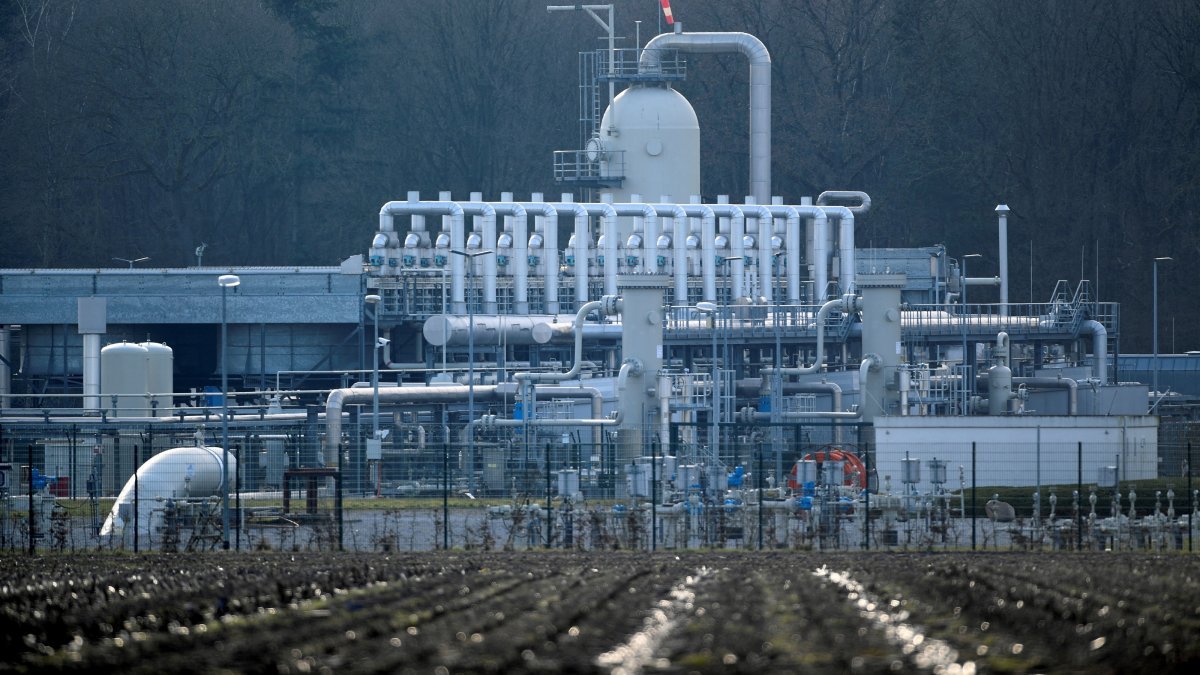
The consequences of this maritime instability extend far beyond the Gulf. Four years after Russia’s invasion of Ukraine triggered an energy crisis, European countries are facing fresh questions about natural gas security as the war in the Middle East grinds on. Surging prices due to Iran’s closure of the Strait of Hormuz are keeping liquefied natural gas (LNG) stocks unusually low, with winter just months away. That raises the spectre of both supply difficulties and prices remaining well above pre-crisis levels, just as colder Continental weather drives up demand.
Summer is traditionally when energy firms take advantage of lower prices to fill LNG storage tanks, preparing for higher winter demand. In a typical year, storage sites would be filled to around 75% to 80%, according to Anne-Sophie Corbeau, a researcher at Columbia University’s Center on Global Energy Policy. Currently, the level is just 58%—the lowest since 2021—according to Gas Infrastructure Europe, an industry association cited by the resources consulting firm Kpler. "The European Union ended last winter with underground gas storage at only 28%, significantly lower than in previous years," said Ronald Pinto, an analyst at Kpler First.
European imports were curtailed by the U.S. and Israeli strikes against Iran, which led Tehran to effectively close the Strait of Hormuz to Gulf tanker traffic. That halted gas shipments from Qatar, a key European supplier, driving up prices of contracts for future delivery, the main way of buying LNG on global markets. "Italy, Poland and Belgium, contracted buyers of Qatari LNG, have borne the direct losses, as they have been unable to import any Qatari LNG volumes since April 2—the date on which Italy received its last vessel loaded with Qatari LNG," Pinto said. The Dutch TTF contract—the benchmark for European gas—for September delivery is currently trading between 55 euros ($63.4) and 58 euros per megawatt-hour. The cost was just 30 euros before the Middle East war, and as low as 15-20 euros before the war in Ukraine.
The Nixon Doctrine Parallel: A Fragile Architecture
This concern helps explain why the alliance has been established with such urgency. The objective is not simply to deter missile and drone attacks, but to prevent the institutionalization of an alternative maritime order in which armed non-state actors exercise durable economic authority over global shipping routes. History offers a sobering reminder. The current trajectory recalls the Nixon Doctrine and the "Twin Pillars" strategy adopted after 1969. That architecture appeared durable until 1979, when the collapse of one pillar—Iran—rendered the entire regional security framework unsustainable almost overnight.
A comparable dynamic may now be unfolding. As Washington shifts greater responsibility onto regional partners, those same states are investing more heavily in indigenous missile capabilities, integrated air defense systems, and advanced strategic technologies. Institutionalization and military proliferation are not separate developments but two dimensions of the same structural transformation. The Multinational Maritime Defense Alliance is thus a double-edged sword. It represents a genuine attempt by regional powers to assert agency over their own security destiny. Yet it also embodies the inherent fragility of a system where the guarantor of last resort is increasingly reluctant to act, and where the partners expected to fill the vacuum are still developing the capacity to do so. The fourteen flags flying in Riyadh may herald a new regional order—or they may simply be the latest banner raised over a security architecture that, like the Twin Pillars before it, is only as strong as its most vulnerable foundation.
By Malik Hassan, Staff Writer
This article was produced with AI-assisted research and editorial support. Sources: Daily Sabah, Reuters, Saudi Press Agency.
What's Your Reaction?
 Like
0
Like
0
 Dislike
0
Dislike
0
 Love
0
Love
0
 Funny
0
Funny
0
 Wow
0
Wow
0
 Sad
0
Sad
0
 Angry
0
Angry
0

Middle East Correspondent at Global1.News. Based in Beirut, covering politics, conflict, energy, and society across the Middle East. Brings context and depth to a region often reduced to headlines.















Comments (0)