
Family of Imprisoned U.S. Marine Robert Gilman Warns He Is Near Death in Russian Custody
Family of Robert Gilman, a former U.S. Marine imprisoned in Russia since 2022, warns he is near death after months of alleged torture and medical neglect. Advocates plead for emergency medical evacuation amid reports of a dissociative stupor, fever, and denied hospital visits.
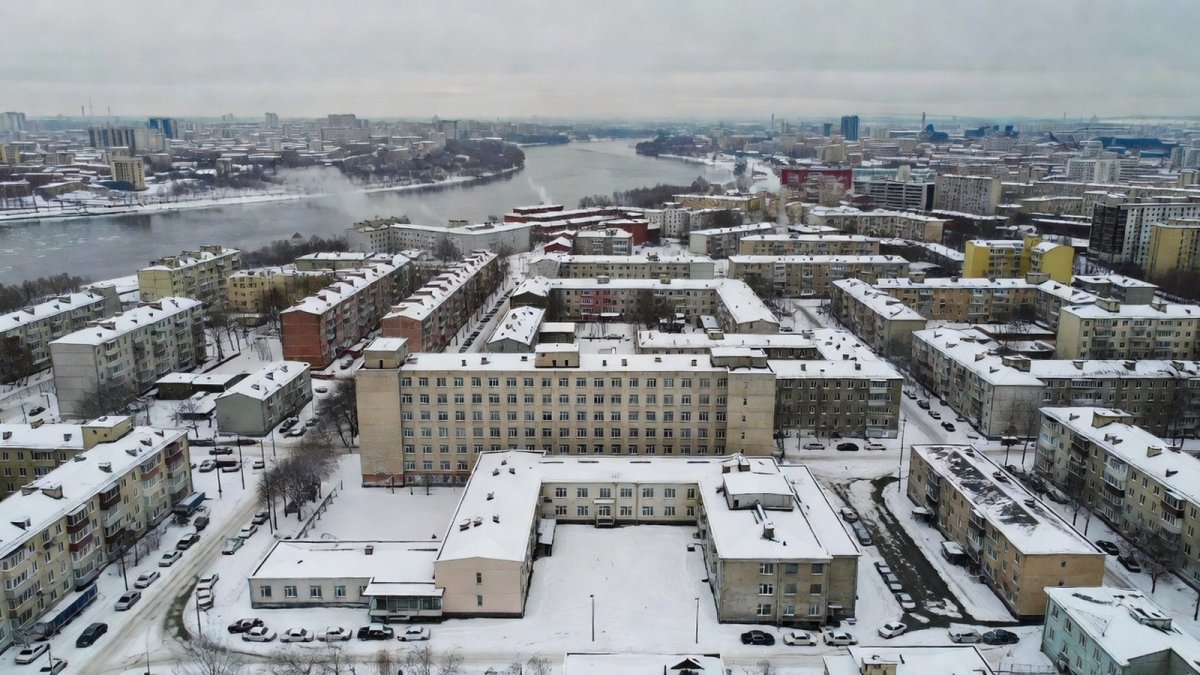
The family of Robert Gilman, a former U.S. Marine and English teacher imprisoned in Russia, issued an urgent public appeal this week warning that the 32-year-old is near death following months of alleged torture and medical neglect in Russian custody. The warning, delivered through the hostage advocacy group Global Reach, comes as Gilman remains in a psychiatric ward in the southern city of Voronezh, unresponsive and reliant on a feeding tube, with his mother barred from visiting him despite a court order permitting her to do so.
Family of Imprisoned U.S. Marine Robert Gilman Warns He Is Near Death in Russian Custody, Pleads for Emergency Evacuation
Moscow, Russia — The family of Robert Gilman, a 32-year-old former U.S. Marine and English teacher from Massachusetts, is making a desperate, hour-by-hour plea to both Washington and Moscow to secure his release before it is too late. In interviews this week, family members and advocates described a man in a "dissociative stupor" for nearly two months, suffering from fever and high blood pressure, handcuffed to a hospital bed in Voronezh, and cut off from both his lawyers and his mother.
The Warning
Kieran Ramsey, chief investigator for Global Reach, the advocacy group representing the Gilman family, told PBS Newshour on Monday that the situation has reached a critical juncture. "The treatment that [Gilman] has suffered at the hands of the Russian prison guards has been far worse than anything else we have seen before," Ramsey said, framing the case as an unprecedented humanitarian emergency.
"We're literally on an hour-by-hour basis hoping that Mr. Gilman hangs on and that we can secure for him some kind of lifesaving medical evacuation out of Russia," Ramsey added, underscoring the urgency that has consumed the family's advocacy efforts. The group said it receives updates on Gilman's condition through his family and the U.S. Embassy in Moscow, which has been monitoring the case closely.
A Deteriorating Condition
Reuters reported last week that Gilman slipped into a state assessed as "dissociative stupor" in late June and was subsequently transferred from a prison hospital to the psychiatric ward at a civilian hospital in Voronezh. Global Reach confirmed that Gilman has been unable to communicate, his eyes remain shut, and he is being fed through a feeding tube. Since Tuesday of this week, he has also been experiencing a high fever and high blood pressure, complicating an already dire medical picture.
Gilman's lawyer, Irina Brazhnikova, confirmed to Russian media that her client has been held in the psychiatric ward since early July. However, defense lawyers have been unable to visit him, prompting formal complaints to the local prosecutor's office, the local branch of the Federal Penitentiary Service, and the prison hospital where Gilman is registered. The hospital has reportedly barred Gilman's mother from visiting him, despite a court order explicitly allowing her to do so, a decision that has only deepened the family's anguish.
The Case Against Gilman
Gilman's legal troubles in Russia began in January 2022 in Voronezh, following an incident in which he was accused of assaulting a police officer. He was initially handed a 3 1/2-year sentence in 2022 when he was convicted of beating an officer after being taken off a train for causing a disturbance. In December of that year, a judge in Voronezh handed him an additional eight-year prison sentence for allegedly attacking guards at the correctional facility where he was being held.
His sentence was extended last year to 10 years after he was found guilty of assaulting prison guards. The business daily Kommersant reported that Gilman pleaded guilty to those charges and apologized to the guards he was accused of assaulting, explaining his actions by saying he wanted to stay in the prison where he was serving his sentence and avoid being moved to another penitentiary. This detail, reported by Kommersant, suggests a complex psychological profile that his family and advocates argue has been exploited rather than treated.
Family's Account of Abuse
The family's website details a harrowing narrative of how Gilman's ordeal began. They say he became violently ill on his way back to Moscow, and police allegedly tried to restrain him. He was then detained after his leg brushed against one of the officers. The family describes a "series of vague and escalating charges" that were lodged against him, and claims that in prison, he has been "goaded" into additional actions and related charges "through forced drugging, provocations, and torture."
Lexie Hudson, Gilman's sister, expressed her profound fear in an interview with the Associated Press. "I am more afraid for my brother than I have been since this horrible nightmare started," she said. "I'm worried that I may never see him again if the Russians don't release him. I'm worried that he could die." Her words capture the raw desperation of a family watching a loved one deteriorate from thousands of miles away, unable to intervene directly.
Washington's Response
The case has drawn high-level attention in Washington. U.S. Secretary of State Marco Rubio raised Gilman's imprisonment with Russian Foreign Minister Sergei Lavrov during a meeting in the Philippines last month, according to Reuters. The source could not say how Lavrov responded, but the fact that the issue was raised at such a senior level indicates its importance to the Trump administration.
U.S. Sen. Edward Markey, a Democrat from Massachusetts, has also weighed in publicly, calling on both governments to act. "I am very worried that, if urgent action is not taken to release Robert so he can receive urgent medical care in the United States, his condition could become permanent, or he could die in Russian custody," Markey said. "I implore the United States and Russian governments to find a solution before we find ourselves in a situation that will further complicate an already difficult relationship."
A State Department spokesperson confirmed that Washington is "deeply concerned about Robert Gilman's health and continued detention in Russia," adding that "the U.S. government has raised his case repeatedly with the Russian government and has requested his release on humanitarian grounds." A senior Trump administration official said the administration is "closely tracking" Gilman's case and has made "repeated, concerted outreach to the Russians calling for his return to the United States."
The Leverage Question
Gilman is one of at least eight U.S. citizens jailed in Russia whom the Trump administration is trying to have released, according to the Moscow Times. Reuters puts the number even higher, reporting that Gilman is one of at least 10 Americans currently held in Russia. In May 2025, Reuters published a list of nine U.S. citizens Washington hoped to see returned as part of a possible exchange with Moscow; Gilman was among them.
Ramsey said the U.S. State Department fears that classifying Gilman and several other Americans held in Russian prison as subjects of wrongful detention would "raise the cost in securing their release." This is a critical insight into the delicate diplomatic calculus at play. Analysts suggest this signals a strategic hesitation on Washington's part, as formally designating detainees as "wrongfully detained" could complicate or inflate the price of any future prisoner swap, a dynamic that has defined U.S.-Russia relations in recent years.
The Kremlin has a well-documented history of using imprisoned Americans as diplomatic leverage, a practice that has intensified since the full-scale invasion of Ukraine in 2022. High-profile exchanges, such as the release of WNBA star Brittney Griner in 2022 and the complex multi-country swap in 2024 that freed several Americans and Russians, have cemented Moscow's view of detainees as bargaining chips. This context is essential for understanding why Gilman's case, despite its humanitarian urgency, remains mired in bureaucratic and geopolitical complexity.
What Happens Next
Russia's Federal Penitentiary Service did not immediately respond to a request for comment on Gilman's condition or the allegations of abuse. The silence from Moscow is telling, analysts suggest, as it may indicate a reluctance to engage on a case that could become a flashpoint in an already fraught bilateral relationship. The local prosecutor's office in Voronezh has also not publicly commented on the complaints filed by Gilman's defense team.
For the Gilman family, the wait is agonizing. His mother remains in Russia, attempting to see her son, but has been repeatedly denied access. The family's only hope, they say, is a swift humanitarian evacuation that would allow Gilman to receive specialized medical care in the United States. Whether that can be achieved through diplomatic channels, or whether it will require a broader prisoner exchange, remains an open question.
As the hours tick by, the international community watches a case that encapsulates the human cost of geopolitical tension. Gilman's fate, analysts suggest, may ultimately depend not on the merits of his case, but on the broader calculations of two governments locked in a bitter standoff. For now, his family can only wait, hope, and pray that their worst fears do not materialize.
By Irina Volkov, Staff Writer
This article was produced with AI-assisted research and editorial support. Sources: The Moscow Times, Reuters, Associated Press.
What's Your Reaction?
 Like
0
Like
0
 Dislike
0
Dislike
0
 Love
0
Love
0
 Funny
0
Funny
0
 Wow
0
Wow
0
 Sad
0
Sad
0
 Angry
0
Angry
0

Russia/Eastern Europe Correspondent at Global1.News. Covering Russian politics, energy, security, and the shifting dynamics of the post-Soviet space. Provides clear-eyed analysis on one of the world's most opaque regions.















Comments (0)