
US 'Heavy Wave' Strikes Against Iran Deepen Gulf War as Retaliation Hits Kuwait, Egypt, Jordan
The United States has unleashed what Central Command called "a heavy wave of strikes" against dozens of Islamic Revolutionary Guard Corps (IRGC) targets across Iran, retaliating for an Iranian missile attack on American troops in Jordan and a coordinated naval assault on three oil tankers
The United States has unleashed what Central Command called "a heavy wave of strikes" against dozens of Islamic Revolutionary Guard Corps (IRGC) targets across Iran, retaliating for an Iranian missile attack on American troops in Jordan and a coordinated naval assault on three oil tankers in the Strait of Hormuz. Within 24 hours, the fallout had reached Kuwait, Egypt, and Iraq, pulling Washington's Gulf partners — and even Cairo, long spared — into the war's expanding blast radius. This is no longer a bilateral US-Iran confrontation; it is a region-wide escalation whose second-order effects are still unfolding.
US 'Heavy Wave' Against Iran Deepens Gulf War as Retaliation Reaches Kuwait, Egypt, and Jordan
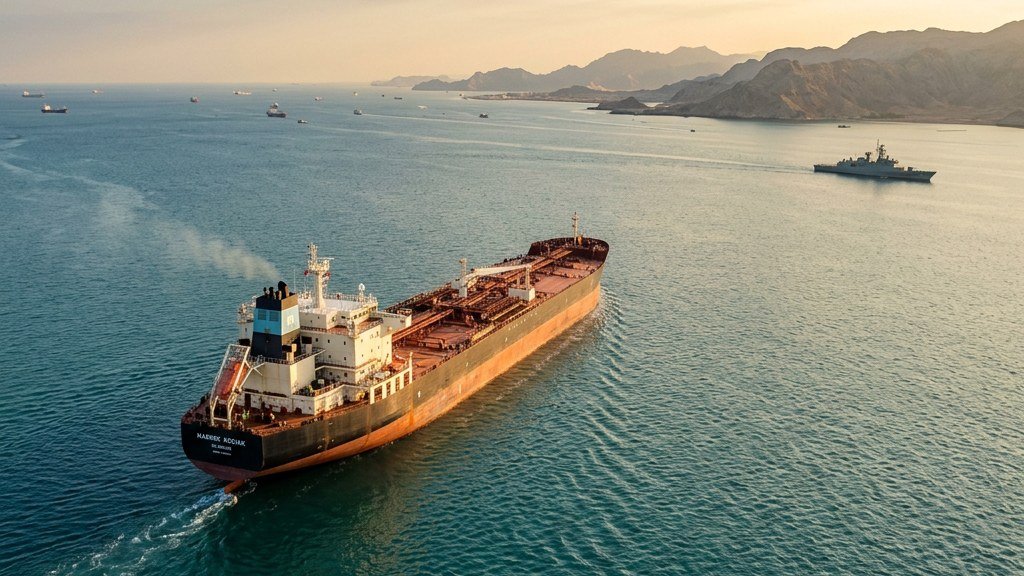
Beirut, Lebanon – July 30, 2026 — At 20:00 ET on Wednesday night — the early hours of Thursday morning in the Gulf — CENTCOM announced it had completed a roughly one-hour barrage against "dozens" of IRGC military command centers, missile and drone facilities, coastal surveillance and defense sites, and maritime capabilities across Iran. CENTCOM described the operation as "a powerful response to yesterday's attempted Iranian attacks on US forces based in the Middle East," a reference to Tuesday's IRGC missile strike on a US base in Jordan — which CENTCOM said was entirely intercepted — and IRGC naval strikes on three oil tankers transiting the Strait of Hormuz.

Targeting Iran's Maritime Muscle
The target set — command centers, missile and drone bases, coastal surveillance and defense sites, and maritime capabilities — suggests a campaign calibrated to degrade Iran's ability to threaten shipping and American forces, rather than an attempt to cripple the regime itself. CENTCOM said the strikes aimed to "further diminish threats posed by Iran and its proxies to American forces, commercial shipping, and neighboring Gulf nations."
Iranian media offered a harrowing picture of the ground truth. Fars News, citing Hormozgan University of Medical Sciences, reported that a family of three — a father, a mother, and a two-year-old child — were killed in the Chah Tangu neighborhood of Qeshm island. The IRGC separately acknowledged the deaths of three of its own personnel. Both Qeshm and Abadan, which were hit, are oil-industry islands; Tasnim News reported power outages in Abadan and the nearby city of Ahvaz. Other strikes rattled Bushehr, Kazerun, and Farashband, according to Iranian outlets. Neither casualty figure could be independently verified.
Iran's IRGC said it had targeted Ali Al Salem Air Base in Kuwait, a claim that underscored how quickly the fight was spreading.
A Regional Firefight: Kuwait, Jordan, Egypt, and Iraq
By Thursday morning, the conflict had visibly spread beyond Iran's borders. Kuwaiti Defence Ministry spokesman Major General Saud Abdulaziz al-Otaibi said an Iranian strike had hit a building belonging to a Chinese company in the north of the country, killing one worker. Jordan said it had shot down five Iranian missiles. And in a significant development, Egypt — which had previously been spared direct attack — confirmed that an Iranian drone had ignited fires on two gas vessels at the port of Damietta: a US-owned floating storage unit and a Greek-owned tanker, according to maritime security firm Ambrey. There were no injuries, but the symbolism was unmistakable: no state in the eastern Mediterranean or the Gulf now stands entirely outside the war's blast radius.
The regional front was already active before the heavy wave. On Tuesday, the United States and Saudi Arabia conducted their first publicly announced joint strikes on Iran-backed militias in eastern Iraq. The Popular Mobilization Forces, formally integrated into Iraq's armed forces, said 20 of its members were killed and 32 wounded; the Associated Press reported that six Iranian advisers were among the dead. CENTCOM framed the operation as a response to more than 30 IRGC-directed drone attacks in 72 hours against US forces and Saudi energy infrastructure. Saudi defence ministry spokesman Major General Turki al-Maliki said the drones had been launched from Iraq at Saudi oil facilities in the Eastern and Riyadh regions on Monday and Tuesday, and that the Kingdom had acted under its right of self-defence.
President Trump told Fox News the strikes were "co-ordinated with the Iraqi government" — a claim the Iraqi presidency rejected, denouncing what it called "an unacceptable attack and a blatant violation of Iraq's sovereignty." Riyadh, meanwhile, denounced Iran's missile strikes on Jordan as a violation of "international law and the principles of good neighbourliness," according to the Saudi Press Agency.
Saudi Arabia's Tightrope: Bombs in Iraq, Diplomacy in Washington
Riyadh's dual posture — striking Iran-backed militias alongside the United States in Iraq while pressing for de-escalation in the Gulf — captures the strategic bind facing the Kingdom. Saudi Arabia is the leading Sunni Arab power confronting Shia Iran; the rivalry that defined the region for decades was papered over by a China-brokered rapprochement in 2023. That détente has been shredded by the current war: the Houthis, Iran's Yemeni ally, have claimed attacks on Saudi energy facilities, and Iranian-directed drones launched from Iraq have twice targeted Saudi oil infrastructure in recent days. For Riyadh, the calculus is existential: its economic diversification agenda rests on stable energy exports and a calm Gulf.
Yet the Saudis are also signalling that they do not want a wider war. Axios reported that Trump met Saudi Defence Minister Prince Khalid bin Salman on Wednesday, and that the prince conveyed Riyadh's desire for de-escalation. Taken together, these moves amount to a message to Tehran: the Kingdom can defend itself, but it would prefer a diplomatic off-ramp. Whether Iran reads that message as strength or as an invitation to probe Saudi resolve may determine whether the Kingdom is drawn deeper into direct combat.
Trump's Escalation Calculus: Punishment With a Ceiling
The American president has framed the heavy wave in personal, muscular terms. After the Jordan attack, Trump said: "We're going to be hitting them very hard because it's our turn to hit them. They know it's coming. They asked us not to do it." He told Fox News the Iranians "are going to get a beating." The rhetoric, however, masks a more calibrated reality. David Des Roches, a former Pentagon official, assessed that the strikes were "not a very overwhelming attack," and that Trump is "trying to keep things proportionate, or to keep things open for diplomacy."
The economic pressure track is running in parallel. On Wednesday, the US Treasury sanctioned two Iranian firms linked to an IRGC-backed scheme that forced commercial vessels to buy insurance to transit the Strait of Hormuz. Treasury Secretary Scott Bessent said: "The United States will not allow Iran to hold global commerce hostage or use international shipping to finance the IRGC's terrorism, aggression, and repression."
The backdrop is a war that has already consumed extraordinary resources. Defense Secretary Pete Hegseth put the cost at $37.5 billion as of July 21, with the Pentagon rushing to buy 10,000 missiles. The war began on February 28 with US-Israeli strikes on Iran, following the 2025 Twelve-Day War, the Gaza war, and attacks on US bases. A ceasefire took hold on April 8, after 40 days in which Iran fired 650 missiles at Israel, killing 24 civilians. Trump signed an "Iran Peace Plan" memorandum of understanding on June 17-18, complete with a $300 billion reconstruction fund that became a political flashpoint; the deal collapsed in recent weeks over renewed fighting in the Strait. A 13-night US bombing campaign was suspended on July 24, and oil markets briefly exhaled — Brent fell below $90 on July 27, down 7 percent — before this week's strikes upended the pause.
Diplomatic Channels Open — Even as the Strait Closes
For all the firepower, the diplomatic track has not closed. Iran's foreign ministry spokesman, Esmaeil Baghaei, said talks with Omani officials were continuing over the Strait of Hormuz, even as he asserted that "currently, the Strait of Hormuz is closed due to American actions" — a striking inversion of responsibility, given that Iran has effectively severed the waterway through which roughly 20 percent of global oil passes. Baghaei blamed "military aggression" by the United States and Israel beginning March 28. Tehran earlier rejected an Omani proposal on co-managing shipping routes through the strait; the rejection suggests the regime sees the closure less as a bargaining chip it is willing to cash than as an instrument of coercive leverage it is determined to retain.
Pakistan's foreign ministry spokesman, Tahir Andrabi, said negotiations were ongoing, particularly on the Strait of Hormuz and de-escalation. The combination of Omani mediation, Pakistani diplomacy, and the Saudi message carried by Prince Khalid bin Salman points to a region exhausted by war yet unable to find a formula both Washington and Tehran can accept. Ryan Bohl of the RANE Network outlined two possible US escalation paths: a repeat campaign against Iran's Hormuz blockade infrastructure, or a move toward the bridges and power plants Trump has threatened. Bohl's two scenarios underscore how far the conflict has moved from the "Iran Peace Plan" the President signed in June.
Regional Implications
The most dangerous feature of this new phase is that the conflict has lost its geographical guardrails. Egypt's inclusion in Iran's target set — a drone strike on gas vessels at Damietta, a Mediterranean port hundreds of miles from the Gulf — signals Tehran's willingness to expand the war's geography to raise costs for Washington's partners. The killing of a Chinese worker in Kuwait adds another layer: Beijing, which brokered Saudi-Iranian détente in 2023 and depends on Gulf energy, now has a direct human stake in the conflict. Great power competition is no longer an abstraction hovering over the Gulf; it is embedded in the casualty figures.
For the Gulf states, the nightmare scenario is a war in which they are both targets and participants. Saudi Arabia has already crossed a threshold by joining American strikes in Iraq — a decision that underscores how completely the 2023 rapprochement has unravelled. Iraq faces a paralysing dilemma: its government's patron in Washington and its own Iran-aligned militias are now exchanging blows on Iraqi soil. For Iran, the calculus is increasingly one of survival and leverage: as long as it can impose costs on shipping, on US partners, and on the global economy, it retains negotiating weight that its battered military might otherwise lack.
The coming days will test whether the "heavy wave" is the prelude to a broader campaign or the ceiling of America's appetite for escalation. If the pattern of the past five months holds — punitive strikes, regional retaliation, oil-market convulsions, and a frantic scramble for a diplomatic landing zone — the region should brace for more of the same, only harder. The window for de-escalation, if it exists at all, is narrowing, and the signals from Washington, Riyadh, and Tehran remain contradictory. What is certain is that the old rules of Gulf conflict have been rewritten — and nobody has yet written the new ones.
By Malik Hassan, Staff Writer
This article was produced with AI-assisted research and editorial support. Reporting is based on sources cited in the article.
What's Your Reaction?
 Like
0
Like
0
 Dislike
0
Dislike
0
 Love
0
Love
0
 Funny
0
Funny
0
 Wow
0
Wow
0
 Sad
0
Sad
0
 Angry
0
Angry
0

Middle East Correspondent at Global1.News. Based in Beirut, covering politics, conflict, energy, and society across the Middle East. Brings context and depth to a region often reduced to headlines.












Comments (0)