
Ceuta Migrant Crisis: Thousands Storm Spain's African Border
Thousands of migrants stormed Spain's Ceuta enclave from Morocco, leaving at least nine dead and triggering a humanitarian emergency, a military deployment, and a political clash over Europe's borders. Rosa Martinez reports on a crisis that echoes Mexico's own migration story.
In a recent DW News report, the Mediterranean became a theater of desperation as thousands of migrants stormed the Spanish enclave of Ceuta from Morocco. They swam around the breakwaters at Tarajal beach, paddled inflatable inner tubes through cold water, and scaled border fences, many shouting "Viva España!" as they reached European soil. The scenes — young men collapsing on the sand, mothers clutching small children, search teams pulling bodies from the surf — are the same images Mexican families have watched for decades along the Rio Bravo and the All-American Canal.
Ceuta Migrant Crisis: Thousands Storm Spain's African Border
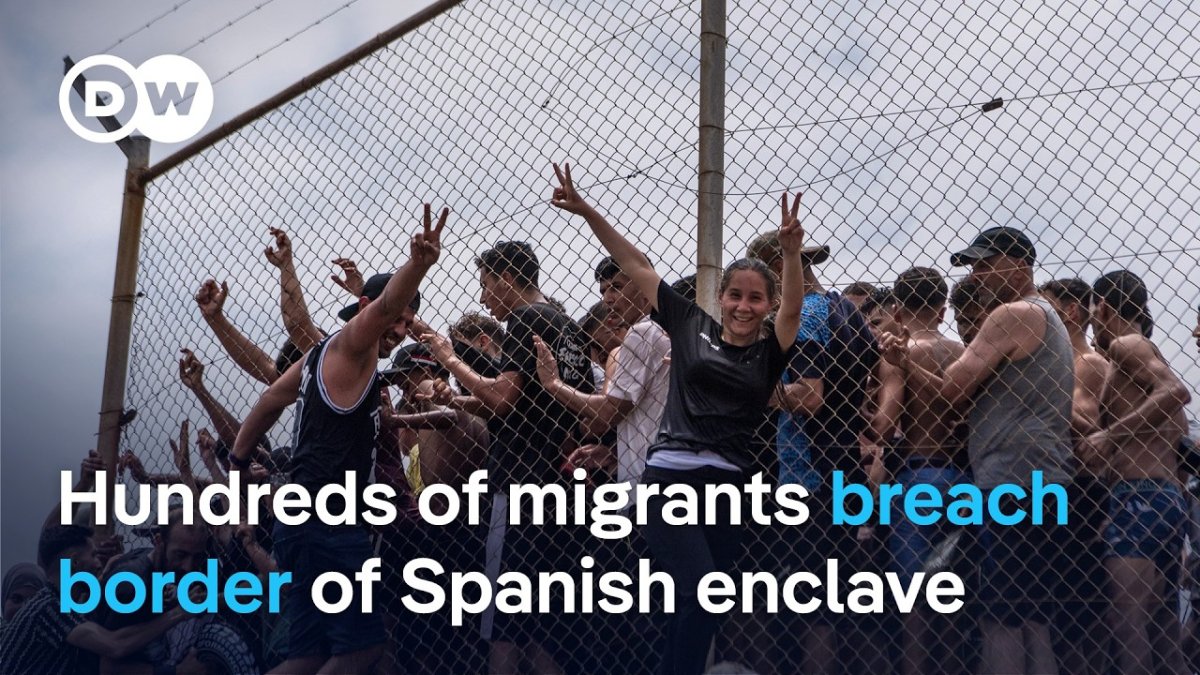
CEUTA, Spain — On Thursday, July 30, 2026, this Spanish autonomous city of roughly 85,000 residents became the epicenter of Europe's migration fault line. Thousands of mostly Moroccan migrants, along with sub-Saharan Africans, overwhelmed the border in a single surge that left at least nine people dead, their bodies floating in the water off Tarajal beach. Dozens have died this year trying to reach Ceuta, a Spanish possession since 1580 whose mixed Christian and Muslim population now finds itself at the center of a humanitarian emergency.
A Border Collapses at Tarajal Beach
The scale of the collapse is difficult to overstate for a city Ceuta's size. Regional president Juan Jesús Vivas declared an "absolute humanitarian and social emergency," reporting that between 1,500 and 2,000 people arrived in just 10 days — roughly two percent of the enclave's entire population. Nearly a thousand people were waiting outside the CETI, Ceuta's Temporary Migrant Reception Center, whose official capacity is about 500.
Rachid Sbihi, head of the association representing Guardia Civil officers in Ceuta, described the scene bluntly: "The situation is absolute chaos... It's not possible to give precise numbers, but there are thousands of migrants crossing." The border, he said, had "totally collapsed."
For the migrants, the journey is a lethal calculation. Many swim about five kilometers from the Moroccan town of Fnideq to Ceuta, while others depart from Belyounech. They ride inner tubes that offer no more safety than the improvised rafts Mexican migrants once used on the Rio Bravo, navigating currents that have claimed dozens of lives this year. The sight of children arriving on these flimsy floats is a reminder that desperation, not recklessness, drives people into the water.
An Emergency for a City of 85,000
Ceuta has weathered migration surges before, but never quite like this. The influx recalls May 2021, when more than 8,000 migrants poured into the enclave in just two days after Morocco eased border controls amid a diplomatic crisis over Spain's decision to treat Polisario Front leader Brahim Ghali in a Spanish hospital. This week's arrivals, like those in 2021, included families with women and small children — a fact that transforms the story from a security issue into an unmistakable humanitarian one.
Vivas has called on Madrid to declare a national emergency and deploy the army, arguing that a city of 85,000 lacks the infrastructure to absorb an influx equal to two percent of its residents in mere days. The CETI is overflowing; health clinics, schools, and sanitation systems are stretched beyond capacity. The overflow has spilled into the streets of Ceuta's neighborhoods, testing a city whose mixed Christian and Muslim community has long lived in relative harmony behind the border fence. The scenes echo the way Mexican border towns in Tijuana and Ciudad Juárez have absorbed arrivals with scarce resources and open hearts.
The strained relationship between the Guardia Civil and the migrants is now visible on every corner. Ceuta, which forms the European Union's only land border with Africa alongside Melilla, has become a pressure valve for the entire continent — and the valve is blowing. Vivas's appeal for national emergency status reflects the local government's sense of abandonment by Madrid.
The Court Ruling Behind the Explosion
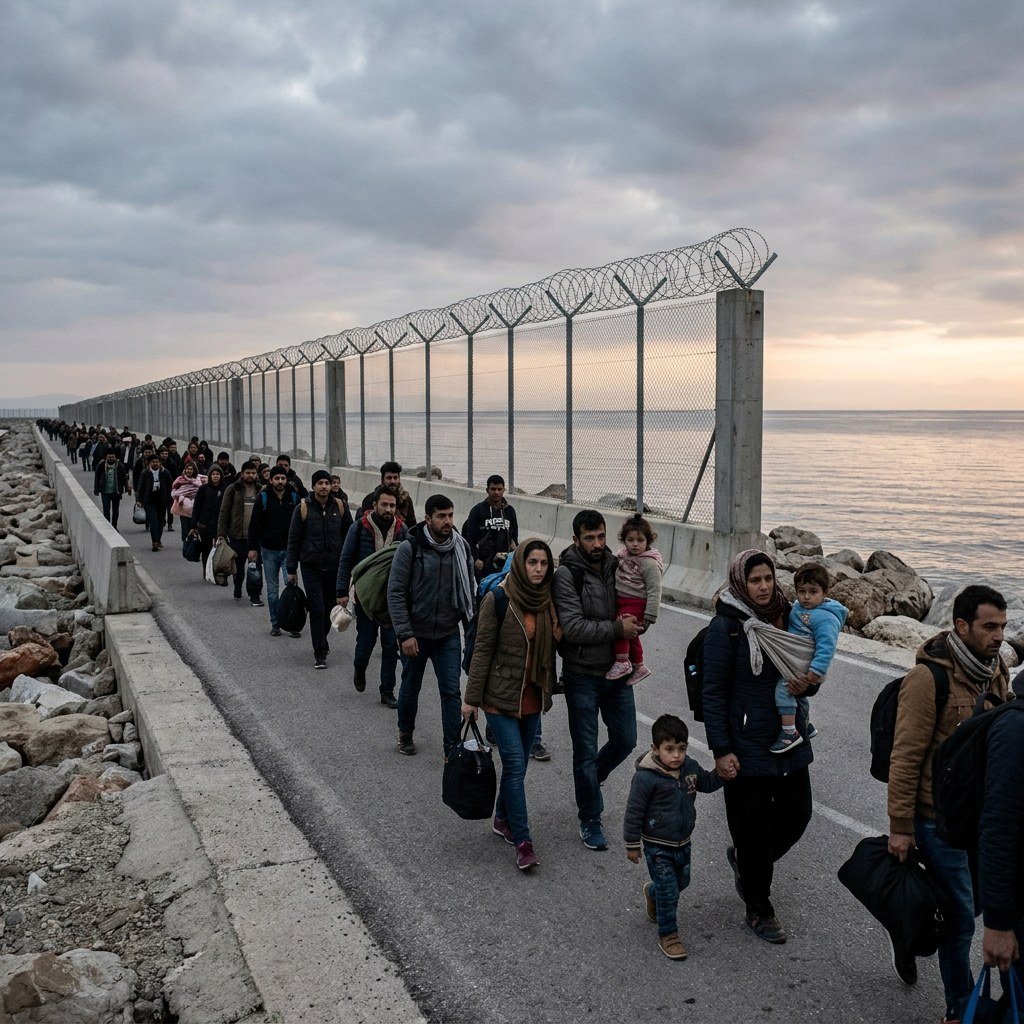
This week's surge did not come from nowhere. Earlier in July 2026, Spain's Supreme Court ruled that migrants arriving by sea cannot be immediately pushed back across the border without due process, unlike those crossing by land. The ruling dismantled a key pillar of Spain's border enforcement strategy, which had long relied on swift "pushback" operations to return migrants to Moroccan soil.
A Guardia Civil spokesperson captured the shift: "It has been a slow trickle since the Supreme Court's ruling, but today has been an explosion." The decision, grounded in international and European law, affirms that people who survive a sea crossing deserve to have their asylum claims heard. It is a legal principle Mexican courts have defended as well, with amparo rulings that have repeatedly curbed the INM's enforcement powers and protected migrant rights in the face of political pressure.
Achraf Maimouni of the Moroccan Association for Human Rights offered a different angle: "The Tarajal border was opened under unusual circumstances this morning and people crossed." Whether the Moroccan security forces were complicit or simply overwhelmed, his words have fueled suspicion in Madrid that Rabat is again using migration as a diplomatic instrument.
Sánchez's Response and the Politics of Panic
Prime Minister Pedro Sánchez pledged an "immediate response," promising, "We are mobilizing all necessary resources, working with Moroccan and international authorities." On Friday, July 31, he traveled to Ceuta with Interior Minister Fernando Grande-Marlaska to see the situation firsthand — a journey meant to project control over an event that is slipping beyond it.
The response, however, is full of contradictions. Spain's Interior Ministry rejected the national emergency request, noting that migration flows are not covered by Spain's emergency legislation. Yet it simultaneously announced that the Armed Forces would reinforce the Guardia Civil "to maintain civil security in the city of Ceuta." Reports of the deployment ranged from 60 troops to El Mundo's unconfirmed claim of up to 3,000 troops and armored vehicles — a wide gap that reflects the confusion on the ground.
The politics are as turbulent as the water off Tarajal. Italy's Prime Minister Giorgia Meloni called the scenes "shocking" and threatened to suspend Italy's open-border Schengen agreement with Spain "to defend our borders and ensure the safety of our citizens." Her language taps into the same far-right playbook that has reshaped politics on both sides of the Atlantic, from the European Parliament to the American border wall.
Morocco's Leverage
Spain's Interior Ministry insists Morocco is "closely cooperating," with Moroccan police stopping "numerous people" from attempting the crossing. Both countries agreed, according to the ministry, to work together "for the return, as soon as possible, of all the people who entered Ceuta illegally." That diplomatic framing — Rabat as both enforcer and gatekeeper — is central to understanding how the crisis unfolded.
Morocco has long used migration as a lever in its relationship with Spain. The 2021 crisis, triggered by Spain's decision to treat Polisario Front leader Brahim Ghali in a Spanish hospital, demonstrated how quickly Rabat can relax its controls when it feels slighted. This week's "unusual circumstances" at Tarajal, in the words of Maimouni, suggest the border's collapse was not entirely an accident of geography.
The pressure is spreading along the coast. About 400 migrants entered the neighboring Spanish enclave of Melilla as Morocco reinforced security at Beni Ansar. Migrants appear undeterred by the deaths at Ceuta, probing the border for weaknesses and turning Europe's southern frontier into a continuous stress test.
Europe's Border Battles
The European Union has mobilized in response. The European Commission offered Spain financial, technical, and operational support, including the deployment of the EU border agency Frontex. EU Home Affairs Commissioner Magnus Brunner framed the stakes plainly: "Protecting the European Union's external borders is crucial in our efforts to combat irregular migration." Brussels is also engaging Moroccan authorities for "immediate measures."
The United Nations urged respect for migrant rights amid the Ceuta arrivals, a reminder that humanitarian obligations do not disappear at a border fence. The White House, meanwhile, blamed Spain's migration policy for the crisis — an ironic jab from a country whose own wall-building and deterrence strategies have drawn sharp criticism from human rights organizations.
For Mexico, the echoes are unmistakable. The Sheinbaum administration walks the same tightrope as Sánchez's government: defending humane treatment of migrants while negotiating with enforcement-minded partners to the north. The INM processes thousands of migrants in Tapachula and Ciudad Juárez, the SRE manages repatriation agreements, and the daily mañanera briefings from Palacio Nacional defend Mexico's policies against foreign criticism. The poverty that pushes families to migrate is the same poverty CONEVAL documents in Mexican households — measured in empty chairs, unfinished houses, and money orders sent from abroad.
The Days Ahead
The situation, as migrant rights activist Zakaria Zarroqui told Reuters, "remains out of control as we speak." People were still flocking to Fnideq on Friday, undeterred by the nine known deaths. Spain's Interior Ministry will publish its next migration report on August 3, offering a fuller picture of a year in which nearly 3,000 migrants had already entered Ceuta by land or sea as of July 15.
The immediate challenge is humanitarian: processing thousands of arrivals, sheltering families with children, preventing more deaths at sea. The longer challenge is political and legal: reconciling the Supreme Court's protections with the demands of European partners and domestic critics. Meloni's threats and Washington's criticism show how quickly human desperation becomes a weapon in continental politics.
For the migrants still gathering on the Moroccan coast, these calculations are abstract. They see a fence, a stretch of water, and a chance. Nine bodies floated this week; dozens have drowned this year. Still they come — from Fnideq, from Belyounech, from the dusty roads of West Africa — because borders do not stop hope. They only make it more dangerous.
Spain is learning what Mexico has always known: you can fortify a border, but you cannot fortify the human heart. The boats will keep coming, the inner tubes will keep floating, and the bodies will keep washing ashore until the violence, poverty, and inequality that push people into the water are confronted head-on. That is the real lesson of Tarajal beach — a lesson written in the waters of the Mediterranean, and in the deserts of Sonora and Chihuahua.
By Rosa Martinez, Staff Writer
This article was produced with AI-assisted research and editorial support. Reporting is based on sources cited in the article.
What's Your Reaction?
 Like
0
Like
0
 Dislike
0
Dislike
0
 Love
0
Love
0
 Funny
0
Funny
0
 Wow
0
Wow
0
 Sad
0
Sad
0
 Angry
0
Angry
0

Latin America/Andes Correspondent at Global1.News. Based in Bogota, covering politics, environment, energy, and social movements across the Andean region. Passionate about environmental journalism and communities protecting their land.














Comments (0)