
US Carve-Out Loosens Huawei, ZTE Grip on Venezuela's 5G Future
New US telecom licences ease sanctions on Venezuela's 5G expansion while locking out Chinese suppliers, reshaping a market Huawei and ZTE dominate. General Licenses 61 and 62 could open the door for Ericsson, Nokia - and potentially Japanese vendors - as Caracas modernises.
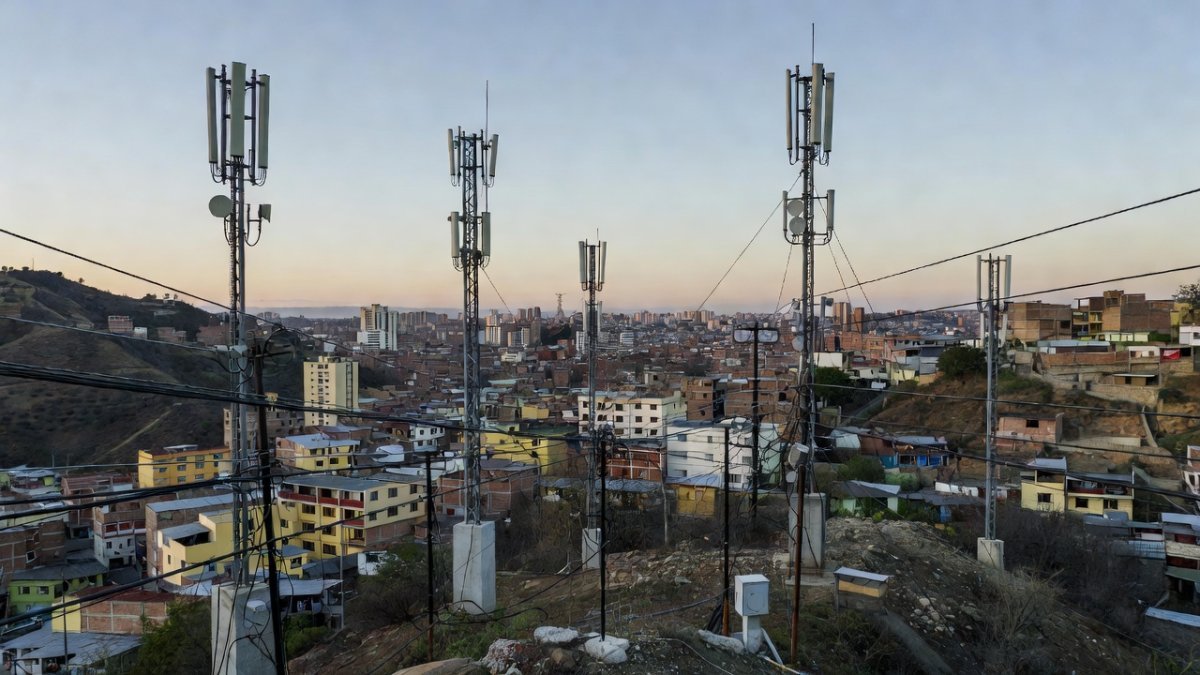
Washington Opens Venezuela's Telecom Door While Locking Out Chinese Vendors
The United States is easing its sanctions grip on Venezuela's telecommunications sector while explicitly excluding Chinese companies from the benefits - a two-part move that could reshape a market where Huawei and ZTE have become deeply embedded and give Western suppliers their first major opening as Caracas expands its 5G networks.
The US Treasury Department's Office of Foreign Assets Control (OFAC) on August 21 issued two general licences relaxing restrictions on Venezuela's telecom sector, including transactions involving state-owned provider CANTV and mobile operator Movilnet. Both licences, however, specifically exclude transactions involving people or companies in China, Russia, Iran, North Korea and Cuba, as well as entities owned or controlled by, or in joint ventures with, them.
The carve-out extends to telecommunications a restriction Washington has already applied as it selectively eases sanctions on Venezuela. Earlier authorisations covering the country's oil sector similarly opened the door to certain transactions while excluding China-linked entities, allowing Washington to loosen economic restrictions on Caracas without extending the benefits to one of its principal geopolitical rivals.
What the Two General Licences Actually Allow
General License 61 authorises US persons and companies to provide the goods, technology, software and services needed to install, maintain, repair, upgrade or operate telecommunications infrastructure in Venezuela. The authorisation covers equipment and spare parts, fibre-optic capacity, satellite bandwidth, cloud services, data storage, servers, software and network-support services, and it explicitly permits transactions involving CANTV, Movilnet and telecoms regulator Conatel.
It does not, however, authorise transactions involving a person located in or organised under the laws of China, or an entity owned or controlled by, or in a joint venture with, such a person.
A second authorisation, General License 62, carries potentially more far-reaching implications. It allows companies to negotiate conditional contracts for new investment in Venezuela's telecommunications sector - including establishing new providers, expanding existing operations and forming joint ventures - and to submit bids or proposals in response to public tenders. The catch: firms cannot perform the resulting contracts or commit capital without separate OFAC authorisation. Chinese companies are again expressly excluded.
Huawei and ZTE: The Embedded Giants of Venezuelan Telecoms
The China carve-out could prove particularly consequential because of how deeply Chinese suppliers are woven into Venezuela's networks. Huawei and ZTE became the country's dominant vendors as US sanctions and compliance concerns curtailed other international companies' ability or willingness to work with government-linked entities.
"The importance of Chinese companies and Chinese technology in Venezuela's telecommunications companies is enormous," said Alcides Leon, a veteran Venezuelan technology journalist who has covered the sector for decades. In the case of CANTV and Movilnet, Leon said, most of their technology now comes from Huawei, making a shift away from Chinese suppliers potentially difficult and costly. He estimated that about half of the technology used by Digitel, one of Venezuela's largest private mobile operators, comes from Huawei, with the other half supplied by Sweden's Ericsson.
Chinese involvement predates the sanctions era. A CANTV prospectus details a US$144 million contract signed in 2019 by CANTV, Movilnet and Huawei to deploy 4G and 5G technology, including the supply, installation and configuration of 900 LTE radio base stations, financed through Venezuela's National Development Fund. Huawei and ZTE also took part in earlier generations of Venezuelan infrastructure as economic and technological cooperation between Beijing and Caracas expanded under former president Hugo Chavez and his successor Nicolas Maduro.
Maintenance, Spare Parts and the Cost of a Forced Transition
The restrictions could affect not only future investment but also the maintenance, repair and replacement of components in networks that already rely heavily on Chinese equipment, Leon said. Huawei and ZTE "came to the rescue of telecommunications in Venezuela" while restrictions were in place, he added, allowing significant network deployment using Chinese technology as other international suppliers pulled back - a role that extended beyond government companies to private operators.
That history leaves Venezuela facing a complicated technological transition. Leon said opinions among Venezuelan telecommunications specialists differ over the legacy of China's involvement: Chinese technology allowed networks to keep expanding during a period when access to other suppliers was constrained, but some specialists argue that dependence on Chinese systems also contributed to technological isolation and compatibility problems.
The new US rules are therefore likely to "change the landscape of telecom providers in Venezuela," Leon said, while making it more difficult to maintain some existing networks built with Huawei and ZTE components.
Ericsson, Nokia - and Japan's Vendors - Eye the Opening
The immediate beneficiaries could be European suppliers. "Ericsson and Nokia are going to have an enormous opportunity to gain ground," Leon said, particularly in the deployment of fibre and 5G infrastructure. The United States does not have a major domestic supplier offering the full range of 5G radio-network equipment produced by Huawei, Ericsson and Nokia, meaning European technology could play an important role in projects enabled by the new authorisations.
Venezuela has already begun allocating spectrum for next-generation networks. Two spectrum auctions last year allocated frequencies to expand 4G and 5G services; in September, Movilnet was awarded 100MHz of spectrum in the 3.5GHz band for 5G deployment, while CANTV obtained additional spectrum in the 2.6GHz band. The changes are also unfolding amid a broader shake-up: Spain's Telefonica has been pursuing a retreat from most of Latin America, raising questions about the future ownership of its Venezuelan subsidiary Movistar, one of the country's major mobile operators.
For Japan, the carve-out echoes a familiar playbook. Tokyo effectively excluded Huawei and ZTE from government procurement in December 2018, becoming the first G7 economy to move against the Chinese vendors on security grounds. That decision pushed Japanese suppliers toward open radio access network (open RAN) technology - Fujitsu built the fully virtualised, multi-vendor architecture behind Rakuten Mobile's greenfield network, while NEC was first to deliver O-RAN-compliant 5G radio units for large-scale commercial deployment. Japanese vendors are now positioned among the credible alternatives in markets moving away from Chinese equipment, though the risk profile of Venezuela - political uncertainty, payment constraints and a still-sanctioned state - would make any Japanese entry a cautious one, likely in partnership with European operators rather than as a solo leap.
The Bigger Picture: A Carve-Out Strategy in Latin America
Applying Washington's China carve-out to telecommunications puts its Venezuela sanctions policy into a sector at the centre of a much wider US-China technological rivalry. Leon said the licences could be interpreted in two ways: as a further easing of sanctions that could help revive Venezuela's telecommunications sector, or through a geopolitical lens as an attempt by Washington to push back against China's ambitions in global 5G networks.
Beijing has already pushed back. China's embassy in Washington criticised the restrictions and vowed to defend Chinese companies affected by them. "We stand firmly against illicit unilateral sanctions that have no basis in international law or the authorisation of the UN Security Council," an embassy spokesperson said. "We will firmly protect Chinese businesses' legitimate and lawful rights and interests."
The US Treasury Department did not immediately respond to questions about the rationale for excluding Chinese companies. The diplomatic friction comes weeks before a widely expected Xi-Trump summit, and Latin America has emerged as a key testing ground in the US-China competition - from Chinese investment in ports and mining to Washington's push for friendlier supply chains in its own hemisphere.
What to Watch For
Whether the new authorisations ultimately reduce China's position in Venezuela may depend on how willing Western companies are to enter a market still carrying significant political and economic risks - and how easily Venezuelan operators can diversify away from Chinese technology already embedded in their networks. Watch for the fate of Movistar, for the first concrete contract negotiations under General License 62, and for whether CANTV and Movilnet begin replacing Huawei components as maintenance licences take effect.
For Tokyo, the licence pair is another sign that Washington is prepared to use sanctions carve-outs as a tool of technological containment in its own hemisphere - a pattern Japanese policymakers and suppliers will be watching closely as they weigh opportunities in Latin America's telecom modernisation, and as Beijing responds to what it calls unjustified unilateral measures in a region where China has invested heavily in connectivity.
By Kenji Tanaka, Staff Writer
This article was produced with AI-assisted research and editorial support. Sources: South China Morning Post, US Treasury OFAC, Reuters.
What's Your Reaction?
 Like
0
Like
0
 Dislike
0
Dislike
0
 Love
0
Love
0
 Funny
0
Funny
0
 Wow
0
Wow
0
 Sad
0
Sad
0
 Angry
0
Angry
0

Japan Correspondent at Global1.News. Tokyo-based voice covering Japanese politics, technology, economy, and culture. Tracks the intersection of tradition and innovation in one of the world's most dynamic societies.













Comments (0)