
China, Egypt Launch First Air Combat Drills in 'Eagles of Civilization 2026' Featuring J-16 vs Rafale
China and Egypt kicked off the first flight day of the Eagles of Civilization 2026 joint air training, with PLA J-16 fighters facing Egyptian Rafale and MiG-29 jets in air combat drills across Egyptian air bases - a milestone in Beijing's Middle East military diplomacy.
In a recent CGTN report, footage from the first official flight day of the "Eagles of Civilization 2026" joint air force training exercise between China and Egypt was released, showing PLA Air Force J-16 multirole fighters engaged in one-on-one air combat drills against Egyptian MiG-29 and Rafale fighters under realistic combat scenarios. The exercise, which kicked off on August 22, 2026, across several air bases in Egypt, marks a significant milestone in Sino-Egyptian military cooperation and represents the first time both the Chinese J-16 and the Egyptian Rafale have participated in a joint exercise together. As the drills are being phased in over several days per Egypt's State Information Service, the deployment signals a deepening of Beijing's military diplomacy in the Middle East and a strategic diversification of Cairo's security partnerships beyond its traditional Western allies.
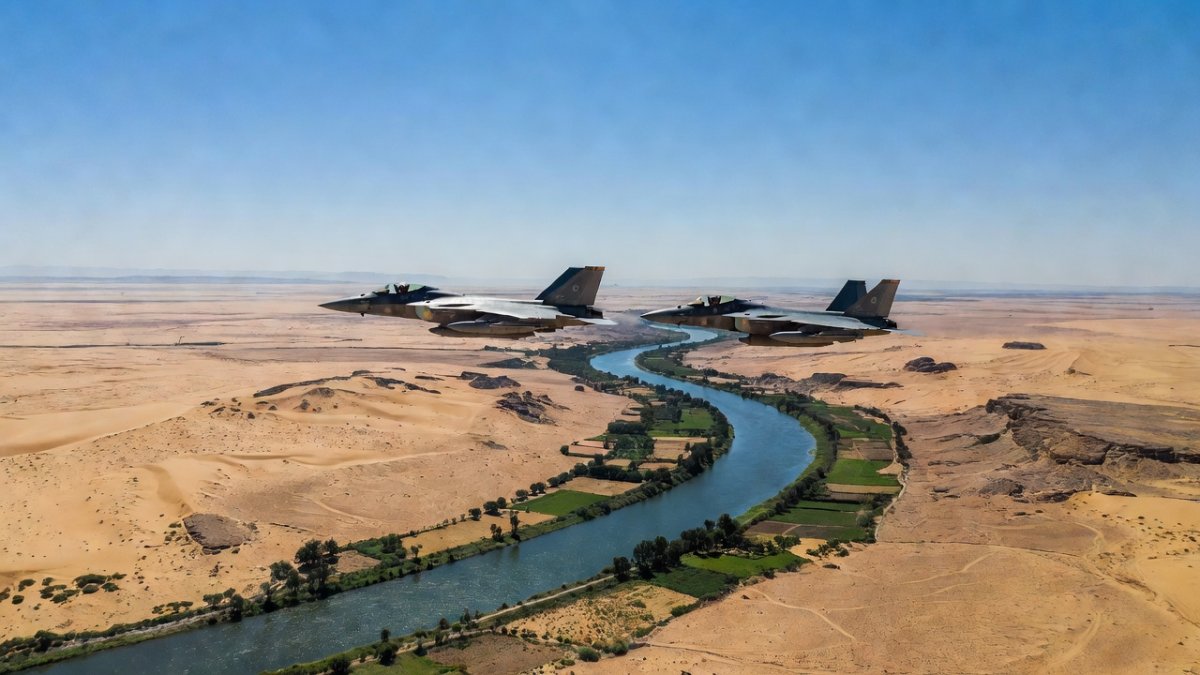
A Historic First: The J-16 and Rafale Share the Skies
The significance of this year's exercise cannot be overstated. While the first "Eagles of Civilization" drill in 2025 saw China deploy J-10 fighters, the 2026 iteration has elevated the stakes considerably. The PLA Air Force has contributed a combined force including fighter jets, tanker aircraft, combat support aircraft, and helicopters, with the J-16 as the centerpiece. This is the first time China has deployed the J-16 in this exercise, and equally notable, the first time Egypt's Rafale fighters have participated in the bilateral drill.
Wang Yanan, editor-in-chief of the Beijing-based Aerospace Knowledge magazine, told the Global Times that this matchup presents a rare opportunity for China to gain familiarity with the Rafale in a joint training setting. He noted that apart from the French military, India and Egypt are the main Rafale users, making this exercise a unique window into the capabilities of a fighter that is increasingly prominent in the inventories of several Global South nations. The J-16, which Wang described as evolved from a Soviet-era platform but completely transformed, is capable of electronic warfare, ground strikes, and long-range air-to-air combat—making it a formidable counterpart to the French-designed Rafale.
From Briefings to Dogfights: The Structure of the Exercise
Before the flight training commenced, Chinese and Egyptian pilots delivered detailed briefings on their respective aircraft capabilities and held in-depth discussions on exercise subjects, flight safety rules, airspace regulations, takeoff and landing procedures, and emergency response plans. This preparatory phase underscores the seriousness with which both air forces are approaching the exercise, which includes both theoretical and practical training components.
Shen Hao, a PLA Air Force unit member, was quoted saying the training is progressing from basic one-on-one and two-on-two air combat to more systematic joint operations. This graduated approach, he explained, is designed to help enhance the technical and tactical proficiency of both sides. The Egyptian Ministry of Defense spokesperson posted on X on Saturday that the joint training had commenced, releasing images of Egypt's MiG-29 and Rafale fighters alongside China's J-16 fighter—a visual confirmation of the unprecedented nature of this drill.
Strategic Calculus: Why Egypt Is Diversifying Its Security Partnerships
The "Eagles of Civilization 2026" exercise must be understood within the broader context of Egypt's deliberate strategy to diversify its security partnerships. For decades, Cairo has relied heavily on the United States as its primary military patron, receiving billions in annual military aid, and on France as a key arms supplier, particularly for the Rafale fleet. However, the geopolitical landscape is shifting, and Egypt is signaling that it no longer wishes to be exclusively dependent on Western security guarantees.
This exercise with China serves multiple strategic purposes for Cairo. First, it establishes shared operational concepts and improves coordination between the two air forces, as stated by Egypt's State Information Service. Second, it sends a clear message to Washington and Paris that Egypt has alternatives. Third, it aligns with Egypt's broader foreign policy of maintaining balanced relations with all major powers—a classic hedging strategy employed by middle powers navigating a multipolar world. For Beijing, this represents a tangible expansion of its military diplomacy in the Middle East, a region where China has traditionally been economically present but militarily cautious.
Regional Airpower Balances: What the J-16-Rafale Matchup Reveals
The direct engagement between the J-16 and the Rafale in a joint training environment carries significant implications for regional airpower balances. The Rafale is currently operated by several Middle Eastern and South Asian nations, including Egypt, India, and Qatar. China's ability to train against and observe the Rafale's performance characteristics in a controlled setting provides Beijing with valuable intelligence that could inform its own tactical developments and export strategies.
Conversely, Egypt gains exposure to Chinese combat aircraft and tactics, which could prove useful if Cairo ever considers diversifying its fighter procurement away from Western and Russian platforms. The J-16, with its advanced electronic warfare suite and long-range air-to-air capabilities, represents a different philosophy of air combat compared to the Rafale. The exercise allows both sides to understand how their respective platforms perform against each other, information that is invaluable in an era where air superiority increasingly determines the outcome of modern conflicts.
China's Broader Middle East Strategy: Belt and Road Meets the Global Security Initiative
This military exercise is not an isolated event but rather a component of China's comprehensive engagement with the Middle East. Under the Belt and Road Initiative, China has invested heavily in Egyptian infrastructure, including the new administrative capital and the Suez Canal Economic Zone. The Global Security Initiative, proposed by Beijing, emphasizes a "common, comprehensive, cooperative, and sustainable" security concept that contrasts with what China characterizes as exclusive and confrontational security arrangements.
By conducting joint military exercises with Egypt, China is operationalizing its security vision in a region where the United States has long been the dominant security provider. This move is carefully calibrated—China is not seeking to replace the US military presence in the Middle East, but rather to establish itself as a credible security partner for nations seeking alternatives. For other Middle East states considering deeper defense ties with Beijing, the "Eagles of Civilization" exercise serves as a proof of concept, demonstrating that China can conduct meaningful, high-level military cooperation with regional powers.
Implications for US Influence and the Global South
The deepening China-Egypt military relationship has inevitable implications for US influence in the region. Washington has historically viewed Egypt as a cornerstone of its Middle East strategy, and the prospect of Cairo developing closer military ties with Beijing will likely cause concern in the Pentagon and State Department. However, the US response is constrained by its own complicated relationship with Egypt, which has faced periodic Congressional scrutiny over human rights concerns and democratic backsliding.
For the broader Global South, the China-Egypt exercise represents a template for security cooperation that does not come with the political conditionalities often attached to Western military partnerships. China's approach—focusing on operational interoperability and mutual capacity-building without overtly demanding political alignment—appeals to nations that value their strategic autonomy. As the exercise continues over the coming days, the international community will be watching closely to see what further milestones emerge from this unprecedented collaboration between the PLA Air Force and the Egyptian Air Force.
The "Eagles of Civilization 2026" exercise is more than a military drill; it is a statement about the changing architecture of international security. As China continues to expand its military diplomacy and Egypt navigates its path between multiple great powers, the skies over Egypt have become a theater where the future of regional security is being rehearsed.
By Prof. Marcus Chen, Staff WriterThis article was produced with AI-assisted research and editorial support. Reporting is based on sources cited in the article.
What's Your Reaction?
 Like
0
Like
0
 Dislike
0
Dislike
0
 Love
0
Love
0
 Funny
0
Funny
0
 Wow
0
Wow
0
 Sad
0
Sad
0
 Angry
0
Angry
0

World Politics Analyst at Global1.News. Based in Beijing, covering US-China relations, global trade, and geopolitical strategy. Brings deep analytical perspective to the power dynamics shaping international affairs.















Comments (0)