
Thailand's First Remote Robotic Prostate Cancer Surgery
Thailand achieves a historic first with remote robotic prostate cancer surgery over 250 kilometers — a medical technology breakthrough transforming healthcare.
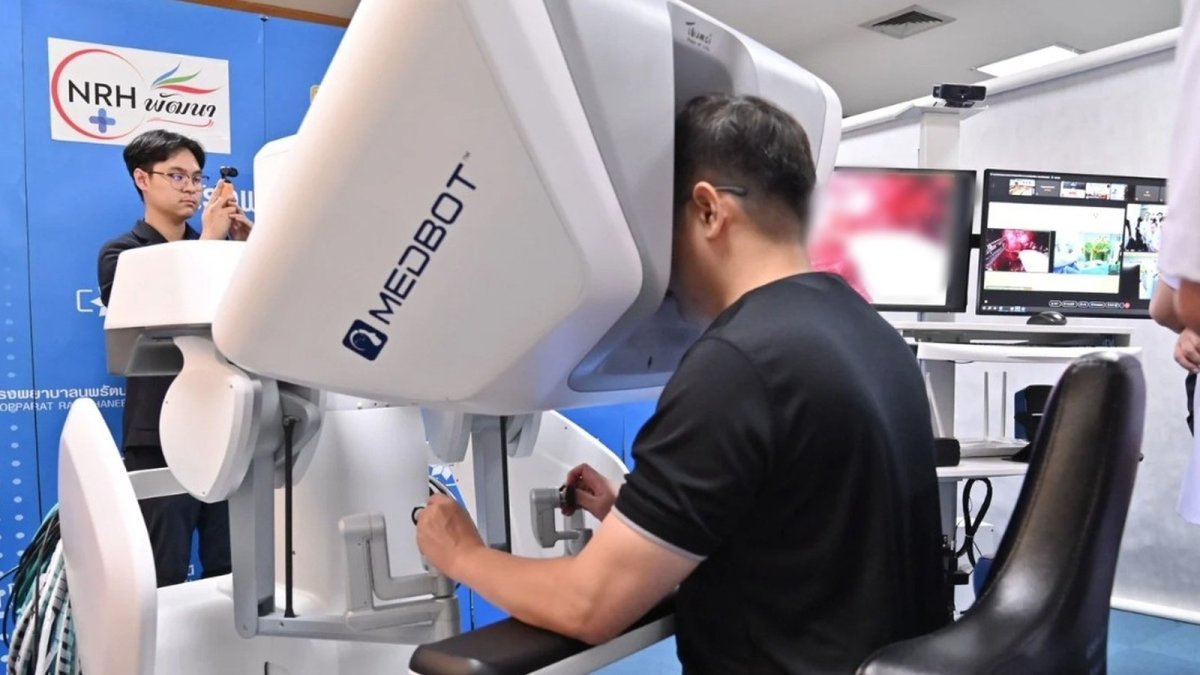
A Historic First: Bangkok Doctors Operate on Patient 250 Kilometers Away
BANGKOK — In a moment that feels pulled from the pages of science fiction, but is very much a reality, Thailand has achieved a historic milestone in its medical sector. On Monday, a team of doctors in Bangkok remotely controlled a surgical robot to perform a delicate prostate cancer operation on a patient lying in an operating theatre at Maharat Nakhon Ratchasima Hospital, roughly 250 kilometers to the northeast. The procedure, conducted between Nopparat Rajathanee Hospital in the capital and the major regional hospital in Nakhon Ratchasima, marks Thailand's first domestic remote robotic surgery.
For those of us who have watched Thailand's healthcare system evolve over the decades, this is not just a technological triumph. It is a profound statement of intent. Health Minister Phatthana Phromphat was unequivocal in his praise, stating that the Ministry of Public Health is actively promoting medical technology and innovation to strengthen healthcare services and develop specialized medical centers to international standards. He framed the successful operation as proof of Thailand's readiness to harness advanced medical technology, suggesting it could serve as a model for expanding remote surgical networks across the entire kingdom.
The significance of this achievement cannot be overstated for a nation where access to top-tier medical care has often been synonymous with being in Bangkok. This surgery bridges that gap in a way that feels almost miraculous, bringing the expertise of the capital's finest surgeons directly to the heart of the Isaan region.
The Team Behind the Console: A Symphony of Coordination
Behind every great medical breakthrough are the skilled hands and sharp minds of dedicated professionals. This operation was a true symphony of coordination, involving a team of specialists at Maharat Nakhon Ratchasima Hospital working in perfect sync with a surgeon in Bangkok. At the patient's side in Nakhon Ratchasima were Dr Niphon Suparattanachantiphan and Dr Thanathon Termkraisi, who managed the patient and the robotic arms in the operating room. Meanwhile, in the capital, Dr Peeradon Saphoemsub sat at the master console at Nopparat Rajathanee Hospital, his every movement translated with precision to the surgical instruments 250 kilometers away.
This is not merely about one doctor's skill; it is about the seamless integration of two teams, two hospitals, and a sophisticated network that allowed for real-time control. The Ministry of Public Health has highlighted this collaborative model as a key to its future plans. Dr Somruek, a senior public health official, noted that this technology would also allow medical personnel in regional hospitals to gain invaluable experience with advanced surgical systems. By working alongside the remote surgeon, the local team in Nakhon Ratchasima is not just assisting; they are learning, absorbing the techniques and protocols that will one day allow them to perform such procedures independently.
For the patient, this means receiving world-class care without the arduous journey to Bangkok. For the doctors in the region, it is an unparalleled educational opportunity. This is how we build a stronger, more resilient healthcare workforce for all of Thailand.
Nopparat Rajathanee Hospital: A Hub of Robotic Innovation
This week's landmark surgery is the culmination of a rapid and impressive journey for Nopparat Rajathanee Hospital. The hospital only began offering robotic surgery in December 2025, yet in a short span of time, it has established itself as a pioneer in the field. According to the Ministry of Public Health, the hospital has since performed 52 robotic procedures across three major specialties, with all 52 reported as successful.
The scope of these procedures is broad and impactful. In gynecology, the robot has been used to treat uterine and ovarian cancers. In general surgery, it has tackled complex cases involving pancreatic, stomach, and colorectal cancers. And in urology, it has been deployed for prostate and kidney cancers. This versatility demonstrates that robotic surgery is not a niche technology but a comprehensive tool that can be applied across the spectrum of surgical oncology.
The success rate is a testament to the rigorous training and dedication of the medical teams involved. It also provides a solid foundation of data and experience that will be crucial as the Ministry of Public Health moves to expand this technology to other hospitals. The journey from a single program to a national network begins with such consistent, successful outcomes, building the confidence needed for wider adoption.
Going Global: The 3,000-Kilometer Test with China
While the Bangkok-Nakhon Ratchasima procedure is a national first, it is not the first time Thai doctors have pushed the boundaries of distance. Nopparat Rajathanee Hospital has already tested remote robotic surgery across international borders in a groundbreaking collaboration with West China Hospital in China. That partnership involved a distance of approximately 3,000 kilometers, a staggering feat of technology and international cooperation.
On 21 April, doctors performed a remote robotic surgery for gallstones on a patient in China, controlled from Bangkok. This was followed by a more complex remote robotic prostate cancer operation on 25 June. These international tests were critical in proving the reliability and safety of the technology over vast distances and across different network infrastructures. They served as a rigorous dress rehearsal for the domestic procedure we witnessed this week.
The success of these cross-border operations places Thailand in a very elite group of nations capable of performing such complex telemedicine procedures. It signals to the world that Thailand is not just a consumer of medical technology but an innovator and a leader in its application. This is a powerful message for the global medical community and for patients seeking the most advanced care available.
Expanding the Network: A Vision for Regional Referral Hospitals
The ultimate goal of this initiative, as articulated by the Ministry of Public Health, is to reduce the stark disparities in access to advanced medical treatment between Bangkok and the regions. The plan is ambitious and clear: to expand this technology to regional referral hospitals in different health zones across the country. This is not about replacing local surgeons but about empowering them and giving patients in provinces like Nakhon Ratchasima, Khon Kaen, or Chiang Mai access to the same level of care as those in the capital.
Nakhon Ratchasima, often called Korat, is a particularly fitting location for this milestone. As the largest province in Thailand and a major gateway to the Isaan region, it serves as a crucial medical hub for millions of people. Maharat Nakhon Ratchasima Hospital is one of the largest and busiest hospitals in the country, and its role in this pioneering surgery signals a new era for healthcare in the Northeast. The ability to bring robotic surgery to such a key regional center has profound implications for the health and well-being of the entire Isaan population, who previously would have had to travel hundreds of kilometers for such procedures.
This expansion will require significant investment in infrastructure, training, and network reliability. But the potential payoff is immense. It promises a future where a farmer in Buriram or a teacher in Chaiyaphum can receive the same cutting-edge cancer treatment as a business executive in Bangkok, without the financial and emotional burden of relocating for treatment.
Why This Matters for Thailand and Southeast Asia
For Thai readers, this story is about more than just a new machine in a hospital. It is about equity, opportunity, and the future of our nation's health. It speaks to the core Buddhist principle of compassion and the belief that all beings deserve access to relief from suffering. By democratizing access to advanced surgical care, Thailand is taking a significant step toward a more just and compassionate society.
On a regional level, this achievement has major implications for ASEAN. It reinforces Thailand's position as a premier medical hub in Southeast Asia, a status that is crucial for the country's medical tourism industry. Patients from neighboring countries like Cambodia, Laos, Myanmar, and Vietnam already come to Thailand for treatment. The ability to offer remote robotic surgery, potentially even across borders, adds a new, high-value dimension to Thailand's medical offerings. It positions Thailand not just as a destination for treatment but as a center of medical excellence and innovation for the entire region.
Furthermore, this development aligns with Thailand's broader ambitions to become a leader in the regional digital economy. The successful integration of high-speed networks, advanced robotics, and skilled medical professionals is a powerful demonstration of Thailand's technological capabilities. It is a story of national pride, a testament to what we can achieve when we combine our renowned hospitality and care with the very best of modern science. The journey from the first robotic surgery in December to this remote procedure is a rapid one, and it signals that the future of Thai healthcare is being written now, with precision, compassion, and a bold vision for the future.
By Ann Srisawat, Staff Writer
This article was produced with AI-assisted research and editorial support. Sources: Khaosod English
What's Your Reaction?
 Like
0
Like
0
 Dislike
0
Dislike
0
 Love
0
Love
0
 Funny
0
Funny
0
 Wow
0
Wow
0
 Sad
0
Sad
0
 Angry
0
Angry
0

Southeast Asia Correspondent at Global1.News. Based in Bangkok, covering Thai and Southeast Asian politics, economy, technology, and culture. Deep regional perspective on one of the world's most dynamic regions.















Comments (0)