
US and Brazil: Election Clash or Hemispheric Power Play?
Brazil's October 4 presidential vote has become a hemispheric power play: US tariffs and gang designations are reshaping a tight race between President Lula and Flávio Bolsonaro, with China watching closely.
US and Brazil: Election Clash or Hemispheric Power Play?
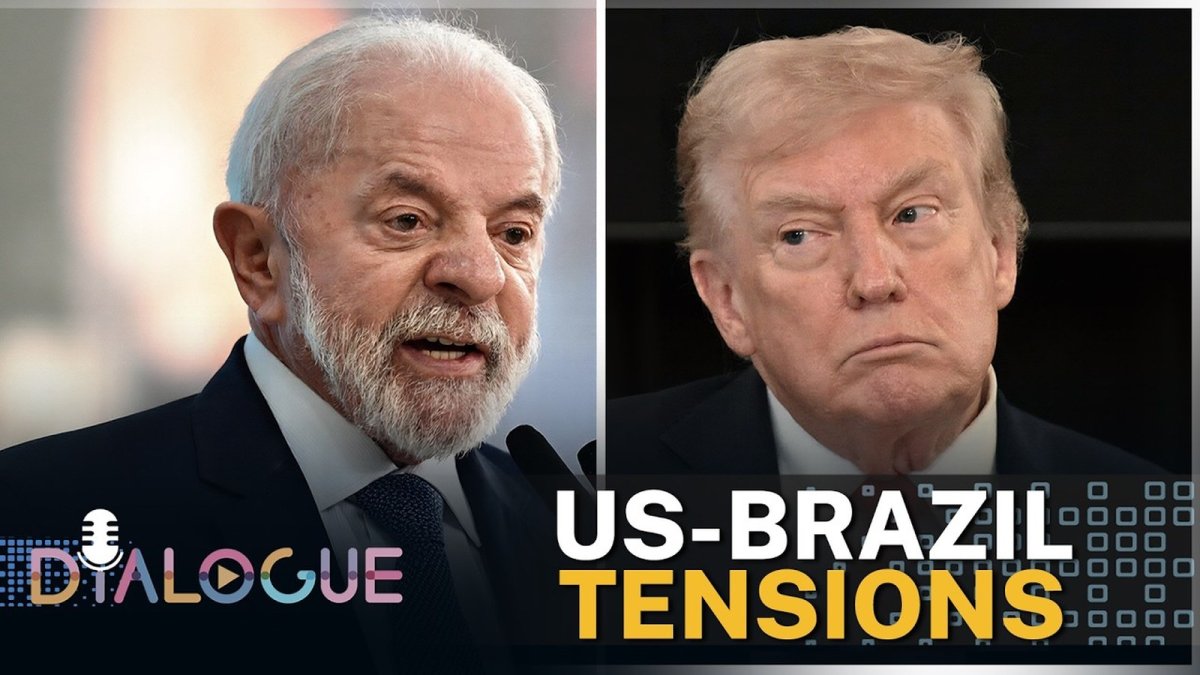
In a recent CGTN report, analysts dissected a singular geopolitical convergence: the autumn 2026 electoral cycles of the United States and Brazil are colliding in real time, transforming a bilateral trade dispute into a hemispheric power play. With Brazil’s first-round presidential vote set for October 4, 2026, and the US midterms looming in November, the fates of President Luiz Inácio Lula da Silva and the Bolsonaro dynasty have become a proxy battle for the future of Latin America. The question posed by the CGTN program—whether this is a clash or a realignment—is being answered daily through tariff diktats, gang designations, and diplomatic maneuvering.

The Converging Electoral Cycles: A Perfect Storm
The official campaign period in Brazil began on August 15, 2026, with candidate registration closing the same day. President Lula, aged 80 and seeking an unprecedented fourth term, launched his bid on August 2 at the Workers’ Party (PT) national convention in São Paulo. His rhetoric was distinctly defensive and nationalist: "I want to be prepared, so that no one invades this country," he declared, calling for increased defense spending and pledging to shield Brazil’s reserves of rare earths and other critical minerals from foreign control — a direct response to the tariff war waged by Washington. His principal challenger is Senator Flávio Bolsonaro of the Liberal Party (PL), endorsed by his father, former President Jair Bolsonaro, who is serving a 27-year prison sentence for plotting a coup after his 2022 election loss. The elder Bolsonaro’s imprisonment has not diminished the family’s political capital; it has cast Flávio as the standard-bearer of a right-wing movement that has swept through Peru, Colombia, Chile, Argentina, and Bolivia. The Quaest poll for TV Globo published August 14, 2026, shows a statistical tie in the runoff scenario: Lula leads Flávio 43% to 40%, within the 2-point margin of error. The trajectory is stark—Lula led by 8 points in July, 5 in early August, now just 3. In the first-round scenario, Lula holds 38% against Flávio’s 31%, with candidates like Romeu Zema and Ronaldo Caiado splitting the remainder. The convergence with the US midterm cycle is not coincidental. Both nations are entering their most volatile political windows simultaneously, meaning decisions in Brasília and Washington over the next six weeks will cascade into each other’s domestic audiences. For the Trump administration, a Bolsonaro victory would cement a rightward realignment across South America’s largest economy; for Lula, survival means keeping Brazil anchored in the BRICS camp.The Tariff War: A Weapon of Electoral Intervention
The economic battleground has been defined by an escalating tariff dispute that began with a July 9, 2025 letter from President Trump to Lula, threatening a 50% tariff on Brazilian exports while denouncing the charges against Jair Bolsonaro as a "witch hunt." By July 30, 2025, Trump declared Brazil’s actions a US "national emergency" and imposed an additional 40% tariff on top of a 10% baseline, totaling 50% on most goods. Exemptions were granted for airplanes, iron ore, aluminum, natural gas, orange juice, fertilizers, petroleum, and lumber. The second phase began on May 28, 2026, and culminated on July 16, 2026, when the Trump administration announced a 25% tariff on certain Brazilian imports under Section 301 of the Trade Act. The US Trade Representative (USTR) had determined that Brazil’s acts, policies, and practices related to digital trade, intellectual property, and anti-corruption enforcement were "unreasonable" and burdened US commerce. The 25% duty began applying on July 22, 2026; trade-monitoring sources report a further 12.5% action followed on July 24, 2026, and a separate US forced-labor probe could add another 12.5%, according to CNBC. Secretary of State Marco Rubio, tasked by Trump with managing pressure on Brazil, has been blunt: "President Lula and his government have not negotiated with the U.S. in good faith. His economic policies are bad for Americans and bad for Brazilians." Brazil’s government called July 15, 2026 "a regrettable milestone" in bilateral relations, asserting there was "no justification for unilateral measures against our country" and accusing the Bolsonaro family of orchestrating the tariffs "driven by electoral motives." Flávio Bolsonaro publicly denied triggering the tariffs and asked Trump to delay implementation until after the election, warning that Brazil’s political landscape "will be redefined within roughly ninety days." Rubio’s response: the US still had "substantial differences" with Brazil. What makes this trade war unusual is the underlying profile. The US ran a $14.4 billion goods trade surplus with Brazil in the prior year, up 112.8% year-over-year — an atypical target for Section 301 actions, usually reserved for countries running large surpluses against the US, like China. The tariffs look less about correcting trade imbalances than about political leverage and electoral interference.The Pix Dispute and the Financial Sovereignty Battle
A parallel front has opened over Brazil’s Pix instant payment system. In July 2025, the USTR launched an investigation into Brazil’s electronic payment services, alleging that Pix unfairly advantages Brazilian companies over US competitors. Lula accused Trump of being "bothered by Pix" because it "will put an end to credit cards," and his administration planned a "massive" media campaign with the slogan "O Pix é do Brasil" (Pix is Brazil’s). Pix enjoys a 92% approval rating among Brazilians. Fundação Getulio Vargas finance professor Fabio Gallo argues that Pix is inspiring other countries to develop their own solutions, weakening the dollar and threatening the "end of the Western financial monopoly." That is precisely why Washington views it as a threat: the US investigation is an attempt to defend the dollar’s dominance in digital payments. For Lula, Pix has become a symbol of national technological self-sufficiency—a narrative resonating with voters who see US actions as an attack on their daily lives.Gang Designations and the Security Card
On May 28, 2026, the US State Department designated Brazil’s Comando Vermelho (CV) and Primeiro Comando da Capital (PCC) as Foreign Terrorist Organizations and Specially Designated Global Terrorists, effective upon Federal Register publication on June 5, 2026. Flávio Bolsonaro had personally pushed for these designations and quickly claimed credit, casting himself as the candidate who could deliver on security fears—the issue where the Brazilian right is strongest. Lula had resisted the move as an intrusion on Brazilian sovereignty. Analysts see the gang designations (a boost for Flávio) and the tariff escalation (a boost for Lula’s nationalist narrative) as roughly cancelling out in electoral terms. Crime is a top concern for Brazilian voters, and Flávio’s association with a tough-on-crime stance, backed by US recognition, gives him credibility. Yet both candidates carry heavy baggage: Quaest measured Flávio’s rejection rate at 54% and Lula’s at 52%, making this a race defined by negative partisanship rather than positive enthusiasm.
China’s Strategic Position and the Regional Realignment
Amid this turbulence, China has moved quietly but decisively. In August 2025, Beijing authorized 183 Brazilian companies to export coffee under a five-year agreement, boosting imports amid rising domestic demand, after the US imposed a 50% coffee tariff covering about 30% of US imports — a classic example of China positioning itself as a reliable alternative market for countries facing US coercion. Faced with US tariffs, Lula has sought to diversify Brazil’s partnerships and strengthen BRICS, a bloc that now includes several Global South powers. Lula’s convention speech pledging to shield Brazil’s rare earths and critical minerals from foreign control is a direct response to the tariff conflict and a signal to Beijing that Brazil is open to deeper strategic cooperation—but on its own terms. Both Lula and Flávio Bolsonaro have made pilgrimages to the White House in recent weeks, and both attended or were scheduled around the G7 in France (June 15-17, 2026), described by analysts as a flashpoint. Lula has kept Trump partly onside despite deep ideological differences, saying he is trying to negotiate directly. The regional context is decisive. Brazil’s election is widely regarded as the litmus test for how far the rightward realignment sweeping Latin America—visible in Peru, Colombia, Chile, Argentina, and Bolivia—extends to the region’s largest economy. A Flávio Bolsonaro win would complete that realignment, aligning Brazil firmly with Washington; a Lula win would hold the line, keeping Brazil in the BRICS/Global South camp and providing a counterweight to US influence. The US "regime change" history, including the 1964 Brazilian coup d’état, remains a sensitive backdrop for voters wary of foreign interference. The stakes could not be higher. The convergence of US and Brazilian electoral cycles has turned a bilateral trade dispute into a hemispheric power play. For Washington, the goal is to ensure Brazil does not become a permanent member of the anti-US bloc. For Beijing, the goal is to deepen economic ties with a nation that controls vast reserves of critical minerals and agricultural output. For Brazilians, the October 4 vote will determine not just their next president, but their country’s place in a fragmenting global order. The CGTN program’s framing—clash or power play—may be a false dichotomy; the answer is likely both, with consequences reverberating far beyond the hemisphere. By Prof. Marcus Chen, Staff WriterThis article was produced with AI-assisted research and editorial support. Reporting is based on sources cited in the article.
What's Your Reaction?
 Like
0
Like
0
 Dislike
0
Dislike
0
 Love
0
Love
0
 Funny
0
Funny
0
 Wow
0
Wow
0
 Sad
0
Sad
0
 Angry
0
Angry
0

Marcus Chen
World Politics Analyst at Global1.News. Based in Beijing, covering US-China relations, global trade, and geopolitical strategy. Brings deep analytical perspective to the power dynamics shaping international affairs.













Comments (0)