
United Russia Heads for a Supermajority as Wartime Vote Sets a Turnout Record
United Russia is heading for a projected constitutional supermajority after a preliminary record turnout in Russia's State Duma election, with observers reporting obstruction and Moscow counting the cost of the war's largest drone attack.
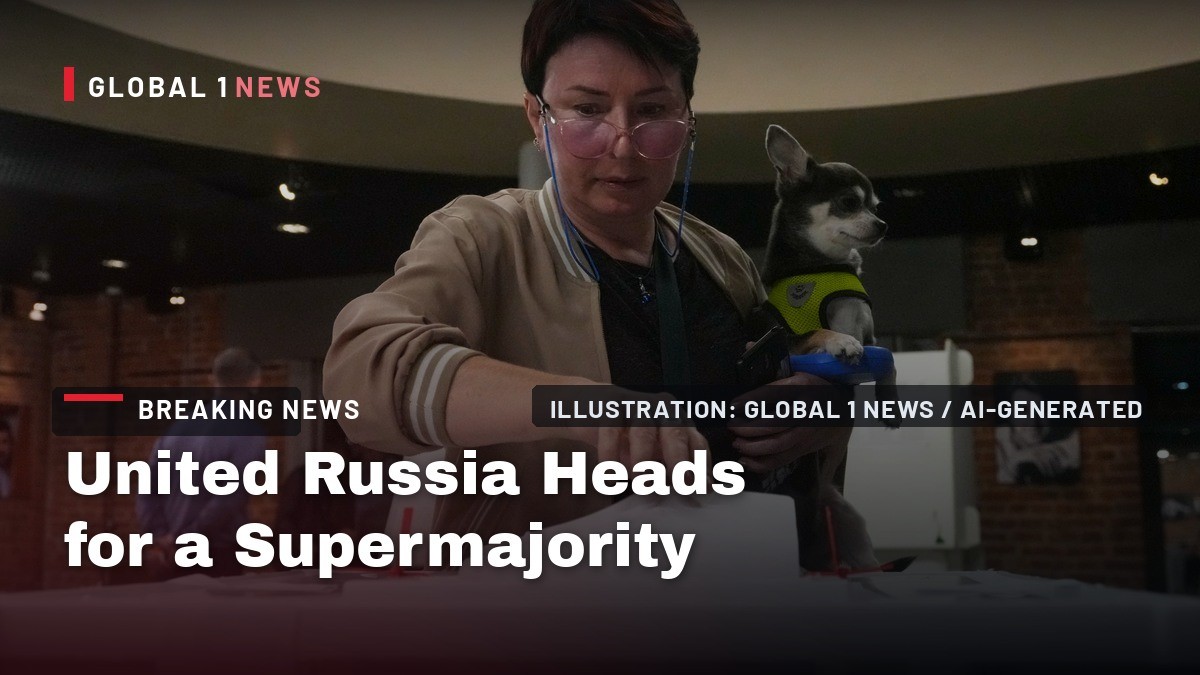
Russia's ruling party is heading back to the State Duma with more seats than it needs to change the constitution, on a turnout the state's own pollsters did not predict. The count is still running, the fraud claims are still unproven, and on the last day of voting the war arrived over Moscow in the largest drone attack of the conflict.
United Russia Heads for a Supermajority as Wartime Vote Sets a Turnout Record
Moscow, Russia — Polling stations closed at 8:00 p.m. local time on Sunday 20 September, and the first nationwide results landed after 9:00 p.m. Moscow time, when the last stations shut in Kaliningrad. All 450 seats were up in the first national parliamentary election since Russia launched its full-scale invasion of Ukraine in February 2022. The Central Election Commission says it will not certify final results before 25 September.
The First Numbers Out of the Central Election Commission
The count came in stages, and each stage told the same story. After 13.88 percent of protocols were processed, CEC chairwoman Ella Pamfilova's commission had United Russia on 57.54 percent, with 3,889,584 votes. The Communist Party stood at 13.67 percent, the Liberal Democratic Party at 9.27 percent, New People at 7.96 percent and A Just Russia - For Truth at 5.16 percent, according to Interfax, BBC Russian and Meduza.
By 25.21 percent processed, United Russia had slipped a fraction to 57.04 percent, with the Communists on 13.92 percent, the LDPR on 9.31 percent, New People on 8.01 percent and A Just Russia on 5.22 percent, per RIA Novosti and Kommersant. At 32.92 percent, KP.ru had United Russia on 56.97 percent. Reuters, citing partial official results, put the party comfortably ahead with 57.5 percent. Ten parties were on the federal party-list ballot, under a 5 percent threshold.
A Turnout Record That Rewrites the History Books
Preliminary nationwide turnout was 56.66 percent after three days of voting, according to Kommersant. That is above the 51.72 percent of the 2021 parliamentary election, the 47.88 percent of 2016, the 55.75 percent of 2003 and the 54.81 percent of 1993. BBC Russian called it a record for at least the last 15 years.
The mechanics behind the number were unusual. More than 4.6 million people voted early, and more than 212,000 Russians voted abroad. The federal remote electronic voting platform recorded 3.3 million votes and a turnout of 90.87 percent on that platform alone. Moscow authorities reported a record turnout for the capital, put at 46.93 percent. Regional figures ran far higher: Chechnya at 92.83 percent, the Donetsk People's Republic at 81 percent and Kabardino-Balkaria at 75 percent, according to Lenta.ru citing the CEC. Turnout climbed steadily across the three days, from 29.45 percent on the first evening to 44.38 percent on the second, past 50.46 percent by noon on day three, and to 56.66 percent at the close.
The Gap Between the Exit Polls and the Count
The state pollsters published their exit polls at 21:00 Moscow time, right after Kaliningrad closed, and they did not match what the commission was counting. VCIOM, which surveyed 1,755 polling stations across 69 regions, had United Russia on 49.4 percent, the Communists on 14.2 percent, the LDPR on 10.7 percent, New People on 9.7 percent and A Just Russia on 6.6 percent, according to TASS.
INSOMAR put United Russia at 52.8 percent, the Communists at 14.8 percent, the LDPR at 9.9 percent, New People at 8.6 percent and A Just Russia at 5.5 percent, Kommersant reported. Both exit polls sit markedly lower for United Russia than the running official count, and the gap is visible in the state pollsters' own published figures.
The Supermajority the Kremlin Came For
Of the 450 seats, 225 are filled by party lists under the 5 percent threshold and 225 by first-past-the-post races in single-mandate districts. Two hundred and twenty-six seats is an absolute majority. Three hundred seats is a two-thirds constitutional supermajority. United Russia held 310 seats before this election and needed at least 300 to keep that supermajority, Reuters reported.
The CEC says United Russia is on course for a constitutional majority, per Kommersant. In the single-mandate districts, after 23.67 percent of protocols were processed, United Russia candidates led in 177 of 225 districts, the Communists in 4, A Just Russia and independents in 3 each, the LDPR in 2, and Rodina and the Party of Pensioners in 1 each. Bloomberg, citing TASS, said United Russia was leading in 161 of 225 single-mandate constituencies with 20.12 percent of votes counted. If the five parliamentary parties hold their positions, the factional make-up of the ninth Duma stays unchanged, with one possible exception: New People moving ahead of A Just Russia into fourth. In 2021, United Russia officially won 49.82 percent and 324 of 450 seats, including 198 single-mandate wins.
Every Governor Who Ran, Won
Alongside the Duma vote, Russians elected 39 regional legislatures and regional heads in Mordovia, Tuva, Chechnya, Belgorod, Penza, Tver and Ulyanovsk regions, with direct gubernatorial elections in 8 regions and 3 decided by regional parliaments. About 20,700 deputies' mandates and elective offices were to be filled on the 2026 single voting day, according to Rusfact.ru citing RIA Novosti.
Every incumbent head and acting head won on preliminary results, Kommersant reported: Rashid Temrezov in Karachay-Cherkessia, Sergei Menyailo in North Ossetia, Vladislav Khovalyg in Tuva, Alexander Shuvayev in Belgorod region, Yegor Kovalchuk in Bryansk region, Alexei Russkikh in Ulyanovsk region, Oleg Melnichenko in Penza region, Vitaly Korolev in Tver region, Artyom Zdunov in Mordovia and Ramzan Kadyrov in Chechnya. In every region holding a direct gubernatorial election the incumbent or acting head won, with the highest support for Alexei Tsydenov in Buryatia at 86.23 percent and the lowest for Alexander Brechalov in Udmurtia at 64.37 percent. United Russia kept the leading position in the regional legislatures in every region that voted.
The Opposition That Was Taken Off the Paper
Most candidates who openly opposed the war were barred from running. In August 2026, Russia's Supreme Court revoked the registration of Yabloko's federal list, the only registered party that had openly opposed the war, according to Charter'97 and the Associated Press. Courts handed long jail terms to two senior Yabloko figures before the vote over comments about the conflict, and Yabloko candidates in single-mandate races feared for their freedom, Reuters reported.
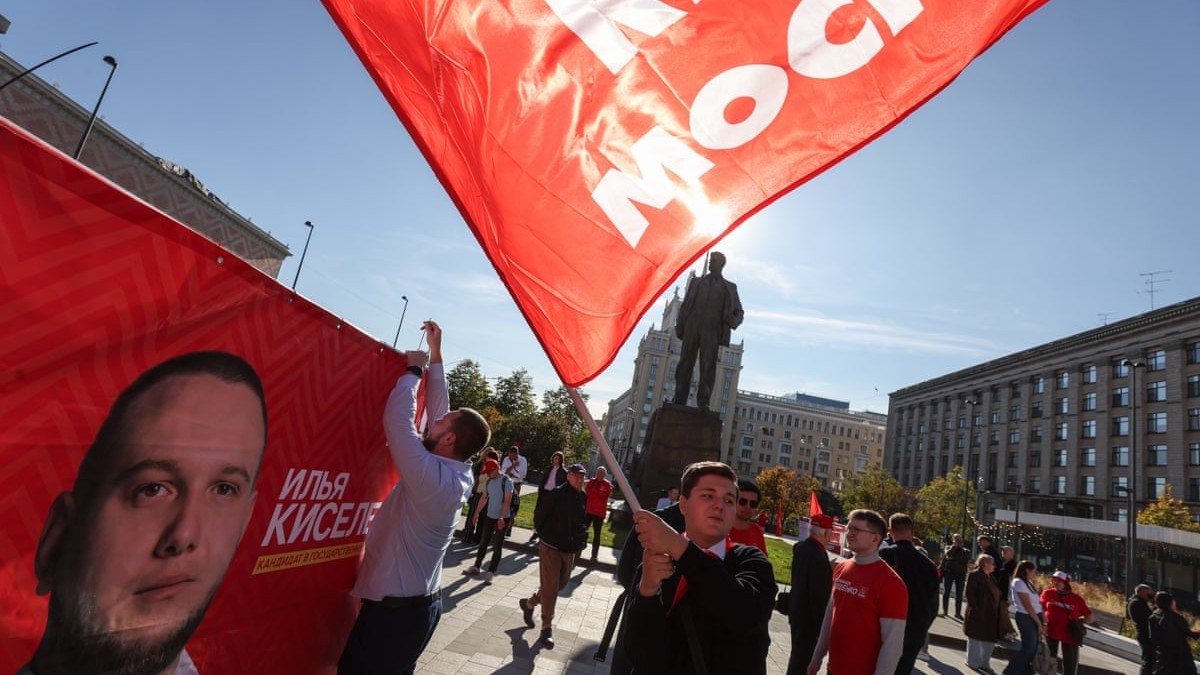
Yabloko's leader Nikolai Rybakov spoiled his ballot paper, covering it in bright green writing declaring "For freedom," "For peace" and "Yabloko." Russia's exiled opposition, including Alexei Navalny's widow Yulia Navalnaya, called on anti-war Russians to vote at noon on Sunday. Long lines formed in some locations, though it was unclear what impact that had on the outcome, Reuters and the Associated Press reported. Thousands of Russians queued outside the embassy in Yerevan, some joining the "Noon for a Peaceful Russia" demonstration with anti-war and anti-Putin posters. Journalist Mark Podberezin said election commission members there made remarks that felt like "outright intimidation," including "You'll have to return to Russia sooner or later, keep that in mind."
What the Observers Recorded
Observers from Yabloko and from the Communist Party reported being denied access to polling stations. A Yabloko observer was detained at a St Petersburg polling station on Saturday, lost consciousness, and was later issued a protocol for disobeying police orders, according to UNN and the Associated Press. In Perm, a Yabloko and a Communist representative were both refused entry at polling station No. 3104.
Electoral analyst Ivan Shukshin reported signs of possible artificial inflation of turnout, citing anomalous figures from individual territorial election commissions. There is no independent confirmation of the scale of the alleged fraud. Parties reported sealed ballot boxes being opened, doors not secured overnight, and a refusal to issue paper ballots. Those claims could not be independently verified.
The CEC itself reported 3,000 cyberattacks on Russia's electoral system over the three days, and Pamfilova said one party tried to plant malware in the remote electronic voting system. The commission also reported three attempts at ballot stuffing nationwide. Russia did not invite observers from the OSCE, with the Foreign Ministry accusing the body of "double standards"; OSCE Parliamentary Assembly President Pere Joan Pons said the decision breached Russia's commitments as a member state. Pamfilova, quoted by RIA, said the attacks had not deterred voters: "The more pressure they put on us, the more we are seeing an unprecedented level of what I would call public unity."
The War Arrived on Counting Day
Ukraine launched what Moscow called the largest drone attack of the war on the capital overnight into Sunday, the final day of voting. Moscow Mayor Sergei Sobyanin said on Telegram: "The biggest attack by enemy drones has been repelled... This unprecedented attack was clearly planned with the aim of disrupting the elections. The enemy did not succeed." He said more than 1,600 drones had been repelled across all defensive lines, including 450 shot down as they approached Moscow.
Russia's Defence Ministry put the previous 24 hours at nearly 2,000 Ukrainian drones and 8 cruise missiles downed, and separately said its forces shot down 1,110 drones across Russia, annexed Crimea and the Black Sea, the Associated Press reported. The mayor's 1,600 figure and the ministry's 1,110 figure for the same period do not agree; both are official Russian statements.
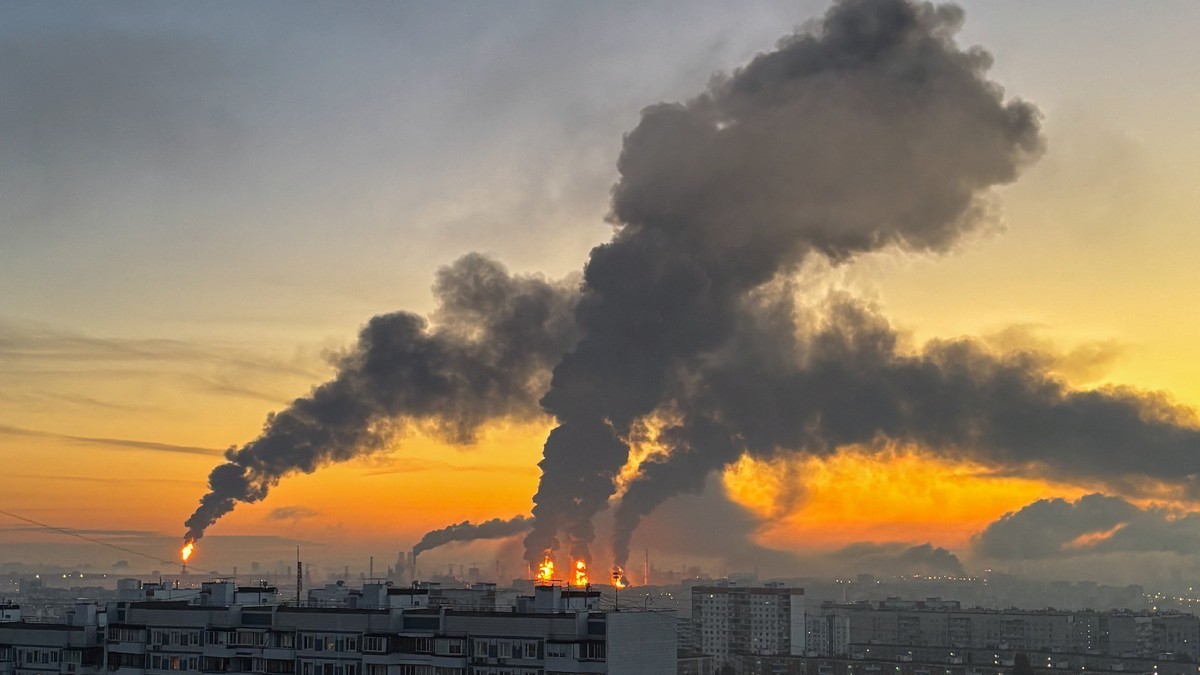
On casualties, Reuters said the strikes killed three people in the Moscow region and two more in the Russian-held part of Ukraine's Kherson region, including an election official. Moscow region Governor Andrei Vorobyov said three were killed, two in the attack and one who died later in hospital, with 20 wounded. The Associated Press said two were killed and 20 wounded across the wider Moscow region. The Guardian reported at least three killed, including a 44-year-old woman and an elderly man. A facility at Moscow's oil refinery was damaged, with flames and columns of smoke rising from the site on the city's outskirts.
The Message Moscow Wants You to Take
Reuters reported the Kremlin is likely to present the results as evidence of public backing for Putin's policies and for the war, now in its fifth year with no sign of ending soon. Putin described the Duma election as the country's most important domestic political event, according to RIA. Deputy chairman of the Security Council and former president Dmitry Medvedev declared that United Russia had performed with dignity, a result he said showed Russians had entrusted it to govern further.
Not everyone reads it that way. The NEST think-tank in Berlin, co-founded by Kremlin critic Mikhail Khodorkovsky, said the vote could still produce awkward moments for the Kremlin at a time of economic strain, and that the Communist party and New People could attract votes the authorities would prefer go to United Russia. It said: "The consequences of the war are increasingly being felt within the country, and accumulated anxiety and frustration may translate into votes for the systemic opposition parties that the Kremlin has allowed to remain on the ballot." The election followed a summer of Ukrainian long-range drone strikes on oil refineries that triggered a widespread fuel crisis, and of attacks on Wildberries and Ozon warehouses, deepening the economic strain.
What Happens Next
The count is not finished, and no final seat allocation for the ninth Duma exists yet; only party-list percentages on partial counts are available, and the 56.66 percent turnout is preliminary. The fraud claims remain unconfirmed. No individual has been named as responsible for the cyberattacks, and Pamfilova did not name the party she accused of planting malware.
For the first time, the election included residents of the four Ukrainian regions Moscow claimed to annex in 2022 — Donetsk, Luhansk, Zaporizhzhia and Kherson — which Russia does not fully control. Voting also took place in Crimea, annexed in 2014. Kyiv, which has suspended elections under martial law, dismissed the Russian vote as a "pseudo election." The European Union called the voting in the annexed regions a "blatant violation of international law," and Romania condemned the elections organised by Putin in Ukraine and Transnistria as a breach of international law. At one polling station in the Russian-held part of Donetsk region, voters dropped their ballots into a box as an armed Russian soldier stood nearby and watched.
By Jessica Ali, Staff Writer
This article was produced with AI-assisted research and editorial support. Sources: Reuters, Associated Press, Bloomberg, CNN, Al Jazeera, The Guardian, BBC Russian, TASS, RIA Novosti, Interfax, Kommersant, Lenta.ru, Meduza, Anadolu Agency, Charter'97, UNN and KP.ru.
What's Your Reaction?
 Like
0
Like
0
 Dislike
0
Dislike
0
 Love
0
Love
0
 Funny
0
Funny
0
 Wow
0
Wow
0
 Sad
0
Sad
0
 Angry
0
Angry
0

Editor-in-Chief at Global1.News. Atlanta-based journalist who cuts through the BS and tells it like it is. Lead anchor, host, and the voice you hear when the spin stops and the truth starts.









Comments (0)