
UK Salmonella Outbreak Linked to Imported Eggs: 474 Cases
The UK Health Security Agency (UKHSA) has confirmed that a significant outbreak of Salmonella Enteritidis, which has now infected 474 people and been linked to two deaths, is likely connected to imported eggs used in the catering industry....
The UK Health Security Agency (UKHSA) has confirmed that a significant outbreak of Salmonella Enteritidis, which has now infected 474 people and been linked to two deaths, is likely connected to imported eggs used in the catering industry. The revelation has reignited a national debate about food standards and supply chain transparency, particularly as the number of cases continues to climb across England, Scotland, Wales and Northern Ireland.
Salmonella Outbreak: The Imported Egg Crisis Shaking UK Food Safety
London, UK – 30 August 2026 — The UK Health Security Agency (UKHSA), working alongside the Food Standards Agency (FSA), has escalated its investigation into a multi-cluster Salmonella Enteritidis outbreak that has now reached 474 confirmed cases. In an update published on 27 August, the agency confirmed that three genetically linked clusters—designated t5.9411, t0.24068 and t5.9765—are being treated as a single, ongoing outbreak. With two fatalities recorded and case numbers rising since June, the investigation has honed in on a likely culprit: imported eggs used in cafes, restaurants and takeaways.

Breaking Down the Numbers: Three Clusters, One Source
The data paints a stark picture of the outbreak’s scale. Cluster 1 (t5.9411) accounts for the majority of infections, with 259 confirmed cases and one death. Sample dates for this cluster range from 11 August 2025 to 8 August 2026, with 189 infections reported in England since late July alone. Patients range in age from under one year to 90 years old, with a median age of 30. Of the 149 cases with available information, 41 required hospital admission—a hospitalisation rate of roughly 27 per cent, notably high for a foodborne illness.
Cluster 2 (t0.24068) has seen 177 confirmed cases in England, with no deaths reported. Sample dates span from 27 May 2025 to 5 August 2026, affecting patients aged under one to 92, with a median age of 29. Of the 27 patients with detailed information, 12 were hospitalised. Cluster 3 (t5.9765) is smaller but no less concerning, with 38 confirmed cases and one death in England. Cases range from age 2 to 87, with a median of 32, and five people have been hospitalised.
Geographically, the vast majority of cases are concentrated in England, but the outbreak has not respected borders. Scotland has reported 13 cases with illness dates between 1 April and 10 August 2026, affecting patients aged 2 to 78 (median 36), with ten of the 13 being female. Smaller numbers have been reported in Wales and Northern Ireland, though the UKHSA has not yet published a full regional breakdown for those nations.
The Imported Egg Hypothesis: A Supply Chain Under Scrutiny
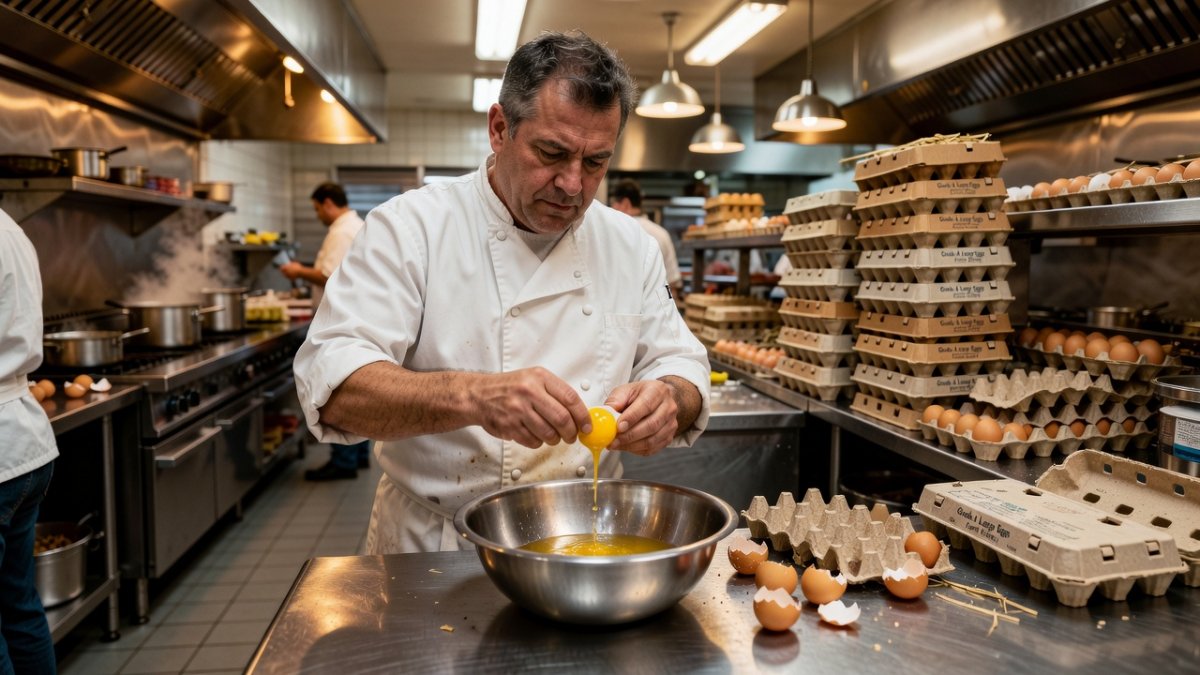
The critical question on everyone’s lips is: where are these eggs coming from? The UKHSA’s latest epidemiological investigation suggests a strong link to imported eggs, with cases associated with eating out—specifically small cafes, restaurants and takeaways. This is a crucial distinction, as imported eggs are predominantly used in the catering sector rather than retail, where British Lion mark eggs dominate the shelves.
Professor Paul Wigley of the University of Bristol, an expert in animal microbial ecosystems, explained the economic pressures driving this trend. "Bought in bulk these eggs are cheaper than UK lion mark eggs and so can end up being used in schools and nursing homes along with cafes, restaurants and takeaways," he said. "The eggs may be mixed batches from different batches, but the clustering of cases suggests there may be a single source."
The scale of imported egg usage is staggering. According to the British Egg Industry Council, approximately 1.6 billion eggs are imported into the UK each year—a figure that has surged by 60 per cent since 2021. This dramatic increase has been driven by changing trade arrangements and acute cost pressures on the hospitality sector, which has struggled with rising energy and ingredient costs. The result is a two-tier egg market: premium, assured British eggs for the home consumer, and cheaper, often unlabelled imports for the catering trade.
International Dimensions: A European-Wide Problem
This is not an isolated British problem. The European Centre for Disease Prevention and Control (ECDC) has reported more than 100 related Salmonella Enteritidis sequence type 11 infections in the Netherlands, with 15 in Belgium, two in Austria, one in Denmark, four in France and six in Germany. At least 34 people across these countries have been hospitalised. In July, the Dutch National Institute for Public Health and the Environment (RIVM) restarted an investigation into a Salmonella Enteritidis outbreak that began in spring 2025, with 111 patients in that cluster, including 31 in 2026.
Previous UK salmonella outbreaks have been linked to eggs imported from European countries such as Poland, though the current source has not yet been definitively identified. Professor Chris Elliott of Queen's University Belfast, an expert in food safety, highlighted the investigative challenges. "All we have been told is that the likelihood is that it's been imported. There is a huge amount of difficulty in tracing the origins of something like this, particularly when it's food service. Within the UK's retail industry, they really know their supply chains extremely well. But with food service, less so."
Professor Mark Stevens, chair of microbial pathogenesis at the University of Edinburgh, noted that the outbreak’s temporal clustering is unusual. "Cases are occurring at the same time, whereas salmonella cases across the UK were usually more spread out," he said. "This is obviously a real challenge for the health protection agencies because they have to now identify that source and try to restrict its entry into the food system. It is of concern to have an outbreak of this size. There are thousands of salmonella cases each year, but rarely are they on this scale where hundreds of people are being infected by a common strain."
Public Health Response: What You Need to Know
Despite the alarming numbers, the UKHSA is keen to stress that the overall risk to the general public remains low. Hannah Charles, Lead Epidemiologist at UKHSA, said: "It's important to emphasise that the overall risk to the general public remains low. In England, all Salmonella samples from patients presenting to hospitals or primary care undergo Whole Genome Sequencing, which provides a good understanding of the emergence of new outbreaks. Our investigation to date indicates a link to imported eggs, however this investigation remains ongoing."
For the average consumer, the key takeaway is that eggs produced in the UK are safe. The FSA guidance is clear: older adults, pregnant women, young children and people with weakened immune systems can safely eat raw or lightly cooked hen eggs, or foods containing them, if the eggs carry the British Lion mark or are produced under the Laid in Britain assurance scheme. However, when eating out, the safest approach for vulnerable people is to ensure eggs are thoroughly cooked and to avoid dishes containing raw or lightly cooked egg, such as mousses, fresh mayonnaise or hollandaise sauce.
Professor Wigley offered a pragmatic piece of advice for the public: "Avoiding runny eggs outside the home, unless lion mark eggs, is perhaps the only step an individual can make." The FSA also advises anyone with symptoms—fever, diarrhoea, abdominal cramps—to stay away from work, school or nursery until symptom-free for at least 48 hours.
Broader Context: A Decade High and a Looming Question
This outbreak arrives at a particularly sensitive time for food safety in the UK. Figures released in May 2026 showed that Salmonella infections in England were at their highest level in a decade. While the UKHSA notes that thousands of salmonella cases occur each year, the scale of this particular outbreak—hundreds of people infected by a common strain—is rare and deeply concerning.
The situation is further complicated by a separate, unrelated US egg recall over salmonella risk involving around 1.6 million eggs in July 2026. While that recall does not affect UK supplies, it underscores the global fragility of egg supply chains and the constant vigilance required to protect public health.
For the UK’s hospitality sector, already grappling with tight margins, the outbreak poses a reputational risk. Small cafes and takeaways that rely on cheaper imported eggs may face increased scrutiny from environmental health officers. For the government, it raises uncomfortable questions about the adequacy of post-Brexit food import controls and whether the current traceability regime for catering supplies is fit for purpose.
As the UKHSA prepares to publish weekly updates on all three clusters, the focus now shifts to identifying the specific source of the contaminated eggs and preventing further infections. Until then, the advice is simple: when eating out, make sure your eggs are thoroughly cooked—and if you are vulnerable, perhaps give the runny yolk a miss.
By Erica Thornton, Staff Writer
This article was produced with AI-assisted research and editorial support. Sources: Channel 4 News, UK Health Security Agency, Food Standards Agency, The Guardian, Food Manufacture, Food Safety News.
What's Your Reaction?
 Like
0
Like
0
 Dislike
0
Dislike
0
 Love
0
Love
0
 Funny
0
Funny
0
 Wow
0
Wow
0
 Sad
0
Sad
0
 Angry
0
Angry
0

US Politics and Policy Correspondent at Global1.News. Based in Washington DC, covering American politics, policy, elections, and the courts. Knows how the system works and tells you what it actually means.















Comments (0)