
Fatal shooting at Swiss rave triggers manhunt
One person killed and five injured in a shooting at a rave at the Schachen racecourse in Aarau, Switzerland, in the early hours of Sunday. Police have launched a manhunt for an unknown perpetrator, with a major operation underway.
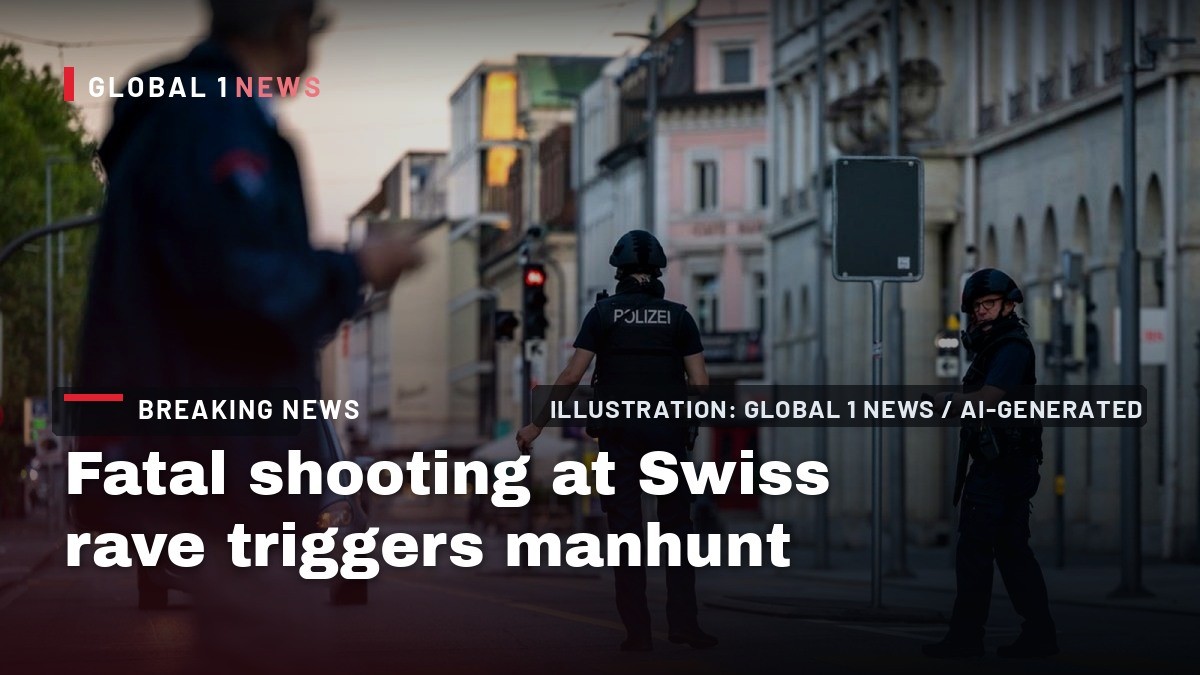
One person has been killed and five others wounded in a shooting at a rave party in the Swiss town of Aarau, prompting a major police operation and a manhunt for an unknown perpetrator. The incident unfolded in the early hours of Sunday at the Schachen racecourse, on the edge of the town, 46km west of Zurich, where an annual techno event was drawing to a close.
Police confirm casualties and launch manhunt
The Aargau Cantonal Police confirmed on social media that one person had died and five were injured, some seriously, in the attack. In a statement posted on X, the force said a "large contingent" had been deployed to the scene and that investigations had begun. "The manhunt for the unknown perpetrator is underway," police said. "Possible motives as well as the exact circumstances of the crime are still unclear."
The confirmation of casualties came after a night of confusion and fear for those at the scene. The fact that police have described the perpetrator as "unknown" suggests that, at this stage, they have not identified a suspect or established a clear line of inquiry. This is a significant detail, as it indicates the investigation is in its very early stages, with officers likely combing through witness statements, CCTV footage, and digital evidence in an attempt to piece together what happened. The appeal for videos and photographs from the public is a standard but crucial part of such an investigation, as mobile phone footage can often provide a more accurate timeline of events than eyewitness accounts given under duress.
Earlier, police had issued a stark warning to the public: "Aarau: Nighttime shots at event in Schachen. Several victims. Major police operation underway. Stay away from the area. More info to follow." The force has urged anyone who captured video or photographs of the incident to share them with investigators, and has asked members of the public to avoid the area entirely. The use of the phrase "major police operation" in the initial alert is telling; it signals that this is not a contained incident but one that requires a significant, visible and sustained response, likely involving armed officers, dog units and aerial support. For residents of Aarau, the sight of such a deployment in their midst will have been deeply unsettling.
Shots fired at annual techno party
The shooting took place on the sidelines of the "Aarauer Rave," an annual techno party that drew around 3,500 people to the Schachen racecourse between 3pm on Saturday and 2am on Sunday, according to Swiss outlet Blick. Witnesses described hearing "repeated shots" shortly after 2.30am, with one video obtained by the newspaper capturing the sound of multiple gunshots at 2.35am.
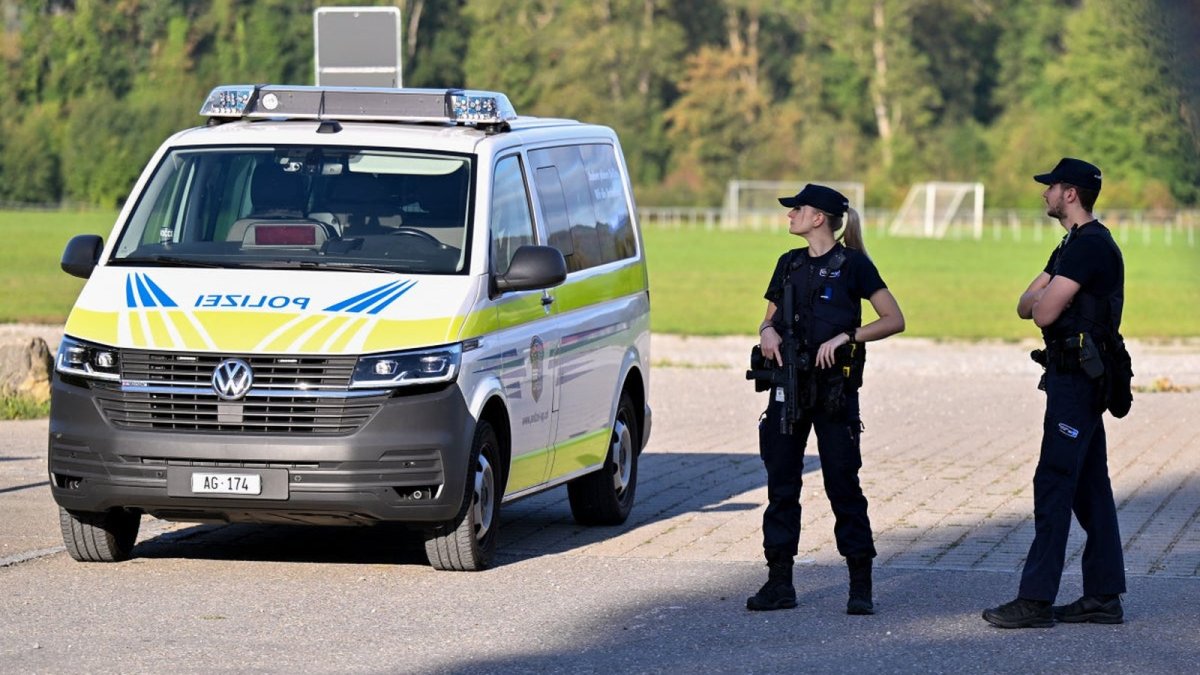
The scale of the event is important context. A gathering of 3,500 people is a substantial crowd, and the fact that the shooting occurred "on the sidelines" suggests it may have happened at the periphery of the main event, perhaps near an entrance or exit, or in a less densely populated area of the racecourse. This could have implications for how many people witnessed the attack directly, and how quickly news of it spread through the crowd. The timing, just after the event's scheduled 2am conclusion, is also notable. It raises the possibility that the shooter targeted the event as it was winding down, when attendees were beginning to disperse and security may have been less vigilant, or that the attack was opportunistic, occurring as the perpetrator happened upon the scene.
One attendee told Blick they initially mistook the noise for fireworks before hiding under the DJ booth. The exact sequence of events remains unclear, with police spokesperson Vanessa Rumpold telling the newspaper: "It is not yet clear what exactly happened." She confirmed that police can currently only verify "several shots being fired at a large group of people." The witness account of initially believing the shots were fireworks is a common reaction to sudden gunfire, particularly in a country where gun violence is rare. It also highlights the confusion and panic that must have swept through the crowd in the immediate aftermath. The decision to hide under the DJ booth, a makeshift structure likely offering little protection, underscores the terror of the moment. The fact that police are only able to confirm "several shots" suggests they have not yet established a precise number of rounds fired, which will be a key detail for ballistic analysis.
Emergency response and ongoing operation
The scale of the police response has been significant. The Aargau Cantonal Disaster Response Unit (KKE) and an army Super Puma helicopter were deployed to the site, according to Blick, underscoring the seriousness with which authorities are treating the incident. The helicopter was reportedly used to support the ground operation, though its precise role has not been disclosed.
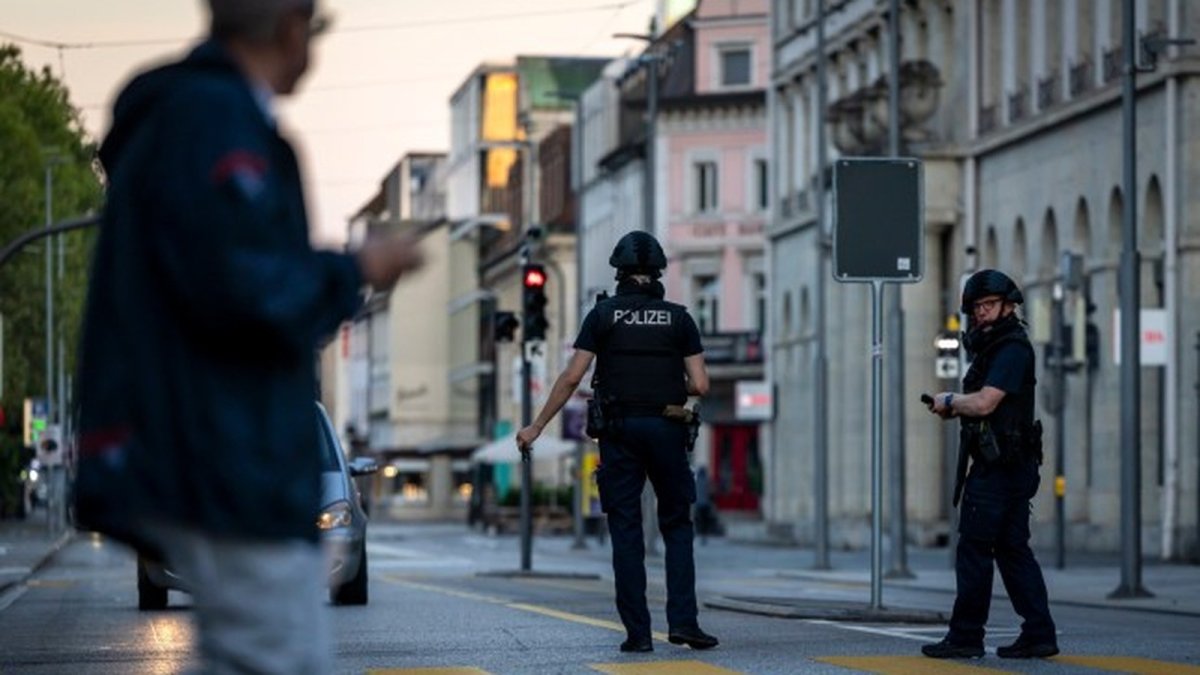
The deployment of the KKE, a specialised unit designed to respond to major incidents and disasters, is a strong indicator of the severity of the situation. This is not a unit that is called out for routine incidents; it is mobilised for events that overwhelm normal police resources. The involvement of the army's Super Puma helicopter adds another layer of complexity. While its role has not been specified, such aircraft are often used for aerial surveillance, search operations, or the rapid transport of personnel or equipment. In the context of a manhunt, a helicopter can provide a significant advantage, allowing officers on the ground to coordinate their search over a wide area and potentially track a fleeing suspect. The fact that these resources were deployed within hours of the shooting suggests that police were, at least initially, treating the possibility of the perpetrator still being in the vicinity as a serious concern.
The fallout has extended beyond the immediate crime scene. Aarau's public swimming pool has been closed until further notice because of the ongoing operation. "Due to the ongoing major police operation, Aarau Swimming Pool will remain closed until further notice. Visitors are requested to stay away from Aarau Schachen," police said in another post on X. It remains unclear whether anyone has been apprehended in connection with the shooting. The closure of the swimming pool, which is located in the Schachen area, is a practical measure to ensure public safety and to allow investigators to work unimpeded. It also serves as a visible reminder to the local community that the situation is not yet resolved. The fact that the pool remains closed, rather than being reopened after a few hours, suggests that the police operation is still active and that the area is still being treated as a potential crime scene or search zone.
A rare act of violence in a country with deep gun culture
The shooting stands out sharply against Switzerland's broader record on violent crime. While the country has one of the highest rates of civilian gun ownership in Europe — with around 27 firearms for every 100 residents, behind only a small group of nations such as Finland, Austria and Norway — violent shootings remain rare. The country's gun culture is deeply rooted in its militia-based military system, under which many men complete compulsory service, and a significant share of households possess firearms linked to military or shooting club participation.
This paradox — high gun ownership but low gun violence — is often attributed to the cultural and regulatory framework within which firearms are held. The militia system, which requires many men to keep their service weapons at home, has historically normalised the presence of guns in Swiss households. However, this is not a situation of unregulated access. Strict rules govern the storage and use of these weapons, and the system is underpinned by a strong culture of marksmanship and responsibility.
However, rules on keeping service weapons at home have been tightened over time, and in 2019 Swiss voters approved stricter gun control measures in a referendum, aligning the country's firearms laws more closely with those of the European Union. The Aarau shooting will inevitably reignite questions about the balance between Switzerland's traditions of civilian marksmanship and the need for public safety, even if the incident appears to be an outlier in the country's crime statistics. The fact that this attack occurred at a large public event, rather than in a domestic or gang-related context, adds a new dimension to the debate. It raises questions about the security of large gatherings and whether current measures are adequate to protect attendees. It is important to note, however, that the police have not yet commented on the type of weapon used, its origin, or whether the shooter held a valid permit. Until these details emerge, any discussion of policy implications remains speculative.
Questions remain as investigation unfolds
As the manhunt continues, several critical questions remain unanswered. Investigators have yet to establish a motive, and it is not known whether the shooter acted alone or had any connection to the event or its attendees. The fact that the shots were fired at a large group of people, rather than at a specific individual, raises the possibility of a random or indiscriminate attack, though police have not confirmed this.
The absence of a stated motive is a significant gap in the public's understanding of this event. In many shooting incidents, a motive or a statement emerges relatively quickly, but here, police have been explicit that the circumstances are "still unclear." This could mean that the shooter has not been identified, that no communication has been found, or that the investigation is simply too early to draw conclusions. The possibility of a random attack is deeply concerning for the public, as it suggests a level of unpredictability that is difficult to guard against. However, it is equally possible that the shooter had a specific grievance or connection to the event that has not yet come to light. The police appeal for footage and information suggests they are still in the process of building a picture of what happened, and it may be some time before a clearer narrative emerges.
The timing of the shooting — just after 2.30am, as the rave was scheduled to end at 2am — suggests the perpetrator may have struck as crowds were dispersing, potentially complicating efforts to identify witnesses or secure CCTV footage. Police have appealed for anyone with information to come forward, and the public has been asked to share any footage they may have captured. The dispersal of a large crowd in the dark, in the aftermath of gunfire, presents a significant challenge for investigators. Witnesses may have been intoxicated, disoriented, or focused on fleeing the scene rather than observing details. The quality and availability of CCTV coverage at a temporary event venue like a racecourse is also uncertain. This is why the appeal for mobile phone footage is so critical; it may provide the only reliable visual record of the attack and the perpetrator's movements before and after the shots were fired.
What happens next
The immediate priority for the Aargau Cantonal Police will be to locate and apprehend the shooter. This will involve a coordinated effort between ground units, the helicopter, and potentially specialist firearms teams. The manhunt is likely to focus on the immediate vicinity of Schachen, but could quickly expand to transport hubs, border crossings, and other key locations if there is any indication the perpetrator has fled the area. The public has been asked to stay away from the area, which will help officers work more efficiently and reduce the risk of any further incidents.
In the coming days, the investigation will shift towards establishing a timeline of events, identifying the weapon used, and tracing the perpetrator's movements in the lead-up to the attack. Autopsies on the deceased and medical reports on the wounded will provide crucial forensic evidence. Police will also be analysing the footage and photographs submitted by the public, as well as any CCTV from the racecourse and surrounding businesses. The closure of the swimming pool suggests that the police operation is still in its active phase, and it is likely to remain closed until investigators are satisfied that the area has been thoroughly searched and documented. For the community of Aarau, the coming days will be a period of shock and mourning, as they come to terms with an act of violence that is profoundly out of character for their town and their country.
By Erica Thornton, Staff Writer
This article was produced with AI-assisted research and editorial support. Sources: The Independent, Aargau Cantonal Police, Blick.
What's Your Reaction?
 Like
0
Like
0
 Dislike
0
Dislike
0
 Love
0
Love
0
 Funny
0
Funny
0
 Wow
0
Wow
0
 Sad
0
Sad
0
 Angry
0
Angry
0

US Politics and Policy Correspondent at Global1.News. Based in Washington DC, covering American politics, policy, elections, and the courts. Knows how the system works and tells you what it actually means.











Comments (0)