
Millions across UK to receive texts warning of air pollution in their area
The Government has launched a free text message and email alert system designed to warn people across the United Kingdom when air pollution reaches dangerously high levels in their neighbourhoods. The opt-in service, unveiled by Environment Secretary Dame Angela Eagle, allows members of the public to select specific locations – from their home address and workplace to their local park – and receive direct notifications when air quality deteriorates.
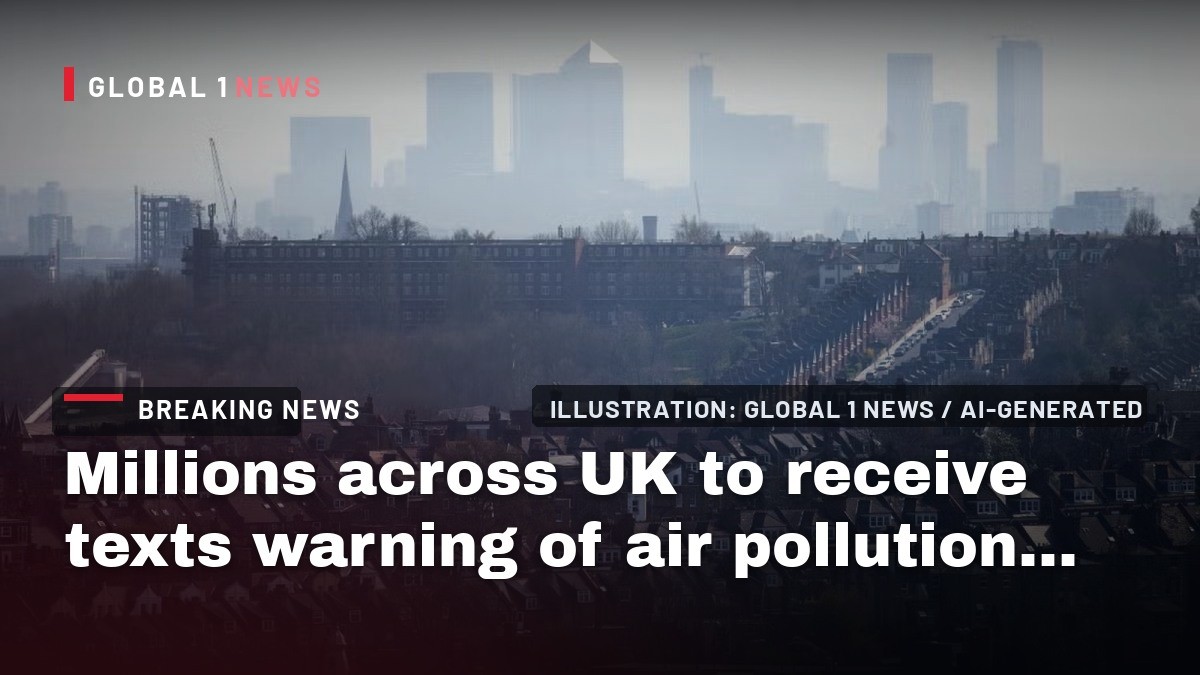
Millions across UK to receive texts warning of air pollution in their area
The Government has launched a free text message and email alert system designed to warn people across the United Kingdom when air pollution reaches dangerously high levels in their neighbourhoods. The opt-in service, unveiled by Environment Secretary Dame Angela Eagle, allows members of the public to select specific locations – from their home address and workplace to their local park – and receive direct notifications when air quality deteriorates. The move marks a significant shift in how Whitehall communicates environmental health risks, moving from passive data publication towards proactive, personalised public health messaging.
Ministers have framed the initiative as a practical tool for the most vulnerable members of society, particularly those living with respiratory conditions such as asthma, who are disproportionately affected by poor air quality. The scheme delivers on a commitment set out in the Government's environmental improvement plan, which promised to enhance public access to air pollution data. It arrives amid growing political and medical consensus that air pollution represents one of the most pressing – and most solvable – public health challenges facing the nation.
How the new alert system works
The service operates on a simple but potentially life-changing premise: users register their chosen locations on the Gov.UK website, and the system monitors air quality in those specific areas. When pollution is recorded as high, or forecast to reach elevated levels within the coming days, subscribers receive an immediate alert via text message or email. This allows individuals to take practical steps to reduce their exposure – whether that means avoiding outdoor exercise, keeping windows closed, or ensuring inhalers are close at hand.
The opt-in nature of the scheme is deliberate. Unlike emergency alert systems that broadcast to all mobile phones in a given area, this service requires active registration, ensuring that those who receive warnings have explicitly requested them. Officials believe this targeted approach will increase the likelihood that recipients act on the information, rather than becoming desensitised to frequent notifications. The system also allows users to monitor multiple locations simultaneously, which could prove particularly valuable for parents wanting to check air quality at their children's schools, or for commuters tracking conditions along their daily travel routes.
Dame Angela Eagle said: "We want everyone to have access to clear, reliable information about the air they breathe. This new service will make it easier for people to understand air pollution in their local area and take practical steps to protect their health, particularly those living with conditions such as asthma." The Environment Secretary added that better access to air quality information represents "another way this government is tackling air pollution and protecting people's health."
The five pollutants that threaten public health
The monitoring service tracks five key pollutants, each with distinct sources and health impacts. Particulate matter – specifically PM2.5 and PM10 – comprises tiny particles suspended in the air, originating from vehicle exhausts, industrial processes, construction sites and domestic wood burning. PM2.5 particles are particularly dangerous because their microscopic size allows them to penetrate deep into the lungs and enter the bloodstream. Nitrogen dioxide (NO2), primarily emitted by diesel engines and gas boilers, is a respiratory irritant linked to the development of asthma in children and the exacerbation of chronic obstructive pulmonary disease in adults.
Ground-level ozone (O3) forms when sunlight reacts with pollutants from vehicles and industry, and while it provides protection in the upper atmosphere, at ground level it can trigger coughing, throat irritation and breathing difficulties. Sulphur dioxide (SO2), produced mainly by power stations and industrial facilities burning fossil fuels, is a colourless gas that can constrict airways and worsen symptoms for those with existing lung conditions. Together, these five substances account for the vast majority of air pollution-related health harm in the UK, and their monitoring forms the backbone of the Government's new alert system.
The health economics of air pollution are stark. Treating conditions exacerbated by poor air quality – asthma attacks, cardiovascular events, lung disease – costs the NHS millions of pounds each year. Public Health England has previously estimated that air pollution contributes to tens of thousands of deaths annually across the UK, making it a greater public health burden than obesity or alcohol consumption in some analyses. The new alert system will not reduce pollution levels directly, but it represents a crucial adaptation strategy for a nation learning to live with poor air quality while longer-term mitigation measures take effect.
Government's wider air quality agenda
The alert service forms part of a broader package of measures the Government says it is pursuing to tackle air pollution at source. Officials have pointed to ongoing work to simplify industrial permits, making it easier for regulators to enforce emissions limits and penalise polluters. The Government is also consulting on stricter emissions standards for new wood-burning appliances, a significant source of particulate pollution in urban and suburban areas. Domestic wood burning has surged in popularity in recent years, and environmental campaigners have long argued that the romantic appeal of a log fire masks a serious contribution to localised air pollution.
These measures sit alongside existing policies such as the expansion of clean air zones in cities including London, Birmingham and Bristol, which charge older, more polluting vehicles to enter urban centres. The Government has also committed to phasing out the sale of new petrol and diesel cars by 2035, a target that will dramatically reduce NO2 emissions from road transport over the coming decade. However, critics have noted that air quality improvements have been uneven across the country, with rural areas and smaller towns often overlooked in favour of high-profile city schemes.
The environmental improvement plan, under which the alert service was developed, represents the Government's overarching strategy for reversing biodiversity loss and improving environmental quality by 2030. Air quality monitoring is a central pillar of that plan, and officials believe the new alert system will empower citizens to make informed decisions about their daily activities. The service also aligns with the Government's broader digital transformation agenda, which has seen increasing numbers of public services move online and adopt personalised communication strategies.
Sir Chris Whitty's stark warning on health impacts
England's chief medical officer, Sir Chris Whitty, has lent his considerable authority to the initiative, describing air pollution as "an extremely important, solvable health problem." In a statement accompanying the launch, Sir Chris outlined the full spectrum of harm caused by poor air quality, from "poor pregnancy outcomes" and "childhood lung disease" to "long-term health conditions including cancers, heart disease and stroke." His intervention underscores the medical establishment's growing frustration with the slow pace of air quality improvement and its determination to see public health considerations placed at the centre of environmental policy.
Sir Chris was explicit about who bears the greatest burden: "The health impacts are greatest for the most vulnerable – children, pregnant women and people with pre-existing cardiovascular or lung conditions." This framing is significant because it moves the debate beyond generalised concerns about pollution towards a sharper focus on health inequality. Deprived communities in the UK consistently experience higher levels of air pollution than affluent areas, and residents of those communities are often less able to take protective measures such as relocating or installing home filtration systems.
The chief medical officer's characterisation of air pollution as "solvable" is a deliberate choice of words. Unlike many public health challenges that require complex behavioural changes or expensive medical interventions, air pollution can be addressed through regulation, technology and urban design. The alert system is a recognition that while the Government works towards those longer-term solutions, individuals need immediate tools to protect themselves and their families.
How to sign up and what to expect
Members of the public can register for the service directly through the Gov.UK website, where they will also find detailed information about current air quality levels in their area. The sign-up process requires users to specify which locations they wish to monitor, and they can add or remove locations at any time. Notifications will be sent only when pollution levels are recorded as high or forecast to reach elevated levels, meaning users should not expect a constant stream of alerts during periods of good air quality.
The service is free to use, and officials have emphasised that it is designed to be accessible to all, including those who may not consider themselves particularly vulnerable to air pollution. Even healthy individuals can experience short-term symptoms such as coughing, wheezing and eye irritation during high pollution episodes, and the alerts may prompt sensible precautions such as reducing strenuous outdoor activity. For those with chronic conditions, however, the alerts could prove genuinely life-saving, allowing them to adjust medication use or avoid exposure before symptoms develop.
The launch of the alert system raises important questions about how the UK communicates environmental health risks in an era of increasing climate volatility. Heatwave warnings, flood alerts and pollen forecasts have all become routine features of British life, and air quality alerts now join that pantheon of public information services. The challenge for the Government will be ensuring that the service reaches those who need it most, particularly elderly people, those with limited digital literacy, and communities where air pollution levels are highest.
What this means for public health in the UK
The introduction of a nationwide air quality alert system represents a meaningful step forward in the UK's approach to environmental public health. For decades, air pollution data has been collected and published by government agencies, but it has largely remained the preserve of academics, campaigners and local authority officers. By translating that data into personalised, actionable warnings, the Government is effectively democratising access to environmental health information and treating air pollution as the serious medical issue that clinicians have long argued it to be.
The scheme also signals a shift in the Government's relationship with citizens on environmental matters. Rather than simply imposing regulations from Westminster, the alert system invites individuals to become active participants in managing their own health risks. This approach has precedents in other areas of public health – from the "Catch It, Bin It, Kill It" campaign during the pandemic to the long-running anti-smoking messaging – and it reflects a broader trend towards personalised, preventative healthcare.
However, the alert system is not a substitute for meaningful action on pollution reduction. The Government's own advisers have repeatedly warned that current targets for particulate matter are not ambitious enough to protect public health, and that thousands of premature deaths could be avoided with stricter standards. The alert service may help individuals navigate the current reality of polluted air, but the ultimate goal must be to make such warnings unnecessary. As Sir Chris Whitty noted, air pollution is a solvable problem – and the solution lies not in teaching people to live with dirty air, but in cleaning the air itself.
By Erica Thornton, Staff Writer
This article was produced with AI-assisted research and editorial support. Sources: The Independent.
What's Your Reaction?
 Like
0
Like
0
 Dislike
0
Dislike
0
 Love
0
Love
0
 Funny
0
Funny
0
 Wow
0
Wow
0
 Sad
0
Sad
0
 Angry
0
Angry
0

US Politics and Policy Correspondent at Global1.News. Based in Washington DC, covering American politics, policy, elections, and the courts. Knows how the system works and tells you what it actually means.











Comments (0)