
Karnataka Food Safety Raids: KFC Outlet Sealed, 1,000+ kg Expired Meat Seized in Mysuru, Mangaluru
The Karnataka Food Safety and Drug Administration Department has intensified its statewide crackdown on food adulteration and unsafe storage practices, seizing more than 1,000 kg of expired and contaminated food products across Bengaluru, Mysuru, and Mangaluru in an operation that has now ensnared major hotel chains and a global fast-food franchise.
The Karnataka Food Safety and Drug Administration Department has intensified its statewide crackdown on food adulteration and unsafe storage practices, seizing more than 1,000 kg of expired and contaminated food products across Bengaluru, Mysuru, and Mangaluru in an operation that has now ensnared major hotel chains and a global fast-food franchise. The enforcement drive, conducted between August 15 and 16, 2026, comes amid growing public concern over food hygiene standards in the state's hospitality sector.
Karnataka's Food Safety Crackdown: 1,000+ kg of Expired Meat Seized, KFC Outlet Sealed in Mangaluru as Statewide Drive Targets Hotels and Quick-Commerce
Bengaluru, Karnataka – August 16, 2026 — The Karnataka Food Safety and Drug Administration Department has seized over 1,000 kg of unsafe food items during recent operations across the state, with inspections on August 15-16, 2026, uncovering expired chicken, rotten vegetables, and fungal contamination in three-star and five-star hotels in Mysuru and a sealed KFC outlet in Mangaluru. The enforcement, conducted under the Food Safety and Standards Act, 2006, has now expanded to government canteens and quick-commerce warehouses, signaling a comprehensive regulatory overhaul of the state's food supply chain.
Mysuru Raids: 81 kg of Expired Meat Seized from Three Hotels
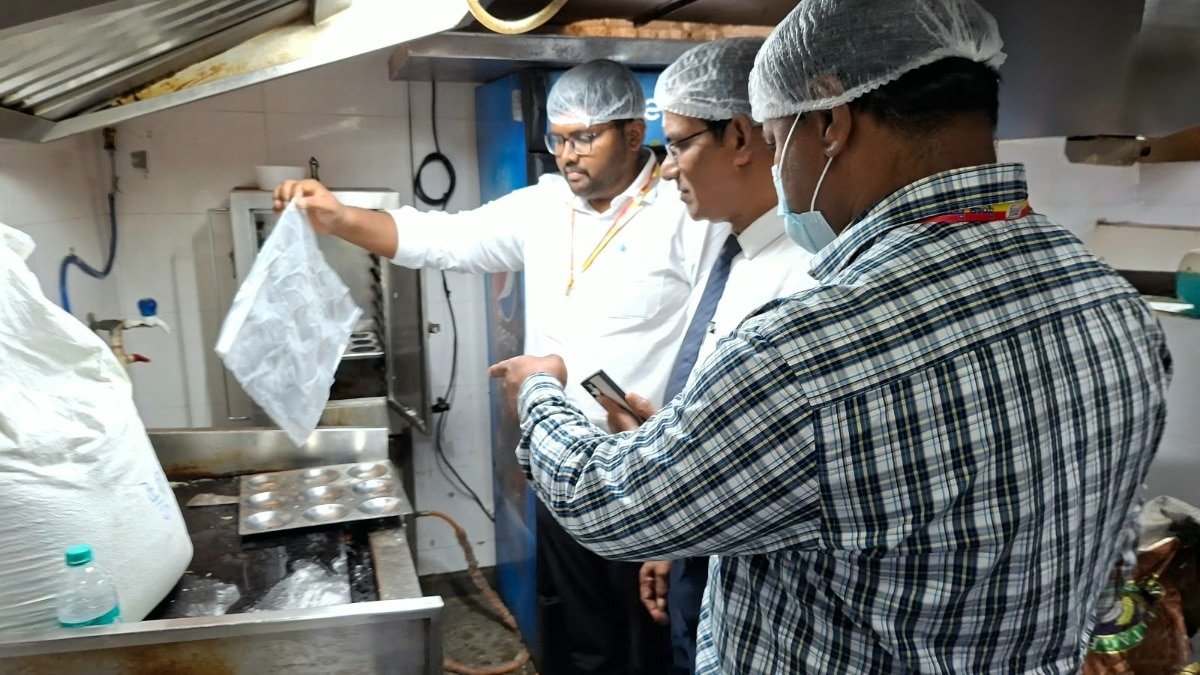
On Saturday, August 15, 2026, food safety teams conducted coordinated inspections across Mysuru city and district, targeting hotels and resorts that had been flagged for potential violations. The operation yielded significant seizures: 9 kg of expired chicken was confiscated from Rio Meridian Hotel, while 68 kg of meat was seized from Grand Mercure Hotel, and 4 kg of mushrooms were removed from Q Star Hotel — totaling approximately 81 kg of unsafe food products in a single day's operation.
The inspections extended to Mysuru and Nanjangud taluks, where teams covered three resorts and issued three formal notices for regulatory violations. Officials collected five food samples for laboratory analysis — two legal samples and three survey samples — to determine the extent of contamination and spoilage. Additionally, around 16 kg of expired and perishable food items were discarded on-site, preventing their potential entry into the consumer market.
The hotels have been directed to rectify their storage protocols and comply with the licensing regulations under the Food Safety and Standards Act, 2006, which mandates strict temperature control, sanitation, and waste disposal systems for all food business operators. Officials said the seized materials showed clear signs of improper storage and temperature control failures.
Mangaluru KFC Outlet Sealed: 9-Month-Old Chicken and 20-Hour Thawing Violations
In coastal Karnataka, a surprise inspection at a KFC outlet in City Centre Mall on K.S. Rao Road in Mangaluru resulted in the outlet's closure after officials discovered severe food safety violations. The inspection was triggered by a consumer complaint that a Chicken Peri Peri Leg purchased online tasted stale and was unfit for consumption — a complaint that proved to be the tip of a much larger iceberg.
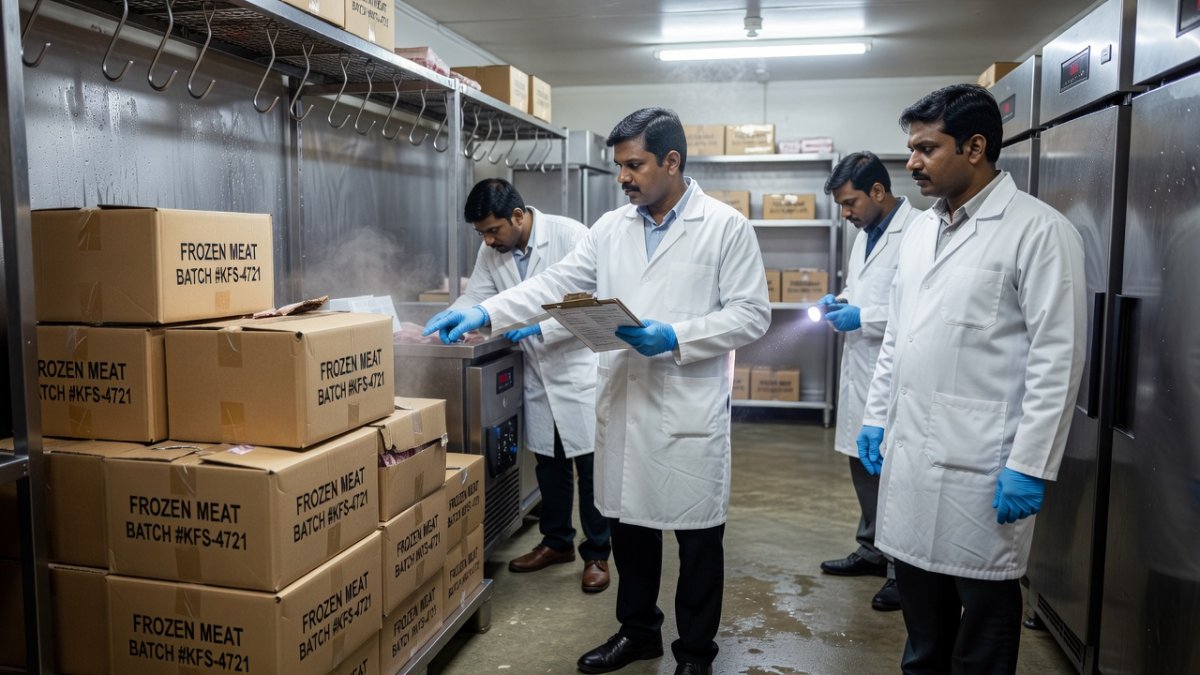
Officials from the Karnataka Food Safety and Drug Administration Department examined the outlet's kitchen, storage areas, cold rooms, freezers, cooked food stocks, and frying oil. Their findings were alarming: frozen chicken had been thawed for 20-22 hours before cooking, a practice that food safety experts flag as a contamination risk. Times Now reported that the outlet was sealed after chicken meat stored for approximately 9 months was discovered on the premises — a clear violation of FSSAI regulations that mandate strict inventory rotation and expiry management.
District Food Safety Officer Dr. Praveen Kumar C.H. stated that the outlet was instructed to shut down for thorough cleaning and removal of foul-smelling, rotten, and spoiled materials before any potential reopening. The sealing of a major international franchise outlet underscores the state's commitment to enforcing food safety standards regardless of brand reputation or market position.
What This Means for India: Consumer Protection and Regulatory Accountability
This crackdown represents a significant shift in India's food safety enforcement landscape. For Indian consumers, particularly the millions of Indians who eat outside their homes regularly, these raids signal that regulatory bodies are finally taking proactive measures rather than reactive ones. The Karnataka operation, which has now expanded to include government complexes in Bengaluru — Vidhana Soudha, Vikasa Soudha, and Arogya Soudha — found unhygienic food handling, inadequate pest control, and expired ingredients in facilities serving state government employees and visitors.
The inclusion of quick-commerce storage centres in the enforcement net is particularly noteworthy. Earlier in August 2026, a Zepto warehouse in Hoskote taluk was sealed, and Blinkit operations were suspended in Bengaluru following raids conducted between August 11-13. These actions reflect growing regulatory scrutiny of the rapid delivery ecosystem, which has expanded exponentially in Indian cities but has often lagged in maintaining cold-chain integrity and inventory management standards.
For Indian taxpayers, the enforcement drive represents a dual benefit: protection from foodborne illnesses and accountability for public institutions that have historically operated with impunity. The inspections at Indira Canteens, which serve subsidized meals to urban poor populations, indicate that food safety is being treated as a universal right rather than a privilege for those who can afford premium restaurants.
Statewide Enforcement: 60 Hotels Inspected in Bengaluru Urban District Alone
The scale of the Karnataka operation is unprecedented in recent memory. In Bengaluru Urban district alone, teams inspected 60 three-star and five-star hotels and collected 77 food samples for laboratory testing. This intensive scrutiny of premium establishments challenges the assumption that higher price points correlate with higher safety standards — a myth that has been systematically dismantled by the discovery of expired food products, rotten vegetables, fungal contamination, and improper meat storage in some of the state's most prestigious hospitality venues.
The enforcement drive has been coordinated across multiple districts, with teams operating simultaneously in Bengaluru, Mysuru, and Mangaluru to prevent tip-offs and ensure surprise inspections. This operational strategy mirrors the approach taken by Maharashtra FDA Commissioner Tukaram Mundhe, whose crackdown on restaurants in Mumbai earlier in 2026 set a national precedent for aggressive food safety enforcement. The Karnataka operation appears to be following this template, with state officials coordinating with district-level teams to maximize coverage and impact.
The legal framework for these actions is well-established under the Food Safety and Standards Act, 2006, which empowers designated officers to conduct inspections, seize unsafe products, and initiate prosecution proceedings. The Act's provisions on licensing regulations require all food business operators to maintain temperature control, sanitation, and waste disposal systems — requirements that many establishments have historically treated as optional rather than mandatory.
Expert Perspectives: Public Health Implications and Industry Response
Public health experts in India have welcomed the Karnataka crackdown as a necessary corrective to years of inadequate enforcement, even as they caution that the 1,000+ kg of seized food represents only a fraction of the unsafe food circulating in the state's supply chain. The visible seizures, they argue, are only the beginning — the real deterrent effect comes from every hotel owner, restaurant manager, and warehouse operator now knowing that inspections are real, frequent, and consequential.
The hospitality industry has responded with a mix of compliance pledges and operational adjustments. Hospitality industry bodies have urged members to conduct internal audits and rectify storage practices before the next round of inspections. However, industry insiders acknowledge that the cost of compliance — including upgraded cold storage, regular staff training, and more frequent inventory rotation — will be passed on to consumers in the form of higher prices.
The timing of this crackdown is significant, coming just ahead of the festive season when food consumption and out-of-home dining typically spike across Indian cities. The Karnataka Food Safety and Drug Administration Department appears to be positioning itself to prevent the seasonal surge in foodborne illnesses that has historically accompanied Diwali, Christmas, and New Year celebrations. For Indian consumers, this proactive approach represents a welcome departure from the reactive model that has dominated food safety enforcement for decades.
The Bottom Line
The Karnataka food safety crackdown, which has now seized over 1,000 kg of unsafe food products and sealed a KFC outlet in Mangaluru, represents a watershed moment in India's food safety enforcement landscape. With 60 hotels inspected in Bengaluru Urban district alone, 77 samples collected for laboratory testing, and operations extending from Mysuru's Rio Meridian Hotel to government canteens at Vidhana Soudha, the message is unambiguous: food safety compliance is no longer optional for any food business operator in the state. The 81 kg of expired meat seized from three Mysuru hotels on August 15, the 9-month-old chicken found at the Mangaluru KFC, and the 20-22 hour thawing violations all point to systemic failures that have now been exposed. For Indian consumers, this enforcement drive offers genuine protection; for the industry, it signals a new era of accountability; and for regulators across the country, Karnataka has provided a template for what rigorous, statewide food safety enforcement looks like in practice.
— By Dr. Raj Patel, Staff Writer
This article was produced with AI-assisted research and editorial support. Reporting is based on sources cited in the article.
What's Your Reaction?
 Like
0
Like
0
 Dislike
0
Dislike
0
 Love
0
Love
0
 Funny
0
Funny
0
 Wow
0
Wow
0
 Sad
0
Sad
0
 Angry
0
Angry
0

India/South Asia Correspondent at Global1.News. Analytical voice with a background in science and health journalism. Based in New Delhi, covering Indian politics, education, healthcare, technology, and policy. Breaks down complex data into clear, actionable reporting.











Comments (0)