
Tusk Warns Russia Is Planning 'Accidental' Strikes on NATO as Slovakia's Leader Balks at Article 5
Polish PM Donald Tusk told parliament that Russia is planning hybrid drone and missile strikes on NATO countries it will label accidents, while Slovakia's PM Fico said he would keep his country out of a war over Article 5.
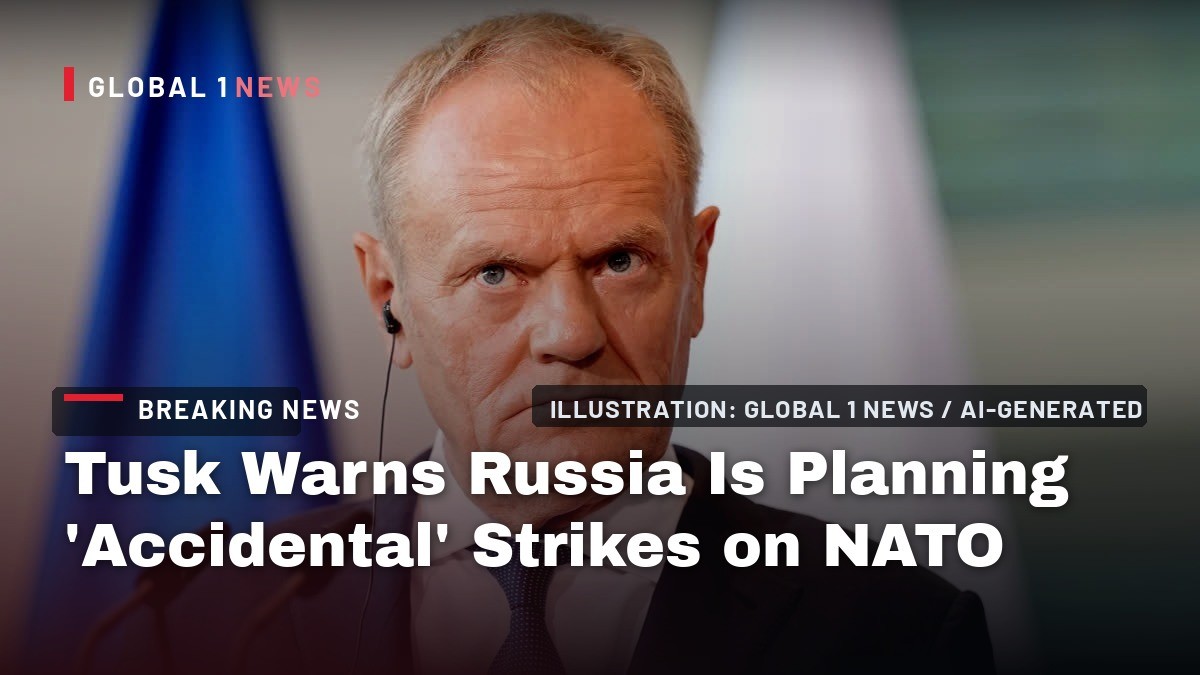
Poland's prime minister told his parliament that Moscow is preparing strikes on NATO soil — and plans to call them accidents. The same week, Slovakia's prime minister stood up in a Slovak city and said he would do everything to keep his country out of a war over Article 5.
Tusk Warns Russia Is Planning 'Accidental' Strikes on NATO as Slovakia's Leader Balks at Article 5
Warsaw, Poland — Polish Prime Minister Donald Tusk told the Sejm on Thursday, September 17, that Russian planning includes hybrid strikes with drones and missiles on countries supporting Ukraine, Poland among them, and that the official narration afterward would be that it was an accident with no reason for NATO to respond. The same day, Slovak Prime Minister Robert Fico said publicly in the eastern Slovak city of Presov that he does not want Slovakia to be part of an armed conflict "because of some Article 5."
What Tusk Told Parliament
Tusk laid out before the Polish parliament what he said the intelligence shows. "The Russian plan, according to intelligence assessments ... includes hybrid strikes using drones and missiles on countries supporting Ukraine, including Poland," he told deputies.
"There is a real risk that drones or other types of projectiles will enter the territory of one or several countries on the eastern flank and even cause destruction," he said. "The official narration will be that it's an accident and there is no reason for NATO to think about a response."
He said his warnings have grown increasingly specific as intelligence arrived from NATO, Ukrainian and U.S. secret services, including the CIA. He said Russia is not ready for any peace talks "without the total capitulation of Ukraine," and that intelligence indicates continuous attacks of "very high frequency and intensity" on six main Ukrainian cities should be expected in the near future.
The Plan Moscow Would Call an Accident
The mechanism Tusk described is not a battlefield breakthrough. It is a messaging operation built on a projectile: strike, declare the strike unintended, and dare the alliance to treat an accident as an attack.
The aim, he said, is to "paralyze or at least weaken the motivation of NATO countries" to rush to the defense of the member state coming under attack. The broader target is cohesion, and the specific belief Moscow wants to plant is that Article 5 is "more theoretical than practical."
Tusk said he would consult NATO allies on preparing a potential joint response. Polish officials have warned that response could take the form of sabotage or a sharp intensification of hybrid warfare "on a scale that we have not seen before," or other actions along NATO's borders.
Why Jet-Powered Drones Change the Arithmetic
Tusk said Russia has become more dangerous because it is increasingly using jet-powered drones, which fly higher and faster and are therefore more difficult for air defense to detect before they reach their targets.
That is the technical core of the warning. A slower propeller-driven drone gives radar operators and interceptor crews time to work with. A jet-powered airframe compresses that window on a frontier where the gap between a target in western Ukraine and NATO territory is measured in a few kilometres.
The arithmetic was on display this week. A Russian drone fell or was destroyed just several kilometres from Poland during Thursday's attack on western Ukraine, prompting Warsaw to scramble military aircraft and ready its air defenses. Polish airspace was not breached.
The Border Is Already Being Hit
This is not hypothetical. Tusk said four border-crossing incidents happened on Poland's frontier with Ukraine in the past week, and several others took place in recent weeks on Ukraine's border with Moldova.
On the night of September 12 into September 13, a Russian air raid set fire to a petrol station and several lorries at the Yahodyn-Dorohusk crossing, some 800 metres from Poland's border, according to Ukrainian customs, the state rail operator Ukrzaliznytsia, the State Border Guard Service and the regional military administration. The customs service confirmed the fire. The State Border Guard Service said the checkpoint itself was not hit.
Polish fighter jets were operating from 4 a.m. Sirens sounded across the Lublin region at around 4:15, an RCB alert covered six areas, and the immediate threat was called off at about 5 a.m. The Polish military stated that no violation of the airspace of the Republic of Poland was recorded.
A Sixth Checkpoint, and a Train Full of Dignitaries
The Yahodyn-Dorohusk strike was the sixth Ukrainian checkpoint, or facility directly connected with one, hit by Russian drones since August 20 — and the first on the border with Poland.
Hours later, a drone struck a train near the frontier shortly after senior visiting officials had passed through the same station, Ukraine's state rail operator said. A diplomatic train carrying former British Prime Minister Boris Johnson, former Swedish Prime Minister Carl Bildt and security advisers from several EU states had left Yahodyn station ahead of schedule on the way back from a security conference in Kyiv.
"This wasn't our train, but the one just minutes after us by the Polish border crossing," Bildt wrote on X. "It was evacuated as the Russian drone approached and no one was hurt."
Another train, with former CIA Director David Petraeus aboard, was still at Yahodyn when the drone struck, according to Ukrzaliznytsia. No casualties were reported. Ukraine's Foreign Minister Andrii Sybiha called it "Putin's terror knocking directly on the doors of the EU and NATO."
The Same Threat, the Opposite Answer
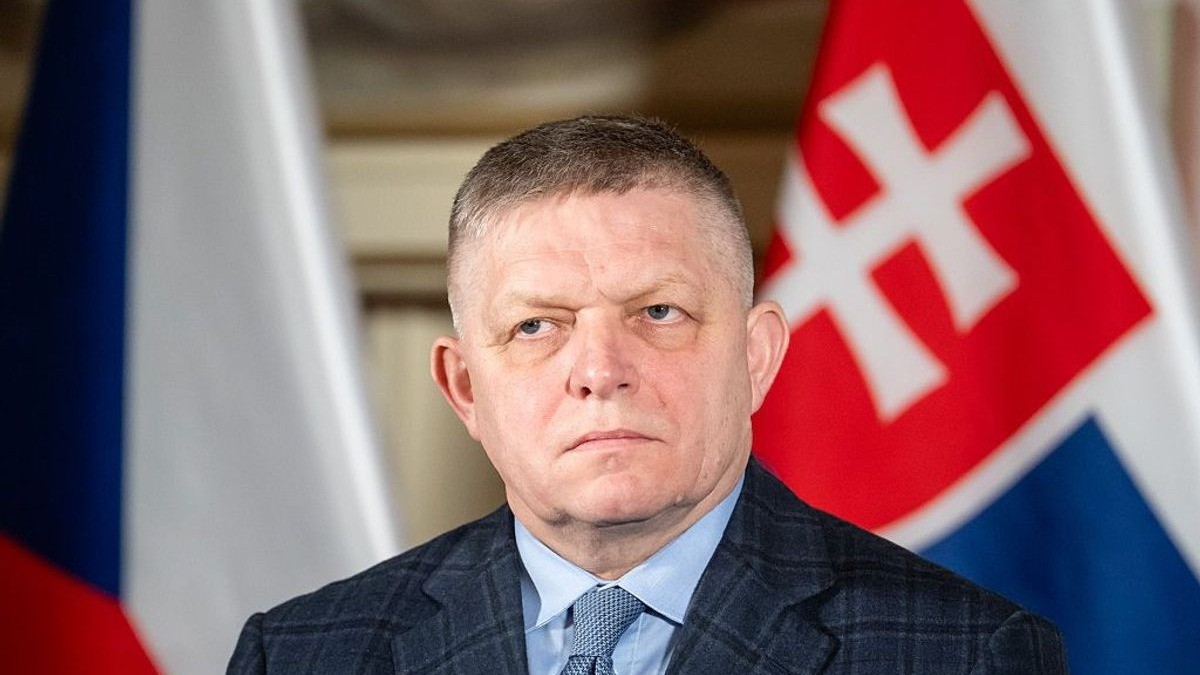
On the same day Tusk addressed the Sejm, Fico stood before an audience in Presov and answered the question Tusk had raised. "I don't want Slovakia to be part of any military conflict because of some Article 5," he said. "As prime minister, I will do everything to ensure that Slovakia is never drawn into a military conflict."
He asked his listeners to imagine Article 5 being invoked — and to imagine being told to get "5,000 soldiers ready, or 10,000 soldiers, and they'll go off somewhere to fight."
Fico also accused European capitals of warmongering, saying there is "a tendency to replace the inability to solve problems such as illegal migration, competitiveness and high energy prices with these war-mongering conversations." He said the risk of a Europe-wide conflict has never been as serious as it is now. In the same speech, he did not refer to Russia as an aggressor nation.
Article 5, Tested From Both Sides
Article 5 has not been invoked. No NATO territory has been attacked, and no Article 4 or Article 5 consultations have been triggered. What the treaty requires is that an armed attack against one member be considered an attack against all, and that each ally take the action it deems necessary, including armed force, to restore security.
That is the commitment Fico described as something he does not want Slovakia drawn into. It is also the commitment Tusk says Moscow is trying to make look hollow.
NATO Secretary-General Mark Rutte, speaking in Brussels on Monday, September 14, said the strikes near the Ukraine-Poland border would drive the alliance to increase its support for Kyiv. "The strikes yesterday on trains in Ukraine close to NATO territory again show Putin's desperation and also his desire to sow fear and terror," he said. Of Putin, he added: "He thinks that he can stop us from supporting Ukraine and that he can undermine our unity. He is wrong." Rutte pledged to bolster the 32-nation alliance's own defenses along its eastern border with Russia. EU chief diplomat Kaja Kallas said the drone strikes near the Polish border were clearly intended to intimidate Western nations into withdrawing their support for Ukraine.
Washington's Answer: A Base, Not a Blank Check
On the same day Tusk spoke, U.S. President Donald Trump wrote on Truth Social that "major progress is being made toward establishing a U.S. Army base in Poland," after an American delegation visited several possible locations last week. "If this happens, the location will be announced very soon," Trump wrote. "This will be a historic step for our Great U.S./Polish Alliance." He credited the "bold leadership" of Polish President Karol Nawrocki.
Poland has sought a permanent American base for years as a guarantee against the Russian threat, and its defense spending and arms purchases have persuaded the Trump administration to consider one even as it reorganizes and reduces its overall military presence in Europe.
The reassurance carries an asterisk. In May, the U.S. unexpectedly withdrew troops from the total of around 10,000 stationed in Poland, causing confusion among European allies and nervousness in Warsaw. Officials in both countries later said the withdrawal was temporary. In June, Defense Minister Wladyslaw Kosiniak-Kamysz said the U.S. Department of Defense was open to a permanent presence but that no decision had been taken, after meeting U.S. Defense Secretary Pete Hegseth in Brussels, where Hegseth announced a review of America's troop deployments in Europe.
Poland's Answer: Interceptors and a Summit
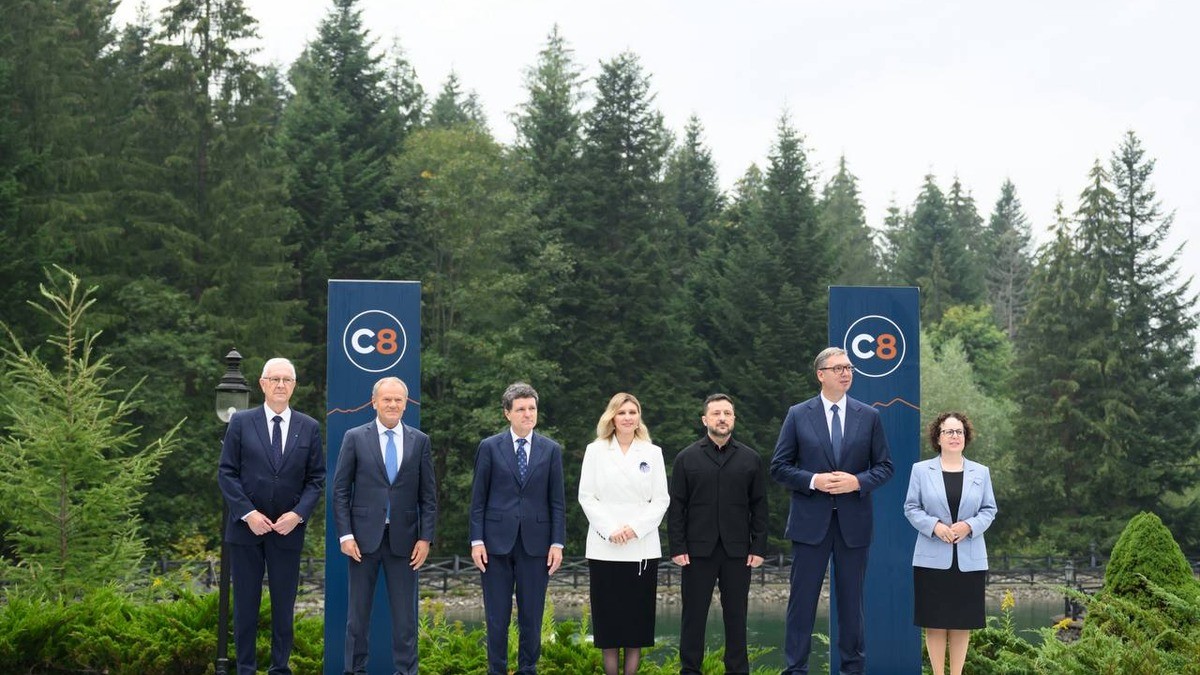
Tusk traveled to Ukraine overnight Thursday into Friday — an act of defiance after European leaders narrowly escaped a drone strike on a train near the Polish-Ukrainian border on Sunday. Officials usually keep such travel plans secret for security reasons.
At the inaugural Carpathian 8 summit at the Bukovel ski resort in western Ivano-Frankivsk Oblast, he said Poland has prepared new, "quite substantial support packages" for Ukraine, and that it is "crucial ... to secure more effective anti-ballistic missile systems." President Volodymyr Zelensky, who hosted leaders from eight Carpathian-region states, said the two discussed "how important it is to preserve our unity and work together to stop this war" and that "we will create a European anti-ballistic system." Tusk said he would discuss Poland's participation in the anti-ballistic missile coalition.
Slovakia had been expected at the summit. Fico canceled his trip because of illness, according to the Ukrainian Presidential Office.
The Winter Moscow Is Counting On
Tusk told the Sejm that Russia is not ready for peace talks "without the total capitulation of Ukraine." "They are convinced the winter will be tragically critical for Ukraine," he said. "Russia's goal is to destroy as much as possible the economy and logistics of Ukraine."
Last winter, Poland stepped in with deliveries when Ukraine's energy infrastructure came under attack. If the border crossings are destroyed, Tusk said, it will be much harder for Warsaw to offer that help this coming winter.
That is the thread connecting a drone that struck a petrol station 800 metres from Poland to a household in Ukraine in the middle of winter. The border is the supply line. The supply line runs through the crossings that have been hit six times since August 20. And the political argument Moscow needs is being made for it — from Presov, in the same week, by the prime minister of a NATO member state.
By Jessica Ali, Staff Writer
This article was produced with AI-assisted research and editorial support. Sources: The Associated Press, Reuters, The Guardian, ABC News (Australia), Kyiv Independent, Kyiv Post, Ukrainska Pravda, Ukrinform, Interfax-Ukraine, NV, The Independent, New York Post, UA.NEWS and Censor.NET.
What's Your Reaction?
 Like
0
Like
0
 Dislike
0
Dislike
0
 Love
0
Love
0
 Funny
0
Funny
0
 Wow
0
Wow
0
 Sad
0
Sad
0
 Angry
0
Angry
0

Editor-in-Chief at Global1.News. Atlanta-based journalist who cuts through the BS and tells it like it is. Lead anchor, host, and the voice you hear when the spin stops and the truth starts.














Comments (0)