
Tupac Shakur Murder Trial Begins in Las Vegas After 30 Years
Nearly three decades after Tupac Shakur was gunned down on the neon-lit streets of Las Vegas, the murder trial of the only man ever charged in the case has finally begun. The proceedings, which opened this week in a Nevada courtroom, are more than a legal reckoning—they are a global cultural event that underscores hip-hop's enduring reach, from the Bronx to the boulevards of Dakar.
Nearly three decades after Tupac Shakur was gunned down on the neon-lit streets of Las Vegas, the murder trial of the only man ever charged in the case has finally begun. The proceedings, which opened this week in a Nevada courtroom, are more than a legal reckoning—they are a global cultural event that underscores hip-hop's enduring reach, from the Bronx to the boulevards of Dakar. For millions of African fans who grew up with 2Pac's voice as a soundtrack to their own struggles, this trial closes a painful chapter of unfinished history.
2Pac Trial Opens in Vegas After 30 Years
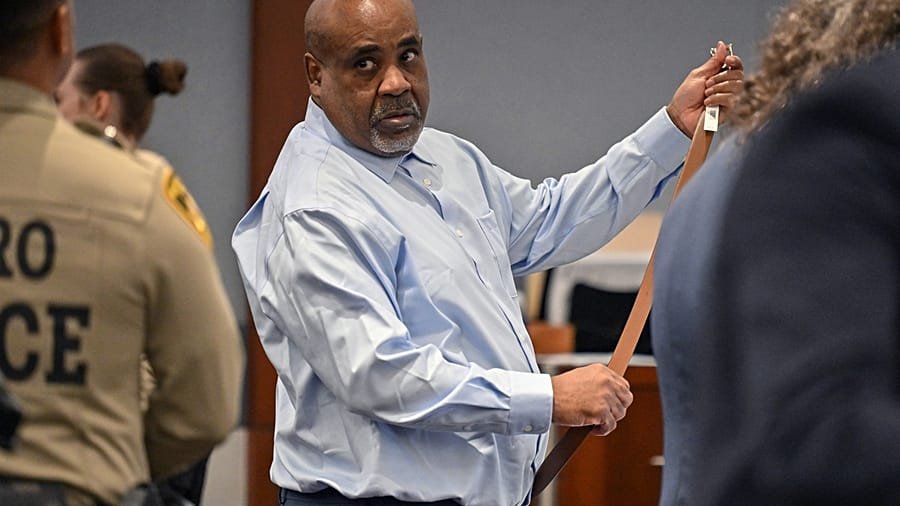
Dakar, Senegal — The weight of three decades of grief, unanswered questions, and a global fanbase's longing for justice settled over a Las Vegas courtroom this week as jury selection began in the murder trial of Duane "Keffe D" Davis. The case against the 63-year-old former gang leader is a landmark moment not just for American music history, but for the millions of Africans who adopted Tupac Shakur as their own—a voice for the voiceless whose art was built on rhythms that echo our own griot traditions.
A Trial Three Decades in the Making
Jury selection commenced Monday, August 10, 2026, at the Clark County District Court Regional Justice Center in Las Vegas, with approximately 75 potential jurors called to the courtroom. The process is expected to take about a week, with the full trial projected to last roughly a month under the gavel of Judge Carli Kierny. The defendant, Duane "Keffe D" Davis, the former leader of the South Side Compton Crips gang in California, has pleaded not guilty to one count of murder with a deadly weapon.
Prosecutors allege that Davis orchestrated the September 1996 killing of Shakur and provided the firearm used in the attack, even though he is not accused of pulling the trigger himself. If convicted, Davis faces a potential life sentence without parole. He is the only person ever charged in a case that has haunted the music world for nearly thirty years — a singular moment in hip-hop history.
Outside the courthouse, the emotion was palpable. William Lesane, who identified himself as Shakur's cousin, told reporters that the trial represents the culmination of decades of pain. "Hopefully we'll find out some new information," Lesane said. "And more importantly, the right person is charged and convicted for Tupac's murder." His words carried the weight of a family that has waited a generation for answers.
Davis appeared composed as the proceedings began. His defense team has maintained his innocence, arguing that the prosecution's case rests on unreliable testimony and a memoir Davis now claims was exaggerated.
For the family, for fans in Las Vegas, and for millions watching from across the Atlantic, this is the first real opportunity to see justice address a murder that has become legend.
The Night Tupac Was Shot
To understand the gravity of this trial, one must return to the night of September 7, 1996, when Shakur, just 25 years old, was a passenger in a black BMW driven by music mogul Marion "Suge" Knight. The pair had just watched a Mike Tyson boxing match at the MGM Grand in Las Vegas and were heading to Club 662, a nightclub owned by Knight. It was a night meant to celebrate victory and success; instead, it became the prelude to tragedy.
Earlier that evening, a confrontation erupted in the MGM Grand lobby between Knight, Shakur, and Orlando "Baby Lane" Anderson, a Crips member and Davis's nephew. The altercation, caught on hotel security cameras, was reportedly retribution for an alleged assault on a Death Row Records employee days earlier — a beating that set in motion a chain of events ending in gunfire.
Prosecutors allege that Davis, riding in a white Cadillac with Anderson and others, orchestrated the retaliation. The Cadillac pulled up alongside Shakur's BMW at a red light on Las Vegas Boulevard, and shots were fired from the vehicle. Shakur was struck multiple times, rushed to the University Medical Center, and died six days later on September 13, 1996. Knight survived the attack, suffering only minor injuries.
At the time of his death, Shakur was one of the biggest names in hip-hop, known for hits like "California Love" and the double album "All Eyez on Me." He was the son of Afeni Shakur, a prominent Black Panther activist, and had been raised in Harlem and Baltimore before finding fame on the West Coast. His music was raw, poetic, and unflinchingly honest about the realities of poverty, violence, and systemic injustice.
The shooting occurred against the backdrop of the infamous East Coast-West Coast rivalry, a feud that pitted Death Row Records, founded by Suge Knight, against Bad Boy Records, led by Sean "Diddy" Combs and featuring the Notorious B.I.G. The rivalry claimed another victim in March 1997 when B.I.G. was murdered in Los Angeles, a crime that remains unsolved. Tupac's death, coming just months before B.I.G.'s, marked a dark chapter in hip-hop's history.
A Cold Case Revived by Davis's Own Words
For decades, the investigation into Shakur's murder sputtered, hampered by a lack of cooperation from witnesses and the code of silence that often surrounds gang-related violence. The case grew cold, and it seemed that the truth might never emerge. Then, in 2011, Los Angeles detective Greg Kading published "Murder Rap," a book that named Davis as a key figure in the killing, based on interviews and evidence gathered during a task force investigation.
The case took a dramatic turn in 2019 when Davis published his own tell-all memoir, "Compton Street Legend." In the book, Davis described handing a pistol from the front seat to the back seat of the Cadillac that pulled up alongside Shakur's BMW. He acknowledged being in the vehicle from which gunfire came but denied being the shooter. The memoir, intended as a confession of sorts, became the cornerstone of the prosecution's case.
Davis was arrested in September 2023, and his indictment that year marked a major breakthrough in a case that had seemed unsolvable. He is the only person still alive out of the group prosecutors believe attacked that night, making him the sole surviving link to the events of September 7, 1996. His arrest reignited global interest in the case.
Since his arrest, Davis has backtracked from his memoir's revelations, pleading not guilty and insisting that there is no evidence against him. He has claimed that his co-author inflated the tale to sell books, a defense that prosecutors have dismissed as a desperate attempt to escape accountability. The contradiction between his published words and his courtroom statements will likely be a central theme of the trial.
The New York Post's exclusive report of a seven-minute jail call Davis made to a woman days after his 2023 arrest has further complicated his defense. In the call, Davis reportedly said "Oh, yeah, I did" when asked about the book, and railed at the detective who named him, saying, "He had my life f—ked up. I crawled up under a rock for six years." These words, captured on tape, could prove devastating to his case.
Prosecutors are expected to call witnesses including Devonta "Dirt Rock" Lee, who gave key grand jury testimony. His account, along with Davis's own words in the memoir and jail calls, forms the backbone of the state's case.
Hip-Hop's African Roots and 2Pac's Reach Across the Continent
Hip-hop emerged from Black American communities in the Bronx in the 1970s, but its musical DNA is deeply African — griot storytelling, polyrhythmic drumming and call-and-response patterns that have shaped African musical expression for centuries. When Tupac rapped, he was channeling the oral historians of West Africa.
Tupac's themes of poverty, violence, and social inequality resonated powerfully with young audiences across Africa. In Dakar, Lagos, Nairobi, Johannesburg, and Accra, his music became anthems for a generation grappling with their own struggles against corruption, unemployment, and systemic injustice. Songs like "Dear Mama," "Changes" and "Keep Ya Head Up" remain globally known.
African hip-hop scenes have long cited Shakur as a foundational influence. In Senegal, the fusion of Mbalax rhythms with rap created a unique sound that owes a debt to 2Pac's socially conscious artistry. South African kwaito and Nigerian hip-hop similarly bear his imprint, with artists from across the continent acknowledging his impact on their craft. His music was not just entertainment; it was a call to consciousness.
The parallel between Tupac's activism and the tradition of African musician-activists is striking. Senegal's Youssou N'Dour, a global ambassador for African music, has used his platform to address social and political issues, much as Shakur did in his own context. Both artists understood that music could be a tool for change, a way to speak truth to power and give voice to the marginalized.
This trial is being followed by music fans across the continent who grew up on 2Pac. For them it is not just an American story; it is about the power of art to transcend borders and the enduring quest for justice.
What African Audiences Can Learn From Tupac's Legacy
Tupac's journey demonstrates that art born from struggle can travel the world. His music, rooted in the pain and resilience of Black America, found a universal audience because it spoke to love, loss, hope and the fight for dignity — a reminder that authenticity can cross any boundary.
The importance of preserving artistic legacies cannot be overstated. Tupac's work endured because fans kept his memory alive through the decades — and this trial shows how cultural memory can demand accountability.
African creatives can draw lessons from Tupac's genre fluidity — he was a rapper, actor, poet and activist whose cross-medium range offers a model for expanding creative horizons. His mother's Black Panther background also connects to Pan-African struggles for justice.
The creative economy lesson is clear: music builds global cultural bridges. Tupac's work created connections between Black Americans and Africans — proof that African artists can reach far beyond their local communities.
Yet Tupac's story is also a cautionary tale. The violence and rivalry that cut his career short remind us of the costs of conflict; his death at 25 robbed the world of a voice with so much more to say.
What to Watch For
In the coming weeks, testimony is expected to shed new light on the shooting. Witnesses connected to rival record labels and others familiar with that night will take the stand. The trial may not definitively identify who fired the fatal shots, but it promises the most detailed public accounting of the case to date.
The legal proceedings are unfolding against a backdrop of continued interest in the case. In May 2026, Shakur's stepbrother Maurice Shakur filed a wrongful death lawsuit, with a complaint stating that "there remain individuals who were involved in Tupac's murder who, for 30 years, have not been held accountable for their crimes."
Documentaries, books and podcasts continue to explore the case. For a new generation of fans, this trial may be an introduction to the complex history of hip-hop's golden era.
The trial's place in the broader history of hip-hop's 1990s era cannot be overstated. It was a time of incredible creativity and innovation, but also of violence and division. The East Coast-West Coast rivalry, the deaths of Tupac and B.I.G., and the legal battles that followed shaped the genre's trajectory and left lasting scars. This trial is an opportunity to revisit that history and consider its lessons.
A verdict could bring the family a measure of closure after three decades of grief, validate years of investigative work, and answer a question that has lingered since 1996. Whatever the outcome, this trial marks a historic moment in the long, unfinished story of Tupac Shakur.
By Amara Diop, Staff Writer
This article was produced with AI-assisted research and editorial support. Reporting is based on sources cited in the article.
What's Your Reaction?
 Like
0
Like
0
 Dislike
0
Dislike
0
 Love
0
Love
0
 Funny
0
Funny
0
 Wow
0
Wow
0
 Sad
0
Sad
0
 Angry
0
Angry
0

West Africa/Sahel Correspondent at Global1.News. Dakar-based journalist covering politics, security, climate, and development across Francophone and Anglophone West Africa. Tells the stories of a region undergoing profound transformation.













Comments (0)