
Trump's Polysilicon Tariff: A Strategic Escalation in the US-China Technology Contest
Trump's 15% polysilicon tariff escalates the US-China technology contest, targeting China's near-monopoly in a material critical to semiconductors and solar. Prof. Marcus Chen analyzes Beijing's coordinated countermeasures, the strategic calculus on both sides, and the global supply-chain stakes.
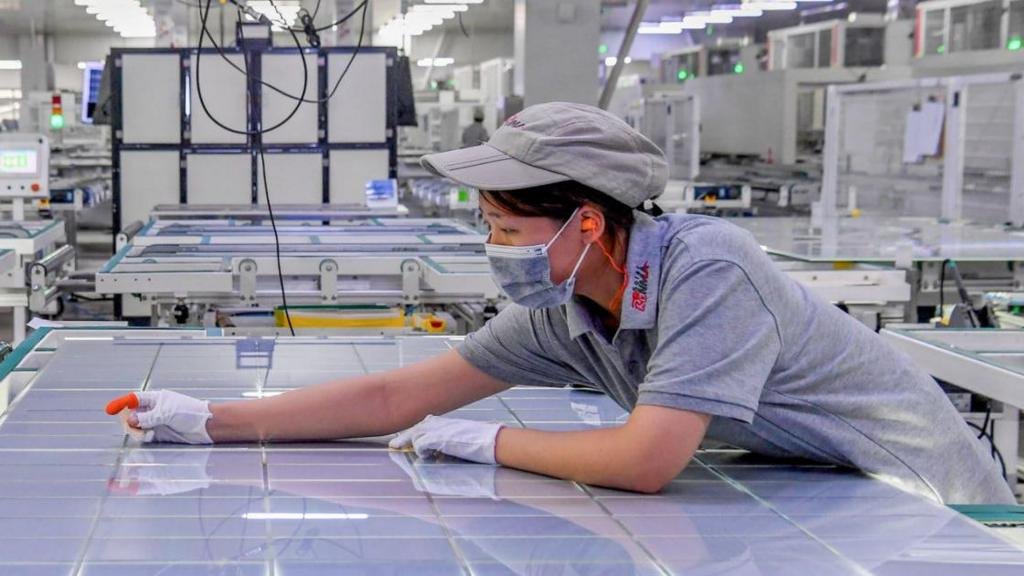
The executive order signed by President Donald Trump on 6 August, imposing a 15% tariff on imported polysilicon and related products, represents a calculated move in the ongoing strategic rivalry between Washington and Beijing. The measure, which follows a national security investigation into overseas production of the material, targets a sector where China holds a near-monopoly position. For Beijing, this is not merely a trade dispute; it is an attempt by the United States to weaponize its regulatory apparatus against a critical node in the global technology supply chain. The Chinese embassy in Washington has already characterized the move as a serious disruption to bilateral trade, vowing that Beijing will act to protect its companies. This analysis examines the strategic calculus behind the tariff, its implications for the semiconductor and solar industries, and the broader geopolitical chessboard on which this move is being played.
The Strategic Significance of Polysilicon in the Modern Economy
Polysilicon is the foundational material for both the semiconductor industry and the solar energy sector. It is refined from quartz and processed into high-purity ingots that are sliced into wafers, which then become the substrate for microchips and photovoltaic cells. The material's importance cannot be overstated: it is embedded in everything from military guidance systems to consumer electronics and renewable energy infrastructure. The Trump administration's executive order explicitly frames the tariff as a national security imperative, citing the need to protect US manufacturers from foreign competition that has decimated domestic production capacity.
The data cited in the executive order is stark: the United States' share of global polysilicon production has collapsed from approximately 50% in 2005 to less than 2% in 2024, according to figures cited by the administration. This precipitous decline is attributed to decades of allowing foreign firms, primarily Chinese entities, to undercut American producers on price and scale. China now controls the overwhelming majority of global polysilicon output, giving it significant leverage over the downstream industries that depend on this critical input. For Washington, this dependency represents a structural vulnerability that the tariff is designed to address, albeit through a mechanism that will likely raise costs for American manufacturers in the short term.
Decoding the Executive Order: Tariffs, Minimum Prices, and Domestic Incentives
The executive order is not a single instrument but a multi-pronged approach. It imposes a 15% tariff on imported polysilicon and products made from it, while simultaneously setting minimum import prices for the material and its derivatives. This dual mechanism is intended to prevent Chinese producers from simply absorbing the tariff and continuing to flood the US market with low-cost goods. By establishing a price floor, the administration aims to ensure that domestic producers like Hemlock Semiconductor and Wacker Chemie can compete on a more level playing field, regardless of the tariff's direct impact.
Secretary of Commerce Howard Lutnick's recommendations, which Trump accepted, also include provisions for incentives to boost domestic production. This suggests a longer-term industrial policy objective: rebuilding a self-sufficient polysilicon supply chain within the United States. However, the timeline for such a rebuild is substantial. Constructing and ramping up polysilicon manufacturing facilities is a capital-intensive and time-consuming process, often taking years to reach commercial viability. The immediate effect of the tariff will be to increase costs for US semiconductor fabs and solar panel assemblers, who will have to either absorb the higher import prices or pass them on to consumers. The measure is likely to benefit Hemlock Semiconductor and Germany's Wacker Chemie, the two main producers of the material operating in the United States.
China's Response: A Coordinated Countermeasure Package
Beijing's reaction has been swift and multifaceted, signaling that it will not accept this latest provocation without a response. The State Council Information Office announced a package of countermeasures in early August 2026, which includes a national security investigation into certain imported office equipment with printing and copying functions. This is a direct mirror of the US approach, using the same national security rationale to justify potential restrictions on American exports to China. The investigation into printers and copiers is a pointed choice, as it targets a sector where US and other foreign manufacturers have a significant market presence in China.
Additionally, Beijing has tightened export controls on drone-related dual-use items to the United States. This is a particularly significant move given that the US Federal Communications Commission banned the import and sale of new drone models from foreign manufacturers, including Chinese ones, in December 2025. China's response effectively restricts the flow of critical components and technologies that US drone manufacturers may rely upon. The package also includes measures against Compliance Testing LLC and six other US entities, as well as the suspension of US-based certification bodies. These actions are designed to increase the cost of doing business for American firms in China and to demonstrate that Beijing has a wide array of tools at its disposal.
The Geopolitical Chessboard: Beyond Bilateral Trade
This tariff dispute is not occurring in a vacuum. It is the latest salvo in a tit-for-tat trade war that has been on hold since May 2025, when both sides agreed to a temporary truce. The polysilicon tariff represents a breaking of that fragile peace, at least in this specific sector. The move also follows other US restrictions on imports of drones, humanoid robots, and other tech products from China, indicating a broader strategy to decouple critical technology supply chains from Chinese dominance.
For the global community, particularly the ASEAN nations, the European Union, and the Global South, this escalation carries significant second-order effects. These countries are caught in the crossfire of a superpower rivalry that threatens to fragment the global trading system. Many of them rely on Chinese polysilicon for their own solar energy ambitions, and the US tariff could disrupt global supply chains and price stability. The EU, in particular, has its own polysilicon producers, such as the German-headquartered Wacker Chemie, which operates facilities in both Germany and the United States. The tariff could create a bifurcated market, with different pricing and supply dynamics in the US versus the rest of the world.
Strategic Calculus: What Each Side Wants and What Leverage They Hold
The United States' primary objective is to rebuild its domestic manufacturing base in a sector deemed critical for national security and economic competitiveness. The leverage Washington holds is its massive consumer market and its ability to set the rules for its own domestic industry. By imposing tariffs and minimum prices, the US is effectively forcing a reshoring of polysilicon production, albeit at a higher cost. The administration is betting that the long-term benefits of supply chain security outweigh the short-term economic pain.
China's strategic calculus is more complex. On one hand, Beijing wants to maintain its dominance in polysilicon production, which is a source of economic power and technological leverage. On the other hand, it must respond to US actions to maintain credibility and deter further provocations. China's leverage lies in its control over the global supply chain and its ability to restrict exports of critical materials and technologies. The drone export controls are a clear signal that Beijing can and will use this leverage. However, China also has a vested interest in maintaining access to the US market for its finished goods, which means its countermeasures must be calibrated to avoid a full-scale trade war that would harm its own economy.
Implications for the AI Race and Technological Self-Sufficiency
The production of computer chips is central to the race between the US and China to develop artificial intelligence. Polysilicon is a foundational input for these chips, making the tariff a direct intervention in this technological contest. By restricting Chinese polysilicon imports, the US is attempting to limit China's ability to leverage its production dominance into influence over the AI supply chain. However, the move also highlights the US's own vulnerability: its reliance on imported materials for a sector it considers vital to its national security.
For China, the response is part of a broader strategy of technological self-sufficiency. Beijing has been investing heavily in domestic semiconductor production and AI development, aiming to reduce its dependence on foreign technology. The US tariff, and the broader trade restrictions, are likely to accelerate these efforts. China's countermeasures, including the national security review of imported printers and copiers, are designed to create leverage in negotiations while also protecting its own domestic industries. The long-term goal for Beijing is to achieve self-reliance in critical technologies, making it less susceptible to US pressure.
Diplomatic Context and the Path Forward
The diplomatic context surrounding this tariff is delicate. Reports of a potential Xi-Trump summit remain unconfirmed and speculative and should not be over-interpreted. What is clear is that the bilateral relationship is in a state of managed tension, with both sides engaging in calibrated escalations while leaving room for negotiation. The tariff war has been on hold since May 2025, but the polysilicon measure suggests that the truce is fragile and sector-specific disputes can still flare up.
The path forward is uncertain. The US is likely to continue using tariffs and export controls to protect its technology industries, while China will respond with its own countermeasures. The risk is that this tit-for-tat dynamic spirals into a broader conflict that disrupts global supply chains and harms the world economy. For the Global South, which is heavily invested in solar energy and digital infrastructure, the stakes are particularly high. A prolonged dispute could raise costs and delay the energy transition, undermining global climate goals. The international community will be watching closely to see whether Washington and Beijing can manage their rivalry without resorting to measures that cause collateral damage to the rest of the world.
By Prof. Marcus Chen, Staff Writer
This article was produced with AI-assisted research and editorial support. Sources: BBC News, White House, State Council Information Office, Associated Press.
What's Your Reaction?
 Like
0
Like
0
 Dislike
0
Dislike
0
 Love
0
Love
0
 Funny
0
Funny
0
 Wow
0
Wow
0
 Sad
0
Sad
0
 Angry
0
Angry
0

World Politics Analyst at Global1.News. Based in Beijing, covering US-China relations, global trade, and geopolitical strategy. Brings deep analytical perspective to the power dynamics shaping international affairs.














Comments (0)