
Duterte Camp Sought to Control Marcos, Palace Warns of Power Struggle
Palace press officer Claire Castro says the alleged demands of the Duterte camp for the 2022 endorsement point to a power struggle to control or remove President Marcos Jr., as Vice President Sara Duterte's impeachment trial resumes in the Senate.
In a recent ANC 24/7 report, House Majority Leader Rep. Ferdinand Alexander "Sandro" Marcos dropped a political bombshell, alleging that the camp of former President Rodrigo Duterte imposed conditions in exchange for endorsing his father's 2022 presidential bid — including demands to control key government posts and, according to the Palace's interpretation, possibly even remove the President. The allegation, which has sent ripples through an already volatile political landscape, centers on a power struggle that ordinary Filipinos watching from their barangays and sari-sari stores must now decipher as the Senate impeachment trial of Vice President Sara Duterte continues in Manila.
Marcos Jr.'s Son Alleges Duterte Camp Sought Control, Palace Warns of 'Power Struggle' and Possible Ouster Plot
Manila, Philippines — The already fractured UniTeam alliance between the Marcos and Duterte dynasties faced its most serious rupture yet this week, as President Ferdinand "Bongbong" Marcos Jr.'s own son and House Majority Leader revealed explosive details about the 2022 campaign's backroom deals. In an August 8 radio interview on "Kwatro Alas," Rep. Sandro Marcos recounted how he and his father were brought before three unidentified individuals at Malacañang — not then-President Duterte himself — who offered the presidential endorsement only under strict conditions: the Duterte camp would choose who occupies the Executive Secretary, House Speaker, Senate President, and other key positions.

The Allegation — A Campaign Promise Turned Power Play
Sandro, who represents Ilocos Norte's 1st district, said he personally accompanied his father to Malacañang during the 2022 campaign season, expecting to secure the endorsement of then-President Rodrigo Duterte. Instead, the Marcoses were led to a room where three individuals laid out their terms. "Instead of meeting the president, we were brought to three people who said they would support us, but on the condition that they would choose who would occupy the Executive Secretary, House Speaker, Senate President, and other positions," Sandro said in mixed Filipino and English.
The young lawmaker revealed that one of the three individuals is a sitting government official today, though he refused to name any of them. He also admitted he had anticipated the eventual collapse of UniTeam — the electoral alliance that won the 2022 elections in a landslide — because of competing groups surrounding both camps. "It was a power struggle," he said plainly.
This account, delivered on a provincial radio program, has now become the subject of intense national scrutiny, with the Presidential Communications Office (PCO) weighing in on Monday, August 10, during a press briefing in Malacañang.
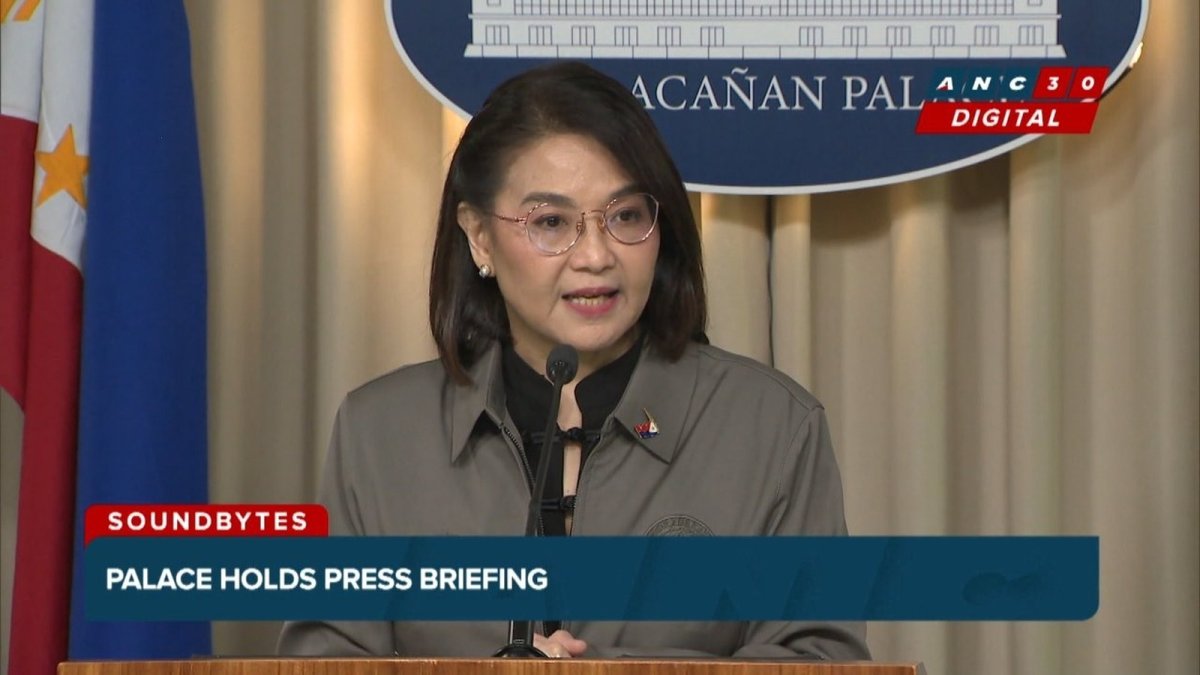
Palace Vouches for Sandro, Points to 'Power Struggle'
Palace Press Officer Undersecretary Claire Castro, speaking at the Monday briefing, said President Marcos Jr. personally vouched for his son's credibility. "Actually, the president himself mentioned this earlier. He just told me that he has raised his kids well and his son, Sandro, will not lie," Castro told reporters. She added that she believes Sandro's account because he personally witnessed the conversation, and the Palace would respect his decision not to name the individuals involved.
Castro went further, offering the PCO's interpretation of the alleged demands. "Ang nakikita ng PCO dito: power struggle, kontrolin ang Pangulo, maybe the plan to remove the president like what happened before. Dahil may mga grupo na gustong manatili sa posisyon at hawakan at kontrolin ang Pangulo at hindi iyon pinayagan ni Pangulong Marcos Jr.," she said. Translated: "What the PCO sees here is a power struggle, an attempt to control the President, and perhaps a plan to remove the President like what happened before... because there were groups that wanted to remain in position and control the President, and President Marcos Jr. did not allow that."
Castro stressed that some of the alleged demands were not granted because they would not serve public funds or the nation's interest. "You will see that there are demands that were not approved by the president because [they] will not bode well for the public, because [they] will not be good for the interest of the people. That's why we say there is a power struggle because there are groups who want to stay in position and hold and control the president," she explained.
Importantly, Castro clarified that this interpretation is the PCO's opinion, not the President's own explanation. The distinction matters in a political environment where every word from Malacañang is parsed for meaning.
The Philippine Context — A Dynasty Alliance in Ruins
The allegation lands at a particularly sensitive moment. The Senate impeachment trial of Vice President Sara Duterte — Rodrigo Duterte's daughter and Marcos Jr.'s former UniTeam running mate — is now in its second week-plus, around day 14. The trial was paused on Monday, August 10, due to heavy rains from the enhanced southwest monsoon (habagat) and the effects of tropical cyclones, then resumed Tuesday, August 11.
The 2022 UniTeam alliance was hailed as a "political dream team" — two of the Philippines' most powerful political dynasties joining forces to deliver a landslide victory. The Marcos family, seeking to reclaim Malacañang after the 1986 EDSA People Power Revolution that ousted Ferdinand Marcos Sr., and the Duterte family, riding on the popularity of the former president from Davao City, seemed unstoppable. But the alliance spectacularly unraveled, with the two families now in open political conflict.
Vice President Sara Duterte was impeached by the House of Representatives — the second impeachment of a vice president in Philippine history. Her first impeachment was not pursued to trial by the House; the current Senate trial follows her second impeachment. The proceedings have become a flashpoint for the deepening rift between the two families.
Castro's phrase "like what happened before" evokes painful chapters in Philippine history — the 1986 EDSA People Power Revolution that removed Ferdinand Marcos Sr., and the 2001 EDSA II that removed Joseph Estrada. While the PCO did not explicitly reference these events, the phrasing invites comparison — though Castro was careful to label the reading as the PCO's opinion, not a claim of an active plot.
Impact on Filipinos — What This Means for Governance and Public Funds
For ordinary Filipinos, this political drama is not merely entertainment. The alleged demands — control over the Executive Secretary, House Speaker, Senate President, and other key posts — directly affect how government functions and how public funds are spent. If true, these conditions would have meant that key positions determining the country's legislative agenda, budget priorities, and executive decisions would have been controlled by a faction loyal to the Duterte camp rather than to the elected President.
Castro's statement that some demands were rejected because they "will not bode well for the public" and "will not be good for the interest of the people" suggests that at least some of the alleged conditions involved appointments or policies that would have benefited specific groups at the expense of the public. For the millions of Filipinos who rely on government services — from farmers in Nueva Ecija to jeepney drivers in Quezon City to OFWs in Saudi Arabia — the integrity of these positions determines whether roads get built, hospitals get staffed, and schools get funded.
The ongoing power struggle also raises questions about the stability of governance. When political dynasties fight, the machinery of government can stall. The Senate trial of Vice President Duterte, now in its second week, has already consumed significant legislative time and attention. The Palace's warning about a possible "plan to remove the president" — however speculative — adds another layer of uncertainty to an already tense political climate.
Reactions and Responses — Silence from the Duterte Camp
As of August 10-11, 2026, the Duterte camp had not yet issued a formal response to Sandro's allegations, according to GMA News Online and newswatchplus.ph. The silence is notable, given the gravity of the accusations. Political analysts suggest the Duterte camp may be calculating its response carefully, given the ongoing impeachment trial of Vice President Sara Duterte and the former president's own legal challenges.
The Palace, for its part, has positioned itself as transparent and principled. Castro's defense of Sandro's credibility — backed by the President's personal endorsement — signals that Malacañang is treating the allegation seriously. The decision not to name the three individuals, while respecting Sandro's choice, leaves the matter partially unresolved, fueling speculation about who among the current government officials might have been involved.
In a related development, the Palace also said President Marcos is studying the U.S. extradition request for Apollo Quiboloy, the Kingdom of Jesus Christ founder currently detained at the International Criminal Court (ICC), and expects a decision "in a couple of weeks." While unrelated to the UniTeam dispute, this adds to the sense of a presidency navigating multiple crises simultaneously.
What to Watch For
The coming days will be critical. The Duterte camp's formal response — when it comes — will likely shape the narrative. Will they deny the allegations outright, or will they offer a counter-narrative? The ongoing Senate impeachment trial of Vice President Sara Duterte will also continue to dominate headlines, and any new revelations about the 2022 campaign could influence public perception of the proceedings.
Political observers will also watch whether Sandro's revelation prompts further disclosures from other UniTeam figures. The House Majority Leader's decision to speak publicly suggests that the Marcos camp is willing to go on the offensive, potentially signaling a strategy to discredit the Duterte faction ahead of the 2028 elections.
For the Filipino public, the key takeaway is this: the political dynasties that have long dominated Philippine politics are now openly at war, and the consequences will be felt in governance, public funds, and democratic institutions. The PCO's warning about a possible "plan to remove the president" — even as an opinion — underscores the fragility of political alliances built on convenience rather than shared principles.
As the Senate trial resumes and the Duterte camp prepares its response, one thing is clear: the UniTeam dream has fully collapsed, and the fallout will shape Philippine politics for years to come. For ordinary Filipinos, the hope is that amidst the power struggles, the business of government — building roads, funding schools, supporting farmers, protecting workers — continues without interruption. The stability of the nation depends not on the fortunes of political dynasties, but on the resilience of its institutions and the vigilance of its people.
By Bella Reyes, Staff Writer
This article was produced with AI-assisted research and editorial support. Reporting is based on sources cited in the article.
What's Your Reaction?
 Like
0
Like
0
 Dislike
0
Dislike
0
 Love
0
Love
0
 Funny
0
Funny
0
 Wow
0
Wow
0
 Sad
0
Sad
0
 Angry
0
Angry
0

Philippines/Southeast Asia Correspondent at Global1.News. Manila-based journalist covering Philippine politics, environment, maritime security, and social issues. Passionate about marine conservation and the communities protecting the Philippines' natural heritage.













Comments (0)