
The Diplomatic Dead End: Why Tehran and Washington Are Stuck in a Cycle of Escalation
In a recent CGTN report, Professor Mohammad Marandi of the University of Tehran delivered a blunt assessment of the ongoing US-Iran crisis: diplomatic efforts to ease tensions are at a dead end, and the root cause lies in repeated violations by Washington. The segment, aired on August 10, 2026, captures a moment of profound strategic paralysis.
In a recent CGTN report, Professor Mohammad Marandi of the University of Tehran delivered a blunt assessment of the ongoing US-Iran crisis: diplomatic efforts to ease tensions are at a dead end, and the root cause lies in repeated violations by Washington. The segment, aired on August 10, 2026, captures a moment of profound strategic paralysis. With the Strait of Hormuz closed, a fragile ceasefire in tatters, and both capitals trading accusations of bad faith, the question is no longer whether the conflict will end, but how the region's most consequential waterway reopens without triggering another round of devastating warfare. Marandi's framing — that the US is the problem — resonates with a growing chorus of voices in the Global South, even as Washington insists its conditions are reasonable. This article examines the tactical standoff, the domestic political pressures on both sides, and the wider geopolitical implications for energy markets and great-power competition.
The Anatomy of a Collapsed Ceasefire
The timeline of the 2026 Iran war reads as a catalogue of broken promises and miscalculated brinkmanship. What began on February 28 with the US-Israeli strikes — codenamed "Operation Epic Fury" — that killed Supreme Leader Ali Khamenei — has evolved into a grinding conflict with no clear exit. The Islamabad Memorandum of June 17, signed by President Donald Trump and Iranian President Masoud Pezeshkian, was supposed to end the war. It did not. By July 8, the ceasefire had collapsed, and Trump declared the memorandum "over," prompting CENTCOM to strike roughly 90 Iranian military targets. The subsequent reinstatement of a naval blockade and a brief, since-cancelled 20% toll on cargo shipping underscored the volatility of US policy. The core issue is trust, or rather the absence of it. Tehran points to the July 8 collapse as evidence that Washington treats agreements as tactical pauses rather than binding commitments. Iranian officials note that the US has repeatedly escalated even while claiming to seek negotiations. The August 9 statement from Tehran rejecting direct talks, accusing Washington of violating the memorandum, is not a rhetorical flourish; it reflects a strategic calculation that engaging directly with the Trump administration offers no guarantees. For Iran, the pattern is clear: the US signs, then undermines, then demands more concessions. This perception is reinforced by Marandi's commentary, which frames US behavior as inherently predatory.Iran's Six Conditions: A Non-Negotiable Baseline
On August 8, Secretary of the Supreme National Security Council Mohammad Bagher Zolghadr laid out six conditions for reopening the Strait of Hormuz. These are not modest requests. They include a cessation of US threats, an end to wars involving Iran's non-state allies (Hezbollah, Hamas, and the Houthis), the lifting of the naval blockade, the withdrawal of US troops, compensation for losses from both the Twelve-Day War and the current conflict, and the removal of sanctions alongside the release of frozen Iranian assets. The list is maximalist, but it reflects Tehran's assessment of its leverage. The strait, through which roughly 20% of global oil passes, is Iran's most potent strategic asset. By seizing control of it in late March and maintaining control since, Tehran has demonstrated that it can inflict severe economic pain on the international community. The August 6 framework agreement with Oman to temporarily reopen the waterway was a diplomatic opening, but the IRGC quickly clarified that any reopening depends on the US accepting Iran's conditions. This is a classic bargaining position: Tehran is signaling that it will not give away its primary leverage without substantial concessions. The question is whether Washington can accept any of these terms without appearing to capitulate.The US Domestic Calculus: Reparations and Political Survival
On the American side, the political dynamics are equally constraining. President Trump's August 10 instruction to his negotiators to demand reparations for Americans killed and seriously injured is a direct appeal to domestic constituencies. With 19 US soldiers and one contractor killed, and 624 military wounded, the human cost is politically salient. The administration's request for a $1.5 trillion Pentagon budget, alongside an estimated $113.3 billion war cost as of June, signals that this conflict is being framed as a national-security imperative rather than a discretionary intervention. The US negotiating team — Special Envoy Steve Witkoff, policy planning director Michael Anton, CENTCOM commander Brad Cooper, and envoy Jared Kushner, with Vice President JD Vance joining in April — faces a difficult balancing act. They must appear tough to satisfy the administration's base, yet flexible enough to achieve a diplomatic outcome. The April failure of the Islamabad Talks, where Vance claimed Iran refused "to accept our terms," illustrates the rigidity on both sides. Trump's public statement that he "no longer cares about negotiations" was likely posturing, but it reflects a genuine dilemma: any deal that appears to reward Iranian intransigence could be politically fatal.
China's Strategic Stake in the Hormuz Standoff
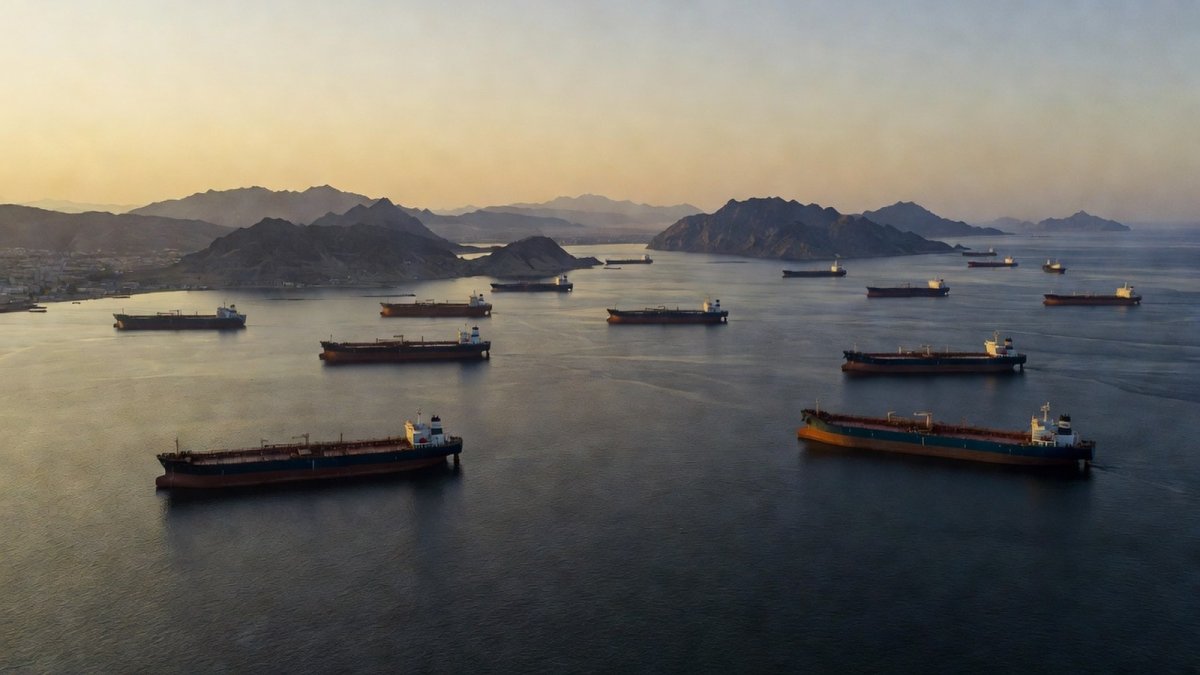
For Beijing, the closure of the Strait of Hormuz is not an abstract geopolitical abstraction; it is a direct threat to energy security. China is the largest buyer of Gulf crude, and the disruption of shipping through the strait has already caused the largest-ever supply disruption of the global oil market, with roughly 150 freight ships stalled at the war's start. The Asia-Pacific supply chain, heavily dependent on Middle Eastern energy, remains vulnerable to any prolonged closure. China's official position has consistently called for de-escalation and diplomatic solutions, a stance that aligns with its broader Belt and Road connectivity goals and its economic ties to both Iran and the Gulf states. However, the Washington Institute's analysis that Russia and China have provided satellite-imagery support to Iran introduces a complicating factor. If accurate, this would represent a significant strategic alignment between Tehran and Beijing, one that Washington would view as a direct challenge to its regional dominance. For China, the calculus is delicate: it wants stable energy flows, but it also benefits from a US military overstretch in the Middle East that diverts attention and resources from the Indo-Pacific. The Hormuz crisis, therefore, serves Beijing's broader objective of weakening US hegemony, even as it complicates China's immediate economic interests.The Regional and Global Ripple Effects
The second-order effects of this standoff extend far beyond the US and Iran. For the Gulf states, the closure of Hormuz is an existential economic threat, yet their ability to influence the outcome is limited. Oman's mediation role, culminating in the August 6 framework agreement, highlights the diplomatic space available to smaller powers, but the ultimate decision rests with Washington and Tehran. The European Union, heavily dependent on energy imports, faces the prospect of prolonged price volatility and inflationary pressure. The Global South, already grappling with food and energy insecurity, is bearing the brunt of a conflict it did not choose. The human cost is staggering: OCHA reports over 3,400 civilians killed and 33,000 injured in Iran alone, with HRANA documenting 3,684 total deaths. The Iranian military has suffered significant losses, but the IRGC's August 8 statement, reinforced by the new SNSC leadership under hardliner Mohsen Rezaei, suggests that Tehran is prepared to endure further pain rather than accept a deal it views as illegitimate. The analysts at the Washington Institute note that Iranian attacks since July 12 have become "more extensive and more effective," indicating that Tehran's military capacity remains intact despite the blockade.Conclusion: A Stalemate with No Clear Exit
The diplomatic dead end described by Marandi is not a temporary impasse; it is the logical outcome of a conflict where both sides believe time is on their side. Washington calculates that economic pressure will eventually force Tehran to capitulate, while Tehran believes that the global energy market will compel the US to accept its conditions. The August 10 statement from Iran's SNSC — "The strait will not reopen until the US corrects its behavior" — is a direct challenge to the Trump administration's narrative of American strength. The path forward is unclear. Direct negotiations have been rejected by Tehran, and the intermediaries — Oman, Pakistan, and others — have limited capacity to bridge the gap. The possibility of another massive strike, which Trump claims was called off on August 2 after Iran requested more time, remains on the table, though Tehran denies making any such request. What is certain is that the status quo is unsustainable. The global economy cannot indefinitely absorb the closure of Hormuz, and the human toll in Iran continues to mount. For China, the EU, and the broader international community, the imperative is to find a formula that allows both sides to save face while reopening the strait. But as Marandi's analysis suggests, that formula remains elusive as long as the US is perceived as the primary obstacle to peace. By Prof. Marcus Chen, Staff WriterThis article was produced with AI-assisted research and editorial support. Reporting is based on sources cited in the article.
What's Your Reaction?
 Like
0
Like
0
 Dislike
0
Dislike
0
 Love
0
Love
0
 Funny
0
Funny
0
 Wow
0
Wow
0
 Sad
0
Sad
0
 Angry
0
Angry
0

Marcus Chen
World Politics Analyst at Global1.News. Based in Beijing, covering US-China relations, global trade, and geopolitical strategy. Brings deep analytical perspective to the power dynamics shaping international affairs.












Comments (0)