
Trump warns US may not support UK over Falklands as defence row deepens
Donald Trump has reportedly warned he might not support the UK in defending the Falkland Islands from a future invasion, as the US pressures Prime Minister Andy Burnham to raise defence spending amid a deepening row over the 3 per cent target.
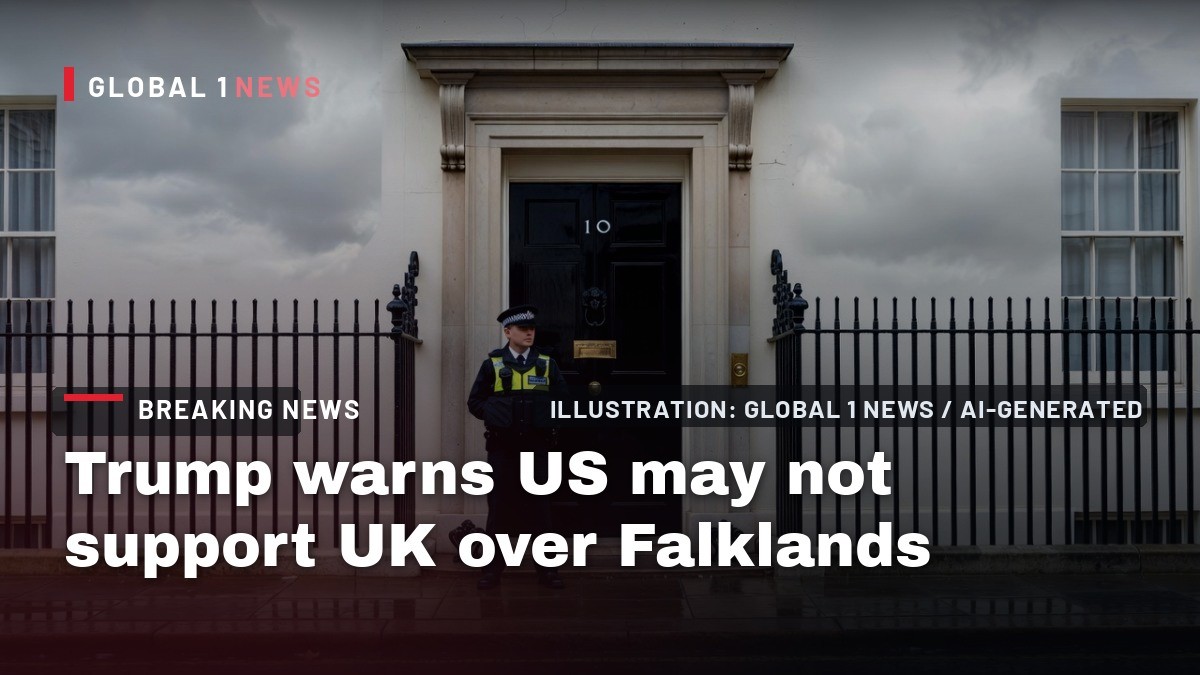
The reported warning from Donald Trump that he might not support the UK in defending the Falkland Islands from a future invasion has landed like a depth charge in Whitehall, underscoring the dire strategic position facing the new Prime Minister, Andy Burnham. The suggestion, reportedly under active consideration by the US administration, is being framed as leverage to force Britain into a dramatic increase in defence spending.The veiled threat comes at a moment of acute vulnerability for the UK, with Argentina's president, Javier Milei — a political ally of Trump — issuing a fresh warning over the islands, and Vladimir Putin hinting that Russia could attack UK military targets over Britain's continued support for Ukraine. For a government that has spent its first months in office trying to project stability, the confluence of these pressures paints a picture of a nation perceived as increasingly weak by both its opponents and its allies. The Argentine dimension adds a further layer of volatility. President Javier Milei, a self-styled libertarian who has cultivated close ties with Trump, issued a fresh warning over the islands this week, saying his country's national sovereignty had been "violated" and that he would defend its interests "with tooth and nail, no matter who it bothers".Milei's rhetoric is reminiscent of the period before the 1982 conflict, when few believed Argentina would invade the Falklands until they did. The islands are administered by the UK but still claimed by Argentina, and the current Argentine president is an avowed ally of the man in the White House. The prospect of Washington signalling a change in its stance on the sovereignty question would be a significant diplomatic victory for Buenos Aires.Admiral Lord West of Spithead, who commanded HMS Ardent, a frigate sunk in the Falklands conflict, and later served as commander-in-chief of the Royal Navy, sought to downplay the military significance of a US policy shift. He said that losing American support for British sovereignty would have "no impact" militarily, adding: "The recognition or otherwise by the US does not make the islands less secure."That may be true in purely military terms. But diplomatically and politically, the signal would be profound. It would suggest that the special relationship, long the cornerstone of British defence policy, is now conditional on the UK meeting American demands on spending. And it would hand Milei a propaganda victory that he would be certain to exploit.
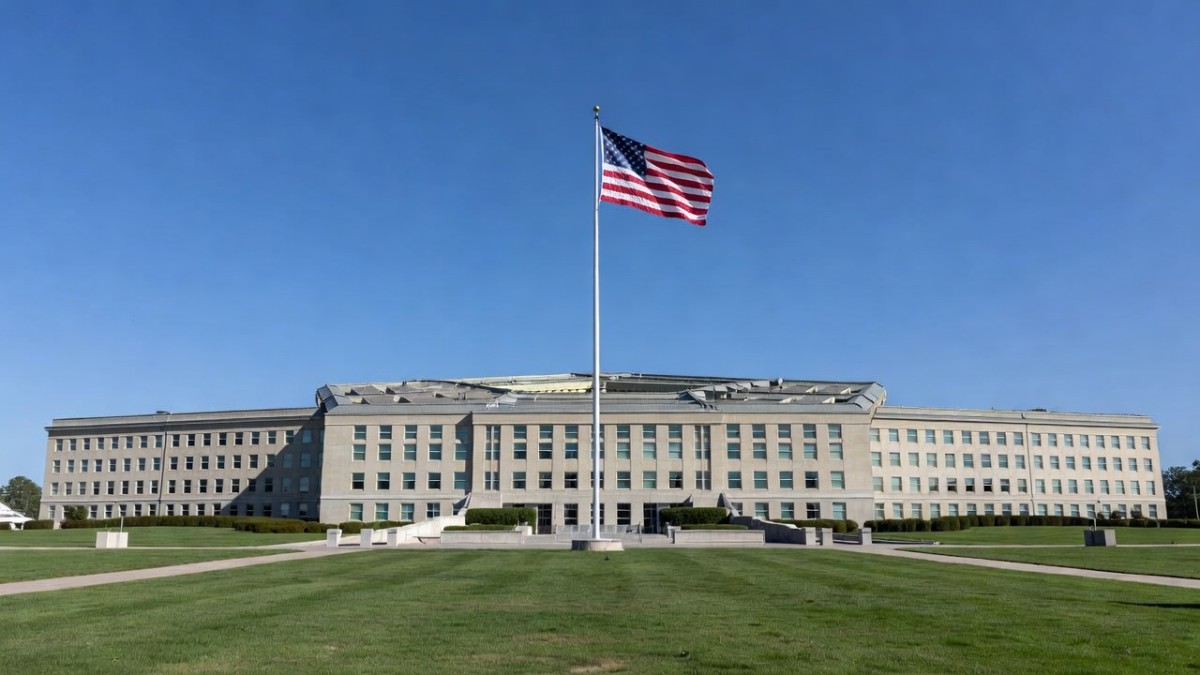 The Falklands dispute is merely the most visible symptom of a broader malaise. Since 1989 and the fall of the Berlin Wall, the UK has been living off the peace dividend. That period is over. The aim of spending 3 per cent of GDP on defence by 2030 is not an option or a luxury; it has become a necessity. Arguably, the target is too slow and not enough.The UK's refusal to help the US in its war with Iran beyond limited defensive measures has exacerbated tensions. Bitterness in Washington over not being allowed to fly from UK bases will be felt well after Trump stops being president. Brexit has left Britain adrift and outside EU rearmament efforts, but failures on defence funding and complacency have been worse.Putin's veiled threat to attack UK military targets over Ukraine is a reminder that the threat from Moscow is not theoretical. The Russian President watches the debates in Westminster with keen interest. Every sign of division or hesitation is noted. Every delay in meeting defence commitments is logged. The UK's adversaries are emboldened by confusion; its allies are undermined in their confidence.The wider signal to both allies and adversaries is damaging. When the United States signals that it may no longer be Britain's security blanket, other nations take note. When the UK government cannot clearly state when it will meet its own defence spending targets, its credibility suffers. And when the Prime Minister says one thing and Downing Street says another, the impression of weakness is compounded.
The reported US warning
According to senior US officials speaking to The Telegraph, the Trump administration is considering an ultimatum that would threaten to withdraw American support for Britain's sovereignty over the Falklands if the UK does not increase its defence budget. Pentagon officials are understood to be reviewing Nato allies' commitment to their defence spending promises, with the UK set to receive "special attention".One senior US official was blunt about the administration's intent: "I would expect the UK to receive special attention because it has so much potential. We will therefore continue efforts to incentivise and enable the UK to step up in a major way." The official added that conversations were "candid and nothing is being ruled out as far as options for encouraging the sort of burden-sharing that we seek."The notion of changing America's stance on the Falklands is not new. A leaked internal Pentagon email in April suggested the US could review Britain's claim to the islands as revenge for a lack of support in the Iran war. That earlier threat was dismissed by Downing Street, which insisted the sovereignty of the Falklands was "not in question". The Foreign Office has reportedly considered a shift in the US position but treated it as a "hypothetical scenario". This week, it appears to have become rather more concrete.The UK government's formal response remains steadfast. A spokesperson said: "The UK position on the Falkland Islands is long-standing and unwavering: they are and will remain a British Overseas Territory in line with the wishes of the Falkland islanders." The spokesperson also noted that the UK is Nato's third largest cash spender on defence and the only European Nato member to commit its nuclear deterrent to the alliance.The ultimatum over defence spending
The timing of the reported US move is no coincidence. The Treasury confirmed on Friday that Chancellor John Healey's first budget will fail to set out when the UK will meet the target of allocating 3 per cent of GDP on defence. That omission will be read in Washington as a signal that the Burnham government is not serious about matching its rhetoric with resources.Healey's own history makes the situation particularly awkward. He resigned as defence secretary in June, accusing former Prime Minister Sir Keir Starmer of being "unable, and the Treasury has been unwilling, to commit the resources that the nation needs to defend the country at this time of rising threats". Now, as Chancellor, he must put his money where his mouth was. The early signs are not encouraging.The confusion emanating from the government does not help. The Prime Minister has said that spending 3 per cent of GDP on defence by 2030 is a commitment; Downing Street has since suggested it is not. That contradiction looks weak and emboldens the UK's enemies while undermining the confidence of its allies. Trump's administration believes the UK did not go far enough with its defence investment plan in June and is now looking at ways to incentivise the Prime Minister to invest further.The US President has already said he is unwilling to defend Europe from a Russian attack and has told Nato allies they must fund defence properly. The UK, which appeared to lead the way on a commitment under Sir Keir Starmer, has apparently failed to fulfil that promise. The result is that Britain now finds itself in the crosshairs of an American administration determined to extract greater burden-sharing from its allies, with the Falklands sovereignty question being used as a bargaining chip.Milei and the Argentine claim
The Argentine dimension adds a further layer of volatility. President Javier Milei, a self-styled libertarian who has cultivated close ties with Trump, issued a fresh warning over the islands this week, saying his country's national sovereignty had been "violated" and that he would defend its interests "with tooth and nail, no matter who it bothers".Milei's rhetoric is reminiscent of the period before the 1982 conflict, when few believed Argentina would invade the Falklands until they did. The islands are administered by the UK but still claimed by Argentina, and the current Argentine president is an avowed ally of the man in the White House. The prospect of Washington signalling a change in its stance on the sovereignty question would be a significant diplomatic victory for Buenos Aires.Admiral Lord West of Spithead, who commanded HMS Ardent, a frigate sunk in the Falklands conflict, and later served as commander-in-chief of the Royal Navy, sought to downplay the military significance of a US policy shift. He said that losing American support for British sovereignty would have "no impact" militarily, adding: "The recognition or otherwise by the US does not make the islands less secure."That may be true in purely military terms. But diplomatically and politically, the signal would be profound. It would suggest that the special relationship, long the cornerstone of British defence policy, is now conditional on the UK meeting American demands on spending. And it would hand Milei a propaganda victory that he would be certain to exploit.Westminster reaction
The political fallout in Westminster has been immediate. Conservative leader Kemi Badenoch said this morning that strong countries are not attacked, only weak ones. She described the potential US policy review as "absolute nonsense", comparing it to Trump's previous threat to annex Greenland. Her remarks reflect a broader concern that Britain's standing on the world stage is diminishing.On the government's own benches, there is unease. Tan Singh Dhesi, the senior Labour backbencher who chairs the Commons Defence Select Committee, warned Mr Burnham at Prime Minister's Questions on Wednesday that good vibes alone are not going to defend the UK and its interests. The message from the committee chair is clear: the Prime Minister must translate his warm words on defence into hard cash, and quickly.Downing Street has insisted that the sovereignty of the Falkland Islands is "not in question", and that the UK's position is "long-standing and unwavering". But the repeated need to issue such reassurances is itself a sign of the times. A decade ago, the idea that the United States would even consider reviewing its support for British sovereignty over the Falklands would have been unthinkable. Today, it is the subject of serious discussion in Washington and London alike.The Prime Minister faces very difficult choices. There is not much money to play with, and his Labour Party has other plans for spending on public services and infrastructure. But the defence of the realm cannot be postponed indefinitely. He must now be wondering whether the UK could defend the Falklands without US support, and whether the 3 per cent target is achievable at all given the state of the public finances.The wider strategic picture
The Falklands dispute is merely the most visible symptom of a broader malaise. Since 1989 and the fall of the Berlin Wall, the UK has been living off the peace dividend. That period is over. The aim of spending 3 per cent of GDP on defence by 2030 is not an option or a luxury; it has become a necessity. Arguably, the target is too slow and not enough.The UK's refusal to help the US in its war with Iran beyond limited defensive measures has exacerbated tensions. Bitterness in Washington over not being allowed to fly from UK bases will be felt well after Trump stops being president. Brexit has left Britain adrift and outside EU rearmament efforts, but failures on defence funding and complacency have been worse.Putin's veiled threat to attack UK military targets over Ukraine is a reminder that the threat from Moscow is not theoretical. The Russian President watches the debates in Westminster with keen interest. Every sign of division or hesitation is noted. Every delay in meeting defence commitments is logged. The UK's adversaries are emboldened by confusion; its allies are undermined in their confidence.The wider signal to both allies and adversaries is damaging. When the United States signals that it may no longer be Britain's security blanket, other nations take note. When the UK government cannot clearly state when it will meet its own defence spending targets, its credibility suffers. And when the Prime Minister says one thing and Downing Street says another, the impression of weakness is compounded.What it means for Burnham
For Andy Burnham, this is a defining moment. He came to office promising a fresh start, a break from the chaos of the Starmer years. But the realities of global power politics do not respect domestic political timelines. The warning from Trump, the threats from Milei and Putin, and the warnings from his own backbenches all point in the same direction: Britain must rearm, and it must do so now.The Chancellor, John Healey, who built his political reputation on resigning over a lack of military funding, now has the opportunity to prove his sincerity. His first budget will be scrutinised not just in Westminster but in Washington, Buenos Aires and Moscow. If it fails to set out a credible path to 3 per cent of GDP on defence, the consequences could be severe.Until government policy pivots to deal with this reality, there will be more threats from Buenos Aires, Moscow and elsewhere. The Falklands question is not going away. The pressure on defence spending is not going away. And the uncomfortable truth for the Prime Minister is that the era of the peace dividend is well and truly over. The question now is whether he has the courage to act on that reality, or whether he will continue to hope that good vibes alone will be enough to defend the UK and its interests.By Erica Thornton, Staff WriterThis article was produced with AI-assisted research and editorial support. Sources: The Independent, The Telegraph (as cited).What's Your Reaction?
 Like
0
Like
0
 Dislike
0
Dislike
0
 Love
0
Love
0
 Funny
0
Funny
0
 Wow
0
Wow
0
 Sad
0
Sad
0
 Angry
0
Angry
0

Erica Thornton
US Politics and Policy Correspondent at Global1.News. Based in Washington DC, covering American politics, policy, elections, and the courts. Knows how the system works and tells you what it actually means.














Comments (0)