
Trump Tariffs: Canada 'Wants Benefits of US State, Without Being One'
Trump's 50 per cent tariffs on $20bn of Canadian goods took effect after US-Canada trade talks collapsed, as Mark Carney vowed dollar-for-dollar retaliation. For Britain, the trade war threatens steel markets, the pound and the UK's own negotiations with Washington.
The collapse of US-Canada trade talks has plunged the North Atlantic economy into its deepest crisis in decades, with President Donald Trump’s 50 per cent tariffs on more than 500 Canadian product categories now in force. For Britain, the confrontation carries a distinctly familiar echo — the man leading Canada’s resistance is Mark Carney, the former Governor of the Bank of England, and the fallout threatens to reshape steel markets, trade diplomacy and the pound’s trajectory.
Trump’s 50% Tariff Blitz on Canada Sparks Trade War — and a Stark Warning for Britain’s Own US Negotiations
London, UK – 23 August 2026 — President Donald Trump launched his most aggressive trade salvo yet against a US ally on Saturday, as new 50 per cent tariffs took effect on roughly $20bn (£15bn; C$28bn) of Canadian goods — approximately 5 per cent of Canada’s exports. The move, which covers everything from Molson beer and Crown Royal whisky to hockey sticks, plywood and goose-down jackets, came just hours after trade negotiations collapsed in Washington late Friday night, with both sides accusing the other of last-minute changes.
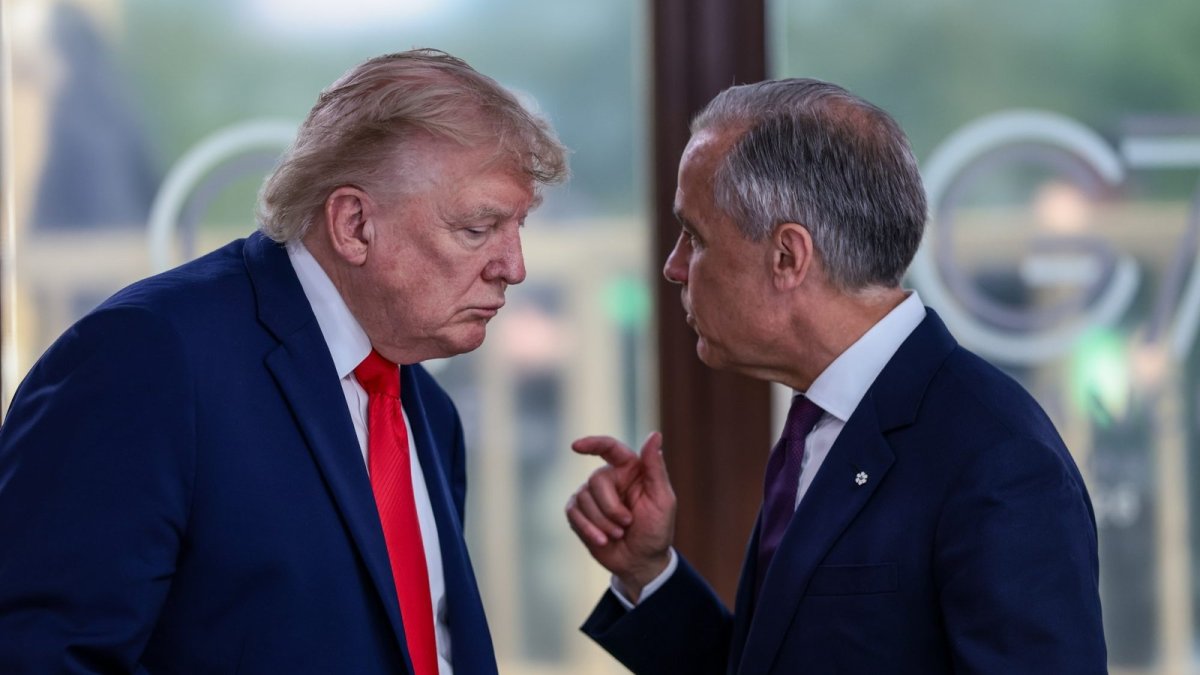
‘No More!!!’ — Trump’s Truth Social Declaration
In his first public comments since the talks unravelled, Trump took to Truth Social early Sunday morning with characteristic bluntness: “Canada wants the benefits of being a State, without being one!!!” He went on to claim that Canada had charged American farmers “massive amounts of Tariffs” for years, concluding with a stark ultimatum: “No more!!!”
The President’s rhetoric — which has repeatedly floated the notion of Canada becoming the “51st state” since his second term began in 2025 — has transformed what might have been a technical trade dispute into an existential political confrontation. Speaking to Fox News on Sunday, Trump dismissed Canadian resistance, labelling the Canadians “foolish” for believing they could “actually win” a trade war against the United States.
US Trade Representative Jamieson Greer offered a more institutional defence of the action: “We’ve said enough and so we’ve taken countermeasures. Our interest is in protecting American workers and protecting American supply chains.”
Carney’s Counter-Punch: ‘We Got Attacked’
For Mark Carney — the former Bank of England Governor who now leads Canada as Prime Minister — this is the defining test of his political career. In a nationally televised address on Saturday, Carney did not mince words: “You’re at war when you get attacked. We got attacked.”
Carney, who steered the Bank of England through the 2016 Brexit referendum and its aftermath, framed the dispute in terms that will resonate powerfully with British audiences familiar with sovereignty battles. He revealed that US negotiators had made demands that were “uneconomic, unfair and undermined the net benefits for Canada” — including curtailing Canada’s ability to strike trade deals with other countries, a direct assault on Canadian sovereignty. Even more provocatively, he said the Americans had made threats to the French language and “Quebec culture”.
“We cannot accept what they’ve offered, and we will not give what they’ve asked,” Carney declared, calling the tariffs a “miscalculation” designed to “hurt and divide us”.
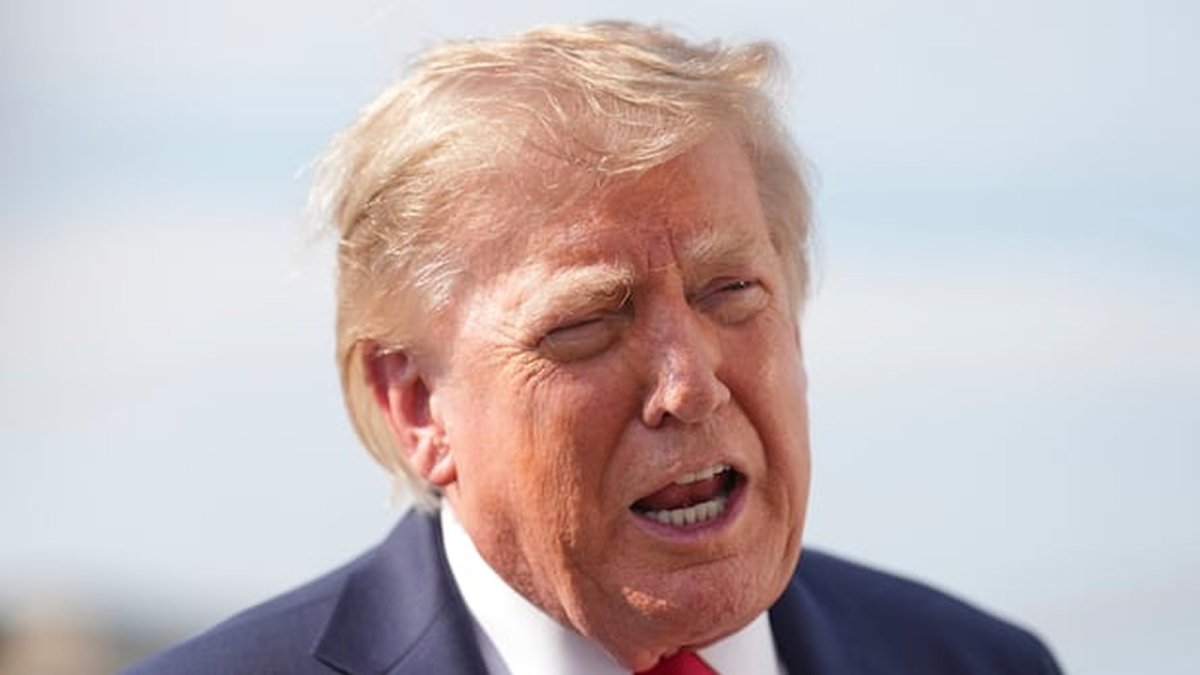
Retaliation ‘Dollar for Dollar’ — The September Counter-Strike
Canada’s response is already calibrated and scheduled. Ottawa will retaliate “dollar for dollar” starting 8 September, with levies targeting US steel, dairy, appliances and electronics — a carefully chosen mix designed to maximise political pain in key Republican constituencies and swing states.
The economic damage is already being quantified. Dan Kelly, president of the Canadian Federation of Independent Business, warned that 40 per cent of small Canadian exporters will be directly hit by the tariffs, with nearly one-third expecting revenues to drop by 50 per cent or more. For a country where roughly 75 per cent of exports flow south to the United States, the numbers are stark.
Conservative opposition MP Shuvaloy Majumdar, the shadow minister for Canada-US relations, has urged Ottawa to release full details of the proposed deal, arguing that Canadians deserve transparency about what was actually on the table. So far, Canadian provincial premiers and opposition leaders have closed ranks behind Carney, presenting a united front rare in Canadian federal politics.
What Was on the Table — and What Collapsed
The proposed agreement that unravelled on Friday would have delivered significant concessions from Washington: US tariffs on Canadian steel and aluminium cut to 25 per cent, automotive duties lowered to 15 per cent, and a 10 per cent levy on lumber eliminated entirely. The broader USMCA renegotiation remains unresolved, leaving a gaping hole in North American trade architecture.
The steel numbers explain why this matters so acutely. Canada was the largest source of US steel imports in 2025, supplying approximately 3.3 million tonnes — 28 per cent of all US imports — despite Section 232 tariffs already sitting at 50 per cent. Canadian-origin flat and long finished carbon steel imports fell 32 per cent year-on-year, according to data from the British Stainless Steel Association and the International Trade Administration, with MEPS analyst Laura Hodges noting the sustained pressure on Canadian producers.
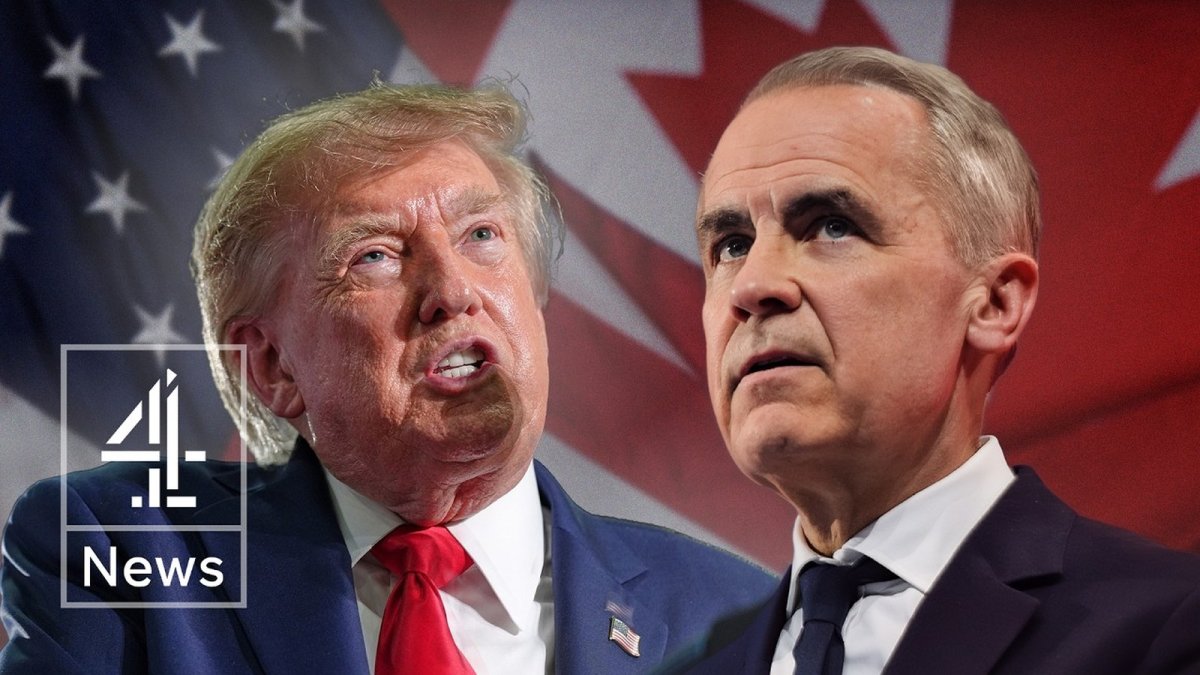
The UK Angle: Steel Diversion, Port Talbot and the Pound
For Britain, this is not a distant quarrel. The steel dimension carries direct consequences for UK producers. With Canadian steel locked out of the US market, the risk of diversion into UK and European markets is acute. British mills — Tata Steel at Port Talbot in South Wales and British Steel at Scunthorpe in Lincolnshire — could face a surge of cheaper Canadian imports, pressing down prices and triggering safeguard questions in Whitehall.
The Section 232 precedent has already reshaped global steel trade flows once, and this escalation threatens to do so again. UK Trade Secretary Jonathan Reynolds’ department will be monitoring the situation closely, with officials at the Department for Business and Trade assessing whether safeguard mechanisms need to be triggered to protect domestic producers.
There is also a broader diplomatic calculation. Britain is currently negotiating its own trade deal with Washington, and Trump’s Canada playbook — tariff leverage combined with statehood rhetoric — is a stark warning for how the Prime Minister’s team should approach the talks. If the US can treat its largest trading partner and closest neighbour this way, the UK’s leverage is inherently limited.
Yet there is a countervailing opportunity. UK-Canada trade ties are being actively revived, with discussions underway on beef and cheese access and Britain’s envoy to Ottawa working to deepen the relationship. A Canada pushed away from Washington may find itself drawn closer to London — and to Brussels — as it seeks to diversify its export markets.
Global Fallout: Inflation, the Bank of England and British Households
The macroeconomic consequences will reach British shores. Global trade-war uncertainty is already weighing on the UK economy, with the pound facing renewed pressure as investors price in the risk of broader disruption. For the Bank of England — now under Governor Andrew Bailey, but still operating in the shadow of Carney’s governorship — the inflation outlook has become more complicated. Trade disruptions tend to be inflationary in the short term, potentially complicating the Monetary Policy Committee’s path on interest rates.
British consumers will feel the effects indirectly. Supply chain disruption in North America affects global prices for everything from electronics to agricultural products. The 50 per cent tariff on Canadian dairy and agricultural goods will reshape North American farming patterns, with knock-on effects for global commodity prices.
The Bottom Line — What Comes Next
The immediate trajectory is clear: Canada’s dollar-for-dollar retaliation lands on 8 September, and the escalation spiral has not yet peaked. Trump shows no sign of backing down, and Carney — who has staked his political credibility on standing firm — cannot afford to blink. The proposed deal’s collapse means the USMCA renegotiation remains in limbo, with no clear path back to the table.
For Britain, the lessons are being drawn in real time. The UK’s own trade negotiations with Washington must proceed with eyes wide open: tariff leverage, sovereignty demands and aggressive rhetoric are the tools of this administration. But there is also an opening — a Canada seeking new partners, a UK seeking new trade relationships, and a shared Commonwealth history that could yet translate into economic substance.
Carney, the man who once steered the Bank of England through Brexit, now finds himself steering Canada through its own sovereignty crisis. The former Threadneedle Street Governor knows something about navigating economic turbulence. Whether that experience is enough to withstand the full force of a Trump trade war is the question that will define his premiership — and shape the global trading order for years to come.
By Erica Thornton, Staff Writer
This article was produced with AI-assisted research and editorial support. Reporting is based on sources cited in the article.
What's Your Reaction?
 Like
0
Like
0
 Dislike
0
Dislike
0
 Love
0
Love
0
 Funny
0
Funny
0
 Wow
0
Wow
0
 Sad
0
Sad
0
 Angry
0
Angry
0

US Politics and Policy Correspondent at Global1.News. Based in Washington DC, covering American politics, policy, elections, and the courts. Knows how the system works and tells you what it actually means.















Comments (0)