
Guadalajara Residents Turn to Citizen Science as Water Crisis Deepens
The Morning the Tap Water Became Evidence On a Saturday morning in Guadalajara's historic Analco neighborhood, the atmosphere at the Casa Bandera community center was less like a lecture hall and more like a gathering of neighbors comparing notes over coffee.
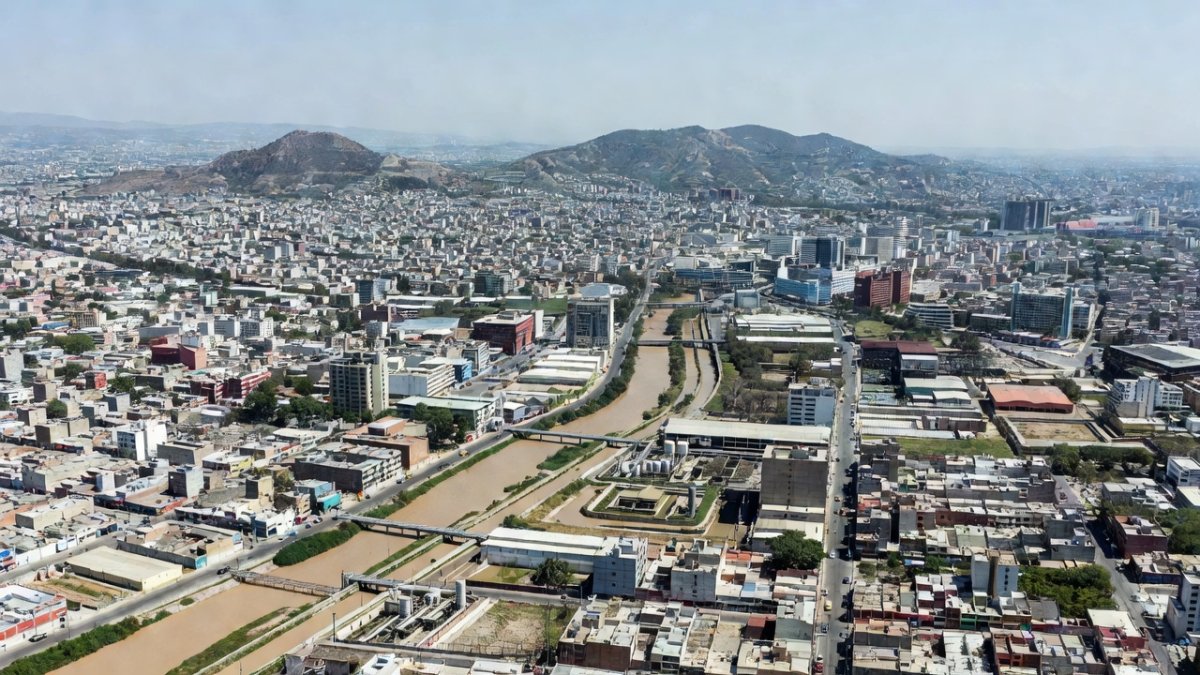
The Morning the Tap Water Became Evidence
On a Saturday morning in Guadalajara's historic Analco neighborhood, the atmosphere at the Casa Bandera community center was less like a lecture hall and more like a gathering of neighbors comparing notes over coffee. But instead of recipes, they carried bottles and jars filled with the most essential resource for their families: water from their homes. At folding tables, researchers from ITESO, Guadalajara's Jesuit university, demonstrated how to dip inexpensive reactive strips into the samples, wait for the colors to shift, and compare the results against a chart measuring pH, chlorine, lead, mercury, and other indicators.
This was the latest workshop in an expanding citizen water-monitoring network that has grown directly out of Guadalajara's months-long water crisis—and out of residents' deep frustration with what they see as inadequate information and action from the authorities responsible for providing safe water. For the families in the colonias of the Guadalajara metropolitan area, this is not an academic exercise; it is a matter of daily survival, of knowing whether the water used to prepare a baby's bottle or wash fresh vegetables is safe.
"We don't claim to be scientific specialists or water experts," Héctor Morales, one of the workshop presenters, told participants. "We are citizens contributing evidence from what we are observing and living through, and that is equally valid." His words resonated with the crowd, many of whom have lived for months with yellow, brown, or foul-smelling water coming from their taps. "We're not trying to compete with science," he continued. "We're trying to generate knowledge that comes from everyday life. That's the approach of citizen science."
What the Citizen Tests Revealed: A Snapshot of Risk
The data emerging from this network paints a troubling picture of the water supply in the five municipalities served by SIAPA (Sistema Intermunicipal de los Servicios de Agua Potable y Alcantarillado): Guadalajara, Zapopan, Tlaquepaque, Tonalá, and Tlajomulco. Before Saturday's workshop, the network had analyzed roughly 184 samples from 90 neighborhoods. The findings were stark: residual chlorine was found in only 12 of the 184 samples. This is a critical issue, as chlorine is added during water treatment, and a small amount should remain as water travels through the distribution network to protect it from bacterial contamination.
The monitoring also detected lead in 20 samples, fluoride in 52, and mercury in an unspecified number, according to Morales. Even more alarming, four of the 184 samples tested positive for E. coli, a form of fecal coliform bacteria that indicates sewage contamination. For families in the affected colonias, this means the water they have been using for cooking and cleaning may be exposing them to heavy metals and pathogens that pose serious health risks, particularly for children and the elderly.
It is crucial to note, as the organizers repeatedly emphasized, that these citizen findings are not a statistically representative survey of Guadalajara's water supply. The low-cost tests do not measure all of the dozens of parameters required under Mexico's drinking-water standard. "What does this analysis tell us?" Morales asked the group. "It tells us when the water is not safe. What doesn't it tell us? It doesn't tell us when the water is good." Certifying water as safe, he explained, requires much more extensive laboratory testing. Yet, for the residents who have been living with this uncertainty, these tests provide a starting point for demanding accountability.
Official Confirmation and the Fight for Institutional Action
The citizen science movement has not operated in a vacuum. Official testing has now documented some of the same warning signs that residents have been reporting for months. In late July, Jalisco health authorities confirmed that E. coli had been detected in 18 of 297 samples analyzed between March and June in neighborhoods affected by water-quality problems. Officials also acknowledged insufficient chlorination in some areas. These confirmations came after months of complaints about the color, smell, and taste of the water, as well as sediment and service interruptions across the metropolitan area.
María González of IMDEC (Mexican Institute for Community Development) explained that the testing has two distinct purposes. "This helps us protect ourselves. You are going to know what is in the water in your homes," she told the group. But the results, she said, are also "our citizen evidence for legal action, for institutional action, for mobilization." This dual strategy is central to the #ElSiapaQueQueremos (The SIAPA We Want) campaign, which has now received nearly 1,500 complaints, with water quality by far the most common problem, followed by outages and high rates.
For the families involved, this is about transforming personal hardship into collective power. The evidence gathered by citizens is being used to pressure authorities at the municipal and state levels, and to build a case for legal action if necessary. It is a form of community organizing that echoes the traditions of Mexican social movements, where the collective voice of the pueblo often serves as the most effective check on institutional power. The goal is not just to document the problem, but to force a solution that ensures the human right to water is respected.
The Agua KK Fest: Humor as a Weapon Against Despair
Amid the serious work of water testing and legal documentation, Guadalajara's water activists are also finding ways to keep spirits high and draw attention to their cause. On Sunday, Aug. 23, they will host the "Agua KK Fest" at Plaza Liberación, a name that is a cheeky play on the word "caca"—a pointed joke about the dirty water that residents say has been coming from their taps. The festival is designed to be both a protest and a community celebration, ensuring the issue remains visible in the public consciousness.
The day's events begin at 10 a.m. with a gathering at Parque Rojo, followed by the "Mega March for Water" departing along Av. Juárez at 11 a.m. The march will culminate in the festival at noon, which will feature workshops on home water filters, rainwater harvesting, dry toilets, and water testing. There will also be children's activities, music, decorated water jugs, costumes, and karaoke. The festival is a testament to the resilience of the community, using humor and festivity to confront a crisis that has become a daily reality.
This approach reflects a deep cultural understanding that in Mexico, even in the face of adversity, the community finds strength in togetherness. Whether it is the solidarity of a tianguis or the festive spirit of a quinceañera, these gatherings reinforce social bonds. The Agua KK Fest is a reminder that the fight for clean water is not just a technical or legal battle; it is a fight for the dignity of families who deserve to live without fear of what comes out of their faucets. It is a call to action that is impossible to ignore.
The $20 Billion Peso Overhaul: A Long Road Ahead
The Jalisco government and SIAPA have acknowledged the serious problems in the aging water system and have announced a long-term overhaul requiring more than 20 billion pesos in investment. Among the major projects are the replacement of the aging Chapala-Guadalajara aqueduct and the modernization and expansion of Potabilizadora No. 1 in Miravalle. Governor Pablo Lemus said this month that the federal government had agreed to participate in the response to the crisis, a crucial step given the scale of the investment required.
However, for the residents of the Guadalajara metropolitan area, these announcements are met with cautious optimism at best. The timeline for these projects is long, and the crisis is happening now. The water that flows—or trickles—from their taps today is the water they must use to bathe their children and cook their meals. The promise of a modernized aqueduct in the future does little to alleviate the immediate anxiety of a mother who wonders if the sediment in her glass is safe to ingest.
Furthermore, the context of Guadalajara as a 2026 FIFA World Cup host city adds an extra layer of urgency. The world will be watching, and the city's ability to provide basic services to its residents and visitors will be under intense scrutiny. The citizen science network is ensuring that this issue cannot be swept under the rug. By creating a body of evidence and mobilizing public opinion, they are holding the authorities accountable to their promises. The road to a reliable, safe water supply is long, but the citizens of Guadalajara have made it clear that they will be watching every step of the way.
Tags: Guadalajara water crisis, citizen science, SIAPA, water testing, E. coli, lead contamination, Jalisco water, Pablo Lemus, #ElSiapaQueQueremos, Mexico water quality, tap water safety, Guadalajara colonias, water infrastructure, Chapala aqueduct
By Rosa Martinez, Staff Writer
*This article was produced with AI-assisted research and editorial support. Reporting is based on sources cited in the article.
What's Your Reaction?
 Like
0
Like
0
 Dislike
0
Dislike
0
 Love
0
Love
0
 Funny
0
Funny
0
 Wow
0
Wow
0
 Sad
0
Sad
0
 Angry
0
Angry
0
Latin America/Andes Correspondent at Global1.News. Based in Bogota, covering politics, environment, energy, and social movements across the Andean region. Passionate about environmental journalism and communities protecting their land.













Comments (0)