
Canada Could Lose Tens of Thousands of Jobs as Trump's 50% Tariffs Take Effect
Trump's 50 per cent tariffs on Canadian goods are now in effect after trade talks collapsed, and economist Trevor Tombe warns Canada could lose nearly 90,000 jobs. Prime Minister Mark Carney has vowed dollar-for-dollar retaliation starting September 8 as Unifor says the U.S. is trying to destroy Canada's manufacturing base.
In a recent CBC News report, chief political correspondent David Common detailed the economic stakes as the collapse of Canada-U.S. trade negotiations triggered a dramatic escalation in the bilateral relationship. With U.S. President Donald Trump's 50 per cent tariffs on roughly $20 billion worth of Canadian goods now in effect, University of Calgary economist Trevor Tombe's analysis suggests Canada could shed tens of thousands of jobs if the measures remain in place. The question confronting Canadian households, workers and businesses is how deep the damage runs — and what the dollar-for-dollar response from Ottawa will mean in the months ahead.
Canada Faces Nearly 90,000 Job Losses as Trump's 50 Per Cent Tariffs Take Hold
Ottawa, Ontario – August 23, 2026 — In a recent CBC News report, chief political correspondent David Common detailed how the collapse of Canada-U.S. trade negotiations has triggered a dramatic escalation in the bilateral economic relationship. U.S. President Donald Trump has imposed 50 per cent tariffs on roughly $20 billion worth of Canadian goods under Section 338 of the U.S. Tariff Act of 1930, a rarely used provision that took effect Saturday, August 22, 2026 at 12:01 a.m. EDT — just hours after talks broke down before a midnight deadline. The move, which followed a brief three-day pause announced on August 19, has sent shockwaves through Canadian industries and prompted urgent analysis from economists about the potential toll on Canadian workers.
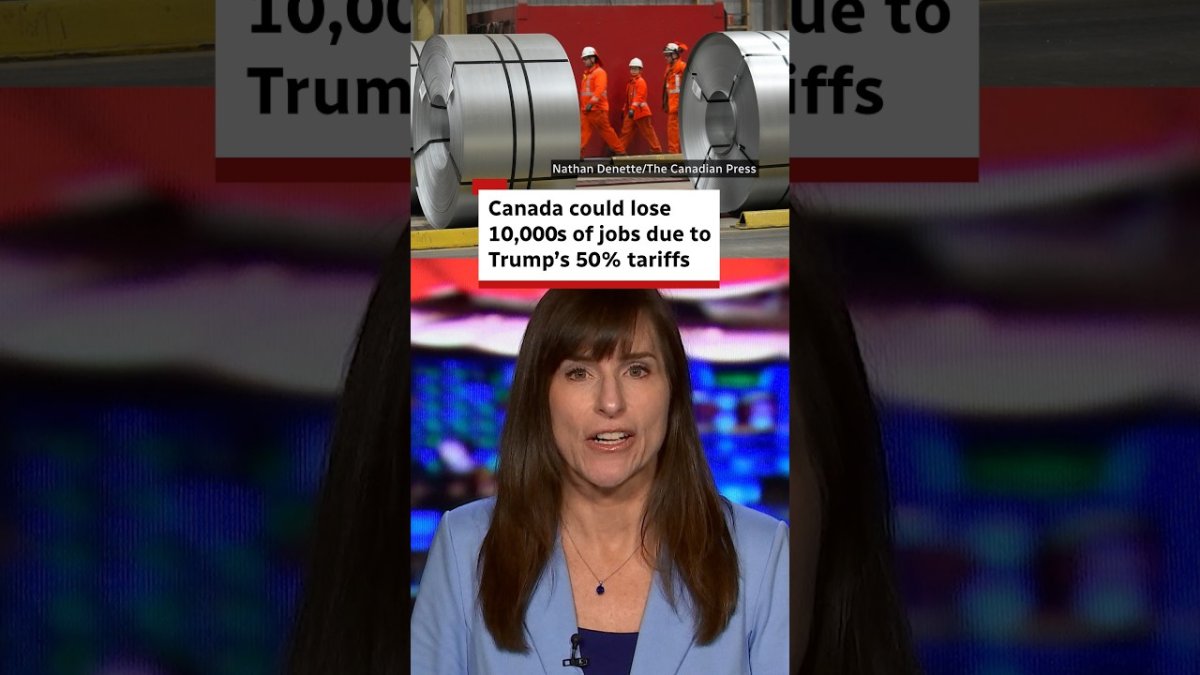
Trade talks collapse, 50 per cent tariffs take effect
The tariff list is sweeping, covering hundreds of Canadian goods including wine, hockey sticks, cement, automobiles, dairy products, machinery and electronics, plastics and rubber, furniture, wood and paper products, and chemicals and cosmetics. For Canadian communities from the Okanagan Valley's vineyards to the automotive corridors of Windsor and Oshawa, the implications are immediate and potentially devastating. The federal government's State of Trade 2026 report notes that more than 70 per cent of Canadian goods exports go to the United States, with some estimates placing the share as high as 77 per cent — a dependency that makes this tariff action uniquely damaging.
Trevor Tombe's analysis: nearly 90,000 jobs at risk
University of Calgary economist Trevor Tombe, who is also a Macdonald-Laurier Institute expert, published analysis on Thursday, August 20, 2026 in The Hub estimating that Canada could lose almost 90,000 jobs if the tariffs remain in place. Tombe's modelling examines the direct and indirect employment effects across supply chains, accounting for the fact that job losses in manufacturing ripple outward to transportation, warehousing, and professional services. Financial analysts have separately projected that the 50 per cent tariffs could reduce Canada's GDP by 0.3 per cent to 0.6 per cent — a significant hit for an economy already grappling with housing affordability challenges and cost-of-living pressures.
The sectors most exposed are those where Canadian producers have built competitive advantages through years of investment and trade integration. Machinery and electronics manufacturers, plastics and rubber producers, furniture makers, wood and paper companies, and chemical firms all face sudden cost disadvantages in their largest export market. Unlike previous tariff disputes that targeted specific commodities like steel and aluminium, this action strikes at the heart of Canada's diversified manufacturing base. Tombe's analysis underscores that the job losses would not be evenly distributed — communities in Ontario and Quebec, where manufacturing is concentrated, would bear the brunt of the economic pain.
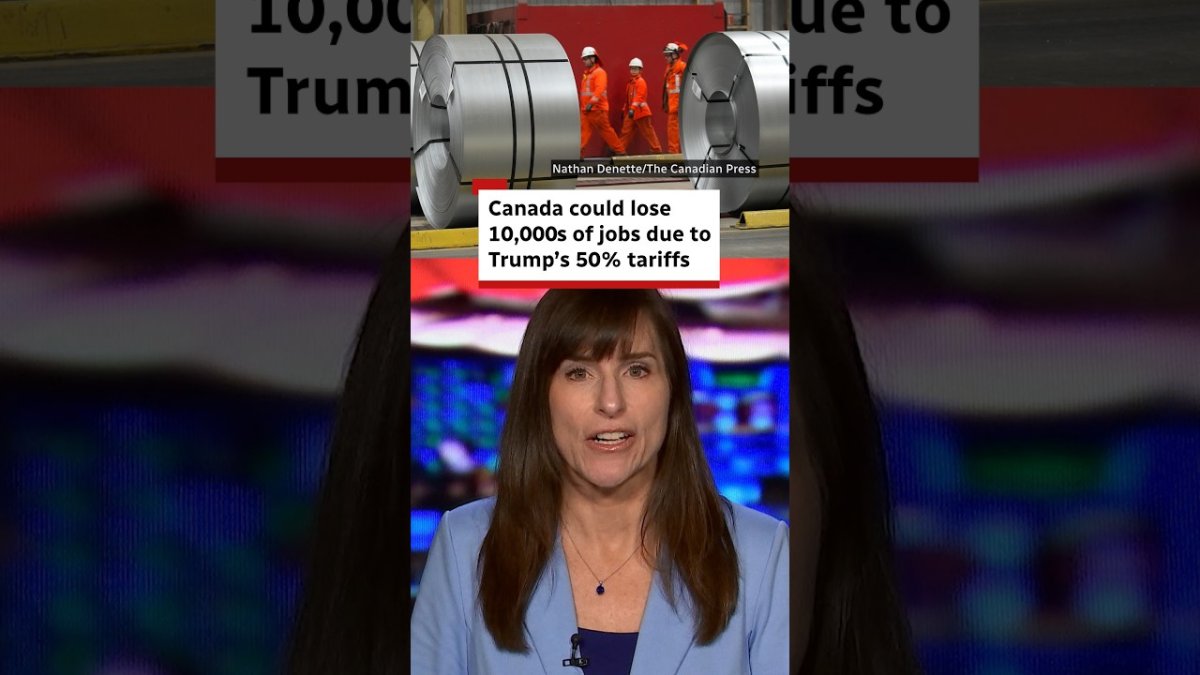
Prime Minister Carney vows dollar-for-dollar retaliation
Prime Minister Mark Carney responded forcefully at a news conference, vowing that "Canada will match Washington's new tariffs dollar for dollar in order to protect Canadian workers, farmers, families, and businesses." When asked whether Canada was now engaged in a trade war, Carney was unambiguous: "You're at war when you get attacked." The Prime Minister's language reflects a significant shift in tone from previous federal responses to U.S. trade actions, signalling that the government views this as an existential challenge to Canadian economic sovereignty rather than a routine trade dispute.
Canada's retaliatory tariffs are scheduled to take effect on September 8, 2026, targeting U.S. steel, dairy products, appliances, agricultural equipment, pulp and paper, and electronics. The two-week gap between the U.S. tariffs taking effect and Canada's response provides a window for diplomatic efforts, but Carney's rhetoric suggests the government is preparing for a prolonged confrontation. The choice of retaliatory targets appears carefully calibrated to apply political pressure on U.S. industries and regions that matter to the Trump administration, particularly agricultural states and manufacturing districts that rely on Canadian market access.
Unifor warns of existential threat to Canadian manufacturing
Unifor National President Lana Payne has been blunt about the stakes, saying Trump is trying to "destroy the manufacturing base of Canada." The union, which represents workers across the automotive, aerospace, and manufacturing sectors, has warned that the Canadian auto sector is in the "fight of our lives" as U.S. tariffs on vehicles, parts, and raw materials threaten tens of thousands of jobs and billions in manufacturing investment. Payne's message to the federal government is clear: "We shouldn't be offering any concessions to the United States right now."
The automotive sector is particularly vulnerable because of the deeply integrated nature of North American vehicle production. Parts and components cross the Canada-U.S. border multiple times during the manufacturing process, meaning tariffs at any stage disrupt the entire supply chain. Washington already had active tariffs ranging from 15 to 50 per cent on Canadian copper, aluminium and steel, plus a 25 per cent tax on non-U.S. parts in cars. The new 50 per cent tariffs on finished vehicles and additional components compound these existing pressures, potentially making Canadian-assembled vehicles uncompetitive in the U.S. market.
For communities like Windsor, Ontario, where the auto sector anchors the local economy, the stakes are existential. The city's unemployment rate would spike dramatically if assembly plants and parts suppliers were forced to idle production lines. Similar concerns apply to Oshawa, Oakville, and Brampton, where major assembly operations and their supplier networks employ tens of thousands of workers. The ripple effects would extend to dealerships, service centres, and the broader retail economy that depends on automotive sector wages.
Provincial premiers respond with calls for Canadian solidarity
Provincial premiers have moved quickly to respond to the escalating trade crisis. B.C. Premier David Eby commented on the suspension of talks, expressing frustration with the unpredictability of the U.S. negotiating approach. Ontario Premier Doug Ford and Eastern Canada premiers have urged Canadians to buy local amid the tariff fight, encouraging consumers to redirect their purchasing power toward Canadian-made products. These provincial responses reflect a recognition that the federal government cannot fight this battle alone — provincial procurement policies, regulatory cooperation, and interprovincial trade barriers all have roles to play in strengthening Canada's economic resilience.
The premiers' emphasis on buying local highlights a broader strategic question: can Canada reduce its dependence on the U.S. market over the long term? While the immediate focus is on countering the tariffs, the crisis has renewed calls for diversifying trade relationships with Europe, Asia, and other partners. However, trade diversification is a long-term project that cannot quickly replace the geographic proximity and market depth that the United States offers. The State of Trade 2026 report's finding that more than 70 per cent of Canadian exports go to the U.S. underscores the scale of the challenge.
What the tariffs mean for Canadian families and the economy
For Canadian families, the tariffs translate into immediate economic anxiety and potential long-term hardship. Workers in affected industries face the prospect of layoffs, reduced hours, or plant closures. Communities that depend on manufacturing face declining tax revenues, reduced local spending, and pressure on public services. The broader economy faces headwinds from reduced export earnings, which could weaken the Canadian dollar and increase the cost of imported goods. With the Bank of Canada having navigated interest rate decisions carefully in recent years, a significant trade shock could force difficult choices between supporting growth and containing inflation.
The timing could hardly be worse for an economy already dealing with housing affordability challenges in major urban centres and persistent cost-of-living pressures. Job losses in manufacturing would reduce household incomes precisely when many families are struggling to keep up with mortgage payments and everyday expenses. The federal government's fiscal position would also come under pressure, as reduced economic activity translates into lower tax revenues and increased demand for employment insurance and other income support programs.
The psychological impact should not be underestimated either. Canadians have long viewed the United States as our most reliable trading partner and ally. The aggressive use of Section 338 — a provision designed for entirely different circumstances — signals that the Trump administration is willing to use any tool available to extract concessions. This erodes the predictability and trust that underpin cross-border commerce and investment. Businesses that had planned expansions or new investments in Canada may now reconsider, and the chilling effect on foreign direct investment could persist long after the current dispute is resolved.
The road ahead: retaliation, negotiation, and uncertainty
As Canada prepares its retaliatory tariffs for September 8, the immediate question is whether the two countries can find a path back to negotiation. The three-day pause announced on August 19 suggested that both sides were willing to keep talking, but the collapse of talks just before the midnight deadline indicates fundamental disagreements remain. Carney's "dollar for dollar" commitment leaves little room for compromise, and Trump's willingness to use aggressive tariff measures suggests he sees economic pressure as his primary negotiating tool.
For Canadian businesses and workers, the uncertainty itself is damaging. Companies cannot make investment decisions, hiring plans, or supply chain arrangements when the rules of trade can change overnight. The longer the tariffs remain in place, the more permanent the damage becomes — even if they are eventually lifted, the disruption to supply chains and customer relationships may be difficult to repair. Tombe's estimate of nearly 90,000 job losses assumes the tariffs persist; the actual number could be higher if the uncertainty causes businesses to delay or cancel investments even before the full impact of the tariffs is felt.
The coming weeks will be critical. Canada's retaliatory tariffs will take effect on September 8, and the federal government will need to manage the economic fallout while maintaining diplomatic channels. The premiers' calls for Canadians to buy local reflect a recognition that consumer behaviour can provide some buffer, but no amount of domestic purchasing can replace the scale of the U.S. market. This is a moment that will test Canada's economic resilience, political leadership, and national unity in ways not seen in generations.
By Alex Thompson, Staff Writer
This article was produced with AI-assisted research and editorial support. Reporting is based on sources cited in the article.
What's Your Reaction?
 Like
1
Like
1
 Dislike
0
Dislike
0
 Love
0
Love
0
 Funny
0
Funny
0
 Wow
0
Wow
0
 Sad
0
Sad
0
 Angry
0
Angry
0

Canada Correspondent at Global1.News. Based in Toronto, covering Canadian politics, energy, trade, and US-Canada relations. Provides the Canadian perspective on North American and global affairs.















Comments (0)