
Trump Signs Section 232 Order Imposing 15% Tariff and Minimum Import Prices on Polysilicon, Escalating US-China Tech Supply Chain Battle
President Donald Trump has signed a proclamation imposing a 15 percent tariff on imported polysilicon derivatives and establishing a comprehensive minimum import price (MIP) program for polysilicon and related products, citing a national security investigation under Section 232 of the Trade Expansio
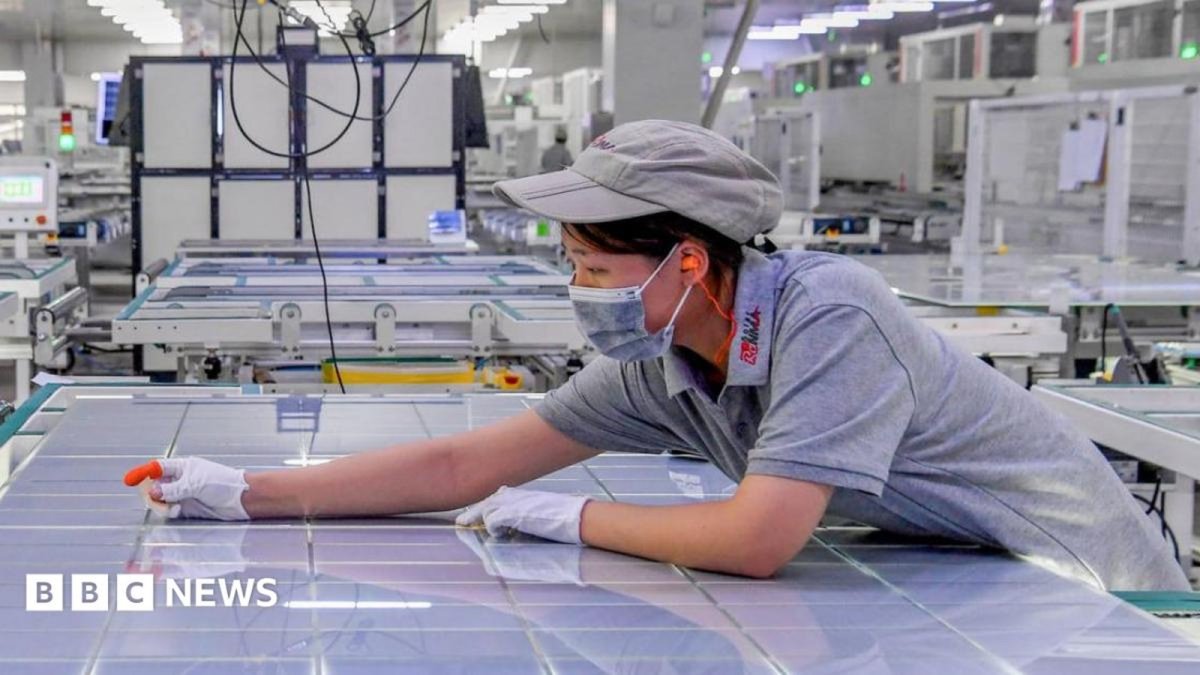
President Donald Trump has signed a proclamation imposing a 15 percent tariff on imported polysilicon derivatives and establishing a comprehensive minimum import price (MIP) program for polysilicon and related products, citing a national security investigation under Section 232 of the Trade Expansion Act of 1962. The proclamation, signed on August 6, 2026, marks a significant escalation in Washington's efforts to restructure the global semiconductor and solar supply chains, directly targeting China's near-monopoly on the critical material.
The measures, which are due to take effect on December 4, 2026, represent the latest front in the ongoing technological rivalry between the world's two largest economies. The Chinese embassy in Washington responded swiftly, stating the move "seriously disrupts" bilateral trade and that Beijing will act to protect its companies. The embassy accused Washington of "abusing state power to go after Chinese businesses," asserting that protectionism will not enhance American competitiveness.
The Strategic Rationale Behind the Proclamation
The White House proclamation, based on findings by Secretary of Commerce Howard Lutnick, argues that polysilicon is the foundational material for both semiconductors and solar products, making it essential to national security. The document details how the United States' share of global polysilicon production capacity has collapsed from 50 percent in 2005 to less than 2 percent in 2024, while China has expanded its capacity to approximately 3.25 million metric tons, controlling an estimated 93.5 percent of global output.
The proclamation explicitly links the polysilicon supply chain to defense applications, including radar systems, electronic warfare capabilities, and guidance systems for missiles and drones. It also connects solar-grade polysilicon to artificial intelligence innovations, framing the issue as central to the broader US-China competition for technological supremacy in AI development.
Mechanics of the New Import Regime
The order establishes specific minimum import prices: $21 per kilogram for raw polysilicon, $100 per kilogram for ingots and wafers, $0.22 per watt for solar cells, and $0.38 per watt for solar modules. Importers must certify that their first arm's-length sale in the United States occurs at or above these thresholds, with violations potentially resulting in permanent bans on importing these products.
In addition to the MIP program, the proclamation imposes a 15 percent ad valorem duty on polysilicon derivatives. Notably, the tariff structure contains differentiated rates: Japan, South Korea, Taiwan, Switzerland, Liechtenstein, and European Union member states face a combined rate equal to 15 percent, while the United Kingdom receives a reduced 10 percent rate. This differentiation appears designed to reward allied trading partners while maintaining pressure on China, which faces the full brunt of the measures.
Domestic Production Incentives and Onshoring Plans
The proclamation includes provisions for an onshoring program, authorizing Secretary Lutnick to enter into company-specific deals with producers. Companies can submit plans to build, refurbish, or expand facilities in the United States, with construction required to start by January 20, 2029. Approved companies would be allowed to import necessary production equipment and covered products without paying applicable Section 232 duties, with benefits tied to the facility's construction period.
This program is likely to benefit the two main US producers: Hemlock Semiconductor in Michigan, a joint venture between Corning and Japan's Shin-Etsu Handotai, and Wacker Chemie's plant in Tennessee. Hemlock Semiconductor previously received a $325 million preliminary grant under the Biden administration to boost domestic production, indicating bipartisan recognition of the strategic importance of this sector.
China's Strategic Calculus and Countermeasures
Beijing's response has been measured but firm. This week, China announced a range of countermeasures, including tighter export controls on drones and a national security review into imported printers and copiers. These actions signal that Beijing is prepared to retaliate while calibrating its response to avoid a full-scale trade war escalation, which has been on hold since May 2025.
Analysts quoted by Chinese state media outlet Global Times characterized the new tariff as the latest escalation in Washington's efforts to limit China's role in critical technology supply chains. The move follows other US restrictions on imports of drones, humanoid robots, and other tech products from China, suggesting a coordinated strategy to decouple critical supply chains.
Geopolitical Implications for Allies and the Global South
The differentiated tariff structure creates strategic opportunities and challenges for US allies. Japan, South Korea, and EU member states face the same 15 percent combined rate, potentially incentivizing these countries to align their export policies with US interests. However, the proclamation also contains provisions allowing the Secretary of Commerce to alter tariff applicability if trading partners establish "substantially equivalent" minimum import prices, creating a mechanism for allied coordination.
For the Global South, particularly nations in Southeast Asia and Africa seeking to develop their own semiconductor and solar manufacturing capabilities, this move reinforces the reality that critical technology supply chains are becoming increasingly securitized. Countries like Vietnam, Malaysia, and India, which have positioned themselves as alternative manufacturing hubs, may face difficult choices about aligning with either Washington or Beijing's respective supply chain architectures.
Economic Consequences and Market Distortions
The global polysilicon market has experienced severe price deflation, with prices collapsing below $4.50 per kilogram due to Chinese oversupply. Global production has grown by more than 270 percent since 2020, with inventories reaching a record high of 400,000 tons by the end of 2024. The MIP program effectively creates a protected domestic market in the United States, insulating American producers from these global market distortions.
However, the economic consequences extend beyond simple tariff collection. The minimum import prices are set significantly above current market rates, potentially increasing costs for American solar installers and semiconductor manufacturers. This creates a tension between the administration's stated goal of revitalizing domestic production and the immediate cost implications for downstream industries that rely on imported polysilicon.
Strategic Assessment: What Each Side Wants
Washington's calculus centers on rebuilding domestic manufacturing capacity in a sector deemed critical for both economic competitiveness and national security. The proclamation explicitly acknowledges that semiconductor-grade polysilicon now accounts for only 2.4 percent of global production, meaning that a viable solar-grade market is essential for sustaining the production volumes necessary for semiconductor-grade material. The MIP program is designed to create that commercial viability.
Beijing's strategic interests lie in maintaining its dominant position in the global supply chain while avoiding a direct confrontation that could accelerate decoupling. China's countermeasures, including drone export controls and the printers and copiers review, appear calibrated to signal resolve without triggering a full-scale escalation. The tit-for-tat tariff war has been on hold since May 2025, suggesting both sides recognize the economic costs of sustained conflict.
Second-Order Effects and the Path Forward
The proclamation's implementation timeline, with measures taking effect in December 2026, provides a window for diplomatic engagement and potential adjustments. The Secretary of Commerce is authorized to monitor trading partner actions and modify the MIP program if partners establish equivalent measures, creating space for negotiated outcomes.
The broader implications for the global technology order are profound. This action, combined with previous restrictions on semiconductors, drones, and humanoid robots, signals that the United States is pursuing a comprehensive strategy to secure critical supply chains. For China, the response will likely involve continued investment in domestic innovation, diversification of export markets, and strategic engagement with the Global South to build alternative supply chain architectures.
As the December implementation date approaches, the international community will be watching closely to see whether this represents the beginning of a coordinated allied approach to polysilicon supply chain security or another unilateral action that fragments the global technology economy. The answer will shape not only the future of semiconductor and solar manufacturing but also the broader trajectory of US-China relations in the critical decade ahead.
By Prof. Marcus Chen, Staff Writer This article was produced with AI-assisted research and editorial support. Sources: BBC News, the White House, Reuters, Global Times.What's Your Reaction?
 Like
0
Like
0
 Dislike
0
Dislike
0
 Love
0
Love
0
 Funny
0
Funny
0
 Wow
0
Wow
0
 Sad
0
Sad
0
 Angry
0
Angry
0

World Politics Analyst at Global1.News. Based in Beijing, covering US-China relations, global trade, and geopolitical strategy. Brings deep analytical perspective to the power dynamics shaping international affairs.













Comments (0)