
DBM submits P7.2 trillion 'people-centered growth' budget to Congress
DBM submits P7.2 trillion 2027 budget to Congress, up 6% from this year, prioritizing education, health, livelihood, and community resilience. Includes 133 new DepEd plantilla positions for inclusive education under RA 11650, with 128 assigned to 32 Inclusive Learning Resource Centers nationwide.
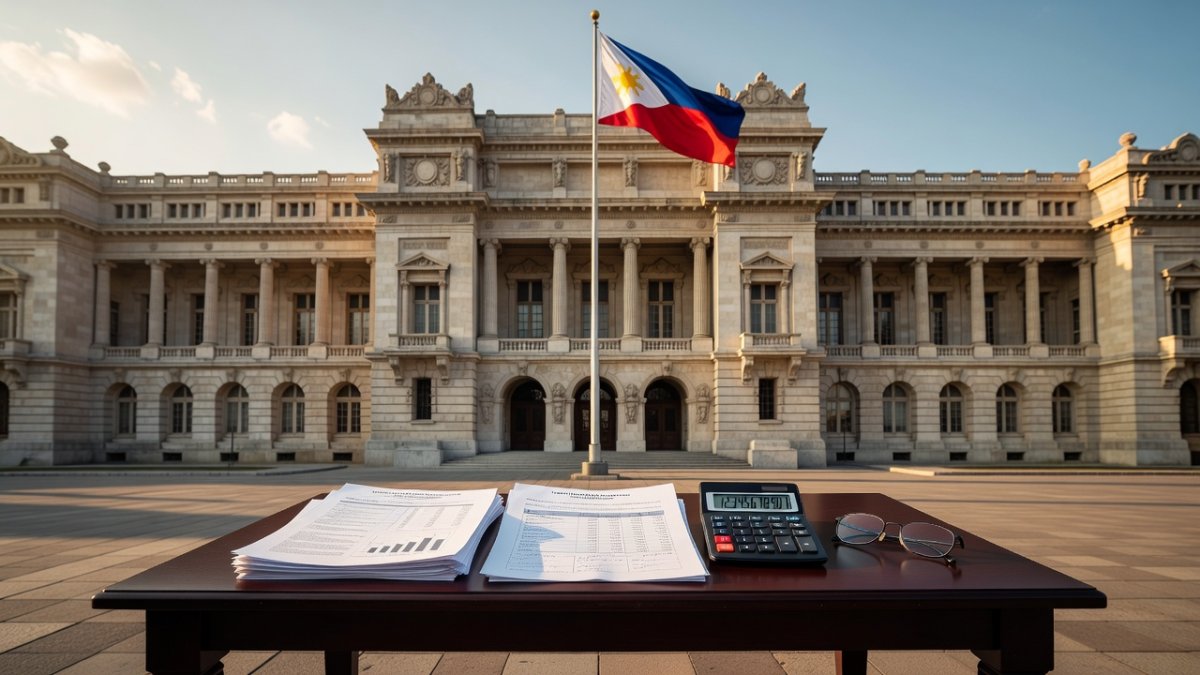
DBM submits P7.2 trillion 'people-centered growth' budget to CongressMANILA, Philippines — The Department of Budget and Management (DBM) is set to submit to Congress today its proposed P7.2-trillion national budget for 2027, a six percent increase over this year's expenditure program, as the administration doubles down on education, health, and community resilience.Budget Secretary Kim Robert de Leon formally presented the 2027 National Expenditure Program (NEP) to President Ferdinand R. Marcos Jr. at Malacañang on Monday, August 10. The spending plan, themed "People-Centered Growth for an Inclusive and Resilient Future," is now set to be submitted to Congress today, Tuesday, August 11, where lawmakers will scrutinize line items that will shape the lives of ordinary Filipinos for the coming year.
A budget built on the needs of the kapitbahay
The proposed P7.2-trillion appropriation is P407 billion higher than this year's P6.793-trillion budget. According to Palace press officer Claire Castro, the spending plan is designed to maximize every peso of public funds by delivering better services and creating more opportunities for Filipinos."Every learner has needs that must be addressed. For children with disabilities, it is even more important to have a multidisciplinary team that focuses not only on their learning but also on the support they need to become more active and independent in school," Education Secretary Sonny Angara said.The budget priorities — education, healthcare, livelihood, national security, and community empowerment — reflect a government seeking to sustain economic momentum while addressing inflation, poverty reduction, and infrastructure gaps. The plan aligns with the Philippine Development Plan (PDP) Midterm Update 2023-2028 and the updated Medium-Term Fiscal Framework, signaling continuity in the administration's economic strategy.For the average Filipino family, this budget translates into concrete questions: Will there be more teachers in our public schools? Will our health centers have enough medicines? Will our barangay roads be paved? These are the concerns that members of Congress will be weighing as they begin the marathon of budget hearings.Inclusive education takes center stage
In a significant parallel development, the DBM has approved 133 plantilla positions for the Department of Education (DepEd) as part of efforts to give learners with disabilities access to appropriate support services. This move comes in support of Republic Act 11650, which seeks to strengthen inclusive education across the country.Of the 133 positions, 128 will be assigned to 32 Inclusive Learning Resource Centers (ILRCs) under DepEd's Schools Division Offices. These personnel will form part of multidisciplinary teams that provide specialized support to learners with disabilities, ensuring that no child is left behind regardless of their physical or developmental challenges."In line with President Marcos' directive, we must ensure there are individuals with the right knowledge and skills to help every child with a disability study, participate and thrive. This is what we aim to strengthen through these new positions," Angara said.The move is particularly meaningful for families who have long struggled to find appropriate educational support for children with disabilities. In many provinces, parents of children with special needs often have to travel to regional centers or Manila just to access basic services. The establishment of ILRCs in school divisions across different regions aims to bring these services closer to home.Understanding RA 11650 and the promise of ILRCs
Republic Act 11650, also known as the Inclusive Education Act, mandates DepEd to establish at least one Inclusive Learning Resource Center in every city and municipality. Existing Special Education Centers are also to be converted into ILRCs under the law, which provides for a multiyear roadmap covering the creation of plantilla positions for ILRC personnel and staff.The law likewise covers the teaching and non-teaching personnel needed to implement inclusive education programs. This is a crucial component, as the success of inclusive education depends heavily on having trained professionals who understand the unique needs of learners with disabilities.Angara emphasized that building the institutional capacity of DepEd is essential to making inclusive education work on the ground, particularly as schools respond to learners who require specialized educational and developmental support. The approved positions will be distributed across the country through the 32 ILRCs, covering school divisions in different regions.For parents of learners with disabilities, the rollout of ILRCs across school divisions promises to bring specialized support closer to home. In many provinces, families have long had to travel to regional centers or Manila just to access basic services for children with special needs. The establishment of ILRCs under RA 11650 aims to change that, placing multidisciplinary teams within reach of local communities.From 32 ILRCs to schools nationwide
The 133 approved positions will be distributed across the country through the 32 Inclusive Learning Resource Centers, which operate under DepEd's Schools Division Offices and cover school divisions in different regions. The multidisciplinary teams formed by these personnel will provide specialized support to learners with disabilities in the schools under their coverage.RA 11650 envisions a much wider network: at least one ILRC in every city and municipality, with existing Special Education Centers converted into ILRCs. The law's multiyear roadmap covers the creation of plantilla positions for ILRC personnel and staff, as well as the teaching and non-teaching personnel needed to implement inclusive education programs.Angara stressed that building DepEd's institutional capacity is essential to making inclusive education work on the ground, particularly as schools respond to learners who require specialized educational and developmental support. For families, each new position brings the promise of support closer to the classroom.The road ahead: Congress scrutiny and public accountability
The proposed budget now enters the legislative process, where the House of Representatives and the Senate will conduct exhaustive deliberations. This is the stage where the budget becomes a living document, shaped by the priorities of lawmakers who represent the diverse interests of their constituents.The DBM is scheduled to hold a press briefing at Malacañang today, Tuesday, August 11, where Budget Secretary de Leon is expected to provide more details on the allocation breakdown. This briefing will be crucial for journalists, civil society organizations, and the public to understand where the money will actually go.Historically, the budget process in the Philippines has been marked by intense debates over pork barrel allocations, questionable expenditures, and the balance between infrastructure spending and social services. The current proposal's emphasis on "people-centered growth" will be tested against the actual line items that emerge from congressional deliberations.For the Commission on Elections (COMELEC), the Department of Health (DOH), and other agencies, the budget determines their operational capacity for the coming year. The Philippine National Police (PNP) and the Armed Forces of the Philippines will also be watching closely, as national security allocations are a perennial point of contention.What this means for Filipino families and communities
The P7.2-trillion budget represents more than just numbers on a spreadsheet. For a family in a remote barangay in Mindanao, it could mean a new classroom that replaces a makeshift structure. For a farmer in the rice terraces of Ifugao, it could mean access to better irrigation systems. For an OFW's family in Ilocos, it could mean improved healthcare services at the local rural health unit.The budget's focus on community empowerment and climate resilience is particularly timely, given the increasing frequency of typhoons and natural disasters that disproportionately affect vulnerable communities. The bayanihan spirit that Filipinos are known for often kicks in during times of crisis, but a well-funded disaster preparedness program could help prevent some of the worst impacts.However, the true test of this budget will be in its implementation. The Philippines has a long history of underspending, where allocated funds remain unutilized due to bureaucratic bottlenecks, procurement issues, and capacity constraints at the local government level. The DBM's challenge is not just to propose a budget but to ensure that the funds actually reach the intended beneficiaries.As the budget deliberations unfold in the coming weeks, civil society organizations, media, and ordinary citizens will be watching closely. The proposed budget's theme of "People-Centered Growth for an Inclusive and Resilient Future" is aspirational, but its realization depends on the collective effort of government, the private sector, and communities working together.For now, the P7.2-trillion proposal represents the administration's vision for the country's future. Whether it delivers on its promise of inclusive growth and resilience will depend on the months of deliberation ahead and, ultimately, on the faithful implementation of the budget once it is signed into law.By Bella Reyes, Staff WriterThis article was produced with AI-assisted research and editorial support. Sources: Philstar.com, ABS-CBN News, Philippine Information Agency, Presidential Communications Office, The Manila Times.
What's Your Reaction?
 Like
0
Like
0
 Dislike
0
Dislike
0
 Love
0
Love
0
 Funny
0
Funny
0
 Wow
0
Wow
0
 Sad
0
Sad
0
 Angry
0
Angry
0

Isabella "Bella" Reyes
Philippines/Southeast Asia Correspondent at Global1.News. Manila-based journalist covering Philippine politics, environment, maritime security, and social issues. Passionate about marine conservation and the communities protecting the Philippines' natural heritage.









Comments (0)