
Trump Refuses to Guarantee US Support for Britain in Falklands Row as Milei Threatens Oil Sanctions
President Donald Trump this week declined to guarantee US support for Britain in any future conflict over the Falkland Islands, a historic shift in tone that has emboldened Argentine President Javier Milei to announce sanctions on oil companies operating near the disputed territory.
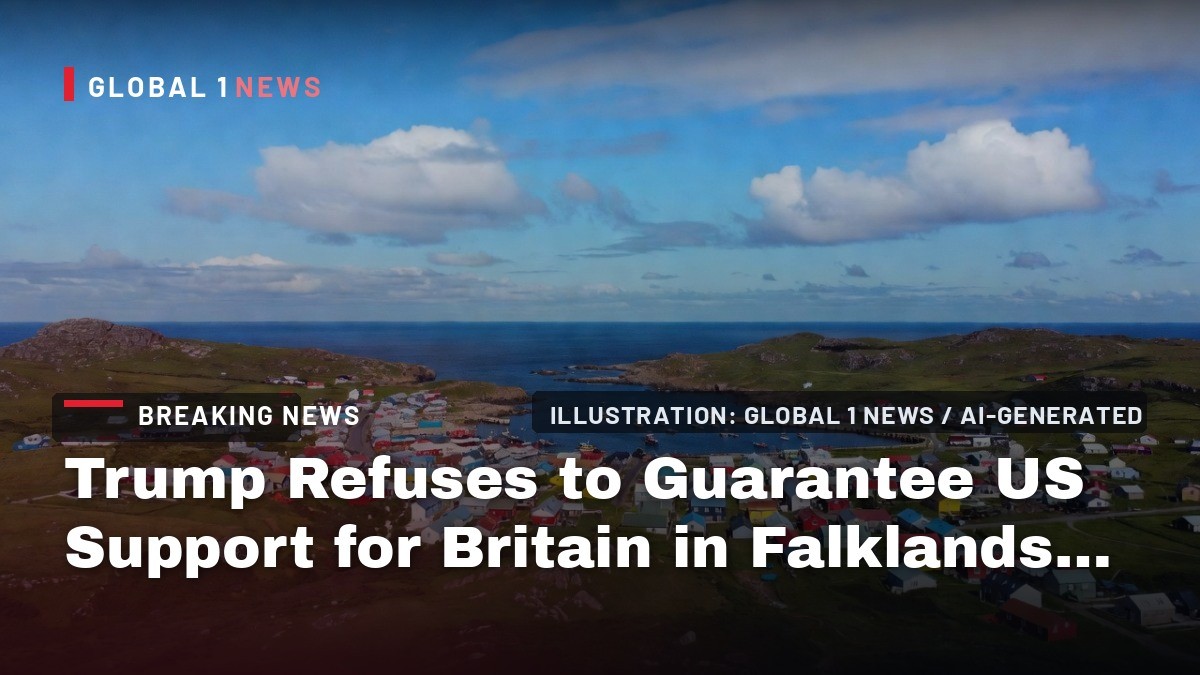
President Donald Trump this week declined to guarantee US support for Britain in any future conflict over the Falkland Islands, a historic shift in tone that has emboldened Argentine President Javier Milei to announce sanctions on oil companies operating near the disputed territory. The developments, unfolding between Monday and Thursday, mark the first time a sitting US president has publicly entertained altering Washington’s long-standing neutrality on the sovereignty question, and they have injected fresh volatility into a dispute that has simmered since 1982.
A President’s Calculated Ambiguity
Trump’s first public remarks on the Falklands came Monday in the Oval Office, when a reporter asked whether his administration was reviewing its position of neutrality. “I always review every position. That’s just one of many,” Trump answered, according to Reuters. The comment was brief, but its implications were immediate. By Tuesday, Argentine President Javier Milei announced he would deliver a televised national address on Thursday, calling the Falklands claim “the most important and sacred cause we Argentines have” and saying “something very significant happened yesterday.”
On Thursday, in an interview with British TV network GB News, Trump went further. Asked whether the United States would “come to the aid” of Britain in a new conflict over the islands, Trump avoided answering directly. “Well, look, I was there when they had the first war... That was a long time ago and I watched it so carefully, and you comported yourselves very well. You took it back pretty strongly,” he said, per the Associated Press. He then pivoted to complaints that Britain has not provided sufficient support for the US-led bombing campaign against Iran. Reuters adds that Trump said: “I just don't know if you (Britain) have the capacity to do that... The Falklands is very interesting because your country is not the same country it was 20 years ago, 25 years ago.”
The remarks were not a formal policy change, but they were a deliberate signal. Trump’s Monday announcement that the US is reviewing its position came amid reports Washington is threatening to oppose Britain’s sovereignty if it does not increase defence spending. An internal Pentagon email reported in April by The Telegraph, citing a senior US official, already raised the prospect of reviewing US backing of the UK’s claim to the Falklands as leverage to press Britain to meet the 5% of GDP military spending target agreed at NATO. The email framed the move as one of several measures to hold allies accountable over the rift caused by the US war with Iran.
Milei’s Overnight Escalation
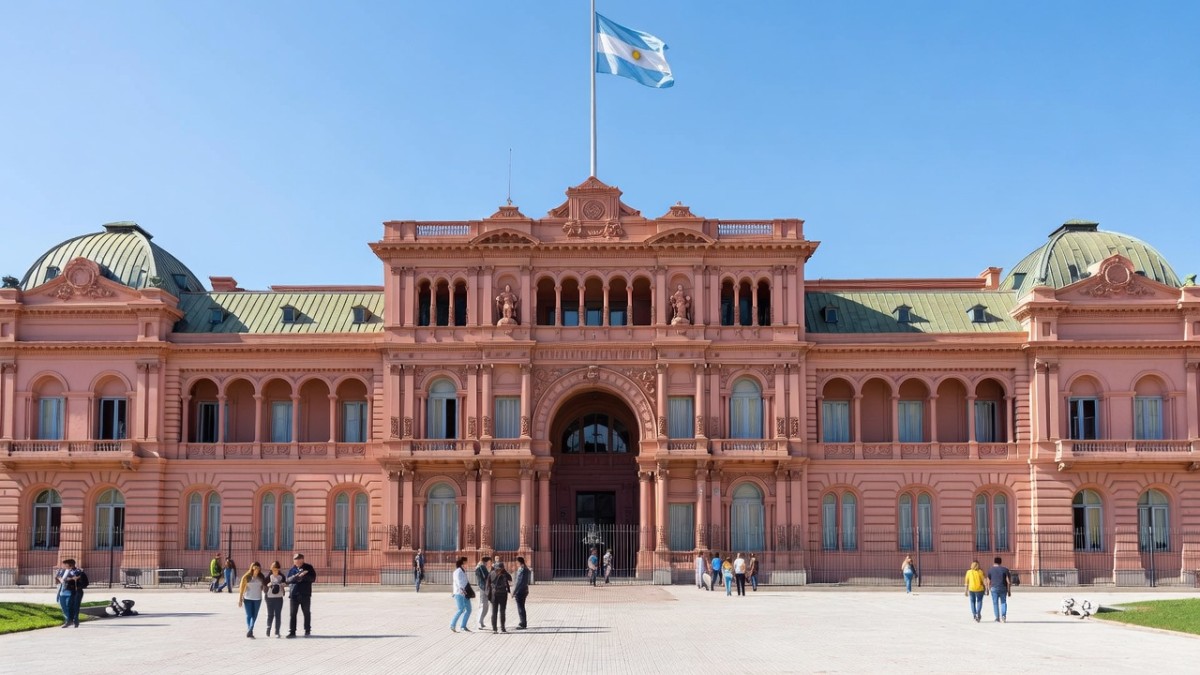
Milei’s response came Thursday evening in a solemn televised national address. He announced sanctions on firms linked to oil extraction “in Argentine territory under British occupation,” and said companies involved in Falklands projects “behind the back of the Argentine government” would be barred from operating in Argentine territory. He also said he is sending Congress an urgent “national sovereignty defence” bill to toughen penalties for unauthorized operations around the islands, extend sanctions to suppliers, shareholders and directors, and broaden the legal framework to cover other activities affecting Argentina’s natural resources.
“There are winds of change in the world that are favorable to our claim,” Milei said, alluding to Washington’s readiness to review its neutrality. He repeated the core Argentine position: “The Falklands are Argentinean. Historically and legally. There can be no argument. They are part of the Argentine territory.” He dismissed the islanders’ right to self-determination, saying they “do not have a legitimate right to self-determination and any argument on any such self-determination is invalid.”
Milei also framed the oil project as a violation of a United Nations resolution calling on both sides to desist from unilateral actions in the islands. “If we allow it, we will be creating an incentive for the British government to deepen the occupation of the islands and the exploitation of our resources,” he said. On Washington, he was explicit: “The United States is considering this change of position because it knows that Argentina has a reliable partner.” He then attacked Britain, saying it is “on a path of decline,” alleging it faces “multiple migratory, demographic, and economic crises.”
The Oil Project at the Center
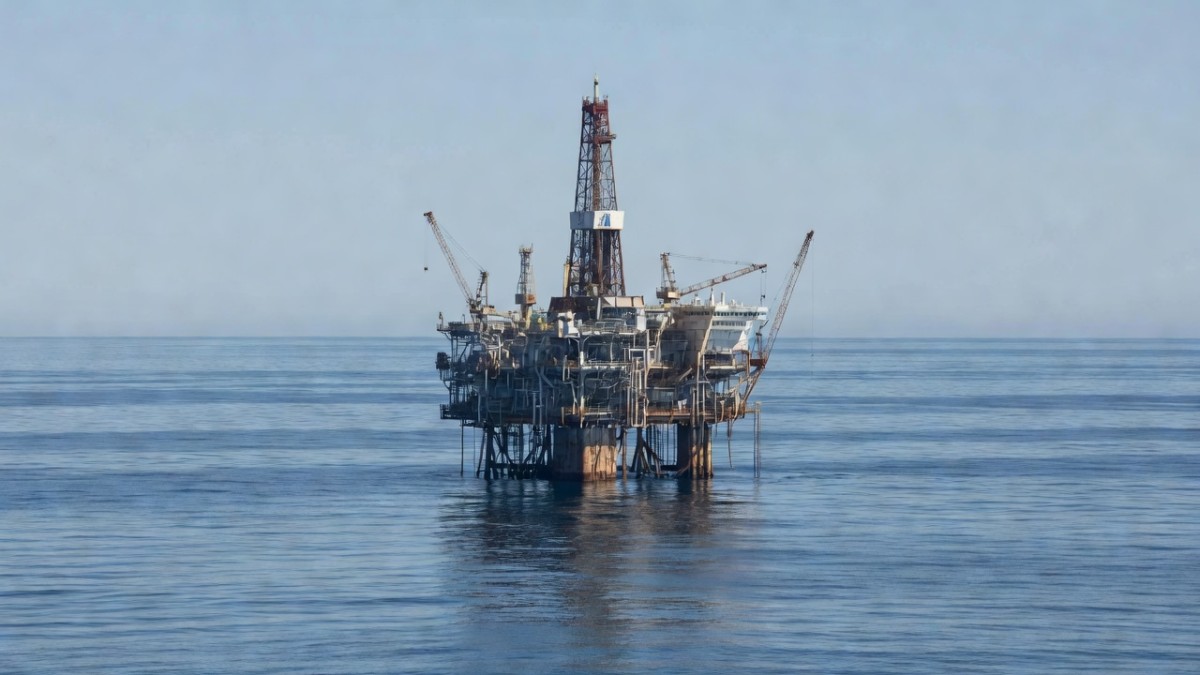
The immediate trigger for Milei’s sanctions is the Sea Lion oilfield, located about 140 miles (about 220 km) north of the Falkland Islands. The project is operated by Tel Aviv-listed Navitas Petroleum, with London-listed Rockhopper Exploration among shareholders holding a 35% interest. Development work could begin in the coming months, and Rockhopper says the Sea Lion project has a world-scale resource base amounting to 1.7 billion barrels of oil. CNA describes it as a British-Israeli oil project, given Rockhopper’s British listing and Navitas’s Israeli parentage.
The market reacted swiftly. Rockhopper stock was down about 8% on Friday morning after Milei’s address, according to Reuters. The legal pressure had already been building: on Tuesday, Argentine Falklands War veterans and environmental lawyers filed a lawsuit to halt the project. Milei’s sanctions threat now adds a regulatory layer, targeting not just the operators but their suppliers, shareholders and directors, with a proposed legal framework that could extend to other activities affecting Argentina’s natural resources.
Britain’s Response: Firm but Tested
Britain’s official position has not wavered. On Thursday, before Milei’s address, Prime Minister Andy Burnham’s spokesman, Tom Wells, told the AP that the British government’s position was “long-standing and unwavering,” pointing to a 2013 referendum in which the roughly 4,000 people living in the Falkland Islands voted overwhelmingly to remain a British overseas territory. “Sovereignty rests with the U.K., and the islanders' right to self-determination is paramount,” Wells said.
After Milei’s speech, Defence Secretary Wes Streeting took to X on Friday, saying: “Milei's statement overnight tells us more about domestic politics in Argentina than it does about the Falkland Islands. Our commitment to the Falklands is absolute and unshakeable.” He also said the people living there had chosen to be British. The language is resolute, but the context is uncomfortable for London. Trump’s refusal to offer a security guarantee, even in hypothetical terms, is a break from decades of US policy, which has officially maintained neutrality while quietly supporting the UK in practice.
Why Trump Is Pressing This Now
The timing is not accidental. Trump’s Monday announcement came amid reports Washington is threatening to oppose Britain’s sovereignty if it does not increase defence spending. The internal Pentagon email reported in April already raised the prospect of reviewing US backing of the UK’s claim to the Falklands as leverage to press Britain to meet the 5% of GDP military spending target agreed at NATO. The email was described by The Telegraph as one of several measures to hold allies accountable over the rift caused by the US war with Iran.
Tomas Mugica, director of the Center for International Studies at the Catholic University of Argentina, told AFP: “The Falklands issue serves Trump's purpose of pressuring the United Kingdom to comply with his demands regarding NATO funding and cooperation in the war in Iran.” That analysis is consistent with Trump’s own words on Thursday, when he complained that Britain has not provided sufficient support for the US-led bombing campaign against Iran. The Falklands, in this reading, is a lever, not a cause.
Historical Weight and Domestic Politics
The Falklands carry enormous political and symbolic weight in Argentina. Britain has controlled the islands since 1833. Argentina claims it inherited sovereignty from Spain after independence in 1816 and says Britain occupied the islands illegally. On April 2, 1982, Argentina’s military junta invaded the islands. Then-British PM Margaret Thatcher sent a naval task force; Britain regained control after 74 days of fighting. The war killed 649 Argentine troops, 255 British service members and three islanders. The islands, known in Argentina as Las Malvinas, are about 300 miles (480 km) off Argentina’s coast in the South Atlantic.
Milei’s turn to a tougher tone is notable because he has previously favoured diplomacy as the best way to pursue Argentina’s claim. But he is emboldened by ally Trump’s repeated broaching of the issue. The domestic calculus is also pressing. Milei’s address came as his approval ratings plummet: polls show only around 34 percent of Argentines support his belt-tightening and deregulation policies, just over a year before he seeks re-election. The Falklands is one of the few causes that unite the deeply divided country, and Milei is leaning into it.
Earlier this year, during the 2026 World Cup, Argentina beat England 2-1 in the semi-final and players celebrated by displaying a banner declaring “Las Malvinas son Argentinas” — “The Malvinas are Argentine.” That moment captured the emotional resonance of the issue, and Milei’s Thursday address tapped into the same vein.
What Happens Next
The immediate flashpoint is the Sea Lion project. Milei’s sanctions, if enacted by Congress, would bar companies involved in the project from operating in Argentine territory. The proposed bill would also extend penalties to suppliers, shareholders and directors, and broaden the legal framework to cover other activities affecting Argentina’s natural resources. The legal challenge filed by veterans and environmental lawyers on Tuesday adds another layer of uncertainty.
For Britain, the risk is not an imminent military confrontation but a slow erosion of international support. The 2013 referendum, in which islanders voted 99.8% to remain a British Overseas Territory, remains the cornerstone of London’s argument. But Trump’s questioning of Britain’s capacity — “I just don't know if you have the capacity to do that” — is a direct challenge to the UK’s credibility as a military power. Streeting’s response, that the commitment is “absolute and unshakeable,” is designed to project resolve, but it does not address the underlying question of whether Washington would back that resolve in a crisis.
Analysis: A Lever, Not a Policy
Trump’s approach to the Falklands is consistent with his broader transactional foreign policy. He is not arguing that Argentina has a better legal claim. He is using the sovereignty question as a bargaining chip to extract concessions from Britain on defence spending and Iran cooperation. The fact that he raised it publicly, and then refused to offer a security guarantee, is a signal to London that the cost of non-compliance is rising.
For Milei, the opportunity is real but risky. He is betting that Trump’s pressure will force Britain to the negotiating table, or at least weaken its resolve on the Sea Lion project. But Milei’s domestic position is fragile, and his approval ratings are low. The Falklands cause may rally support in the short term, but it will not solve Argentina’s economic problems. And if Trump’s interest fades — as it often does — Milei will be left with a tougher stance and no tangible gains.
The islanders themselves remain the wildcard. Their right to self-determination is enshrined in British policy and in the 2013 referendum. Milei’s dismissal of that right is a direct challenge to the principle that has underpinned the UK’s position for decades. Whether Washington’s review of neutrality extends to questioning that principle remains unclear. What is clear is that the United States, under Trump, is no longer a silent observer in the South Atlantic. It is an active player, and it is using the Falklands as a tool of leverage.
By Jessica Ali, Staff Writer
This article was produced with AI-assisted research and editorial support. Sources: Reuters, The Associated Press, CNA/AFP, MercoPress, The Times.
What's Your Reaction?
 Like
0
Like
0
 Dislike
0
Dislike
0
 Love
0
Love
0
 Funny
0
Funny
0
 Wow
0
Wow
0
 Sad
0
Sad
0
 Angry
0
Angry
0

Editor-in-Chief at Global1.News. Atlanta-based journalist who cuts through the BS and tells it like it is. Lead anchor, host, and the voice you hear when the spin stops and the truth starts.










Comments (0)