
Trump's 'Our Turn' Vow Unleashes New Strikes as the Iran War Widens
Trump said it's 'our turn' and US forces struck dozens of IRGC targets in Iran after an intercepted missile attack on a US base in Jordan. Oil jumped 7% as the war widened to Saudi Arabia, with Aramco's 400,000-barrel Jazan refinery shut down.
White House Promises 'Very Hard' Hits as Bombs Fall on IRGC Targets
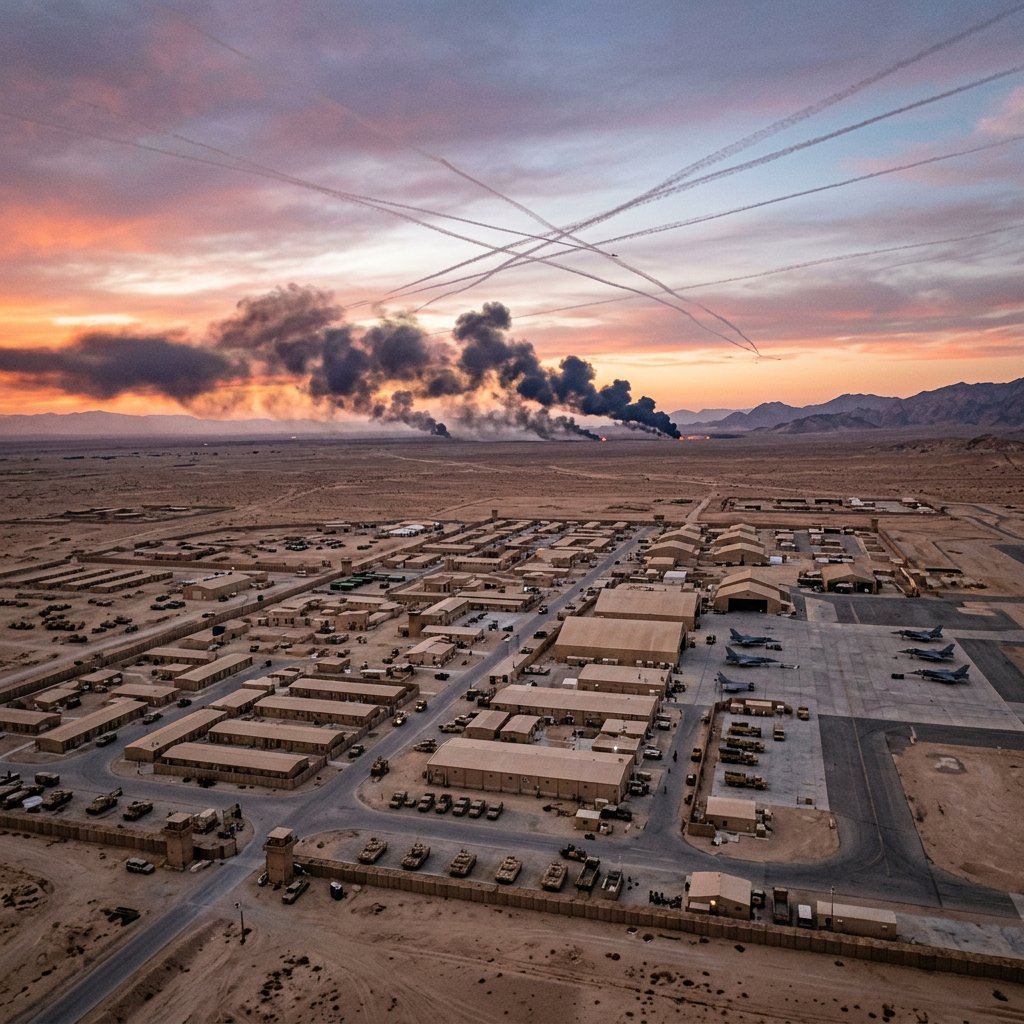
President Donald Trump stood in the Oval Office Wednesday, July 29, 2026, and delivered a blunt warning to Tehran: "We're going to be hitting them very hard because it's our turn to hit them. They know it's coming." Hours later, the bombs fell. A US official told CNN that American forces launched a new wave of strikes against military targets inside Iran, ending a five-day pause and plunging the conflict back into combat.
US Central Command confirmed it completed a "heavy" wave of strikes against the Islamic Republic, telling reporters the operation was a direct response to "attempted missile attacks" on American bases earlier this week. Anadolu reported the strikes hit dozens of Islamic Revolutionary Guard Corps targets, including missile, drone, and maritime facilities — a sweeping barrage aimed at Iran's force-projection backbone.
This is not a war that is winding down. It is a war that is widening. The New York Times captured the moment with an aptly grim headline: "U.S. Strikes Iran Again, as Trump Encounters a More Determined Iran as War Widens." Can escalation break Tehran's will — or simply pull Saudi Arabia, Iraq and Yemen deeper into the fire?
Tuesday's Missile Attack on Jordan Set the Stage for Retaliation
On Tuesday, July 28, Iran launched multiple ballistic missiles at a US military base in Jordan, according to CENTCOM, which described the barrage as an "attempted surprise attack" and said every missile was intercepted and destroyed. Jordan said it shot down five Iranian missiles on Wednesday.
What is most striking about the Jordan attack is what it signals about Iranian intent. A ballistic missile salvo aimed at an American base is not a pinprick; it is a deliberate attempt to inflict mass casualties on US personnel. Every warhead was knocked out of the sky, but the provocation stands.
Trump further claimed that Iran had acknowledged launching the missiles was a mistake and had asked Washington not to retaliate. That assertion — made without corroborating detail or named officials — will need serious verification. If true, Tehran is feeling the heat. If not, it is a miscalculation that could leave the White House blindsided.
Breaking the Pause: 13 Nights of Strikes, Then a Halt, Then Renewed Fire
Wednesday's strikes reversed a pause that had raised hopes of de-escalation. According to Axios, Trump halted the bombing campaign on Friday, July 24, after 13 consecutive nights of US attacks on Iranian military targets. That pause lasted just five days.
The 13-night campaign was a significant escalation — a relentless bombardment aimed at degrading Iran's missile stockpiles, drone fleets, and air defenses. The halt on July 24 appeared to signal a diplomatic opening, until Tehran used the lull to attempt a surprise strike on an American base.
This cycle — strike, pause, strike harder — is becoming the defining rhythm of the war. With each turn of the wheel, the conflict draws in more players and erodes the thin prospects for a negotiated settlement. The president's rhetoric left little room for ambiguity: he intends to keep hitting.
From NATO Summit to Ceasefire Collapse: The July 8 Turning Point
To understand where this war is headed, look back at where it turned. On July 8, 2026, Trump stood at the NATO summit in Turkey and declared the ceasefire over. That announcement ended whatever fragile calm had held and unleashed a massive response: more than 80 targets across Iran in a single punishing round. The market reacted instantly, with Brent crude jumping above $76 a barrel.
The July 8 escalation was framed around Iran's alleged attacks on commercial vessels in the Strait of Hormuz — one of the world's most critical oil chokepoints.
But the war did not start in July. It began in late February 2026, and it has been grinding forward ever since with no end in sight. The conflict has already consumed enormous military resources and reshaped energy markets. The July 8 declaration was not the beginning — but it may prove to be the point of no return.
Oil Markets Sour as Prospects for Negotiated Peace Fade
If you want a real-time referendum on the war's trajectory, look at the oil markets. On Wednesday, July 29, crude jumped more than 7 percent, according to reporting from The National, in direct response to Iran's missile attack on US forces and Saudi strikes against Iran-aligned militias in Iraq.
The 7 percent surge is not a blip. It signals investors are pricing in a prolonged, widening war rather than a quick resolution. When the July 8 escalation pushed Brent above $76 a barrel, that was a warning shot; Wednesday's jump suggests the market believes the worst is yet to come.
The stakes extend beyond the pump. Every added dollar ripples through global supply chains, consumer spending and central bank inflation calculations. A war in the heart of the world's oil-producing region will be felt from Beijing to Berlin — which is why negotiated peace is not just a diplomatic preference. It is an economic imperative.
Saudi Arabia on the Front Line: Houthi Claims and Aramco's Shutdown
The war has now dragged Saudi Arabia into the line of fire. Yemen's Houthi rebels claimed attacks on Saudi Aramco facilities in Jazan and Yanbu, and satellite images taken July 26 showed a tank on fire at Aramco's Jazan refinery. Houthi military spokesperson Yahya Saree claimed the group had successfully targeted the facilities. The damage was severe enough that Aramco shut down the 400,000 barrel-per-day Jazan refinery on July 27, according to Reuters reporting cited by IIR.
The Houthis have gone even further, declaring a naval blockade on Saudi Arabia in the Red Sea and targeting several tankers — a direct assault on the kingdom's ability to export oil. Long armed and funded by Iran, the Houthis are effectively Tehran's proxy forces in a campaign to cripple Saudi energy infrastructure.
Saudi Arabia is not taking the hits lying down. The kingdom said its military intercepted drones targeting Eastern Region oil facilities, and Riyadh pointed the finger at Iranian-backed militias operating from Iraq. But the fact remains: a major refinery is offline, tankers are being targeted, and the kingdom's energy sector is now a battlefield. The Jazan shutdown alone removes 400,000 barrels per day from the global market at a moment the market can ill afford.
New Front in Iraq: US and Saudi Strikes on Iran-Aligned Militias
Wednesday's operations also opened a new front. The United States and Saudi Arabia launched attacks on Iran-aligned militias in Iraq on Wednesday morning, July 29, according to Al Jazeera. Unconfirmed reports and online video showed large fires in Iraq's Sulaymaniyah province after targets there were hit — imagery that could not be independently verified but underscored the conflict's dangerous expansion.
The decision to strike inside Iraq is loaded with risk. Iraq has spent years balancing its relationship with Washington against the heavy influence of Iran-aligned factions within its borders. US strikes risk inflaming Iraqi public opinion — but Washington says the militias' attacks on Saudi oil infrastructure and US forces crossed a line that demands a response.
Iran, the Houthis, Iraqi militias, Saudi Arabia and the United States are entangled in a web of strikes, counterstrikes, and proxy attacks spanning borders and defying easy resolution. The Sulaymaniyah fires are a visual reminder that this conflict is no longer confined to Iranian territory — it is burning across the region.
Washington's War Fatigue: House Vote and Public Doubt
Back in Washington, the political ground is shifting. The US House voted again on July 23 to end the war, according to Bloomberg — a second such vote signaling growing bipartisan discomfort. The votes are largely symbolic — they do not force the president's hand — but they are a loud measure of congressional sentiment, and they are getting louder.
The American public is also losing faith in Trump's management of the war. A CNN poll published July 29 found Americans doubt Trump is paying enough attention to the conflict. That is a devastating data point for a president who campaigned on ending endless wars. Voters are watching a conflict that started in late February, has dragged through more than five months of escalation, and has no visible exit strategy.
The collision between the White House's escalation strategy and the public's war fatigue is the central political story of the moment. Trump's "our turn" rhetoric may play well to his base, but the CNN poll suggests the broader electorate is wary. The House vote, the polling, the oil spikes and the widening circle of combatants point to a simple, uncomfortable truth: this war is not being won, and it is not ending. It is spreading — and the president's vow to keep hitting "very hard" is a bet that deterrence will eventually work. So far, that bet has produced nothing but more fire.
By Jessica Ali, Staff Writer
This article was produced with AI-assisted research and editorial support. Reporting is based on sources cited in the article.
What's Your Reaction?
 Like
0
Like
0
 Dislike
0
Dislike
0
 Love
0
Love
0
 Funny
0
Funny
0
 Wow
0
Wow
0
 Sad
0
Sad
0
 Angry
0
Angry
0

Editor-in-Chief at Global1.News. Atlanta-based journalist who cuts through the BS and tells it like it is. Lead anchor, host, and the voice you hear when the spin stops and the truth starts.














Comments (0)