
Trump May Escalate Foreign Policy After Midterm Setback, Analyst Warns
In a CNA Asia Now segment released on 4 November 2026, James Crabtree, a distinguished visiting fellow at the European Council on Foreign Relations, warned that the United States’ midterm election outcomes are unlikely to curtail President Donald Trump’s foreign policy ambitions.
In a CNA Asia Now segment released on 4 November 2026, James Crabtree, a distinguished visiting fellow at the European Council on Foreign Relations, warned that the United States’ midterm election outcomes are unlikely to curtail President Donald Trump’s foreign policy ambitions. Despite Democrats winning majorities in both the Senate and the House, the analyst suggested that Trump could pursue more dramatic overseas actions, including the possibility of renewed military activity against Iran, as a means of shaping the international narrative. The commentary carries particular relevance for Japan, whose security and diplomatic strategies are closely linked to U.S. policy in the Indo‑Pacific region.
Election Results and Their Immediate Political Impact
The 3 November 2026 midterm elections produced a decisive shift in the composition of the U.S. Congress. Democrats secured majorities in both chambers, a result described in the video as a “sweeping victory” that penetrated traditionally Republican strongholds. Tens of millions of voters participated, delivering what the report characterises as a “scathing rebuke” to President Trump.
While the Democratic gains signal a robust legislative mandate, the analyst emphasised that the electoral outcome does not automatically translate into a curtailment of the president’s foreign policy agenda. The United States’ constitutional framework allows the president to retain significant autonomy in matters of national security and foreign affairs, even when faced with a Congress controlled by the opposition.
Crabtree’s assessment underscores a broader political dynamic: the persistence of a strong executive branch that can operate independently of congressional majorities, especially in the realm of foreign policy. This dynamic is crucial for Japan, where the stability of the U.S.–Japan security alliance depends not only on legislative oversight but also on the president’s strategic choices.
Trump’s Potential for Bolder Foreign Policy Moves
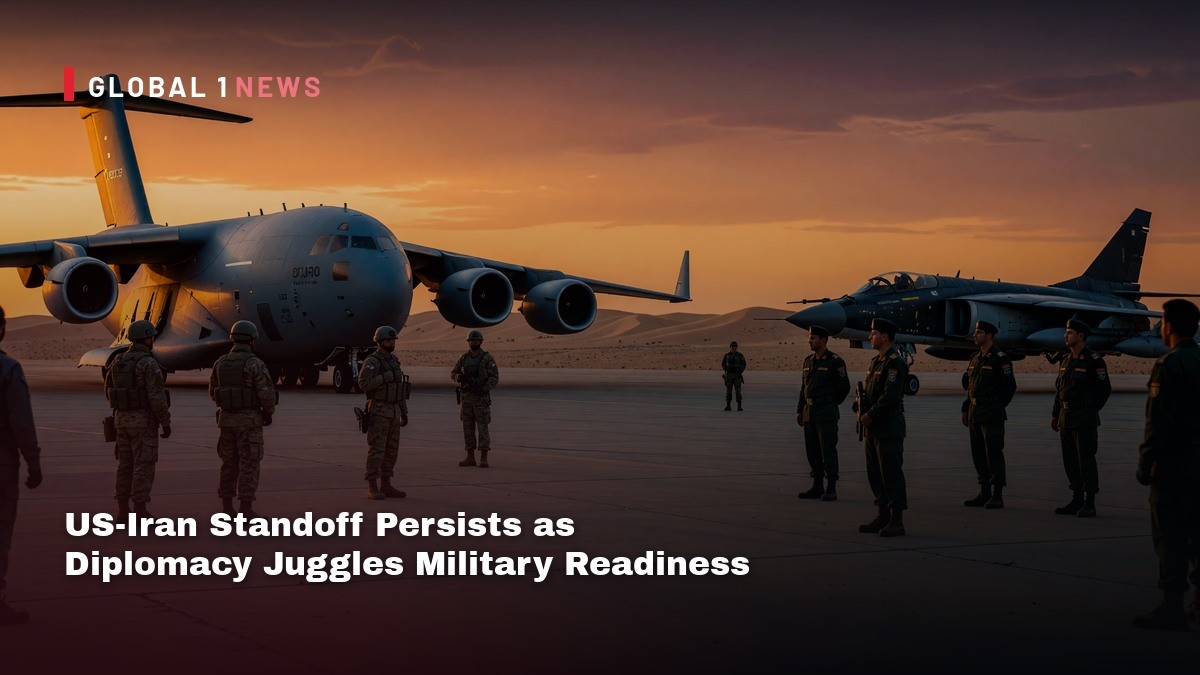
According to the CNA interview, Crabtree warned that President Trump might respond to the electoral setback by seeking to “wrest control of the narrative” through more assertive overseas actions. The analyst specifically mentioned the prospect of renewed military action against Iran as an illustrative example of the type of dramatic move that could be contemplated.
The suggestion of renewed hostilities with Iran carries implications for regional security architectures, particularly in the Middle East and the broader strategic environment that influences energy markets and global trade routes. Japan, as a major importer of oil and a participant in international supply chains, monitors such developments closely because disruptions could affect energy prices and economic stability.
Moreover, a heightened U.S. military posture in the Middle East could divert attention and resources from the Indo‑Pacific, where Japan is currently prioritising the reinforcement of its own defence capabilities and the deepening of alliances with Australia, India and other regional partners. The possibility of a shift in U.S. focus therefore adds a layer of strategic uncertainty for Japanese policymakers.
Implications for Japan’s Security Policy
Japan’s security policy, overseen by the Ministry of Defense and guided by the National Security Council, has increasingly emphasized the need to adapt to a volatile international environment. The prospect of a more aggressive U.S. stance toward Iran could prompt Japan to reassess its own contingency planning, particularly in relation to the security of sea lanes that traverse the Indian Ocean and the Strait of Hormuz.
In recent years, the Japanese government has pursued a policy of “dynamic defence” that includes expanding the Self‑Defense Forces’ operational scope and acquiring advanced capabilities such as missile defence and cyber‑warfare tools. A potential escalation in the Middle East could accelerate discussions within the Ministry of Defense about the allocation of resources to overseas logistical support and joint exercises with U.S. forces.
Additionally, the Ministry of Foreign Affairs (MOFA) would likely need to coordinate diplomatic messaging to balance Japan’s alliance with the United States against its broader commitment to regional stability. This balancing act is a hallmark of Japan’s post‑World War II foreign policy, which seeks to maintain constructive engagement with a wide range of partners while upholding the principles of the pacifist constitution.
Economic Considerations for Japanese Industries
Japan’s economy is deeply intertwined with global energy markets, and any disruption stemming from renewed conflict with Iran could reverberate through Japanese industries. The Ministry of Economy, Trade and Industry (METI) monitors such risks closely, given the potential impact on oil import costs, which in turn affect manufacturing and transportation sectors.
Beyond energy, Japanese technology firms—particularly those involved in semiconductor manufacturing, robotics and AI—are sensitive to geopolitical instability that could affect supply chains. A heightened U.S. focus on the Middle East might shift attention away from the Indo‑Pacific, potentially creating opportunities for Japanese firms to fill gaps in regional technology partnerships, but also raising concerns about the reliability of components sourced from conflict‑prone regions.
In response, METI may consider reinforcing strategic stockpiles and encouraging diversification of supply sources. The agency has previously advocated for “supply‑chain resilience” as a core component of national economic security, a stance that would likely be reinforced if the risk of Middle‑East escalation grows.
Japan’s Diplomatic Position Within the Asia‑Pacific Context
Within the broader Asia‑Pacific framework, Japan’s diplomatic posture is shaped by its relationships with both the United States and regional powers such as China, South Korea and the ASEAN bloc. A more confrontational U.S. policy toward Iran could indirectly influence Japan’s engagement with these neighbours, particularly if the United States seeks to rally broader international support for its actions.
Japan’s Ministry of Foreign Affairs has traditionally pursued a “proactive contribution to peace” policy, which involves active participation in multilateral forums and the promotion of rules‑based order. Should the United States intensify military actions, Japan may be called upon to articulate its stance in multilateral settings such as the G7, the United Nations and the East Asia Summit.
In such forums, Japanese diplomats are likely to emphasise the importance of diplomatic solutions and the avoidance of escalation, reflecting Japan’s long‑standing emphasis on peaceful resolution. This diplomatic nuance would be essential to maintain credibility while aligning with the United States on shared security concerns.
Strategic Outlook and Recommendations for Policymakers
Given the analyst’s warning that President Trump could pursue “more dramatic moves overseas” to shape the narrative, Japanese policymakers are advised to adopt a multi‑layered approach. First, the defence establishment should continue to enhance joint readiness with U.S. forces, ensuring that any shift in American focus does not compromise the security of the Indo‑Pacific.
Second, economic ministries should intensify efforts to secure energy supplies and diversify technology supply chains, thereby mitigating potential shocks from Middle‑East instability. This may involve deeper cooperation with domestic industries and strategic partners in Southeast Asia.
Third, the diplomatic corps should prepare coordinated messaging that underscores Japan’s commitment to a stable international order while advocating for diplomatic avenues to resolve tensions. By maintaining a consistent narrative across defence, economic and diplomatic channels, Japan can navigate the uncertainties highlighted by Crabtree’s analysis.
In conclusion, the CNA report highlights a critical juncture in U.S. foreign policy that carries significant ramifications for Japan. While the Democratic victory in the midterms represents a clear shift in the American legislative landscape, the president’s capacity to act independently in foreign affairs remains robust. As such, Japan must remain vigilant, adaptable and proactive in its policy formulation to safeguard national interests amid potential escalations in the Middle East and beyond.
By Kenji Tanaka, Staff Writer
This article was produced with AI-assisted research and editorial support. Reporting is based on the source material cited below. Sources: CNA video report (04 November 2026); CNA; Global1.News
What's Your Reaction?
 Like
0
 Dislike
0
 Love
0
 Funny
0
 Wow
0
 Sad
0
 Angry
0

Japan Correspondent at Global1.News. Tokyo-based voice covering Japanese politics, technology, economy, and culture. Tracks the intersection of tradition and innovation in one of the world's most dynamic societies.














Comments (0)