
Don’t Call It a Reset: The Modi-Xi Meeting Wasn’t a Turning Point
When Chinese President Xi Jinping travelled to New Delhi for the BRICS summit in September, the optics of his meeting with Prime Minister Narendra Modi sparked headlines that suggested a possible “reset” in Indo‑China relations.
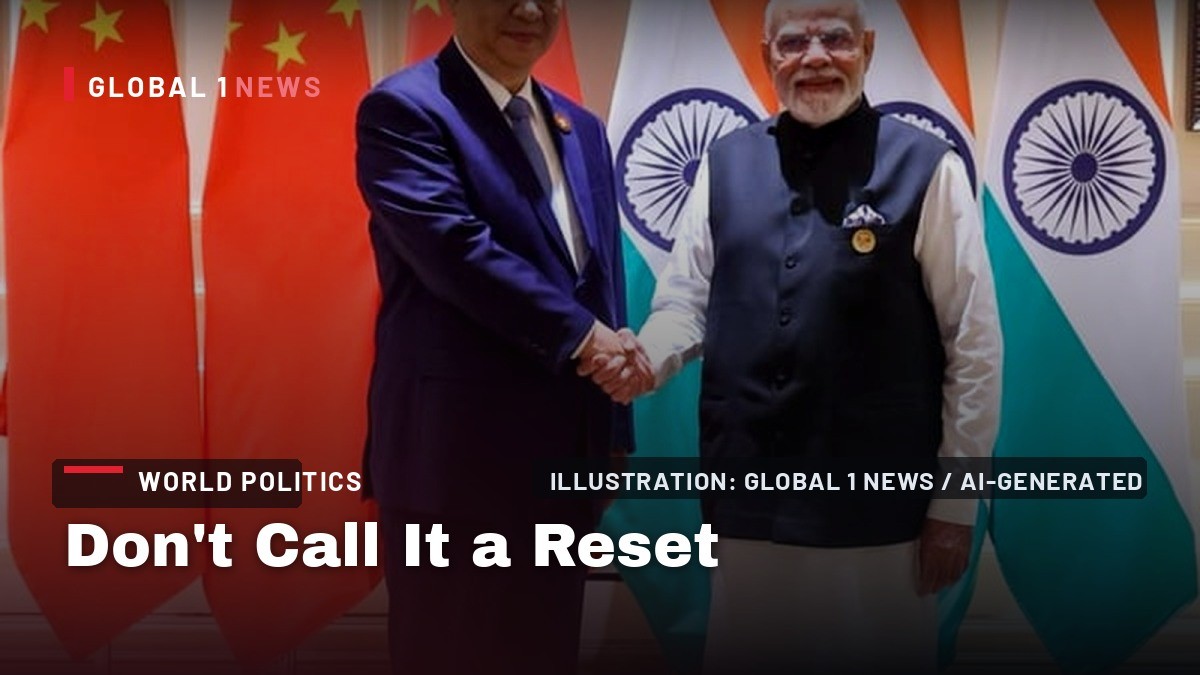
When Chinese President Xi Jinping travelled to New Delhi for the BRICS summit in September, the optics of his meeting with Prime Minister Narendra Modi sparked headlines that suggested a possible “reset” in Indo‑China relations. Yet a closer reading of the diplomatic choreography and the substantive issues that still divide the two powers reveals a far more nuanced picture. While the high‑level encounter was undeniably significant, it did not constitute a turning point. Instead, it underscored the continuity of India’s long‑standing strategy of engagement without concession, and highlighted the persistent fault lines that continue to shape the bilateral relationship.
Historical context of the Modi‑Xi encounter
The September meeting was set against the backdrop of the BRICS summit, a multilateral forum that both nations have used to project a shared vision of a multipolar world. However, participation in such groupings does not equate to a convergence of core interests. India’s involvement in BRICS and the Shanghai Cooperation Organization (SCO) reflects a broader diplomatic habit of seeking platforms that amplify its voice, rather than an endorsement of Beijing’s agenda. This distinction is crucial; it reminds us that multilateral engagement has long been a feature of Indian foreign policy, predating the recent talks.
Since the violent clashes at Galwan in 2020, New Delhi has pursued a dual track: stabilising the border while keeping diplomatic channels open. The Modi‑Xi meeting continued this pattern, offering a venue for dialogue but not signalling a shift in the underlying strategic calculus. The encounter therefore fits within a predictable trajectory rather than breaking new ground.
Why the “reset” narrative overstates the shift
Analysts who framed the meeting as a reset often pointed to the renewed high‑level dialogue and the symbolic value of direct connectivity talks. Yet the substance of the discussions, as reflected in the separate readouts issued by each side, reveals stark divergences. The Chinese statement referenced Tibet and Taiwan—issues absent from the Indian account—while Beijing described India as a “partner,” a term not mirrored in New Delhi’s language. Such discrepancies in wording signal that the two governments remain far apart on political framing, let alone policy alignment.
Moreover, the absence of a joint statement underscores the limited depth of the engagement. Joint communiqués are a standard diplomatic tool for signalling consensus; their omission here indicates that the leaders could not find common ground on even the most basic narratives, let alone on substantive issues such as border demarcation or trade imbalances.
The border dispute remains the central obstacle
The Line of Actual Control (LAC) continues to dominate the bilateral agenda. China’s recent claim that it does not recognise the Union Territory of Ladakh illustrates the depth of the territorial disagreement. This statement, made after the Modi‑Xi meeting, re‑affirmed Beijing’s hardline stance and reminded New Delhi that any diplomatic overture must contend with an unresolved sovereignty question.
Beyond the LAC, other points of friction persist. China’s close relationship with Pakistan, a strategic rival of India, and the long‑standing trade imbalance between the two economies remain sources of contention. The source material notes that there is “little evidence of progress on any of these fundamental differences,” indicating that the meeting did not address these underlying grievances.
India’s motivations beyond its U.S. relationship
Some commentators have linked India’s renewed engagement with Beijing to a cooling of ties with the United States, particularly in light of recent U.S. policies perceived as hostile toward India and broader Asia. While the source material acknowledges that deteriorating Indo‑U.S. relations have shaped the context of New Delhi’s outreach, it also stresses that India’s China policy cannot be reduced to a reaction to Washington. India has long pursued a policy of “preserving options” that seeks to avoid over‑reliance on any single partner.
Indeed, the source notes that India’s willingness to maintain dialogue with China predates the current strain with the United States. This continuity suggests that New Delhi’s engagement is driven by pragmatic security concerns—chiefly the desire to avoid another border crisis—rather than by a strategic pivot away from Washington.
Security considerations and the limits of cooperation
Since Galwan, India has placed a premium on preventing a recurrence of large‑scale border violence. The high‑level meetings, including the Modi‑Xi encounter, serve as mechanisms to manage tensions and keep communication channels open. However, the source material makes clear that such diplomatic gestures cannot substitute for tangible progress on the ground. The “trust needed for closer cooperation” remains lacking, and joint military exercises such as Hand‑in‑Hand remain suspended.
Furthermore, India’s security calculus is not limited to its bilateral relationship with China. The source highlights that regional security concerns persist regardless of Washington’s commitment levels. While the United States remains a key security partner, uncertainties about its future engagement do not diminish the need for regional cooperation among Asian states. This broader perspective reinforces the view that India’s approach to China is part of a wider strategy of balancing multiple security relationships.
Prospects for a genuine reset
Looking ahead, the source material paints a sober picture of the prospects for a genuine reset. The unresolved border dispute continues to dominate India’s security agenda, and the “trust needed for closer cooperation has yet to be restored.” Without substantive breakthroughs on territorial issues, trade imbalances, and the strategic rivalry involving Pakistan, any diplomatic overture is likely to remain superficial.
Nonetheless, the Modi‑Xi meeting does have a functional value: it helps keep the relationship from deteriorating further. By maintaining dialogue, both sides can manage crises and avoid escalation, a pragmatic outcome that aligns with their respective domestic imperatives. Yet, as the source concludes, “until those differences are addressed, dialogue may keep the relationship from deteriorating further, but it will not put China‑India ties on the path to a reset.” The encounter in New Delhi, therefore, should be read not as a watershed moment but as a continuation of a cautious, status‑quo‑oriented engagement that reflects the deep‑seated and unresolved nature of Indo‑China rivalry.
This article was produced with AI-assisted research and editorial support. Reporting is based on the source material cited below. Sources: The Diplomat; thediplomat.com; Global1.News (17 October 2026).
By Kenji Tanaka, Staff Writer
What's Your Reaction?
 Like
0
Like
0
 Dislike
0
Dislike
0
 Love
0
Love
0
 Funny
0
Funny
0
 Wow
0
Wow
0
 Sad
0
Sad
0
 Angry
0
Angry
0

Japan Correspondent at Global1.News. Tokyo-based voice covering Japanese politics, technology, economy, and culture. Tracks the intersection of tradition and innovation in one of the world's most dynamic societies.













Comments (0)