
Ethiopia: Tigray Forces Seize Airports as War Returns
Tigrayan forces seized the airports in Mekelle, Axum and Shire and pushed into the neighbouring regions of Afar and Amhara, as Ethiopia's federal army claimed 272 rebels killed and the TPLF declared the country was in a state of full-blown war.
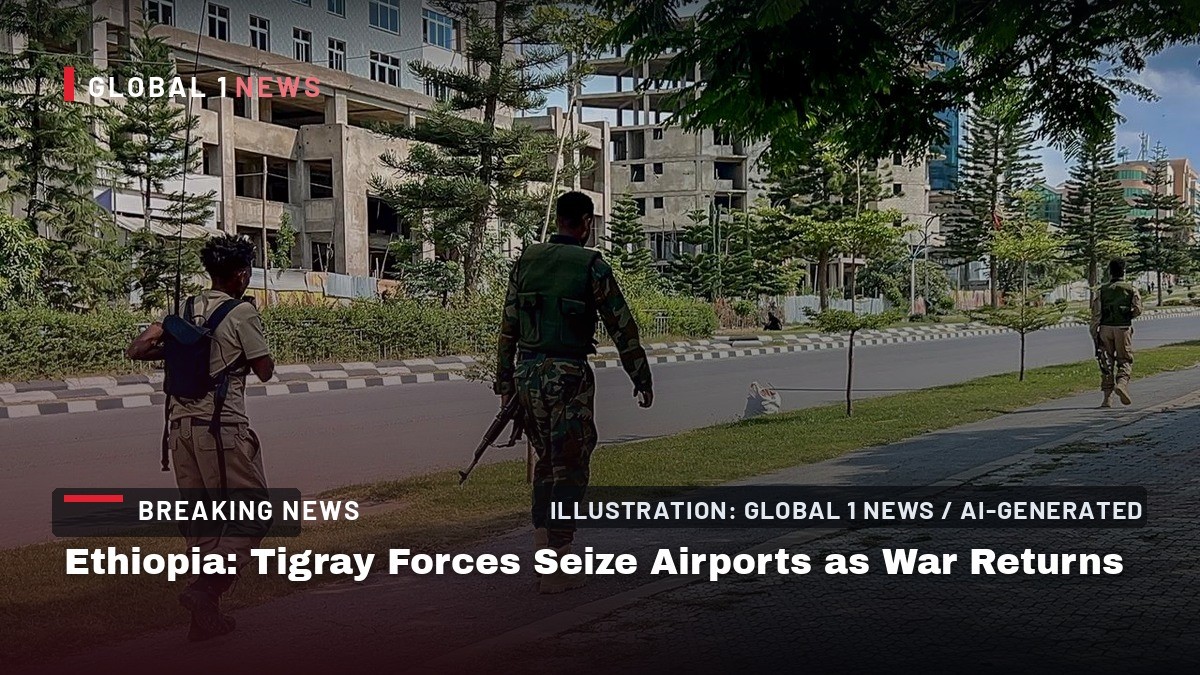
Renewed fighting between Ethiopia's federal government and the Tigray People's Liberation Front has spread across the country's north, with Tigrayan forces seizing three airports, pushing into the neighbouring regions of Afar and Amhara, and drawing warnings of a return to full-scale war. The TPLF vice-president, Amanuel Assefa, told Agence France-Presse the two sides are now in a state of "full-blown war". The fighting, reported on Wednesday 23 September and Thursday 24 September 2026, is the most serious challenge yet to the 2022 Pretoria Agreement, the deal that ended the 2020-2022 civil war.
Ethiopia: Tigray Forces Seize Airports as War Returns
Addis Ababa, Ethiopia - Tigrayan forces hold three airports in Ethiopia's northern highlands, federal troops say they are counter-attacking, and both sides accuse the other of starting the war.
The Airports Fell on Wednesday
On Wednesday 23 September 2026, Tigrayan forces took control of the airports in Mekelle, Shire and Axum from federal police, according to the TPLF vice-president, Amanuel Assefa, who confirmed the seizures to Agence France-Presse. The small number of federal police guarding the facilities were taken prisoner. Ethiopian Airlines suspended flights to all three cities, citing the "current situation ... in Tigray". An employee at Alula Aba Nega Airport in Mekelle described the moment the news reached the ground. "While we were on our way to the airport for work, our supervisor called the driver and told him that the airport had been taken over by Tigray forces," the employee told AFP. "Since there were no flights, he told us to return home." Residents in Mekelle also told the BBC that no flights were landing at the airport.
Fighting Spreads Into Afar and Amhara
The TPLF launched attacks into the neighbouring regions of Afar and Amhara on Wednesday, widening the fighting beyond Tigray. Heavy artillery attacks by the rebels continued on Thursday as they attempted to take control of the town of Yallo, near the Tigrayan border, a humanitarian source in Afar told AFP. The rebels took control of Abala, on the Tigray-Afar border, on Wednesday, a foreign security source based in Ethiopia told AFP. The regional government in Afar confirmed the overnight TPLF attack on Abala. The same foreign security source said there was fighting around the Amhara town of Weldiya, one of the few routes to the capital, Addis Ababa. Fighting was also reported around Lalibela, in North Wollo Zone, home to Ethiopia's medieval rock churches, which are UNESCO World Heritage sites. Its airport was forced to close. The area has often been targeted by the Fano, a local armed group now operating alongside the TPLF.
"Full-Blown War"
Amanuel Assefa, the TPLF vice-president, did not soften his language. "We are in the situation of full-blown war now," he told AFP, confirming that Tigrayan forces were fighting alongside local armed groups in Afar and Amhara. In remarks the previous day, when the airports were still being seized, he had described the moment as "the beginning of the war". He said ground forces had attacked from southern and eastern Tigray, and that the Tigray Defence Forces had been ordered to defend. "I do not see the possibility of a de-escalation now," he said. The TPLF-led Tigray regional government said its forces had entered a "defensive war" in response to a federal offensive that it said involved infantry, mechanised units, drones and other air assets. In a statement posted on Facebook, the regional government described its actions as a response to "intensive bombardments" by federal forces on Tuesday involving "aircraft, drones, and artillery". AFP could not independently verify that account.
Two Armies, Two Claims, No Verification
The Ethiopian National Defense Force said its forces launched a counter-offensive after TPLF fighters attacked several areas of North Wollo Zone in Amhara, an area bordering Tigray. "Government forces launched a counter-offensive that inflicted heavy personnel and equipment losses on the TPLF," the army said in a statement, adding that 272 TPLF members were killed and 260 wounded. AFP could not independently verify those figures, and the army gave no casualty figures for federal forces or civilians. The BBC reported the army said hostilities began in an area of Amhara close to the border with Tigray and that its soldiers had inflicted heavy casualties and seized weapons. It was the army's first statement since fighting broke out. The TPLF has not commented on the army's claims, and the BBC could not independently verify them. There is no verified civilian casualty figure and no verified total death toll for this round of fighting. Neither side's claims have been independently confirmed, and there is no confirmation of which side fired first.
The Alliance Built to Topple Abiy
On Sunday 20 September 2026, three days before the airports fell, the TPLF and six other armed groups announced the formation of the Ethiopian Peoples' Forces Alliance for Survival, aimed at deposing the government in Addis Ababa. The member groups are the TPLF; the Amhara Fano National Movement; the Oromo Liberation Army; the Ogaden National Liberation Front; the Afar Revolutionary Democratic Unity Front; the Benishangul Peoples' Liberation Movement; and the Gumuz Peoples' Democratic Movement. The Associated Press reported the alliance "unites some groups previously opposed to each other" and may put pressure on Prime Minister Abiy Ahmed, according to Kjetil Tronvoll, a regional expert at Oslo New University College. Tronvoll said of the TPLF: "Their stated aim is to take Addis, but its tactical manoeuvres to reach the city are not yet known." ACLED, the conflict monitor, said Tigrayan forces had also attacked positions in the Amhara region and were working alongside the Fano. It said: "Today's episode will cause worry that the other agents in the alliance are about to act in their areas across the Ethiopian state," though it noted several of the groups have limited capabilities.
The Eritrea Question
Assefa said the TPLF has "no information about Eritrea's plan". Asked whether the group would request Eritrean intervention, he said: "Not yet." Billene Seyoum, spokesperson for Abiy, said members of the alliance had been collaborating for a while with the financial backing of Eritrea. Eritrea has repeatedly denied similar accusations. Ethiopian federal authorities have accused the TPLF of seeking to build an alliance with neighbouring Eritrea to destabilise Ethiopia. The TPLF denies it. Analysts say the TPLF has support from Eritrea, which fears landlocked Ethiopia is planning to invade its territory to gain access to the Red Sea, including the port of Assab. Eritrea said it was alarmed by Abiy's repeated assertions of his wish for sovereign access to the Red Sea via Eritrea. In the last civil war, Eritrea and the Fano both fought with the government against the Tigrayans. There is no confirmation of Eritrean military involvement or Eritrean troops on the ground in the current fighting.
Washington Sides With Addis Ababa
The United States embassy sided with Ethiopia's government on Wednesday, saying it was "disappointed to see the leadership of the TPLF ... launch a large-scale offensive". Ervin Massinga, the US Ambassador to Ethiopia, went further. "I am disappointed to see the leadership of the TPLF, that the United States sanctioned earlier this year, make the poor decision to launch a large-scale offensive today," he said. He called the renewed fighting an "unwinnable fight" for the TPLF and warned that the United States retains "tools to sanction additional leaders" who push Ethiopia "down the wrong path". He said other armed groups "would be wise to avoid this". Massinga said he still believes "a reasonable political dialogue is the right way to go", urging engagement with African Union-led talks under former Nigerian President Olusegun Obasanjo. The United States lifted sanctions on Ethiopia and Eritrea tied to the earlier civil war this month, saying the relevant "national emergency" had expired. It also separately lifted sanctions on the Eritrean Defense Forces this month.
The UN, the African Union and the European Union
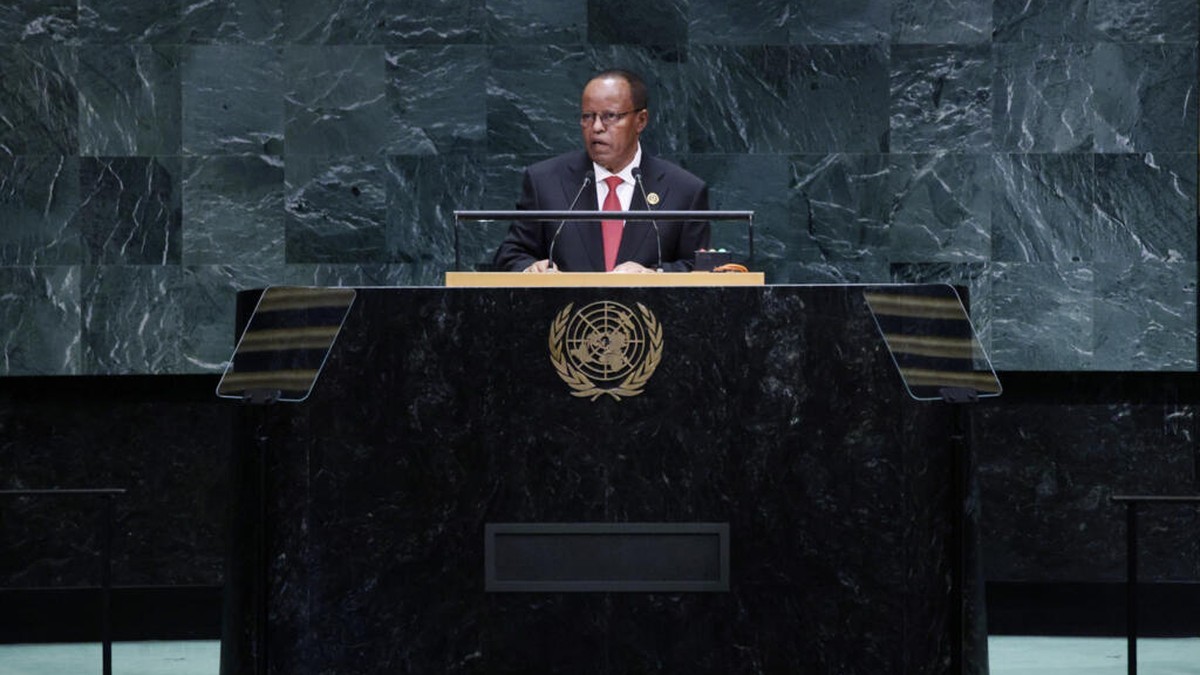
UN Secretary-General Antonio Guterres said in a statement issued by his spokesman Stephane Dujarric that he is "gravely concerned by the rapidly deteriorating situation in northern Ethiopia - including the seizure and occupation of the three airports of Mekelle, Axum and Shire - and reports of intensified fighting in and around Tigray and the spread of hostilities into neighbouring areas." He called on all parties to "exercise maximum restraint, immediately de-escalate tensions, protect civilians, ensure safe and unhindered access for humanitarian partners to reach those in need and avoid actions that could lead to a broader and more devastating conflict." He reiterated support for African Union efforts, including the engagement of Obasanjo, aimed at reducing tensions and re-engaging the parties under the framework of the Pretoria Agreement. Mahmoud Ali Youssouf, chair of the African Union Commission, urged the warring parties to de-escalate immediately and hold direct talks, and called on neighbouring countries not to contribute to further escalation. The European Union said it was "deeply concerned by the rapidly deteriorating situation in Northern Ethiopia" and noted it had followed with concern "several drone strikes conducted by the Ethiopian National Defence Force". It added: "Immediate de-escalation is needed. It is not yet too late to decisively recommit to the Permanent Cessation of Hostilities Agreement."
A Region That Has Not Recovered
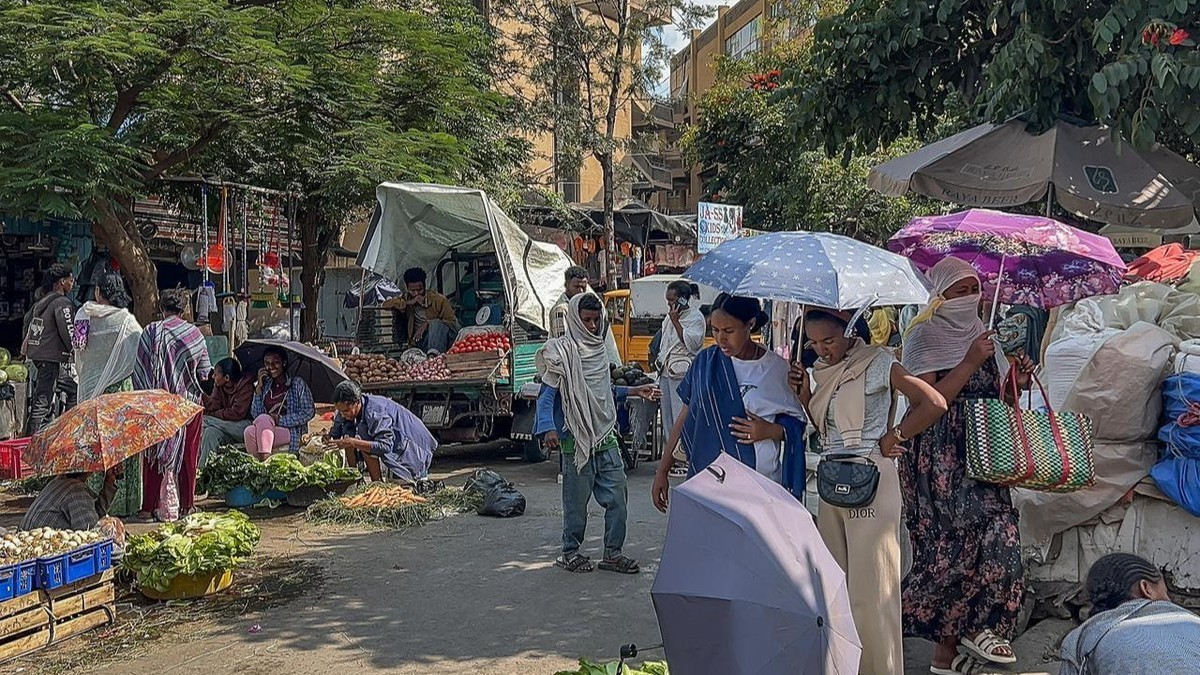
The last war between the TPLF and the federal government ran from November 2020 to November 2022. African Union estimates put the death toll above 600,000, with millions displaced. The war ended with the Pretoria Agreement, signed in South Africa in November 2022. It left unresolved the status of disputed areas in western Tigray, the return of displaced people and the disarmament of TPLF forces. Both sides now accuse each other of violating the agreement. Around 750,000 Tigrayans remained internally displaced as of February 2026, according to the UN refugee agency. AFP reported around one million people are still displaced from the last war. The region also faces drought linked to El Nino. Residents in Mekelle told Reuters they were stocking up on food, cash and basic goods, fearing a return to the severe shortages of the 2020-2022 war. One resident said: "We are buying almost everything we think could become necessary." A second resident, in Adigrat near the Eritrean border, described panic-buying and empty shelves.
What Comes Next
The TPLF ruled the whole of Ethiopia from 1991 to 2018 before being sidelined by the rise of Abiy. After the Pretoria deal, a caretaker administration seen as loyal to Abiy was installed in Mekelle. In May 2026 the TPLF forced out regional leader Tadesse Werede, who reported to Abiy, and replaced him with a new council led by TPLF leader Debretsion Gebremichael, who led the Tigrayans in the previous conflict. In July 2026 Abiy accused the TPLF of preparing for renewed conflict during an address to parliament. Abiy's Prosperity Party was re-elected in June 2026 polls that were boycotted by major opposition groups. Clashes resumed in late 2025. Since then the federal government has launched drone strikes in Tigray and massed troops at the regional border. Rights groups have accused the TPLF of a campaign of forced recruitment this year. Tronvoll said the offensive in Afar is likely aimed at cutting Ethiopia off from supplies routed through Djibouti, which handles almost all of Ethiopia's international trade cargo, including fuel. Whether the alliance holds, and whether the fighting reaches the capital, remains unknown.
By Jessica Ali, Staff Writer
This article was produced with AI-assisted research and editorial support. Sources: Agence France-Presse, The Guardian, BBC News, the Associated Press, Reuters, the United Nations, the European External Action Service, ACLED and Turkiye Today.
What's Your Reaction?
 Like
0
Like
0
 Dislike
0
Dislike
0
 Love
0
Love
0
 Funny
0
Funny
0
 Wow
0
Wow
0
 Sad
0
Sad
0
 Angry
0
Angry
0

Editor-in-Chief at Global1.News. Atlanta-based journalist who cuts through the BS and tells it like it is. Lead anchor, host, and the voice you hear when the spin stops and the truth starts.














Comments (0)