
Thousands Remain Under Evacuation Order as Okanagan Lake Wildfires Burn
Thousands Remain Under Evacuation Order as Okanagan Lake Wildfires Burn Thousands of British Columbia residents remain under evacuation order as firefighters battle two major wildfires on the west side of Okanagan Lake, with the B.C.
Thousands Remain Under Evacuation Order as Okanagan Lake Wildfires Burn
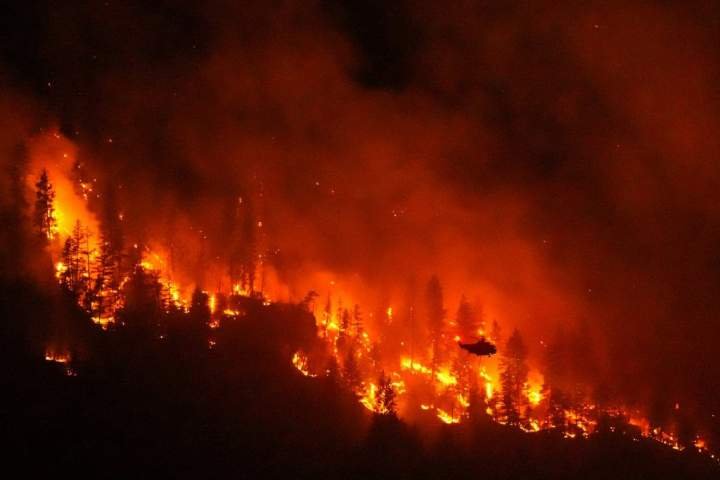
Thousands of British Columbia residents remain under evacuation order as firefighters battle two major wildfires on the west side of Okanagan Lake, with the B.C. Wildfire Service reporting the Quilpituk Creek blaze at 742 hectares and out of control. The evacuation orders cover 2,223 properties in the Central Okanagan, with another 425 properties under alert, as crews work through the night to protect homes and critical infrastructure.
Tags: Quilpituk Creek wildfire, Okanagan Lake evacuation, B.C. Wildfire Service, Westside Road closure, Bradley Creek wildfire, El Niño Canada, BC Hydro outages, Okanagan Indian Band
Current Status of the Quilpituk Creek Wildfire
The B.C. Wildfire Service reports the Quilpituk Creek wildfire at 742 hectares and out of control. The fire is burning north of Kelowna along Westside Road, which remains closed north at Caesars Landing. The service noted significant growth on Monday, yet the fire is moving up the slope and away from community areas.
Structure protection crews and fire department crews worked through the night to secure the perimeter. As of early August, more than 30 evacuation orders remain active in British Columbia amid 110 wildfires, 48 of them out of control. The Canadian Interagency Forest Fire Centre lists 729 active wildfires nationwide.
Provincial emergency management officials continue to coordinate with local authorities to monitor wind patterns and fire behaviour. This approach reflects standard federal-provincial coordination during intense wildfire seasons influenced by broader climate patterns.
Evacuation Orders and Alerts Across the Central Okanagan
Evacuation orders cover 2,223 properties in the Central Okanagan on Tuesday. An additional 425 properties remain under evacuation alert, meaning residents must prepare to leave immediately if conditions shift. Those under order must remain outside the zone due to ongoing wildfire danger.
The B.C. Wildfire Service continues to monitor the situation closely. Indigenous communities such as the Okanagan Indian Band play a central role in these coordinated responses, drawing on local knowledge to support evacuees and protect cultural sites amid the crisis.
Economic impacts from prolonged displacement include strains on local businesses and insurance claims processes. Federal support through provincial channels helps address immediate needs while longer-term recovery planning begins.
Firefighting Operations and Infrastructure Impacts
Crews established a 10-foot edge along the fire perimeter on Tuesday. They are laying hose for water delivery, conducting danger tree assessments, and falling hazardous trees while extinguishing hotspots near the community of Lacasa. BC Hydro reports approximately 1,500 customers without power in the affected area.
Structure protection and structural defence teams remain on site to safeguard homes. These operations highlight the challenges of protecting infrastructure during periods of extreme fire behaviour driven by climate factors.
Coordination between provincial agencies and utilities ensures power restoration efforts align with safety priorities. Such collaboration is essential in British Columbia where wildfire seasons increasingly test emergency response systems.
Related Bradley Creek Wildfire and Property Losses
The Bradley Creek wildfire, mapped at 2,852 hectares, has led to separate evacuation orders from the Okanagan Indian Band, the township of Spallumcheen, the regional district of North Okanagan, and Splatsin. The chief of the Okanagan Indian Band stated on Tuesday morning that up to 230 homes are believed lost.
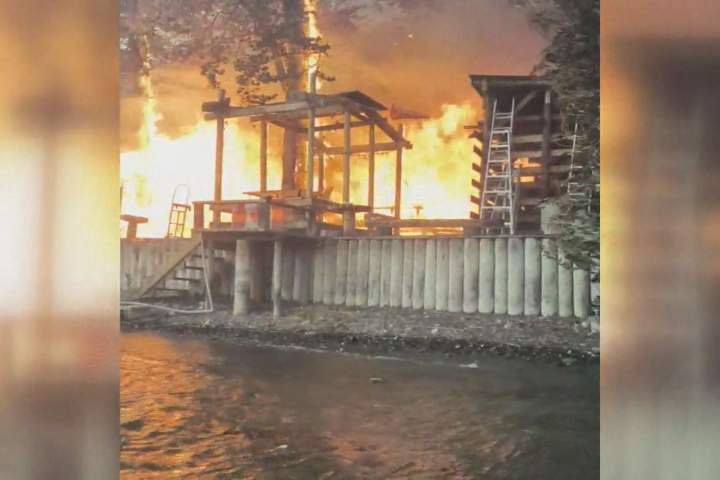
Retired forestry firefighter Jeff Moore watched his family's summer home of 31 years burn on Saturday after sustained winds of 85 kilometres an hour pushed flames north. Moore escaped by boat across Okanagan Lake after homes nearby ignited rapidly, noting that the lake served as his saviour when conditions changed suddenly.
Moore, who specializes in wildfire suppression, described how the fire's behaviour shifted rapidly, forcing a cautious approach to protect lives. The Okanagan Indian Band's estimate of 230 homes lost underscores the severe toll on Indigenous communities and the need for targeted recovery support.
Jeff Moore, a retired forestry firefighter specializing in wildfire suppression, described the rapid shift in conditions near Okanagan Lake. "We were holding our own, but homes around me began to start on fire and it changed the whole game," he said. Moore noted that residents had expected more time to prepare, adding, "We thought we had more time. My wife and family were able to get out and they didn't want to leave me there, but I kept telling them that the lake is my saviour." He escaped on a neighbour's boat and watched from the water as flames destroyed the family cabin.
Moore reflected on the limits of response efforts once the fire intensified. "When things go over the top like this, there's only so much that can be done. It's a time when you just have to stand back and say, 'Hey, we gotta be cautious here. There's lives at stake'," he stated. Westside Road residents ran for their lives as the fire quintupled in size over five hours on Saturday, jumping Highway 97 at the north end of Okanagan Lake. As of Tuesday, Bradley Creek is mapped at 2,852 hectares, with four evacuation orders for hundreds of properties remaining from the Okanagan Indian Band, township of Spallumcheen, regional district of North Okanagan and Splatsin.
El Niño Influence on Canada's Wildfire Season
Environment and Climate Change Canada forecasted in January 2026 that this year will likely rank among the hottest on record. The National Oceanic and Atmospheric Administration's July 2026 consensus indicates an 81 per cent chance of a very strong El Niño from October to December, ranking among the largest events since 1950.
Global average sea surface temperatures reached 20.86C in June, exceeding prior records. Meteorologist Anthony Farnell noted the El Niño is strengthening faster than previously recorded, with climate change amplifying drought and fire conditions across Canada.
These patterns contribute to extended fire seasons and increased pressure on provincial resources. Federal-provincial coordination becomes critical as El Niño effects are projected to continue through early 2027, influencing drought and temperature trends nationwide.
Across Canada the wildfire season has produced extensive activity. Northern Ontario fires have burned more than 7,250 square kilometres of forest, surpassing the previous record set in 2021 according to provincial numbers released July 21. More than 30 evacuation orders remain across B.C., with about 110 active wildfires and 48 out of control as of Aug. 1. The Canadian Interagency Forest Fire Centre reports 729 active wildfires in Canada and 4,460 total year-to-date.
Federal officials stated on July 9 that this year's wildfire season has not reached the scale seen in 2025 despite being challenging. A heat dome gripped parts of Canada earlier in July, contributing to the difficult conditions already recorded.
The El Niño outlook points to continued pressure on fire conditions. There is an 81 per cent chance of a "very strong" El Niño from October to December 2026, among the largest since 1950. Global sea surface temperatures hit 20.86C in June, and forecaster Farnell noted that El Niño "continues to strengthen faster than we've ever recorded before." Environment and Climate Change Canada forecast in January 2026 that this year "will likely be among the hottest years on record."
Support Services for Evacuees
Group lodging is available at Royal LePage Place Arena at 2760 Cameron Road in West Kelowna. The facility provides sleeping cots, washrooms, snacks, water, first aid, and security-patrolled parking for all evacuees.
Provincial and local agencies continue to coordinate resources while residents monitor updates from the B.C. Wildfire Service. Support extends to Indigenous communities affected by the Bradley Creek wildfire, ensuring culturally appropriate assistance reaches those displaced.
Insurance processes and economic recovery planning are underway to address property losses estimated in the hundreds of homes. These services form part of a broader network helping residents navigate immediate and medium-term challenges.
What Happens Next
Fire season outlook remains uncertain as the El Niño strengthens, with potential for continued activity into September and beyond. Provincial resources will focus on mopping up hotspots while federal support aids in long-term recovery for affected areas including the Okanagan Indian Band territories.
Weather forecasts suggest variable winds could influence fire behaviour, requiring evacuees to stay prepared under existing orders. Insurance assessments and economic impact studies will guide rebuilding efforts amid ongoing climate pressures.
Residents should monitor B.C. Wildfire Service updates and follow guidance from local authorities on safe return protocols. Forward planning emphasises coordination between all levels of government to strengthen resilience against future wildfire seasons.
By Alex Thompson, Staff Writer
This article was produced with AI-assisted research and editorial support. Reporting is based on sources cited in the article.
What's Your Reaction?
 Like
0
Like
0
 Dislike
0
Dislike
0
 Love
0
Love
0
 Funny
0
Funny
0
 Wow
0
Wow
0
 Sad
0
Sad
0
 Angry
0
Angry
0

Canada Correspondent at Global1.News. Based in Toronto, covering Canadian politics, energy, trade, and US-Canada relations. Provides the Canadian perspective on North American and global affairs.














Comments (0)