
'Burnham bounce' could be short-lived as Reform regains lead over Labour in new poll
New YouGov poll for The Times and Sky News puts Reform UK back on top at 23 per cent with Labour on 22, suggesting the 'Burnham bounce' under new PM Andy Burnham may be short-lived.
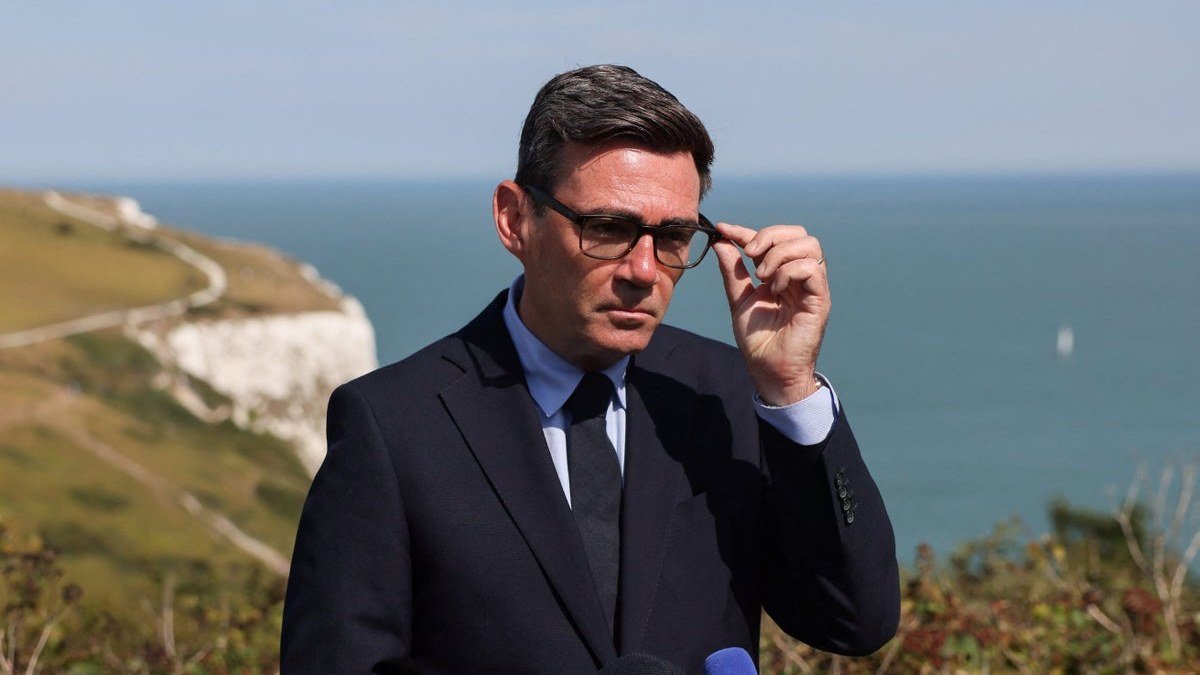
The Latest YouGov Westminster Voting Intention Figures
The poll marks the first time since Burnham took office that Reform has regained its slim national lead. Full breakdowns confirm Reform UK at 23 per cent, Labour unchanged at 22 per cent, the Conservatives at 19 per cent, the Greens at 13 per cent and the Liberal Democrats at 12 per cent. These results come after Reform had led most national surveys for roughly 15 months before the leadership change at Labour.
The one-point swing back to Reform leaves the four main parties separated by just eleven points in total, underlining how fragmented the electorate remains under first-past-the-post. With the Conservatives recovering ground from Reform and the Greens and Liberal Democrats each holding double-digit shares, any future general election would likely produce highly localised swings rather than a uniform national movement. The unchanged Labour figure at 22 per cent suggests the immediate effect of the leadership transition has already been absorbed without further consolidation.
Because the survey was conducted over a single weekend, the narrow Reform lead sits well within normal sampling variation and cannot yet be read as a decisive reversal. Earlier polls had shown Labour briefly ahead, yet the current data indicate that those gains proved fleeting once the initial attention around Burnham's appointment subsided. Observers will therefore watch whether subsequent surveys confirm a renewed Reform advantage or merely register continued volatility.
The Burnham Bounce and Its Recent Shortfall
In recent weeks several polls had indicated Labour leapfrogging Reform for the first time in 15-16 months. An Opinium survey found Labour taking an outright lead for the first time in 15 months, while a BMG poll showed Labour five points ahead of Reform, the first such occasion in 16 months that any party other than Reform had led a BMG survey. One Express-reported YouGov figure had placed Labour at 28 per cent, four points ahead of Reform. The current YouGov data suggests that early momentum has not been sustained into this week.
The pattern across those earlier surveys points to a temporary surge driven by media coverage of the leadership change rather than a structural shift in voter preference. Labour's gains were concentrated in the period immediately after Burnham's elevation, yet the absence of further movement this week indicates that the party's core support has not expanded beyond that initial reaction. Reform's ability to regain the lead so quickly highlights how much of its backing remains anchored among former Conservative voters who have not returned to their previous party.
Under first-past-the-post, even small national swings can produce disproportionate seat changes, but the current four-way split makes such calculations unusually uncertain. If the Conservatives continue to claw back support from Reform, the main effect may be to squeeze Reform's prospects in marginal seats rather than to hand Labour additional gains. The data therefore leave open the possibility that the next election could still deliver a fragmented outcome despite Labour's position in government.
Lord Hayward's Assessment of Voter Movements
Polling expert Lord Hayward observed that most of Reform's votes had come from former Conservative supporters, meaning the Conservatives are now recovering some of that ground. He noted that Burnham is using August effectively, much as Nigel Farage did last year, through a series of announcements and social media videos that have kept Labour on the front foot. Burnham's personal ratings from YouGov's 21-22 July 2026 tracker showed 38 per cent favourable and 35 per cent unfavourable, producing a net favourability of plus three.
Hayward's analysis implies that any Conservative recovery will come at Reform's expense rather than Labour's, tightening an already close contest at the top of the table. The modest net favourability for Burnham suggests his personal appeal has not yet translated into broader party gains, even though head-to-head ratings show him ahead of both Ed Davey and Kemi Badenoch. This gap between personal and party standing remains a central challenge for Labour strategists seeking to convert the leadership change into lasting momentum.
The comparison with Farage's use of August last year underscores how both parties are treating the summer period as an opportunity for sustained visibility rather than a quiet season. Burnham's programme of visits and announcements mirrors the approach that helped Reform maintain its lead through previous months, yet the latest figures indicate that such activity has so far only stabilised rather than extended Labour's position. Further movement will depend on whether these efforts reach beyond the party's existing supporters.
Reform UK's Internal Strategy and Labour's Position
Reform strategists have privately discussed plans to end the Burnham bounce, with one iNews report describing the party's internal push under the phrase "we've got to start punching". Burnham has maintained a visible summer campaign, including a visit to Alstom in Derby where he unveiled new technical education routes aimed at tackling youth unemployment, and a trip to Harlow in Essex alongside the Chancellor as part of a tour of battleground seats. Ministers have sought to play down any snap election rumours amid the early poll movement.
The internal Reform discussion reflects concern that the leadership transition could erode the party's advantage if left unchallenged, particularly in seats where former Conservative voters are still weighing their options. By focusing on policy announcements in manufacturing regions and marginal constituencies, Labour is attempting to demonstrate governing competence before any potential autumn contest. The decision to downplay snap-election speculation suggests ministers believe the current numbers do not yet justify an early vote.
Reform's reliance on a narrow base drawn from one source of voters makes it vulnerable to even modest Conservative recovery, as Hayward noted. At the same time, Labour's summer activity in Essex and Derbyshire indicates a deliberate attempt to contest territory that Reform had previously dominated. The outcome of these parallel efforts will determine whether the present one-point gap widens or narrows in subsequent surveys.
Implications for Burnham's Premiership
Burnham, previously Mayor of Greater Manchester, enters his second month in Downing Street with polling that still rates him ahead of other leaders on the question of who would make the better prime minister. He leads Liberal Democrat leader Ed Davey 41 per cent to 8 per cent and Conservative leader Kemi Badenoch 38 per cent to 26 per cent in those head-to-head measures. The return of Reform to the top of the YouGov table indicates that the party's support base, drawn heavily from former Conservative voters over the past 15 months, remains resilient despite the change at the top of the Labour Party.
These head-to-head advantages provide Burnham with a personal buffer even while Labour trails or ties nationally, yet they have not prevented Reform from regaining the lead. The resilience of Reform's vote suggests that dissatisfaction with the previous Conservative government continues to drive support toward the newer party rather than back to the Conservatives or across to Labour. Burnham's task is therefore to convert his comparative strength against opposition leaders into gains against Reform itself.
Earlier reporting indicated Labour is on course for a landslide in Manchester, Burnham's political base, but the national picture remains far more competitive. The contrast between local strength and national tightness illustrates how first-past-the-post can amplify advantages in some regions while leaving others finely balanced. Sustaining the premiership will require translating personal ratings into measurable shifts in those marginal areas where Reform currently holds the edge.
What to Watch in the Coming Weeks
Attention now turns to whether Labour can convert Burnham's personal ratings into sustained gains across the country or whether Reform can consolidate its renewed lead. Earlier reporting had noted Labour was set for a landslide victory in Burnham's political heartland of Manchester, yet the national picture remains finely balanced. Observers will monitor further surveys from YouGov, Opinium and BMG, alongside any further announcements from the Prime Minister's summer programme, to gauge whether the current Reform lead holds or shifts again before the next general election.
The fragmented distribution of support across four parties means that small changes in any one party's share could alter the projected seat tally significantly under first-past-the-post. If the Conservatives continue to regain ground from Reform, the effect may be to reduce Reform's efficiency in converting votes into seats rather than to boost Labour directly. Conversely, any further Labour advance would need to come primarily from Reform rather than from the Conservatives if the party is to secure a workable majority.
Ministers' efforts to dampen speculation about an early election suggest the government intends to use the remainder of the summer to build on the limited gains recorded so far. Reform's internal discussions about a more aggressive posture indicate the party will not cede the initiative without a response. The coming weeks of announcements and polling will therefore test whether the current narrow Reform lead represents a temporary fluctuation or the start of a more durable pattern.
By Erica Thornton, Staff WriterThis article was produced with AI-assisted research and editorial support. Reporting is based on sources cited in the article.
What's Your Reaction?
 Like
0
Like
0
 Dislike
0
Dislike
0
 Love
0
Love
0
 Funny
0
Funny
0
 Wow
0
Wow
0
 Sad
0
Sad
0
 Angry
0
Angry
0

US Politics and Policy Correspondent at Global1.News. Based in Washington DC, covering American politics, policy, elections, and the courts. Knows how the system works and tells you what it actually means.














Comments (0)