
The Biggest New AI Buyer on Earth Just Locked Itself to One Vendor — and Every Hosting Provider Should Pay Attention
SpaceX's first public earnings call delivered a .81B revenue beat, but the real news was Musk's exclusive Nvidia commitment: 10GW of Vera Rubin compute by 2027 and orbital Starmind AI. Nvidia jumped, AMD fell 9%, and hosting providers face tighter GPU allocation.
The Biggest New AI Buyer on Earth Just Locked Itself to One Vendor — and Every Hosting Provider Should Pay Attention
Let me tell you something. I've been watching the AI compute market for two years now, and I've seen a lot of hype, a lot of hand-wringing, and a lot of "this time it's different" nonsense. But this week something happened that actually changed the shape of the market. Not a model release. Not a capex number. A commitment.
SpaceX — the company spending more on AI infrastructure in a single quarter than most countries spend on defense — just declared that it will use Nvidia GPUs exclusively. For everything. On Earth, and apparently in orbit. And the way the market reacted tells you more about where this industry is headed than any earnings report ever could.
First, the Earnings Call That Wasn't About Earnings
SpaceX reported its first earnings as a public company this week, and on paper the numbers were strong. Revenue came in at $7.81 billion against a $6.81 billion consensus, up 92 percent from a year ago and up sharply from the $4.7 billion it booked in Q1. All three operating segments — Space, Connectivity, and AI — grew. The company spent $18.37 billion on capital expenditures in the quarter, and here's the number that should make every hyperscaler nervous: $15.83 billion of that, 86 percent, went to AI infrastructure, largely through its xAI unit. That's a single company outspending most sovereign nations on compute.
And yet the stock dropped 14 percent and hit an all-time low, because $101 billion worth of shares became available for trading on Thursday as the post-IPO lockup expired. The market punished the very spending that's supposed to create the future. Sound familiar? It should. That's the same schizophrenia we've been watching all year — record AI capex, record skepticism, and a market that can't decide if $15.8 billion in a quarter is a growth signal or a warning sign.
The Real Announcement — Exclusivity
But the headline wasn't the earnings. It was the commitment. Elon Musk said it flat out on the call and on X: "SpaceX has committed to using Nvidia GPUs exclusively because they are the best." No hedging. No "we're evaluating options." No "we'll diversify across vendors." Exclusively. The word every hardware vendor except one hates to hear.
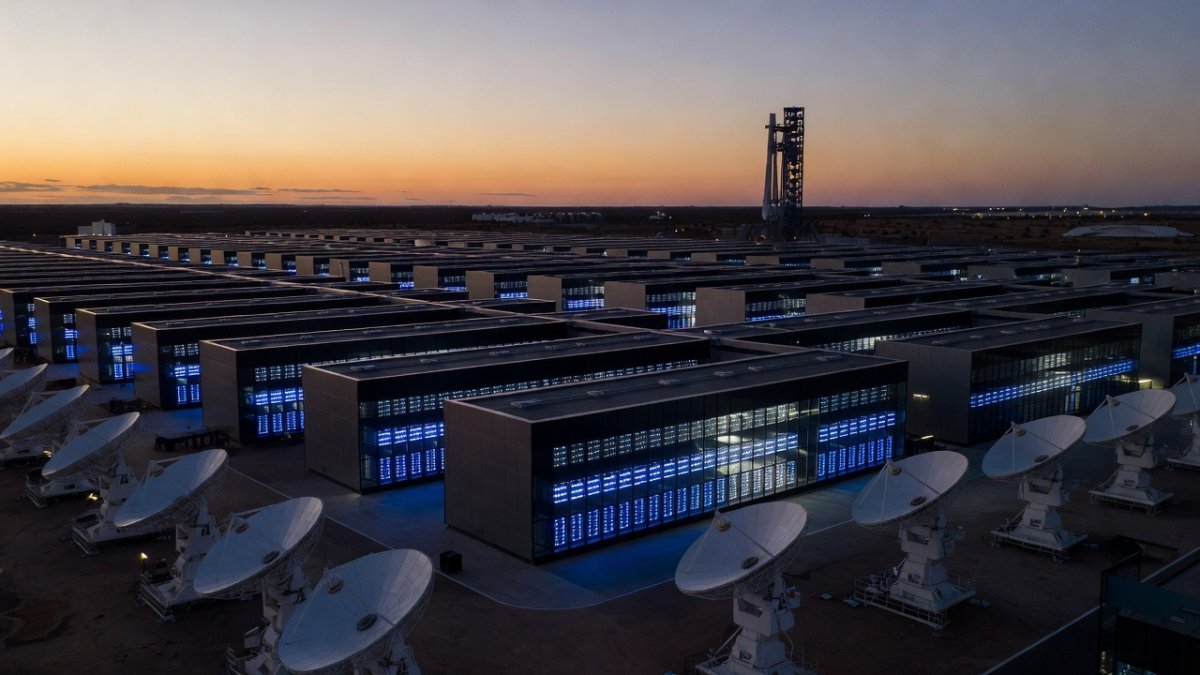
Here's what that means in hardware terms. SpaceX will build its AI data centers on the Nvidia Vera Rubin NVL72 rack, codenamed Kyber — 2 gigawatts of compute capacity by the end of this year, and 10 gigawatts by the end of 2027. Ten gigawatts. For context, that's roughly the scale of what the largest hyperscalers deploy in a year, and this is one customer, locking into one vendor, for everything from terrestrial data centers to orbital platforms.
And it's not just about the data centers on the ground. SpaceX and Nvidia have been quietly working on the orbital piece — the Space-1 Vera Rubin module, which packs four Rubin GPUs, two Vera CPUs, and a hefty amount of memory into a space-certified package. Musk says orbital AI systems are planned for next year. SpaceX had already announced a partnership with Anthropic to build a multi-gigawatt "orbital" AI data center. The dream of putting compute in orbit — where solar power is effectively unlimited, land is a non-issue, and cooling is free — just got a whole lot more concrete.
Same News, Three Different Market Verdicts
Here's the part that should make every independent hosting provider sit up and take notice. One announcement. Three completely different market reactions, all inside 24 hours.
Nvidia stock jumped — it just locked in the most aggressive AI buyer on the planet as a captive customer for the next decade. AMD fell more than 6 percent, with some reports putting it down 9 percent, because the company that was supposed to be the credible Nvidia alternative just got told "no thanks" by the biggest new spender in the game. Intel and Micron declined too, collateral damage in a market that's suddenly realizing the GPU order book just got a whole lot more concentrated. And SpaceX itself? Down 14 percent to an all-time low, because the lockup expiry meant a flood of supply hit the tape.
Three verdicts. One story. And the signal underneath all of them is the same: the AI compute market just consolidated further, right at the moment everyone was hoping it would diversify.
What This Actually Means for Independent Hosting Providers
I'm going to skip the cheerleading and give you the practical read, because this affects your business whether you buy GPUs or not.
First, vendor concentration just got worse, not better. If you were hoping AMD's Instinct line or Intel's Gaudi would break Nvidia's grip in the next 18 months, this week was your reality check. When the newest, most aggressive buyer on Earth goes exclusive, it doesn't just shrink the alternative-vendor market — it tightens Nvidia's allocation power everywhere. That means longer lead times, higher prices, and less negotiating room for everyone else, including the small and mid-size operators who were already at the back of the queue.
Second, watch the orbital story, but don't plan your business around it. Space-based AI compute is a genuinely interesting idea — unlimited solar power, no land fights, no water cooling drama — but it's years away from being a commercial factor. The Space-1 module exists, the partnership with Anthropic exists, but moving hundreds of thousands of GPUs into orbit is a logistics problem that makes terrestrial supply chains look trivial. Treat it as a long-term wild card, not a near-term solution to your capacity problems.
Third, the secondary GPU market is about to get interesting. Every time a giant commits to a new platform — and 2 gigawatts by year-end means massive NVL72 deployments — the older Blackwell gear has to go somewhere. Watch for decommissioned hardware hitting the wholesale market over the next two quarters. That's where the smart independent operators pick up capacity at a fraction of the sticker price.
Fourth, price your services against the reality of the concentration. If you run a hosting or colo business, your cloud competitors are about to pay more for the same compute, because Nvidia's allocation goes to the giants first. That's your opening. Lock in your hardware, lock in your power, and be ready to position yourself as the provider that doesn't make customers wait in line behind a 10-gigawatt commitment.
The Counter-Argument — and Why It Doesn't Hold
Now, the pushback. "SpaceX is one customer. AMD just landed a $5 billion deal with Anthropic. Custom silicon from Google, Amazon, and Meta is eating Nvidia's lunch. Exclusivity doesn't mean monopoly."
I hear it. And it's true that AMD invested $5 billion in Anthropic late last month, deploying 2 gigawatts of Instinct MI450s in Helios racks. That's real. But look at the asymmetry. AMD had to buy its way into one customer with a $5 billion equity investment. Nvidia just got the biggest new buyer in the industry to commit to it exclusively, at scale, for free — no equity stake required, just the best product. That's the difference between winning a deal and winning a customer. And custom silicon? Google, Amazon, and Meta build their own chips for their own clouds. That doesn't help the independent operator who needs to buy compute on the open market. For the rest of us, Nvidia's allocation is the market.
The Structural Reality — This Isn't a Blip
Here's the thing that keeps me up at night. The market is simultaneously questioning the AI buildout — SpaceX gets punished for spending, hyperscalers get punished for capex — while the actual buyers keep doubling down. Musk is projecting $1 trillion in SpaceX revenue long-term, with AI as a core pillar. The hyperscalers are guiding to record capex again next year. And now the most aggressive buyer has locked itself to the most dominant vendor.
That's not a bubble narrative. That's a consolidation narrative. The buildout isn't slowing down — it's concentrating. Fewer vendors, bigger commitments, more allocation power in one company's hands. For independent hosting providers, that's the single most important structural fact of the next two years.
The Bottom Line
Elon Musk just told the world that his company's entire AI future belongs to Nvidia. Ten gigawatts. Exclusive. On Earth and in orbit. Whether you think that's visionary or reckless, it's the reality of the market you're competing in.
So here's my advice, plain and simple. Don't build your capacity plans around AMD or Intel breaking in. Watch the secondary market for the hardware the giants leave behind. And understand that every exclusive commitment like this one tightens the squeeze on everyone who isn't at the front of the allocation line.
The AI gold rush isn't over. It's just consolidating. And if you're not planning for that, you're planning to be left behind. Ent?
-- Allan Ali, Founder
This article was produced with AI-assisted research and editorial support. Reporting is based on sources cited in the article.
What's Your Reaction?
 Like
0
Like
0
 Dislike
0
Dislike
0
 Love
0
Love
0
 Funny
0
Funny
0
 Wow
0
Wow
0
 Sad
0
Sad
0
 Angry
0
Angry
0

Publisher of Global1.News. Automation architect, systems builder, and the guy making sure the truth gets published.















Comments (0)