
The AI Buildout's Price Tag Just Doubled in Six Months - and the $3 Trillion Number Is Now the Problem
Global data center capex is now forecast to surpass $3 trillion by 2030, nearly double Dell'Oro's January outlook. A hosting founder on why a doubling forecast is more dangerous than the spending itself.
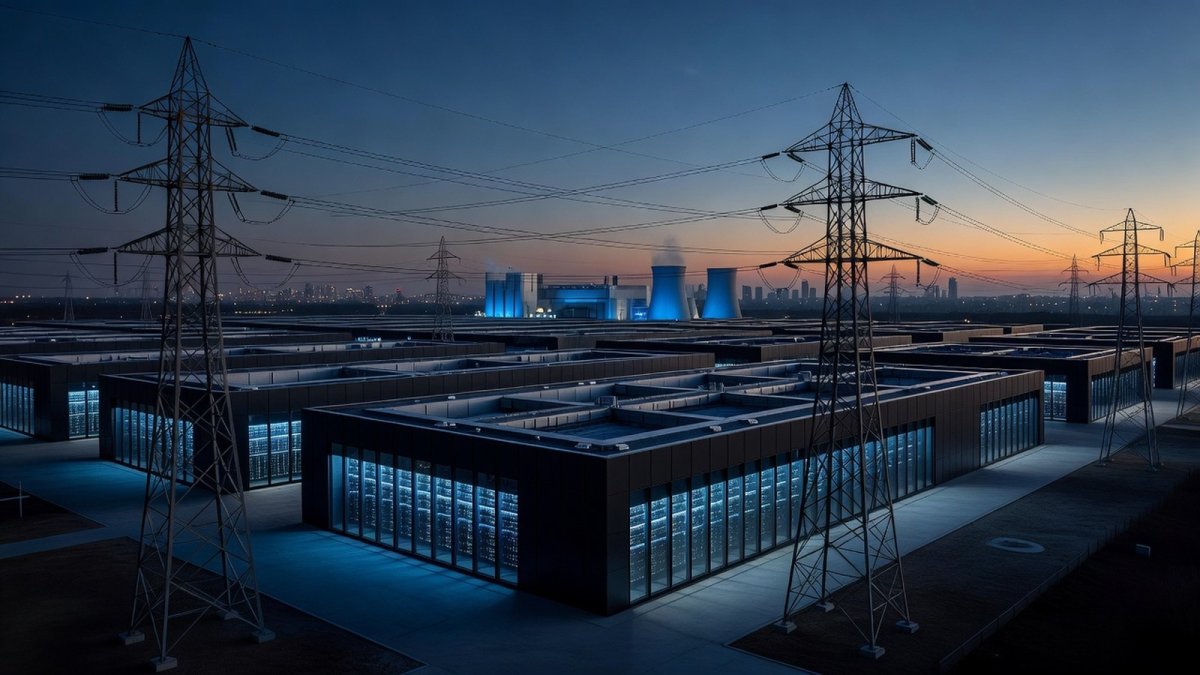
The AI Buildout's Price Tag Just Doubled in Six Months — and the $3 Trillion Number Is Now the Problem
I've been running hosting infrastructure for over a decade, and I've learned one thing about this industry: the numbers move faster than the physics. This week gave us the cleanest proof yet. Dell'Oro Group — the research firm whose data most of us in this industry actually buy from — quietly nearly doubled its forecast for global data center capital spending. The new number: more than $3 trillion by 2030. The old number, from January: less than half of that.
Let me say that again, slowly. In six months, the same firm looked at the same industry and decided the bill was almost twice what it thought it was. Not because the world changed. Because hyperscalers raised their spending guidance, estimates for global power capacity went up, and commodity costs climbed.
I'll tell you what that doubling actually is. It's not a forecast anymore. It's a target — and targets get shot at. When a number that big doubles that fast, it stops being information and starts being a force. It changes what grid operators do, what regulators investigate, what credit markets price, and what your electric utility asks your state legislature for. The spending is real. But the number now has a life of its own.
The Number — What Dell'Oro Just Did
Let's get the specifics on the table, because the details matter more than the headline. Dell'Oro's updated outlook projects worldwide data center capital spending will surpass $3 trillion by 2030 — and the firm says its 2030 view has nearly doubled since its January 2026 forecast.
Baron Fung, vice president at Dell'Oro, told Data Center Knowledge that AI accelerators will account for about a third of that $3 trillion. So roughly a trillion dollars of GPUs and custom silicon. The other two trillion is everything around the chips: servers to host them, the specialized networking for AI clusters, the storage for training and inference, the power distribution, the cooling, the buildings themselves.
The forecast assumes global data center power availability grows past 200 gigawatts. That's not a prediction — that's the industry's entire wish list of new generation, transmission, and interconnection, stacked into one assumption. Dell'Oro also estimates the four largest US cloud providers could account for about half of all global data center capex. And the AI-specialized cloud category — the model developers and neoclouds — is projected to grow at a compound annual rate of nearly 60%.
One more number that should matter to you if you buy hardware: Fung said the biggest cloud providers are using their purchasing power to lock in preferred pricing and capacity through long-term supplier agreements — arrangements that could reduce component availability for other buyers, extend lead times, and push prices up. Their custom chips lower their costs at scale while putting pressure on server manufacturers' margins. In other words: the people writing the $3 trillion check are also the people deciding who gets to sell into it.
Reading One — The Confirmation
Here's the reading that keeps the bulls honest: the doubling is confirmation, not delusion. The spend is happening. Hyperscaler capex guidance has been climbing all year. Every earnings call from every major cloud provider this quarter has pushed the number up, not down. TSMC's advanced packaging lines are sold out. Transformer lead times are measured in years. Interconnection queues are backlogged past 2030.
Dell'Oro isn't hallucinating the demand. It's reading the same purchase orders, the same backlogs, the same guidance that everyone else is reading — it's just doing the math all the way out to 2030. When the four largest US clouds are on pace to account for half of a $3 trillion spend, the scale stops being theoretical. That's the part of the story that says this buildout is real, it's funded, and it's going to reshape the supply chain for the rest of this decade regardless of what the stock market does in any given week.
And there's a real signal in the mix for people who actually run infrastructure: Fung expects enterprises to start with rented GPU capacity because it avoids the upfront bet, then migrate the stable, heavily utilized workloads on-premises when ownership gets cheaper — keeping variable demand in the cloud. That's the classic utilization curve, and it's been the friend of every independent operator who survived the last cloud cycle. The AI version of that curve is just starting.
Reading Two — The Liability
Now the reading that keeps me up at night. When a forecast doubles in six months, it stops being a projection and becomes a liability. Here's why.
A forecast that size doesn't just describe the future — it changes it. Regulators read it. The Federal Reserve reads it. State utility commissions read it. Credit rating agencies read it. And they all react to the number, not to the nuance behind it. You can already see the reaction happening this week without looking hard.
The largest grid operator in the country, PJM Interconnection, released its five-year strategy on Wednesday with a sentence that should be framed: "the state of the interconnection is not tenable." FERC opened a Section 206 proceeding against PJM in June demanding it justify or reform its large-load tariffs. A Colorado data center developer, EdgeCore, signed the White House's Ratepayer Protection Pledge and told the press it expects to "bear 100% of the costs" of its own power infrastructure — at gigawatt scale, that's hundreds of millions of dollars per campus.
I'm not going to re-litigate the IRAS filings or the ride-through fights — I've written about those. The point here is what they have in common: they're all reactions to the same doubling number. Grid operators, regulators, utilities, and even data center developers are all positioning for a world where the $3 trillion forecast lands on their balance sheets. When every player in the chain starts bracing, the forecast has stopped being research and started being policy.
The Secondary Bottleneck Nobody's Talking About — Forecast Credibility
Here's where I earn my keep. Everybody's still arguing about chips, power, cooling, transformers, queues. The constraint that's about to bite hardest isn't physical at all: it's forecast credibility. When the number doubles in six months, every decision that depended on the old number gets re-litigated — and every decision that depends on the new number gets made with less trust.
Think about what a doubling forecast does to the people downstream. A utility planning a substation on a 5-megawatt load forecast now has to re-plan for 10. A state legislature that approved one set of incentives is now looking at a number twice as large and wondering what it signed up for. A credit committee underwriting a colo expansion is now pricing against a scenario that doubled mid-deal. The planning paralysis doesn't come from the number being wrong — it comes from the number being big and moving fast. Neil Osnato, a grid analyst who's been all over this week's coverage, put his finger on it: the quality of the load assumption becomes as important as the quality of the generation being procured. When the assumption doubles in six months, that's not a refinement. That's a regime change.
And here's the kicker: Dell'Oro's own people say the biggest risk is overbuilding. Gordon Johnson at Subzero Engineering told Data Center Knowledge the biggest risk is "building too much too quickly" — which is exactly what a doubling forecast invites. A number that size doesn't just fund construction. It funds speculative construction. It funds leases signed on projections. It funds the kind of demand that Wood Mackenzie already estimates is 70% phantom. The forecast doesn't create the demand. But it sure creates the appetite to pretend it's all real.
What This Means for Independent Hosting Providers
If you run an independent hosting or colo business, here's what I'd do with this week's number.
First, stop planning against the doubling forecast. Plan against your own contracted demand. The $3 trillion number is real for the hyperscalers who are writing the checks, but it is not your backlog. The single biggest mistake you can make in this market is borrowing money for capacity based on someone else's forecast. Model your build on the leases you can sign, not the number you can quote.
Second, price the power risk explicitly. Every component of this story — the grid operator's strategy, the developer's pledge, the utility's minimum-billing rules — is a transfer of power costs toward the customer. Assume your power line item will be a bigger and less predictable percentage of your P&L every year for the rest of the decade. If your pricing doesn't already have a power-cost escalation clause, add one. The rate cases are coming, and they will not be in your favor.
Third, buy hardware while you can, but don't hoard it. The hyperscalers' long-term supplier agreements are already squeezing component availability for everyone else. Lead times are extending and prices are climbing — but the same doubling dynamic that's inflating demand could produce a secondary-market glut in 18 months when the speculative capacity hits. Buy for your contracted needs, keep a rolling buffer, and don't get caught holding the bag on a warehouse of GPUs when the phantom gigawatts evaporate.
Fourth, position as the hybrid landing spot. Fung's enterprise model — rent in the cloud first, repatriate the stable workloads when ownership gets cheaper — is your market. Every enterprise CIO in the world is about to get a bill for the AI buildout, and a growing slice of them are going to decide that their stable, heavily utilized inference workloads shouldn't carry the cloud's power premium. Be the place they land: boring, reliable, contract-priced, and powered by a story you can actually defend.
The Structural Reality — Doubling Numbers, Fixed Timelines
None of this resolves quickly, because the number moves on a quarterly cycle and the grid moves on a decade. Dell'Oro can double its forecast in six months. You cannot double a transmission line in six months. The gap between the forecast and the physics is the whole ballgame — it's where prices get distorted, where rate cases get filed, where politicians get involved, and where independent operators either find their edge or get run over.
Dell'Oro's assumption of more than 200 gigawatts of power availability is the tell. That's not a forecast of what will exist. That's a statement of what the industry needs to exist for the $3 trillion to land. And the people who control that — grid operators, utilities, state regulators — are not on the capex cycle. They're on the political cycle. Those two cycles have never been in sync, and nothing about this week suggests they're about to be.
The Bottom Line
Here's the truth bomb. The $3 trillion number is real, and it doubled in six months, and the doubling is the story. Not because the spending is fake — it isn't. Because when a number that big moves that fast, it stops being something you plan with and starts being something you brace against.
The forecast was never the problem. The gap between the forecast and the grid is the problem. And that gap is now big enough to be seen from space.
So plan like a founder, not like a forecast. Sign the contracts you can defend, price the power you can't predict, and keep your powder dry for the moment when the phantom gigawatts finally meet the real physics. That's the moment the independent operator's phone starts ringing. Be ready for it.
— Allan Ali, Founder
This article was produced with AI-assisted research and editorial support. Sources: Data Center Knowledge (Dell'Oro Group data center capex report, Aug 21, 2026; PJM five-year strategy coverage, Aug 21, 2026; EdgeCore power-cost interview, Aug 20, 2026), PJM Interconnection public filings.
What's Your Reaction?
 Like
0
Like
0
 Dislike
0
Dislike
0
 Love
0
Love
0
 Funny
0
Funny
0
 Wow
0
Wow
0
 Sad
0
Sad
0
 Angry
0
Angry
0

Publisher of Global1.News. Automation architect, systems builder, and the guy making sure the truth gets published.















Comments (0)