
Meta's MusicGen: The Free AI Music Tool That's Terrifying the Industry
Meta's MusicGen, an open-source AI music generator, lets creators produce original tracks for free on local GPUs. Trained on licensed data, it avoids copyright issues plaguing Suno and Udio. Aitrepreneur's tutorial shows easy installation. This democratizes music production, empowering ...
Folks, let me tell you something straight up. The music industry is in a full-blown panic right now, and for good reason. While the corporate giants are busy suing each other over who owns the rights to a chord progression, a bunch of scrappy developers and creators just got handed the keys to a Ferrari. I'm talking about Meta's MusicGen, the open-source AI music generator that dropped in June 2023 as part of the AudioCraft suite. And if you haven't heard of it, you're about to. This isn't some watered-down, cloud-locked demo that begs for your credit card. This is a full-powered, MIT-licensed, runs-on-your-own-GPU beast that lets you generate original music from a simple text prompt. No subscriptions. No gatekeepers. No "sorry, your request violates our terms of service" nonsense. Just pure, unadulterated creative power.
Now, I know what you're thinking. "Jessica, is this another one of those tech hype cycles?" No. This is different. This is a seismic shift. And the proof is in the tutorial that's been making the rounds, a walkthrough by the YouTube channel Aitrepreneur that shows everyday creators how to install MusicGen locally and start generating music for free. That video, which you can find at the link in our story, is a masterclass in democratizing technology. It takes the fear and complexity out of the equation and hands the power back to the artist. And that, my friends, is exactly what the old guard is terrified of.
Meta's MusicGen: The Free AI Music Tool That's Terrifying the Industry
Atlanta, GA -- August 2026 -- In a world where the Recording Industry Association of America is sharpening its legal knives and the major labels are circling the wagons, a quiet revolution is happening in the open-source community. Meta, the company that brought you Facebook and Instagram, has released a tool that could fundamentally alter the economics of music creation. It's called MusicGen, and it's not just a toy. It's a legitimate, powerful AI model trained on a staggering 20,000 hours of music, including 10,000 high-quality licensed tracks and an additional 390,000 instrument-only tracks sourced from ShutterStock and Pond5. We're talking about a model that understands melody, rhythm, and genre in a way that was unthinkable just a few years ago.
Here's the thing that gets my blood boiling. The commercial AI music giants, Suno and Udio, are currently embroiled in a massive copyright lawsuit filed by Universal Music Group, Sony Music, and Warner Music. The labels are claiming these companies trained their models on copyrighted catalog without permission. And they're probably right. But what did Meta do? They went the other way. They deliberately trained MusicGen only on licensed music. They paid for the data. They did it the right way. And then, in a move that should make every creator stand up and cheer, they gave it away for free under an MIT license. That's not just a flex. That's a statement.
What MusicGen Is and Why It Matters
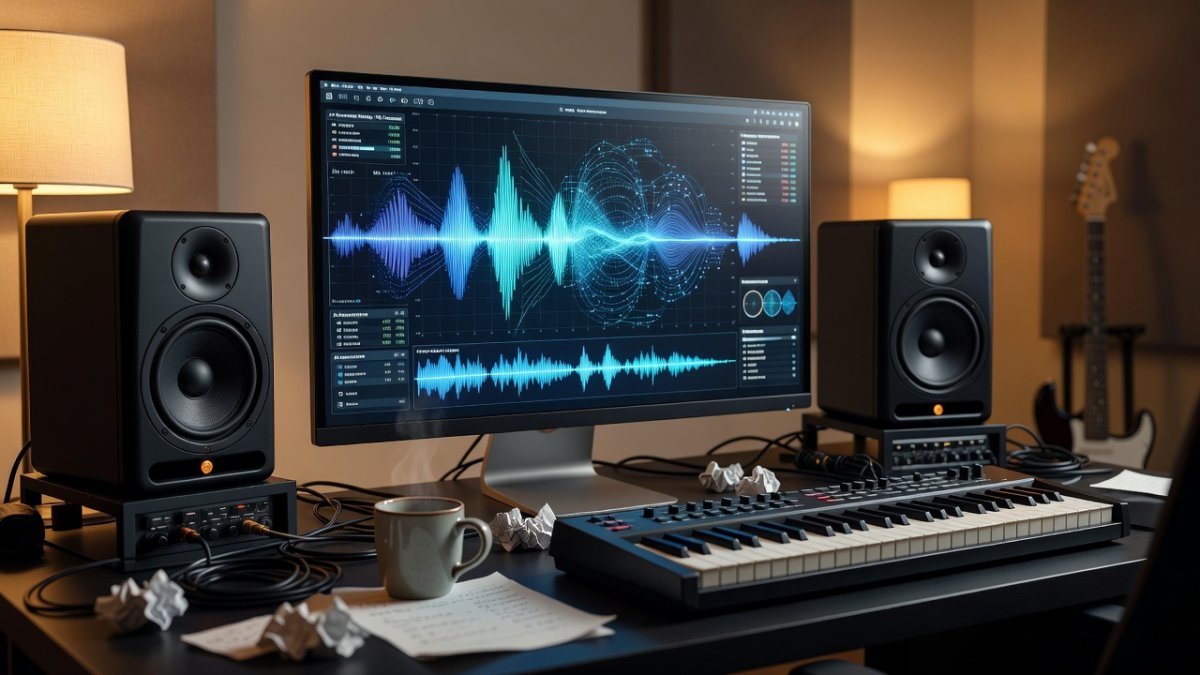
Let's cut through the technical jargon and get to the meat. MusicGen is a text-to-music AI model. You type in something like "upbeat electronic dance track with a driving bassline and synth pads," and it generates a high-fidelity audio clip that matches your description. It also supports melody conditioning, meaning you can hum or play a tune, and the AI will build a full arrangement around it. This isn't a gimmick. The output quality is genuinely impressive, often rivaling what you'd get from a mid-tier producer in a home studio. And it comes in three sizes: small (300 million parameters), medium (1.5 billion parameters), and large (3.3 billion parameters). There are also melody-specific variants for each size. For context, the large model is a monster, capable of generating complex, multi-instrumental pieces that sound like they were composed by a human.
Why does this matter? Because it obliterates the barrier to entry. For decades, making professional-sounding music required either years of training, expensive studio time, or a deep understanding of music theory. MusicGen doesn't care if you can't read a note. It doesn't care if you've never touched a keyboard. It just cares about your imagination. You want a jazz piece with a smoky saxophone solo? Done. You want a heavy metal riff with a double-kick drum? Done. You want a cinematic orchestral score for your indie film? Done. This is the great equalizer, folks. It's the printing press for sound.
The Open-Source Edge
Now, let's talk about the elephant in the room: why open-source matters. When you use a cloud-based tool like Suno or Udio, you're renting access. You're at the mercy of their servers, their pricing models, and their content policies. If they decide to change the terms, you're out of luck. If they go bankrupt, your creative tool vanishes. But MusicGen is different. Because it's MIT-licensed, you can download the model weights and run it entirely on your own hardware. You own the pipeline. You control the output. No one can take it away from you.
This is a radical departure from the corporate norm. The big tech companies want you in their walled gardens, paying monthly fees for the privilege of using their AI. Meta, for all its faults, has decided to play a different game. By open-sourcing MusicGen, they've created a foundation that developers can build upon, modify, and improve. The community is already creating fine-tuned versions, custom interfaces, and integrations with digital audio workstations. This is innovation on steroids. And it's happening right under the noses of the legacy music industry, which is still trying to figure out how to sue a decentralized movement.
Let me be clear: this isn't about replacing human musicians. It's about augmenting them. It's about giving a songwriter a quick way to demo an idea. It's about giving a video editor a way to create custom background music without paying licensing fees. It's about giving a podcaster a unique intro theme. The creative potential is limitless, and the cost is zero. That's the open-source edge, and it's a weapon that the incumbents simply cannot match.

What the Copyright War Means for AI Music
Let's get into the legal mess, because it's a doozy. The lawsuit against Suno and Udio is not just a legal skirmish; it's a existential battle for the future of AI-generated content. The major labels are arguing that training on copyrighted music without permission is theft, plain and simple. And they have a point. If you take a million Beatles songs and feed them into a neural network, the resulting model is, in some sense, a derivative work. But here's the counter-argument: humans do the same thing. Every musician who has ever listened to a record and been inspired by it is, in a way, training their brain on copyrighted material. The difference is that AI does it at scale, and it can reproduce specific styles with uncanny accuracy.
Meta sidestepped this entire minefield by licensing their training data. They paid ShutterStock and Pond5 for the instrumentals. They used licensed tracks for the high-quality portion. This means MusicGen is on solid legal ground. It's a model that can be used commercially without fear of a cease-and-desist letter. That's a massive advantage. While Suno and Udio are fighting for their lives in court, MusicGen users are free to release their creations on Spotify, Apple Music, or any other platform. The legal clarity is a feature, not a bug.
But let's not be naive. The labels are watching. They're waiting. They know that open-source models are harder to sue than a centralized company. You can't send a subpoena to a GitHub repository. You can't freeze the assets of a decentralized community. This is a new frontier, and the old rules don't apply. The copyright war is going to reshape the industry, and MusicGen is on the right side of history.
How to Install and Run MusicGen Locally
Alright, let's get practical. The Aitrepreneur video I mentioned earlier is your best friend here. It walks you through the entire process, step by step, and it's surprisingly simple. First, you need a computer with a GPU. An NVIDIA graphics card with at least 8GB of VRAM is recommended, though you can run the smaller models on less. You'll also need Python installed, along with the PyTorch library. The video provides the exact commands you need to run in your terminal.
Here's the basic rundown. You'll clone the AudioCraft repository from Meta's GitHub page. Then you'll install the required dependencies using pip. After that, you can either use the command-line interface or write a simple Python script to generate music. The video shows you how to load the model, pass it a text prompt, and save the output as a WAV file. It's that straightforward. The entire process, from installation to first generation, can be done in under an hour, even if you're not a programmer.
One of the key tips from the tutorial is to be specific with your prompts. Instead of saying "a song," try "a melancholic piano ballad with a slow tempo and soft strings." The more detail you provide, the better the output. You can also use the melody conditioning feature by providing an audio file of a tune you've hummed or played. The model will then create a full arrangement around that melody. It's like having a session musician in your computer, ready to work 24/7 without complaining about overtime.
And here's the kicker: it's completely free. No subscription. No credits. No "premium tier" that unlocks the good stuff. You pay for the electricity to run your GPU, and that's it. For creators on a budget, this is a game-changer. You can generate unlimited music for your projects without spending a dime. The Aitrepreneur video is a perfect starting point, and I highly recommend you watch it before diving in.
What This Means
This is bigger than just a new tool. This is a paradigm shift in how we think about creativity and ownership. For the first time in history, the means of music production are in the hands of the people. You don't need a record label. You don't need a producer. You don't need a studio. You just need an idea and a computer. That's terrifying to the gatekeepers, and it should be. They've spent decades controlling the pipeline, deciding who gets heard and who doesn't. MusicGen is a direct challenge to that power structure.
Think about the implications for independent artists. You can now create a full album's worth of material in a weekend. You can experiment with genres you've never tried. You can produce soundtracks for your videos, games, and podcasts without worrying about copyright strikes. This is empowerment on a scale we've never seen. And it's not just for musicians. Filmmakers, YouTubers, advertisers, and even educators can all benefit from the ability to generate custom, royalty-free music on demand.
But there's a darker side, too. The same technology that empowers creators can also be used to flood the market with low-quality, generic content. We're going to see a tsunami of AI-generated music, and it will be harder than ever for human artists to stand out. The key is to use MusicGen as a tool, not a crutch. Use it to enhance your creativity, not replace it. The artists who thrive will be the ones who combine AI's speed with human emotion and taste.
The Bottom Line
Here's the bottom line, folks. Meta's MusicGen is a watershed moment. It's a powerful, free, and legally sound AI music generator that puts professional-grade tools in the hands of everyone. The open-source nature of the project ensures that it will continue to evolve and improve, driven by a community of passionate developers. While the commercial AI music companies are fighting legal battles, MusicGen is quietly building a new ecosystem. The Aitrepreneur tutorial is your gateway to this new world, and I urge you to take the plunge.
Don't wait for permission. Don't wait for the industry to catch up. The future is here, and it's open source. Go install MusicGen. Experiment. Create. Break things. Make something beautiful. The old guard is suing each other over the past, but you have the power to shape the future. Use it.
Here are your action steps: First, watch the Aitrepreneur video to get the full walkthrough. Second, check if your computer has a compatible GPU. Third, follow the installation steps in the video. Fourth, start with a simple prompt and see what happens. Fifth, share your creations with the world. You have nothing to lose and a whole new universe of sound to gain.
This is Jessica Ali, reminding you that the only thing standing between you and your creative vision is your own imagination. Now go make some noise.
By Jessica Ali, Staff Writer
This article was produced with AI-assisted research and editorial support. Reporting is based on sources cited in the article.
What's Your Reaction?
 Like
0
Like
0
 Dislike
0
Dislike
0
 Love
0
Love
0
 Funny
0
Funny
0
 Wow
0
Wow
0
 Sad
0
Sad
0
 Angry
0
Angry
0

Editor-in-Chief at Global1.News. Atlanta-based journalist who cuts through the BS and tells it like it is. Lead anchor, host, and the voice you hear when the spin stops and the truth starts.












Comments (0)