
Livelihood Support Initiative for SMEs and Skills Training
Funded by the Caribbean Biodiversity Fund and Global Affairs Canada’s CORE Gender Smart Facility, the programme sits at the heart of the “Our Bay Our Future” project – an enhanced management and monitoring plan for the Woburn–Clarke’s Court Bay Marine Protected Area (MPA).
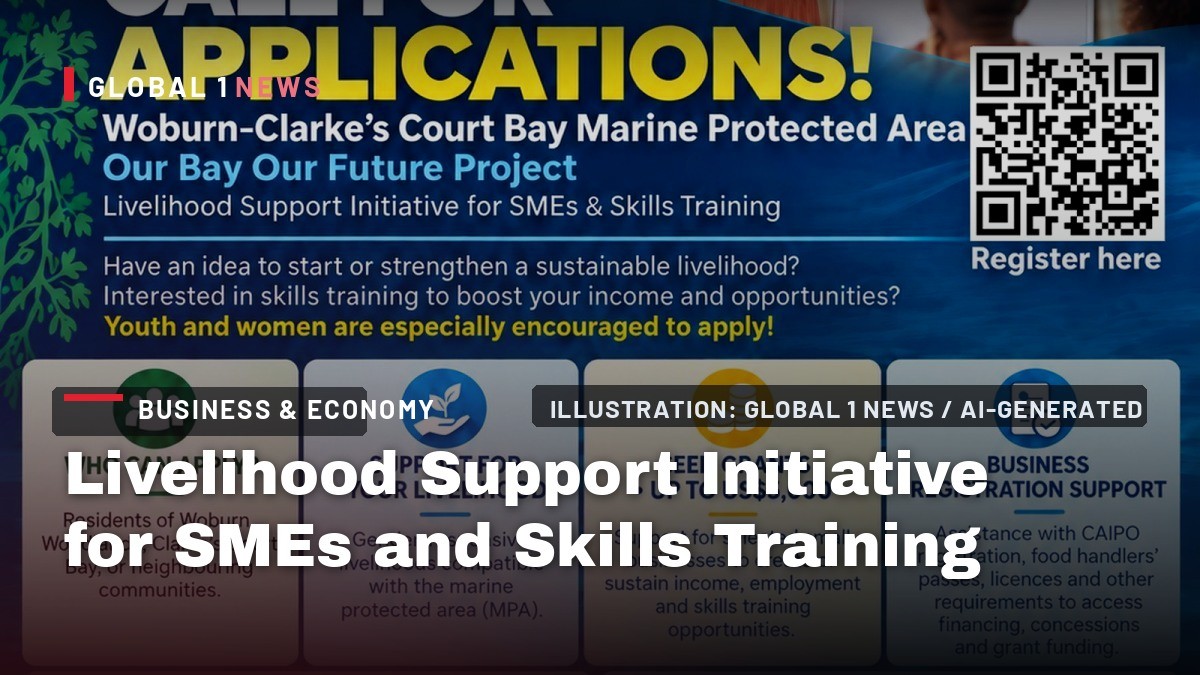
The Grenada Sustainable Development Trust Fund (GSDTF) has just opened its doors to a new wave of community‑driven entrepreneurship, inviting residents of Woburn, Woodlands, Clarke’s Court Bay and the neighbouring villages to apply for the Livelihood Support Initiative for SMEs and Skills Training. Funded by the Caribbean Biodiversity Fund and Global Affairs Canada’s CORE Gender Smart Facility, the programme sits at the heart of the “Our Bay Our Future” project – an enhanced management and monitoring plan for the Woburn–Clarke’s Court Bay Marine Protected Area (MPA). In a region where the cost of living continues to climb and many households rely on coastal resources for their daily bread, the initiative promises fresh income streams, stronger small businesses and a boost in skills that align with marine conservation goals.
Why the initiative matters for coastal communities
The Woburn–Clarke’s Court Bay MPA is a key ecological asset for Grenada, protecting coral reefs, mangroves and fish stocks that underpin local livelihoods. By tying the Livelihood Support Initiative directly to the MPA, the GSDTF is signalling that sustainable development and environmental stewardship can walk hand‑in‑hand. Residents who have traditionally fished or relied on informal tourism stand to gain new, legally recognised avenues for income that do not compromise the health of the marine environment.
For many families in the four targeted communities, the prospect of a diversified income base is a welcome relief. The Caribbean has seen a steady rise in living costs, especially in food and fuel, and the ability to supplement earnings through small‑scale enterprises can make the difference between staying afloat and falling behind. By focusing on “sustainable livelihoods that are compatible with the MPA”, the programme aims to protect the very resources that these communities depend on while opening doors to new market opportunities.
Funding and partnership framework
The financial backbone of the programme comes from two notable sources. The Caribbean Biodiversity Fund, a regional mechanism that channels climate and biodiversity financing, provides the bulk of the grant, while Global Affairs Canada’s CORE Gender Smart Facility adds a gender‑responsive dimension to the funding. This partnership reflects a broader trend in the Caribbean where international donors are increasingly linking environmental projects with social equity outcomes.
Implementation is overseen by the Grenada Sustainable Development Trust Fund, a locally‑based organisation that has been at the forefront of community‑led development in Grenada. The GSDTF’s role is to manage the application process, allocate resources to selected SMEs, and deliver the associated skills‑training modules. By keeping the administration in local hands, the programme seeks to ensure that the support is tailored to the specific needs and cultural context of the target communities.
What the Livelihood Support Initiative offers
Applicants can expect a two‑pronged package. First, there is direct financial assistance aimed at either kick‑starting a new small business or strengthening an existing one. While the exact amount of the grant is not disclosed in the source material, the emphasis is on “creating new income opportunities” and “strengthening existing businesses”. Second, the initiative provides a suite of skills‑training workshops designed to equip participants with the know‑how to run their enterprises sustainably.
The training component is likely to cover areas such as eco‑tourism, sustainable fisheries, value‑added processing of marine products, and basic business management. By embedding conservation principles into the curriculum, the GSDTF hopes to cultivate a generation of entrepreneurs who view the health of the marine ecosystem as a core asset rather than a hindrance.
How to apply and who can apply
Interested residents are invited to submit an Expression of Interest through an online form hosted at forms.gle/TRa9WDTaKTXJvq6MA. The call is open exclusively to people living in Woburn, Woodlands, Clarke’s Court Bay and the surrounding neighbourhoods, ensuring that the benefits stay within the immediate catchment of the MPA. The deadline for applications is 2 October 2026, giving a short but focused window for community members to prepare their proposals.
Applicants can reach the GSDTF for further information via email, telephone or WhatsApp at the contact details provided: Kirani James Athletic Stadium, River Road, St. George’s, Grenada; telephone 1 (473) 410 0867 or WhatsApp 407 0867. The organisation also maintains an online presence through its website, Facebook page, Instagram handle @gsdtf473 and a LinkedIn profile, offering multiple channels for prospective participants to seek clarification.
Potential impact on Grenada’s broader economy
While the initiative is modest in scale – targeting only a handful of communities – its ripple effects could be significant. By fostering small‑scale, environmentally‑friendly enterprises, the programme contributes to diversifying Grenada’s economy, which has traditionally leaned heavily on tourism and agriculture. A thriving cohort of coastal SMEs could feed into the island’s eco‑tourism offerings, attracting visitors keen to experience authentic, community‑led marine activities.
Moreover, the skills training component builds human capital that can be leveraged beyond the immediate programme. Graduates may go on to start new ventures, mentor peers, or even influence policy discussions around marine resource management. In a region where youth unemployment remains a concern, such capacity‑building initiatives are a vital piece of the puzzle.
Challenges and considerations
Any development effort that intertwines livelihoods with conservation must navigate a delicate balance. There is a risk that increased commercial activity, even if labelled “sustainable”, could put pressure on the very ecosystems the MPA seeks to protect. Ongoing monitoring and adaptive management will be essential to ensure that business growth does not translate into over‑exploitation.
Another challenge lies in ensuring equitable access to the programme. By limiting eligibility to specific neighbourhoods, the GSDTF is targeting the most directly affected communities, but it must also guard against exclusion of marginalised groups within those areas. The involvement of the CORE Gender Smart Facility suggests an intention to address gender disparities, yet the success of that aim will depend on how gender‑responsive the training and grant allocation processes truly are.
Looking ahead: a model for the region?
The Livelihood Support Initiative for SMEs and Skills Training could serve as a template for other Caribbean islands grappling with the twin imperatives of economic development and marine conservation. If the Grenada pilot demonstrates that small‑scale, community‑led enterprises can thrive alongside a well‑managed MPA, it may inspire similar programmes in places like Tobago, where coastal tourism and fisheries are also central to livelihoods.
Regional bodies such as CARICOM and the Caribbean Development Bank have long advocated for integrated approaches to sustainable development. The Grenada effort, backed by both regional and international funding, aligns with these broader policy directions and showcases how local implementation can translate high‑level commitments into tangible benefits for everyday people.
This article was produced with AI-assisted research and editorial support. Reporting is based on the source material cited below. Sources: Now Grenada; nowgrenada.com; Global1.News (25 September 2026).
By Sharon Sahatoo, Staff Writer
What's Your Reaction?
 Like
0
Like
0
 Dislike
0
Dislike
0
 Love
0
Love
0
 Funny
0
Funny
0
 Wow
0
Wow
0
 Sad
0
Sad
0
 Angry
0
Angry
0

Caribbean Correspondent at Global1.News. Based in Port of Spain, Trinidad, covering Caribbean politics, economy, energy, climate, and culture. Amplifying the voices and stories of the Caribbean region.












Comments (0)