
North Korea Has Sent a Drone Unit to Russia That Could Strike Targets Inside Ukraine
North Korea has deployed 8,500 troops to Russia, including 400 drone operators capable of striking Ukraine, with up to 50,000 more possible in September. Missile transfers and air-defense shortages deepen the threat.
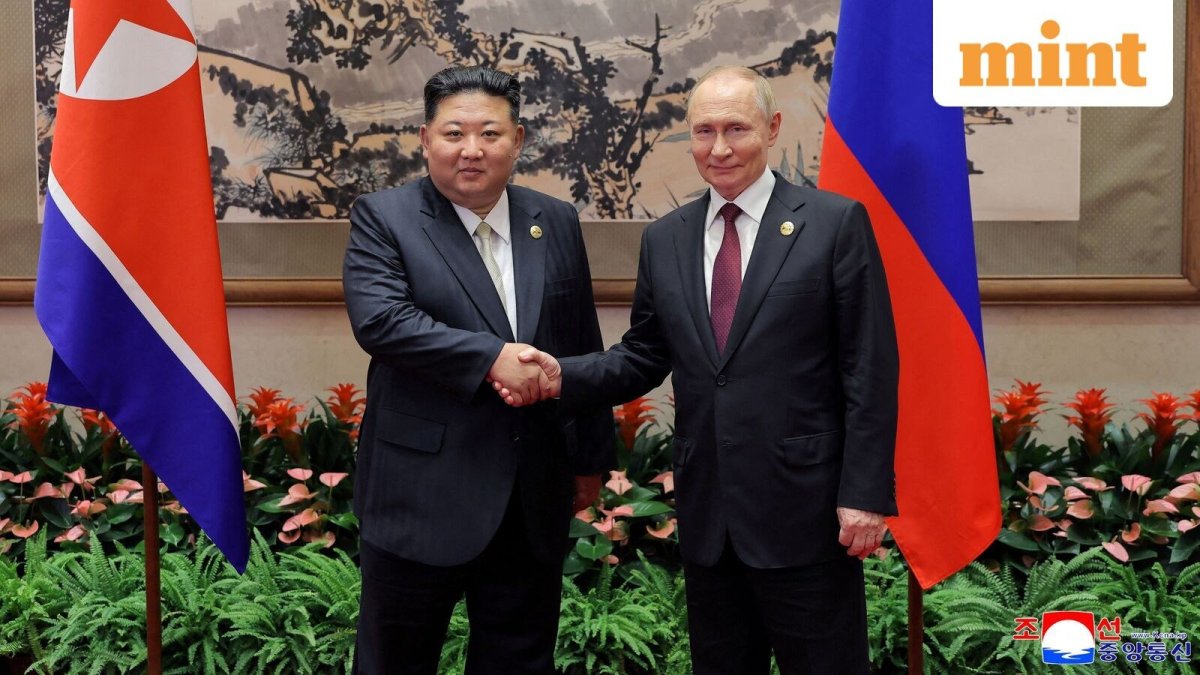
This is not a rumor. A new wave of North Korean troops, already numbering 8,500 inside Russia, now includes a specialized drone unit capable of launching attacks on targets inside Ukraine. That is the stark warning from Major General Vadym Skibitskiy, Deputy Head of Ukrainian Defense Intelligence, in a report published by CNN on August 21. This is the first indication the new wave carries offensive drone capability — and it changes the battlefield calculus in a way Kyiv cannot afford to ignore.
According to Skibitskiy, the North Korean troops already deployed are spread mostly in Russia's Kursk region and include a thousand engineers and deminers, plus 400 drone operators — many with experience from previous North Korean deployments. These are not raw recruits; these are operators who have seen the tech-dominated frontlines and are being sent back with lethal intent.
The timing is brutal for Ukraine. As Kyiv runs painfully short of air defenses, Russia is welcoming foreign manpower and munitions with open arms — another sign that Moscow's resources are stretched thin despite public statements of economic resilience. Let's cut through the propaganda: Russia needs help, and North Korea is cashing in.
A New Wave With a New Lethal Capability
The critical detail here is the drone unit. While Ukraine first warned that North Korean troops were using attack drones on their territory last October, this is the first indication the new wave will carry that capability as a core function. Skibitskiy said the drones will likely be used to both survey and attack targets inside Ukraine — reconnaissance and kinetic strikes, a dual role that makes these operators a direct threat.
The 400 drone operators are embedded within a larger force of 8,500 North Korean personnel currently in Russia. This is not a peacekeeping mission; it is combat support designed to free up Russian troops for offensive operations. And because these operators gained experience in previous deployments, they return with practical knowledge of Ukrainian tactics, electronic-warfare environments and modern drone battlefield realities.
This is a significant escalation. It is one thing to send infantry to hold a line; it is another to send specialized operators with the explicit mission of striking targets inside a sovereign nation. The Kremlin is no longer just borrowing bodies; it is borrowing expertise.
The Scale: 8,500 Troops, 25,000 Rotated, 50,000 More Possible
The numbers: the current contingent stands at 8,500 troops — but that is just the snapshot. Skibitskiy added that some 25,000 North Koreans have so far been deployed or rotated through Russia's military, a rotation cycle that signals Moscow treats North Korea as a reliable manpower reservoir.
And the pipeline is not closing. Skibitskiy warned Russia could ask for up to 50,000 more troops when President Vladimir Putin meets Kim Jong Un in September — a significant expansion of the military cooperation. We are not talking about a trickle; we are talking about a flood.
The initial deployment began in Kursk in October 2024, to repel a Ukrainian incursion — the first on Russian soil since the Nazis. An estimated 10,000 North Koreans were deployed and suffered significant casualties, using suicidal tactics to rush Ukrainian positions en masse. The wounded returned home able to teach colleagues about drone warfare on the tech-dominated frontlines.
The Kursk Deployment and the Rear-Line Strategy
Here is the strategic nuance many are missing: North Korean troops will not fight on Ukrainian territory, Skibitskiy said. Instead, they will reinforce Russia's rear positions, freeing Russian units for assaults inside Ukraine. It is a force-multiplier strategy — foreign troops hold the line at home so Russian units can be thrown into the fight in Ukraine.
The troops are spread mostly in Kursk, a border area that has seen intense fighting since the incursion. By stationing North Korean engineers, deminers and rear-guard units there, Russia is outsourcing the defensive burden. The 1,000 engineers and deminers are not there to build schools; they are there to fortify positions, clear minefields and prepare defensive lines.
The strategy preserves Russian combat power for offensive operations while deepening the dependency between the two regimes — making it harder for Pyongyang to walk away.
The Missile Pipeline: 150 Missiles Sent, 120 More Promised
Beyond manpower, North Korea is helping with missile technology. Skibitskiy said that before August last year, at least 150 KN-23 or KN-24 ballistic missiles had been sent for use inside Ukraine, with another 120 promised — a staggering volume of munitions flowing into an already saturated conflict.
The numbers get worse. Skibitskiy said 40 of those missiles have been delivered, and two are suspected to have been used in Radushne, in the Dnipro Region, on July 30 — an attack that killed at least four children from the same family, and, per RBC-Ukraine, a father, mother, seven children and a young grandson. This is not abstract geopolitics; this is the cost paid in blood.
More modern versions have an extended range of 800km, Skibitskiy said, but often land 15-19km off target. That inaccuracy is a feature, not a bug: North Korea is using launches into Ukraine to improve targeting and payload. Ukraine is effectively a live-fire test range for North Korean weapons development.
The Voronezh Threat and the Baltimore Aerodrome
The threat is not just coming from the frontlines. Russia is deploying new launchers for North Korean missiles in the Voronezh region, putting more Ukrainian territory — seven regions in total — within range.
Skibitskiy detailed that about 90 personnel have been sent to Voronezh to assist with missile launches, and that ten large cargo flights, possibly containing missiles from North Korea, landed at the Baltimore aerodrome in the Voronezh area. It is a logistical pipeline functioning with alarming efficiency.
The 800km range means these missiles can reach deep into Ukrainian territory from launch sites inside Russia — and landing 15-19km off target is cold comfort when they are aimed at civilian settlements. Radushne is proof these weapons are being used, and used lethally.
The Price of Partnership: S-400s, Pantsir-S1, and Knowledge Transfer
North Korea is not doing this out of the goodness of its heart. In return for manpower and munitions, it has asked for the Russian S-400 air defence system and has already received a Pantsir-S1 surface-to-air missile launcher, Skibitskiy said — a direct transfer of advanced Russian military technology to a nuclear-armed state.
The Pantsir-S1 is a capable short-to-medium range system; its delivery is a tangible reward for Pyongyang's support. The request for the S-400, a far more advanced system, signals that North Korea expects to be paid handsomely for its sacrifices.
But the most dangerous currency being traded is knowledge. Wounded North Korean soldiers returning home can teach colleagues about drone warfare — a generational transfer of combat experience that will enhance Pyongyang's capabilities long after the war ends.
The Trump Factor and Kim Yo Jong's Denial
North Korea's deepening ties with Russia are troubling many in the NATO alliance, particularly after President Donald Trump announced on Sunday that military drills with South Korea would be scaled down so as not to antagonize Kim Jong Un — the leader Trump is eager to meet again. The concession comes as Pyongyang actively arms Russia's war machine.
Kim's powerful sister, Kim Yo Jong, denied claims that tens of thousands more North Koreans would soon join Russia's efforts, calling it a "groundless self-fabricated scenario." Her denial rings hollow against Ukrainian intelligence: 8,500 troops on the ground, 25,000 rotated, 400 drone operators — none of that is a fabrication.
Scaling back drills with Seoul is a strategic gift to both Moscow and Pyongyang. It signals to Kim there are no consequences for arming Russia, and it undermines the deterrence that has kept the Korean Peninsula stable for decades.
Ukraine's Air-Defense Crunch and the Road Ahead
Ukraine is running out of ways to shoot these missiles down. Skibitskiy highlighted that supplies of US Patriot interceptors — one of the few systems capable of taking down ballistic missiles — are pretty much exhausted, a critical vulnerability Moscow and Pyongyang are actively exploiting.
The Radushne strike on July 30 — which killed a father, mother, seven children and a young grandson, per RBC-Ukraine — is a grim reminder of what is at stake. When a ballistic missile lands 15-19km off target, it does not discriminate between a military installation and a family home. The inaccuracy of these weapons makes them more dangerous to civilians, not less.
The Russia-North Korea axis is no longer a sideshow; it is a central pillar of Moscow's war strategy. With up to 50,000 more troops potentially on the way in September and a steady flow of missiles and drone operators, the Kremlin is betting foreign support can outlast Ukrainian resilience. The West needs to wake up before the next wave lands.
This article was produced with AI-assisted research and editorial support. Sources: CNN, RBC-Ukraine, New Voice of Ukraine.
By Jessica Ali, Staff Writer
What's Your Reaction?
 Like
0
Like
0
 Dislike
0
Dislike
0
 Love
0
Love
0
 Funny
0
Funny
0
 Wow
0
Wow
0
 Sad
0
Sad
0
 Angry
0
Angry
0

Editor-in-Chief at Global1.News. Atlanta-based journalist who cuts through the BS and tells it like it is. Lead anchor, host, and the voice you hear when the spin stops and the truth starts.














Comments (0)