
Israeli Strikes on Syrian Airbase Draw Regional Condemnation
Israeli airstrikes on the disused Abu al-Duhur Military Airbase in Syria's Idlib province drew widespread international condemnation from Damascus, Turkiye, Jordan, Egypt, GCC states, the Arab League, Pakistan and the UN, deepening Middle East tensions.
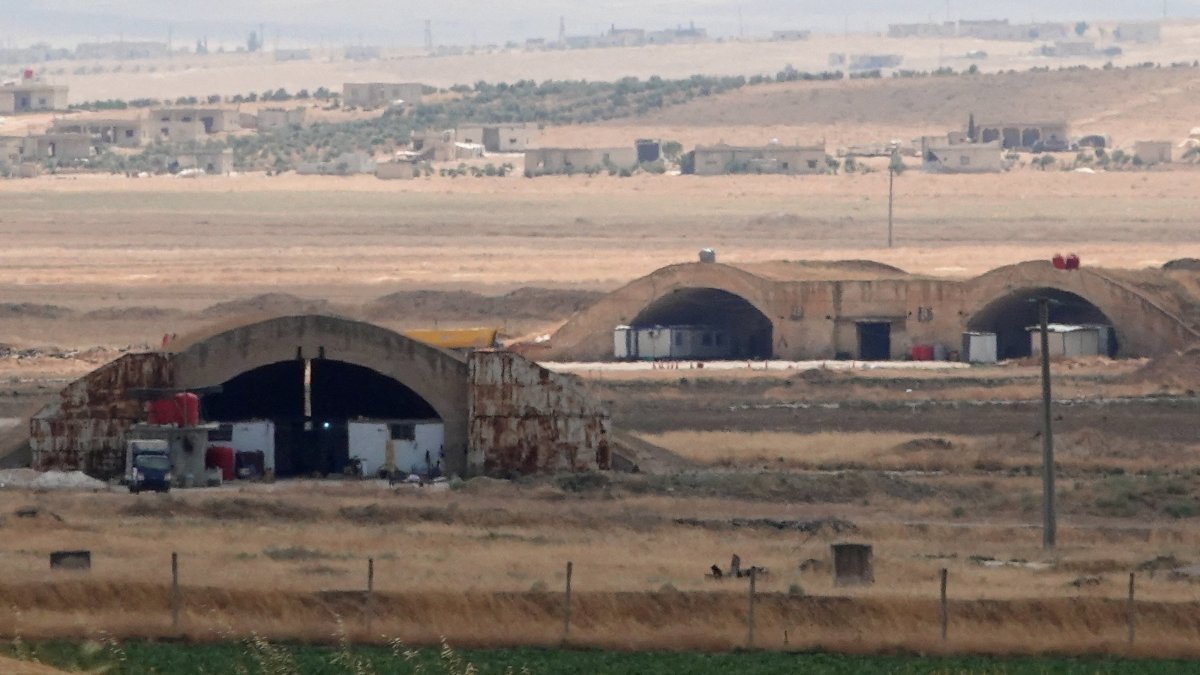
The Israeli Air Force’s latest operation against Syrian territory has ignited a firestorm of diplomatic rebuke across the Middle East and beyond, underscoring the fragile equilibrium that governs the post-2024 regional order. Warplanes struck the disused Abu al-Duhur Military Airbase in northeastern Syria’s Idlib province on Tuesday, damaging its runway and a derelict structure inside a hangar, according to Syrian officials. Eight separate strikes were launched on the facility, though no casualties were immediately reported.
The attack, which Damascus swiftly condemned as a brazen infringement on its sovereignty, has drawn sharp responses from Ankara, Amman, Cairo, the Gulf Cooperation Council (GCC), the Arab League, Islamabad, and even the United Nations. The breadth of the backlash signals that Israel’s repeated military incursions into Syrian airspace are no longer being tolerated as a quiet, bilateral matter—they have become a flashpoint for broader regional tensions.
Damascus Cries Foul, Cites Strategic Restraint
The Syrian Ministry of Foreign Affairs issued a formal statement denouncing the aerial assault as a direct violation of Syria’s territorial integrity. Ministry officials pointedly noted that Israeli attacks against Syrian territory have continued unabated since Dec. 8, 2024—a date that marks a pivotal shift in the country’s internal dynamics and its relationship with external actors.
In a notable rhetorical move, Syrian diplomats emphasized that Damascus has consciously pursued a policy of strategic restraint to consolidate domestic stability and prevent broader regional escalation, despite what it characterized as continuous provocations. This framing is significant: it positions the Syrian government under President Ahmed al-Shara as a responsible actor seeking de-escalation, while casting Israel as the aggressor undermining that effort.
The reference to restraint is not incidental. It reflects a deliberate strategy by Damascus to build international credibility as a stabilizing force, particularly as it seeks to rebuild infrastructure and attract investment after years of conflict. By highlighting its own forbearance, Syria is attempting to shift the burden of responsibility onto Israel and the international community to enforce norms of sovereignty.
Ankara, Amman, and Cairo: A Unified Front
The Turkish Foreign Ministry was among the first to respond, issuing a strongly worded condemnation of the strikes. “We call on the international community to display a more decisive stance to ensure an end to Israel's aggression against Syria, which is acquiring a new dimension every passing day, and to ensure accountability in the face of these actions that disregard international law,” the ministry said Tuesday.
Ankara’s language is notably sharp, reflecting its deep involvement in Syrian affairs and its own complicated relationship with Israel. Türkiye has consistently opposed Israeli military operations in Syria, viewing them as destabilizing to a region where Ankara holds significant strategic interests, particularly in Idlib province, which borders Turkish territory.
The Jordanian Foreign Ministry denounced the airstrikes as an “unjustified hostile attack” that explicitly breaches international law and violates Syrian sovereignty. Amman called for an immediate cessation of strikes targeting Syria's national security and regional stability. Jordan’s position is particularly sensitive given its shared border with Syria and its role as a conduit for regional diplomacy.
Cairo’s Foreign Ministry warned that Israel's persistent violations of Syrian land and airspace risk triggering a dangerous military escalation that could derail broader peace initiatives across the Middle East. Egypt characterized the strikes as a clear violation of both international law and the United Nations Charter. The Egyptian response carries weight, as Cairo has historically served as a mediator in Arab-Israeli disputes and maintains a peace treaty with Israel that anchors its foreign policy.
GCC Unity and the Arab League’s Sharp Rebuke
Member states of the Gulf Cooperation Council issued unified statements condemning the operation and calling for international intervention—a rare display of collective action from a bloc that often struggles to find common ground on regional security matters.
The Saudi Foreign Ministry said it condemned the attack in the “strongest terms,” rejecting the targeting of the Abu al-Duhur facility as a despicable violation of Syrian sovereignty. Riyadh urged the international community to hold Israel accountable to international norms. Saudi Arabia’s forceful language is notable given its ongoing discussions with Washington about normalization with Israel—a process that appears increasingly complicated by such military actions.
Qatari diplomats highlighted that Israel’s ability to repeatedly violate the sovereignty of neighboring states with impunity reflects an attempt to impose political realities through military force. This framing speaks to a broader Gulf concern: that Israel is using its military superiority to reshape the regional landscape unilaterally, without regard for diplomatic processes or international law.
The UAE Foreign Ministry rejected all threats to Syria's territorial security, while Kuwait’s Foreign Ministry warned that the repeated strikes actively undermine regional security frameworks. GCC Secretary-General Jasem Mohamed al-Budaiwi called for firm, decisive action from global bodies to protect Syrian territory and uphold regional order.
The Arab League, meanwhile, criticized the military action as a politically motivated move. Arab League Secretary-General Nabil Fahmy accused Israeli leadership of using provocative military strikes to widen regional conflicts for domestic political and electoral gain at the expense of regional peace. This accusation—tying Israeli military actions to internal political calculations—adds a pointed dimension to the diplomatic response, suggesting that regional actors view these strikes as calculated provocations rather than defensive necessities.
Pakistan’s Solidarity and the UN’s Alarm
In South Asia, Pakistan’s Ministry of Foreign Affairs voiced firm solidarity with Syria, describing the airstrikes as a blatant violation of international law that imperils regional stability. Islamabad also urged the global community to hold perpetrators accountable. Pakistan’s involvement underscores the extent to which this issue resonates beyond the immediate Middle East, touching on broader Muslim-world solidarity and concerns about unilateral military action.
At United Nations headquarters in New York, Stephane Dujarric, spokesperson for U.N. Secretary-General Antonio Guterres, addressed the incident during a daily press briefing. “This is another alarming violation of Syria's territorial integrity and airspace,” Dujarric told reporters. “These airstrikes must stop, and we are opposed to them.” The UN’s direct and unambiguous language reflects growing international frustration with the pattern of Israeli strikes on Syrian territory.
Washington’s Measured Concern
Tom Barrack, the U.S. Ambassador to Ankara and Special Envoy for Syria and Iraq, expressed “deep concern” over the strikes in a statement posted on social media. Barrack emphasized that Washington remains committed to hosting talks between regional parties to encourage diplomatic solutions over military action.
In a notable departure from typical U.S. statements on Israeli operations, Barrack offered a sympathetic characterization of the Syrian government’s posture. “(Syrian President Ahmed) al-Shara's government adopted neither an aggressive stance nor harbored proxy forces,” Barrack wrote. “On the contrary, it has repeatedly demonstrated its preference for de-escalation with Israel.”
This framing is significant. It suggests that Washington, at least through its special envoy, recognizes Damascus’s efforts at restraint and is signaling that continued Israeli strikes may be counterproductive to U.S. interests in stabilizing Syria and the broader region. The statement also implicitly acknowledges that the Syrian government is not posing the kind of threat that would justify such repeated military incursions.
Strategic Calculus: What Each Side Wants
The Abu al-Duhur airbase, located in Idlib province, has a complex history tied to the Syrian conflict. The facility changed hands multiple times during the civil war and has been largely disused in recent years. Its targeting now raises questions about Israel’s strategic objectives: Is Jerusalem seeking to degrade potential future threats, or is it sending a message about its willingness to operate freely in Syrian airspace regardless of diplomatic consequences?
For Israel, the strikes serve multiple purposes. They demonstrate military dominance and deterrence capability, signal to Iran and its proxies that Israeli intelligence and strike capabilities remain potent, and reinforce a policy of preemption against any potential military buildup near its borders. However, the diplomatic cost is mounting, as evidenced by the breadth and intensity of the international response.
For Syria, the attacks provide an opportunity to consolidate domestic support and position itself as a victim of Israeli aggression while projecting an image of responsible statehood. Damascus’s emphasis on strategic restraint is designed to win international sympathy and potentially leverage that goodwill into diplomatic or economic benefits.
For regional actors like Türkiye, Jordan, Egypt, and the Gulf states, the strikes represent a test of their ability to influence Israeli behavior and uphold international norms. Their unified response signals a collective desire to constrain Israeli unilateralism and reinforce the principle of state sovereignty—a principle that all of them, to varying degrees, depend upon for their own security.
Regional Implications and the Road Ahead
The widespread condemnation of these strikes reflects a broader regional consensus that Israel’s military operations in Syria are becoming untenable. The repeated incursions, which Damascus says have continued since December 2024, are eroding trust and complicating efforts to stabilize the region. They also create political space for actors like Iran and its allies to frame Israel as the primary obstacle to peace.
The Arab League’s accusation that Israeli leadership is using military strikes for domestic political gain adds a particularly corrosive element to the dynamic. If regional actors believe that Israeli military actions are driven by electoral calculations rather than genuine security needs, the potential for diplomatic engagement diminishes significantly.
The U.S. position, as articulated by Ambassador Barrack, suggests that Washington may be seeking to moderate Israeli behavior while maintaining its commitment to hosting regional talks. Whether Washington can translate its “deep concern” into concrete pressure on Israel remains an open question, but the tone of the statement indicates a growing awareness that unchecked Israeli operations in Syria are undermining broader U.S. strategic interests in the region.
As the international community weighs its response, the fundamental tension remains: Israel asserts a security imperative to strike targets in Syria, while Damascus and its regional partners insist on the inviolability of Syrian sovereignty. Without a credible mechanism to address Israel’s security concerns within a diplomatic framework, the cycle of strikes and condemnations is likely to continue—each round further eroding the already fragile stability of the Middle East.
By Malik Hassan, Staff Writer
This article was produced with AI-assisted research and editorial support. Reporting is based on sources cited in the article.
What's Your Reaction?
 Like
0
Like
0
 Dislike
0
Dislike
0
 Love
0
Love
0
 Funny
0
Funny
0
 Wow
0
Wow
0
 Sad
0
Sad
0
 Angry
0
Angry
0

Middle East Correspondent at Global1.News. Based in Beirut, covering politics, conflict, energy, and society across the Middle East. Brings context and depth to a region often reduced to headlines.














Comments (0)