
The $105 Billion Data Center Landed in Ohio — and Ohio Is Passing Laws to Stop the Next One
Nvidia will provide up to $105 billion in financing for an 8-gigawatt OpenAI data center campus in Pike County, Ohio — while the state's legislature and senators turn against the buildout. A founder's analysis of the collision between capital and consent.
The $105 Billion Data Center Landed in Ohio — and Ohio Is Passing Laws to Stop the Next One
Let me tell you something that's been sitting wrong with me all week. I've been running hosting infrastructure for over a decade, and I've watched the AI buildout do a lot of strange things — I've watched chips become currency, power become the bottleneck, and debt become a spectator sport. But I have never watched a state take a $105 billion check with one hand while writing the laws to reject the next one with the other. That's what Ohio just did. On Monday, a securities filing revealed that Nvidia will provide up to $105 billion in financing for a massive OpenAI data center campus in Pike County, Ohio. Six days later, a sitting Republican senator from that same state went on national television and drew what every outlet is calling a red line on data center expansion.
And here's the part that keeps me up at night: both of those things are completely rational. The money is real. The backlash is real. And they're colliding in the same state, at the same time, over the same megawatts. If you're an independent hosting provider trying to figure out where the AI buildout goes next — or where it goes sideways — Ohio is the whole story in miniature. Let me walk you through it.
The Deal — What Actually Landed in Pike County
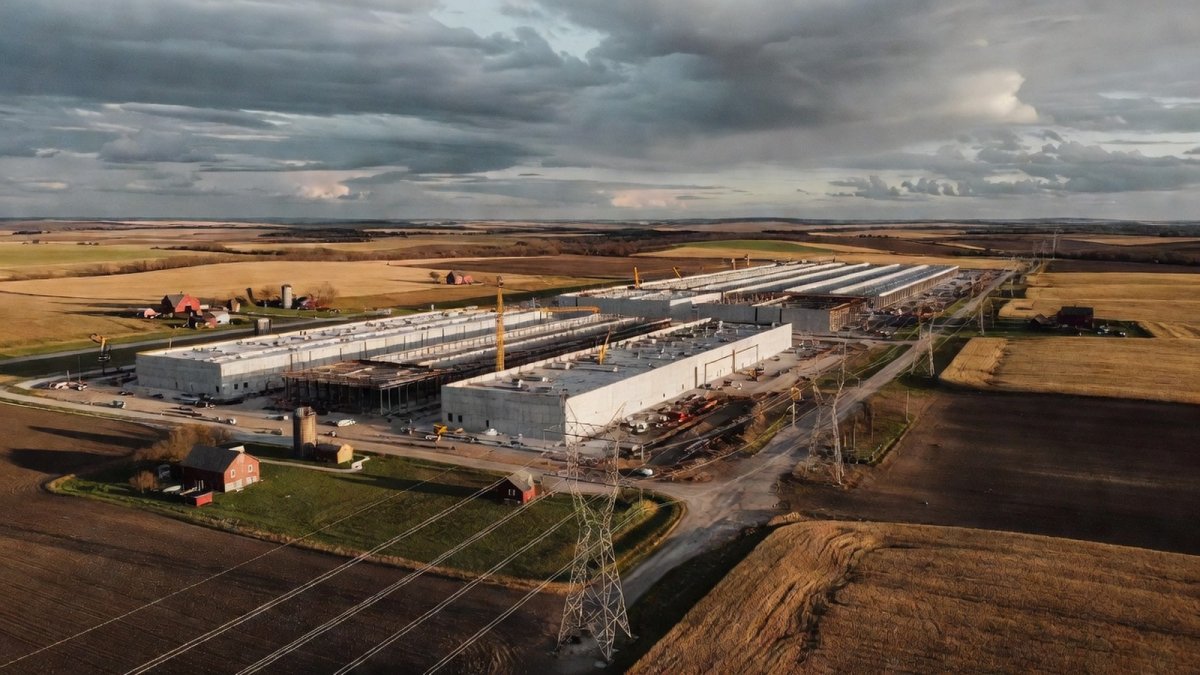
The filing dropped August 17. Nvidia will provide up to $105 billion in credit support so OpenAI can lease an 8-gigawatt AI campus at the PORTS-Pike Technology Campus in Pike County, Ohio — land that used to host the Portsmouth Gaseous Diffusion Plant, a Cold War uranium-enrichment complex that the Department of Energy has spent decades remediating. SoftBank's SB Energy is building and operating the campus. Nvidia is the exclusive AI compute provider — meaning its chips, its hardware, its revenue. And OpenAI is signing a 20-year lease, locking in capacity in phases starting in 2028, with 4.25 gigawatts of IT capacity secured initially and an option on the remaining 3.75.
Read those numbers again. $105 billion. Eight gigawatts. Twenty years. Nvidia is also investing $1.5 billion directly into SB Energy, joining SoftBank Group and OpenAI as investors in the developer. The campus is projected to create 35,000 construction jobs through 2032 and 2,500 long-term operating jobs. The first 800 megawatts are expected to come online in 2028 using existing AEP infrastructure, with SB Energy committing to build at least 10 gigawatts of new generation and invest $4.2 billion in regional grid infrastructure through AEP Ohio — structured, they say, to protect ratepayers. OpenAI is throwing in an $80 million community grant fund and up to $84 million in Codex credits for roughly 844,000 Ohio college students.
This is the single largest AI infrastructure financing deal we've seen on paper, and it's not close. Jensen Huang has been saying for months that land, power, and building shells are the real bottlenecks — and this deal is the answer to that problem, executed at a scale that would have been unthinkable two years ago.
The Same State, Six Months Later
Now here's the other half of the story. Ohio already has 240 data centers — tied with Illinois for the fifth most in the country — and the bill for that buildout has arrived. Residential electricity rates in Ohio are up 175% since 2005, according to U.S. Energy Information Administration data cited by Spectrum News — rising about 1.8 times faster than the national rate and 2.5 times faster than inflation. Voters are furious. And the political class that spent the last five years recruiting data centers is now running from them at full sprint.
Consider the roll call. Jon Husted — the former lieutenant governor who in 2019 personally pushed a deal giving Google $43.5 million in state incentives plus a 15-year property tax abatement to build in central Ohio — is now the senator introducing the Ratepayer Protection Act, which would force data centers and other large electricity users to cover their own infrastructure costs instead of spreading them across households. "What we're requiring the data centers to do is to produce their own power so that the local ratepayers don't have to foot the bill," Husted told Spectrum News. That's the guy who built the welcome mat, now writing the exit clause.
Then there's House Bill 983 — the "Data Center Accountability and Citizen Protection Act," introduced July 28 by Republican Rep. Jennifer Gross with six GOP co-sponsors. The Ohio Capital Journal described it as a far-reaching bill to regulate data center development, addressing the environmental, aesthetic, and public finance fallout of Ohio's rapid buildout. Sherrod Brown — who's challenging Husted for his Senate seat in November — has launched an ad campaign tying Husted to the rate increases and is calling to end state tax breaks for data centers entirely.
And then, on August 23, Sen. Bernie Moreno went on Fox & Friends Weekend and warned that data center backlash could be a defining issue in the midterms. He's been on this since March, when he hammered a Northeast Ohio deal that handed taxpayers' money to two data centers in exchange for what he called a paltry ten jobs. Now he's the loudest Republican voice drawing a line — while Vice President JD Vance touts the facilities as essential to the American AI race. You don't need a pollster to see where this is heading: the state's political center of gravity has shifted, and every new megawatt now has to fight for permission.
The Two Readings — Machine Working, Floor Moving
So which is it? Is Ohio proof that the AI buildout is unstoppable — or proof that it's about to hit the wall? The honest answer is both, and that's what makes this so hard to read. Reading one: the machine works. $105 billion in one filing. A chip supplier financing its own customer's landlord. Eight gigawatts of locked-in demand. The Wall Street Journal reports major tech companies now hold around $3 trillion in AI commitments off their balance sheets — and the Nvidia-OpenAI structure is the purest example yet of that opacity. This deal doesn't look like an industry in retreat; it looks like an industry that has figured out how to print its own runway.
Reading two: the political floor is moving. The same week the filing hit the wire, the entire Ohio political class — Republican and Democrat alike — was campaigning against the next deal. Ratepayer protection, citizen protection, moratorium talk, midterm warnings. The deals already signed will probably get built. The deals not yet signed are going to be negotiated in a completely different atmosphere. When a state's residential rates are up 175% and its top politicians are running on ratepayer anger, the era of cheap consent is over — and the next applicant is going to pay for it in ways that have nothing to do with electricity.
The Part Nobody's Talking About — the Deal Had to Buy Its Own Permission
Here's the detail that tells you everything. Look at what OpenAI and SB Energy put in the PORTS-Pike announcement: an $80 million community fund. Up to $84 million in student credits. A promise to build 10 gigawatts of their own generation. A $4.2 billion grid investment "structured to protect ratepayers." Closed-loop, air-cooled water systems. A pledge that costs won't be shifted to Ohio utility customers. That's not a press release — that's consent engineering. Every single line item is there to answer the exact objections that got Husted and Gross and Moreno elected: your rates, your water, your grid, your kids' schools.
Two years ago, a data center deal didn't need any of this. You showed up with a tax abatement, a power purchase agreement, and a promise of jobs, and the county rolled out the red carpet. Now the political permission has a price tag, and it's inside the deal itself. That's the secondary bottleneck nobody's pricing into the buildout: not chips, not power, not land — but the rising cost of social license. The $105 billion figure doesn't include what the next deal will have to spend just to be allowed to exist.
What This Means for Independent Hosting Providers
First — treat regulatory risk as a siting input, not an afterthought. When you're choosing where to put capacity, the politics of the state matter as much as the price of power. Ohio's queue of signed deals may sail through, but the next generation of projects is now fighting a legislative headwind. If you're shopping colo or planning a build, check the statehouse, not just the substation.
Second — read the consent line item. The hyperscalers have shown they'll pay billions to buy political permission before they'll raise cloud prices. That tells you something important: community commitments are now a cost of doing business, and they're coming out of the same budget as your hardware. It also means the hyperscaler cost base is creeping up in ways that make the capital-light independent provider more competitive — not less.
Third — secondary markets with stable politics are the arbitrage. The states in active backlash (Ohio, New York, Virginia's ratepayer fight) are where execution slows. The states that haven't been burned yet — that still have grid headroom and a welcoming legislature — are where the next round of deals gets built faster. That gap is your opportunity window.
Fourth — model power costs going up everywhere. Ratepayer politics doesn't just hit the big campuses. When Ohio's residential rates rise 175%, every rate class feels it, including colocation power pricing. Lock your contracts, build in escalation clauses, and don't assume today's power price is next year's.
Fifth — a signed filing is not a built campus. This deal has a 2028 first phase, a 20-year lease, and an entire political cycle between now and then. Nvidia's credit support, OpenAI's commitments, SB Energy's construction — all of it can still be derailed by the same forces that produced HB 983 and Moreno's red line. Don't build your business plan around capacity that doesn't exist yet.
The Bottom Line
Ohio just gave us the AI buildout in one state: $105 billion of capital arriving at the exact moment the politics turned against it. The deals signed in the boom years will mostly get built. The deals that come after will have to negotiate with a state that's already been burned — and the price of permission just went on the balance sheet. For those of us running real infrastructure, the lesson is blunt: the AI buildout isn't ending, but it's growing up. And growing up means every megawatt now has to answer for the ones that came before it. Plan accordingly, because the era of the blank check is over.
— Allan Ali, Founder
This article was produced with AI-assisted research and editorial support. Sources: CNBC, SEC filing, NVIDIA newsroom, OpenAI, Ohio Tech News, Spectrum News 1, Ohio Capital Journal, Fox News, cleveland.com, The Wall Street Journal, Los Angeles Times.
What's Your Reaction?
 Like
0
Like
0
 Dislike
0
Dislike
0
 Love
0
Love
0
 Funny
0
Funny
0
 Wow
0
Wow
0
 Sad
0
Sad
0
 Angry
0
Angry
0

Publisher of Global1.News. Automation architect, systems builder, and the guy making sure the truth gets published.













Comments (0)